 Free shipping on orders over £29,85
  Shipping Tracking!


 Google
 Facebook
← Back to How is polyolefin resin obtained?
Choosing between polyolefin, polyurethane, and epoxy resins can be confusing as each has unique properties and applications. Here, we unpack the core distinctions to help you select the right resin for your project.
How Polyolefin Resins Compare with Polyurethane and Epoxy
Polyolefin resins, such as polyethylene and polypropylene, are primarily thermoplastics. This means they can be melted, reshaped, and cooled multiple times without changing their chemical structure. In contrast, polyurethane and epoxy resins undergo a chemical reaction called curing or crosslinking, transforming from liquid to a solid with strong structural properties. Once cured, they cannot be re-melted or reshaped.
Choosing the Right Resin for Your Project
- Polyolefin resins are best for applications demanding easy processing, flexibility, and good chemical resistance, such as packaging and simple moulded parts.
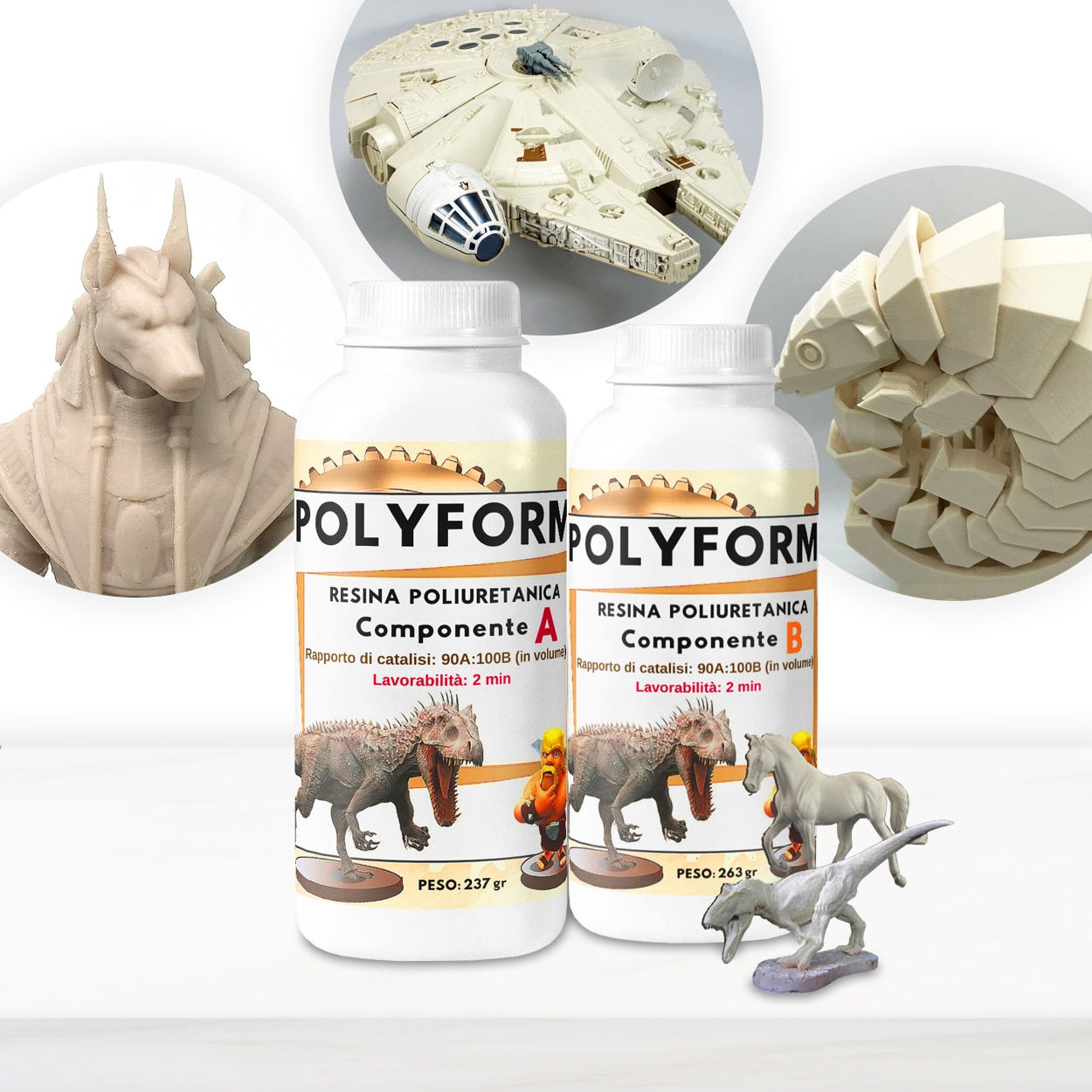
- Polyurethane resins offer quick setting, high detail, and durability—ideal for prototyping, model making, and small batch production. For instance, “Polyform” Polyurethane Casting Resin facilitates rapid and precise casting.
- Epoxy resins are preferred where strong adhesion or high mechanical strength is critical, for example in composites, coatings, or demanding craft uses.
When the Distinction Matters
The choice between these resin types is crucial when considering workability and final part performance. For items needing repeated heating and forming, polyolefins are flexible. For highly detailed and sturdy objects, or technical parts, polyurethanes or epoxies are more suitable.
Related products
Related guides
Understanding the main differences between polyolefin, polyurethane, and epoxy resins makes it easier to find the best fit for your application. Explore more about these materials and their origins on our parent page.