 Free shipping on orders over £29,85
  Shipping Tracking!


 Google
 Facebook
← Back to How is plasticized resin made?
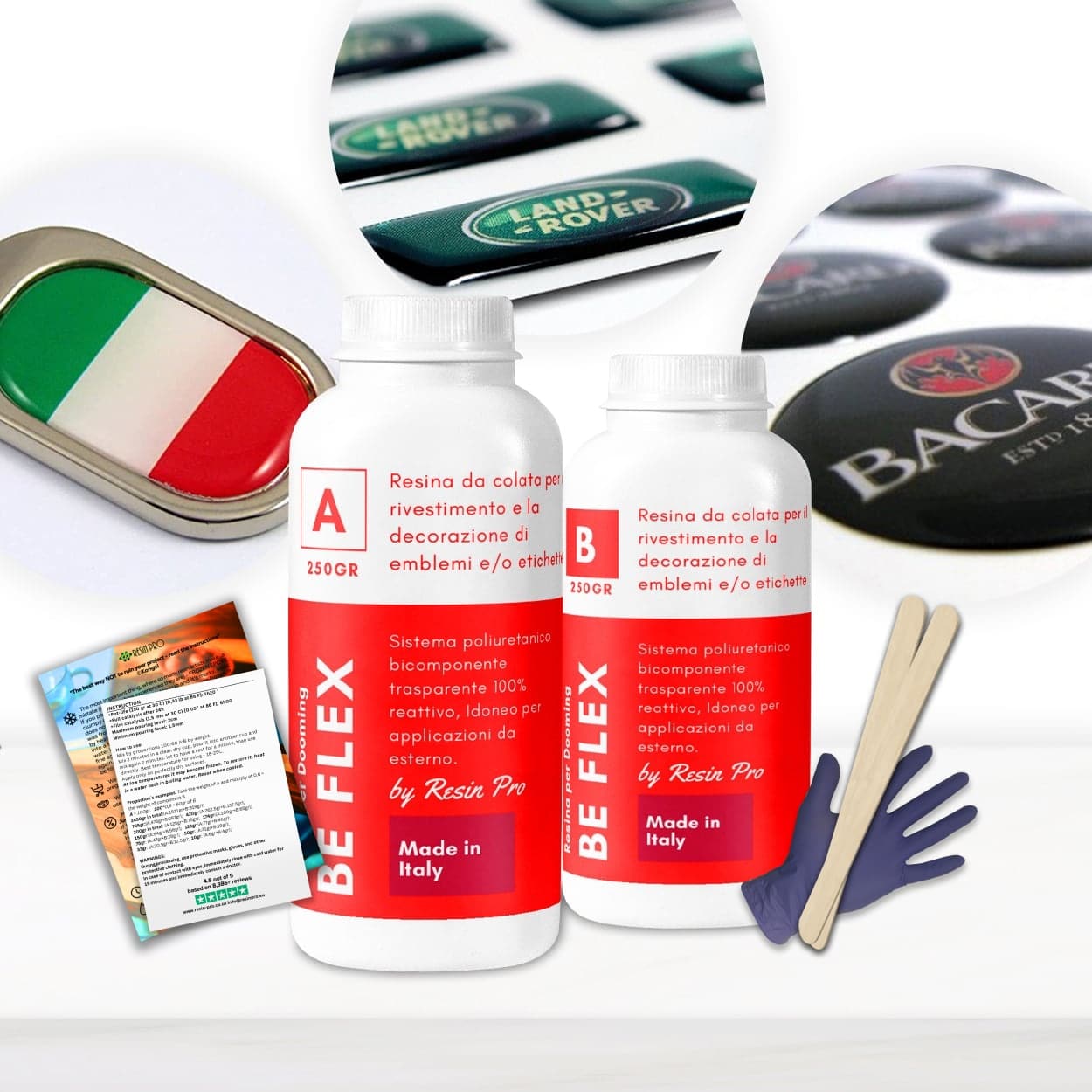
Achieving a flexible, transparent resin finish is essential when working with items that require both clarity and the ability to bend without cracking, such as labels, badges, or decorative crafts intended for curved surfaces.
Why Choose a Flexible, Transparent Resin?
Standard resins may become brittle, making them unsuitable for applications that involve curves, movement, or impact. Flexible transparent resins, often polyurethane-based, are specifically designed to flex and return to their original shape while maintaining clarity. This makes them ideal for domed stickers, 3D labels, and decorative pieces needing a blend of resilience and visual appeal.

Applying Resin to Curved Surfaces
For best results, select a resin formulated for flexibility and good adhesion. Products like Be Flex Transparent Polyurethane Doming Resin are developed to adhere well even on non-flat surfaces, creating a glossy, self-healing layer that resists scratches and withstands handling. Clean and dry your surface before application, and apply the resin evenly using the supplied mixing sticks, taking care to avoid bubbles for a professional, bubble-free finish.
When Is Flexibility Especially Important?
Flexibility is crucial if your project will experience bending, outdoor weather, or frequent handling. For example, resin-coated badges, labels, or promotional items require a finish that will not crack or yellow, even when applied to bottles or curved packaging. Choosing a purpose-made transparent resin with UV and abrasion resistance ensures your creations remain pristine and usable over time.

Related products
Related guides
Flexible, transparent resin finishes open up creative possibilities for everything from signage to craft pieces. For more on the production of plasticised resins and their versatile uses, please explore our main guide: How is plasticized resin made?