 Free shipping on orders over £29,85
  Shipping Tracking!


 Google
 Facebook
← Back to How is plasticized resin made?
For anyone seeking long-lasting clarity and protection in their projects, scratch and abrasion resistant resins featuring self-healing properties offer a modern solution. These advanced resin systems are increasingly popular across creative and commercial uses, helping surfaces withstand everyday wear while keeping a polished appearance.
How Self-Healing, Scratch-Resistant Resin Works
Resins engineered for scratch resistance combine a durable polymer structure with a flexible surface layer. When minor scratches or pressure marks occur, the surface is designed to recover and smooth over time, maintaining a clean, glossy look. This self-healing ability is especially valuable for decorative coatings such as doming on labels, badges, and custom artwork.
Practical Uses and Application Tips
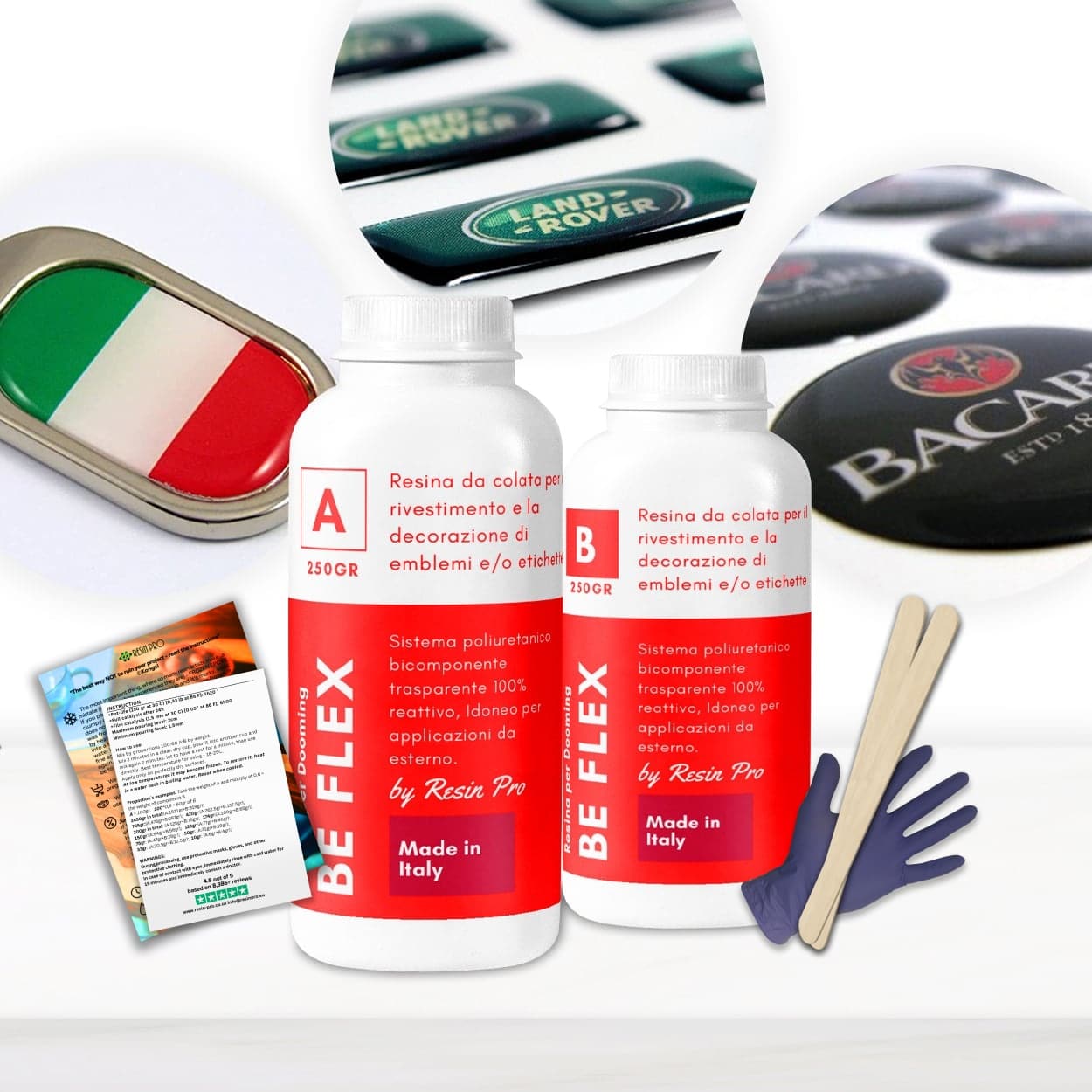
Transparent polyurethane doming resins, such as Be Flex, are ideal for protecting stickers, badges, and nameplates. Their flexibility allows for use on curved surfaces without cracking. For best results, follow provided instructions and apply in a dust-free environment to achieve a bubble-free, high-gloss finish. Allow full curing for optimal self-healing and protective performance.
When This Matters Most
- Creating personalised or commercial labels that are handled often
- Outdoor uses where surfaces are exposed to frequent abrasion or UV
- High-impact applications where aesthetics and clear finishes must be preserved

Related products
Related guides
Choosing a scratch and abrasion resistant resin with self-healing capabilities ensures your creative and commercial projects maintain their pristine appearance for longer. To explore more about the materials and technologies behind these innovative resins, see our main guide on how plasticized resin is made.