 Free shipping on orders over £29,85
  Shipping Tracking!


 Google
 Facebook
← Back to What are synthetic resins commonly called?


When working with synthetic resins, understanding cure and working times is key to achieving professional results in both craft and functional projects. Let’s break down what each stage means and why they matter.
What Does Each Term Mean?
- Working Time: This is the open window when your resin mixture can be poured, spread, coloured or adjusted. Once this period is over, the resin will begin to thicken and set, making further manipulation difficult.
- Demoulding Time: After this period, your resin project should be solid enough to handle and remove from its mould, although it hasn’t yet reached full mechanical strength.
- Full Cure: This is when your creation achieves maximum hardness and stability. Only at this stage can pieces be subjected to regular use, sanding, or polishing, as required.

Why Cure Stages Matter for Project Success
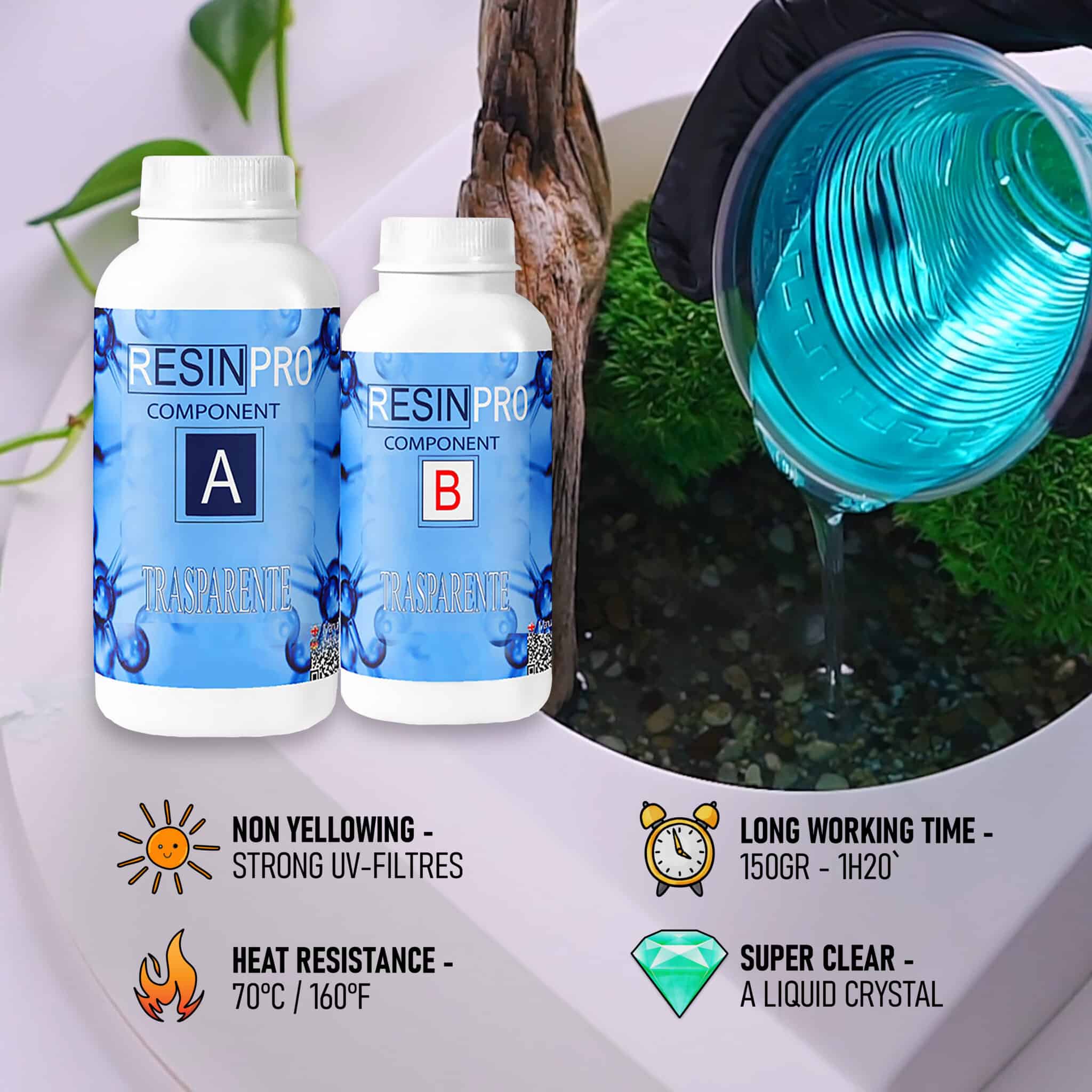
Each resin has its own set of timings. For example, “Trasparente” multipurpose clear epoxy resin offers working and demoulding times suitable for a wide range of crafts and casting projects up to 2cm thick. Fast-cure options like “ICreation” can be demoulded in as little as 6 hours, making them ideal for time-critical projects or quick production cycles. Choosing a resin with the right cure profile can help avoid issues like surface imperfections, softness after unmoulding, or missed working time for detailed artwork. Always check the resin instructions, and plan accordingly to ensure the window for pouring and the time to unmould aligns with your project needs.
When This Matters Most
Timing is especially important for layered projects, large casts, or pieces requiring intricate mixing and embedments. Understanding and respecting cure stages helps prevent common problems such as warping, incomplete curing, or accidental fingerprints on a soft surface.

Related products
Related guides
By recognising the distinct stages of working time, demoulding time, and full cure, you can confidently plan your synthetic resin projects and get the best out of products like multipurpose epoxies. For further details on the characteristics of synthetic resins, see our main FAQ: what are synthetic resins commonly called?