 Free shipping on orders over £29,85
  Shipping Tracking!


 Google
 Facebook
What are synthetic resins commonly called?
Understand synthetic resin terminology and select the ideal type
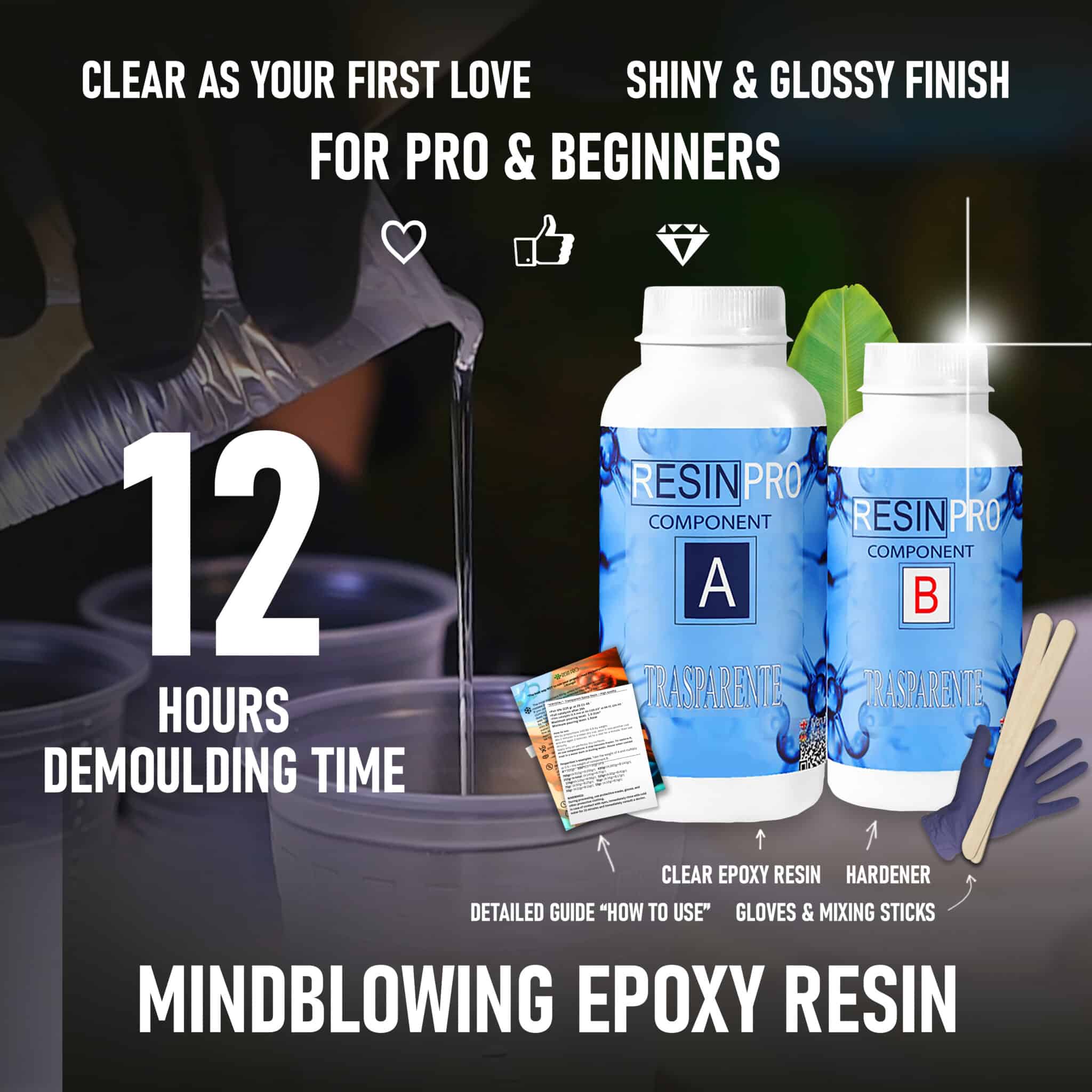

Looking for clarity on the terminology used for synthetic resins, and wondering which type is right for your next creative or woodworking project? This page explains what synthetic resins are commonly called in industry and craft, then compares leading epoxy resin products for casting, deep pours, and quick projects. Whether you are a beginner or a professional, you’ll find practical insight on names, uses, and product selection to suit your specific application.
Understanding Synthetic Resins: Names and Uses
Synthetic resins are broadly referred to as epoxy resins in crafting, woodworking, and industrial contexts. The term covers a vast range of two-part, catalysed plastics valued for their transparency, durability, and strong adhesive properties. Epoxy resin is the most popular synthetic resin for casting, table making, art, jewellery, and coating applications. These products are categorised by their pour depth capability, cure speed, clarity, and targeted uses such as deep river tables or quick craft projects. Understanding the nuances between these epoxies helps you select the optimal resin for your work.
See Synthetic Resin Applications Up Close
Explore finished projects that demonstrate the remarkable versatility of epoxy resins—from jewellery and craft to full-sized river tables. Notice the clarity, layer depth, and professional finishes possible with carefully selected synthetic resins.
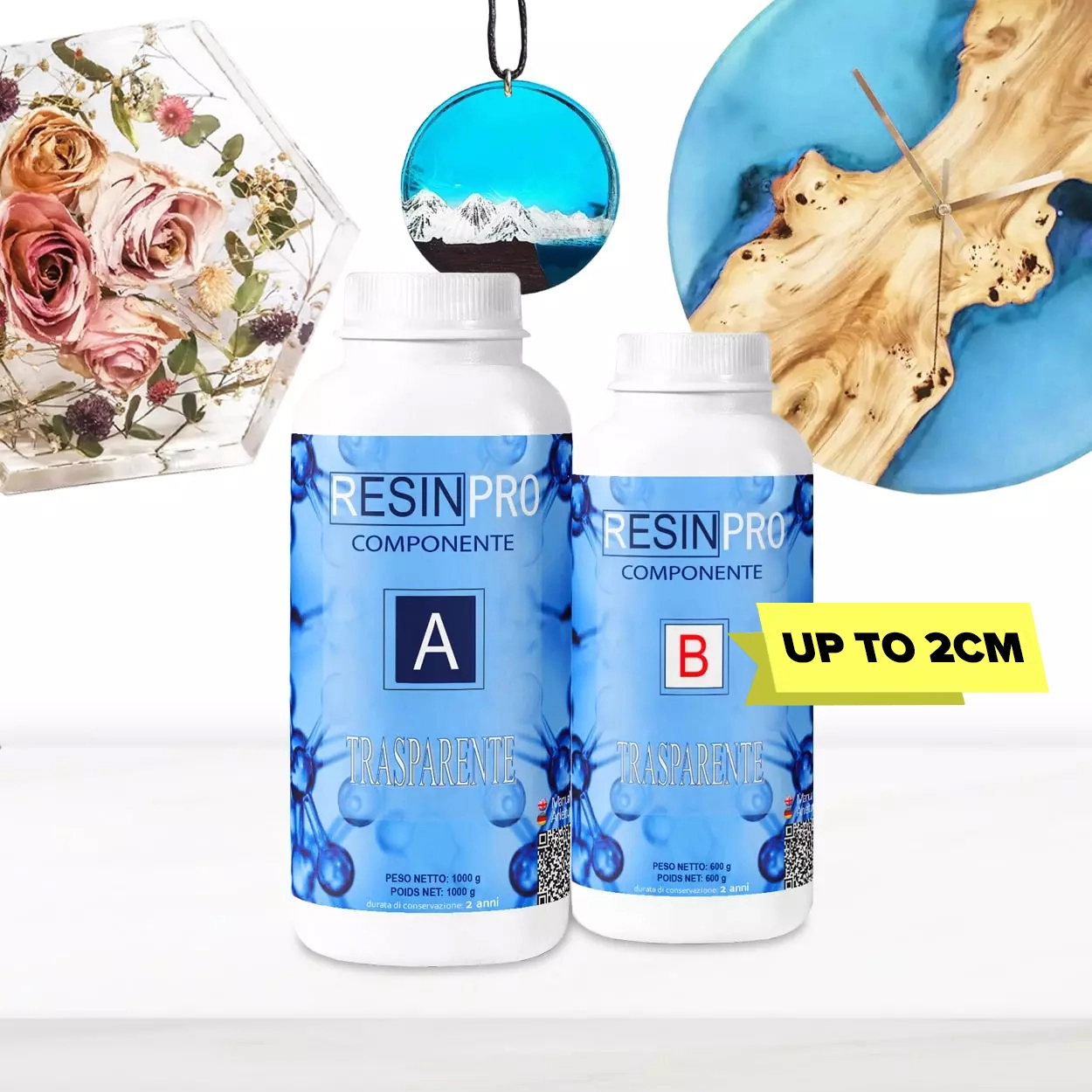
“Trasparente” – Multipurpose Clear Epoxy Resin for Casting Up to 2cm
The “Trasparente” – Multipurpose Clear Epoxy Resin for Casting – Up to 2cm is a widely trusted synthetic resin ideal for creating detailed castings, table surfaces, and a host of artistic projects. With its ultra-clear formula and integrated UV filter, it prevents yellowing and maintains a glossy finish over time. “Trasparente” is especially suitable for pouring layers up to 2 cm in thickness in one go, making it perfect for jewellery, small woodworking, restoration, and crafting. Accessories like mixing sticks and gloves are included, making setup straightforward for both novices and experts.
“Icrystal” – Clear Epoxy Resin, Odourless Formula, Up to 1.5cm
“Icrystal” – Clear Epoxy Resin – Odourless Formula – Up to 1.5cm stands out for its crystal clear finish and ease of use with a simple 2:1 mixing ratio. This synthetic epoxy formulation is perfect for jewellery making, crafting, and seamless coatings on wood, stone, and ceramics. The odourless and VOC-free properties ensure minimal fumes during use, while a built-in UV filter maintains clarity over time. Choose Icrystal for applications needing pours up to 1.5 cm thickness where a clean, professional finish is essential.
“Epoxytable 10-Ten” – Deep Pour Epoxy Resin for Tables, Up to 10cm Casting
The “Epoxytable 10-Ten” – Deep Pour Epoxy Resin for Tables, Up to 10cm Casting is engineered for demanding, large-scale castings such as river tables, creative centrepieces, and thick countertop features. It allows for a single pour up to 10cm due to its low exothermic reaction, preventing overheating and cracking. The super low viscosity formula ensures a bubble-free finish, and robust UV resistance keeps projects clear for years. “Epoxytable 10-Ten” is the synthetic resin of choice for projects needing depth, clarity, and expansive size.
“ICreation” – Fast Epoxy Resin: 6h Demoulding, Transparent Gloss Finish
For time-sensitive projects, the “ICreation” – Fast Epoxy Resin, 6h Demoulding, Transparent Gloss Finish offers a super-fast 6-hour demoulding time and delivers a crystal-clear, self-levelling, glossy surface. With a straightforward 2:1 mixing ratio and UV filter protection, it’s ideal for jewellery, small crafts, and when you need finished pieces in under a day. This synthetic epoxy resin is particularly appreciated by artists, hobbyists, and professionals who want to streamline their workflow without sacrificing transparency or quality.
Choosing the Right Synthetic Resin for Your Project
When selecting a synthetic resin (commonly called epoxy resin), consider the layer thickness you need, desired cure speed, and project end-use. For jewellery and smaller crafts, “Icrystal” or “ICreation” offer optimal clarity in shallow pours and quick results. For small tables or restorations up to 2 cm, “Trasparente” balances clarity and scratch resistance. For large or deep pour artistic pieces and river tables, “Epoxytable 10-Ten” allows the required thickness in a single, bubble-free pour. Always match resin properties to your creative objectives for professional, lasting results.
Pro Tips for Working with Synthetic Epoxy Resins
Plan your pour depth and temperatures carefully to avoid overheating and achieve a flawless finish. For castings above recommended thicknesses, pour in layers and ensure each is fully cured. Always follow product-specific instructions for optimal results and longevity.

- "Trasparente" – Multipurpose Clear Epoxy Resin for Casting – Up to 2cmPrice range: £8.95 through £397.95Clear epoxy resin designed for up to 2 cm casting layers offering a glossy, scratch-resistant finish for various DIY and woodworking uses.
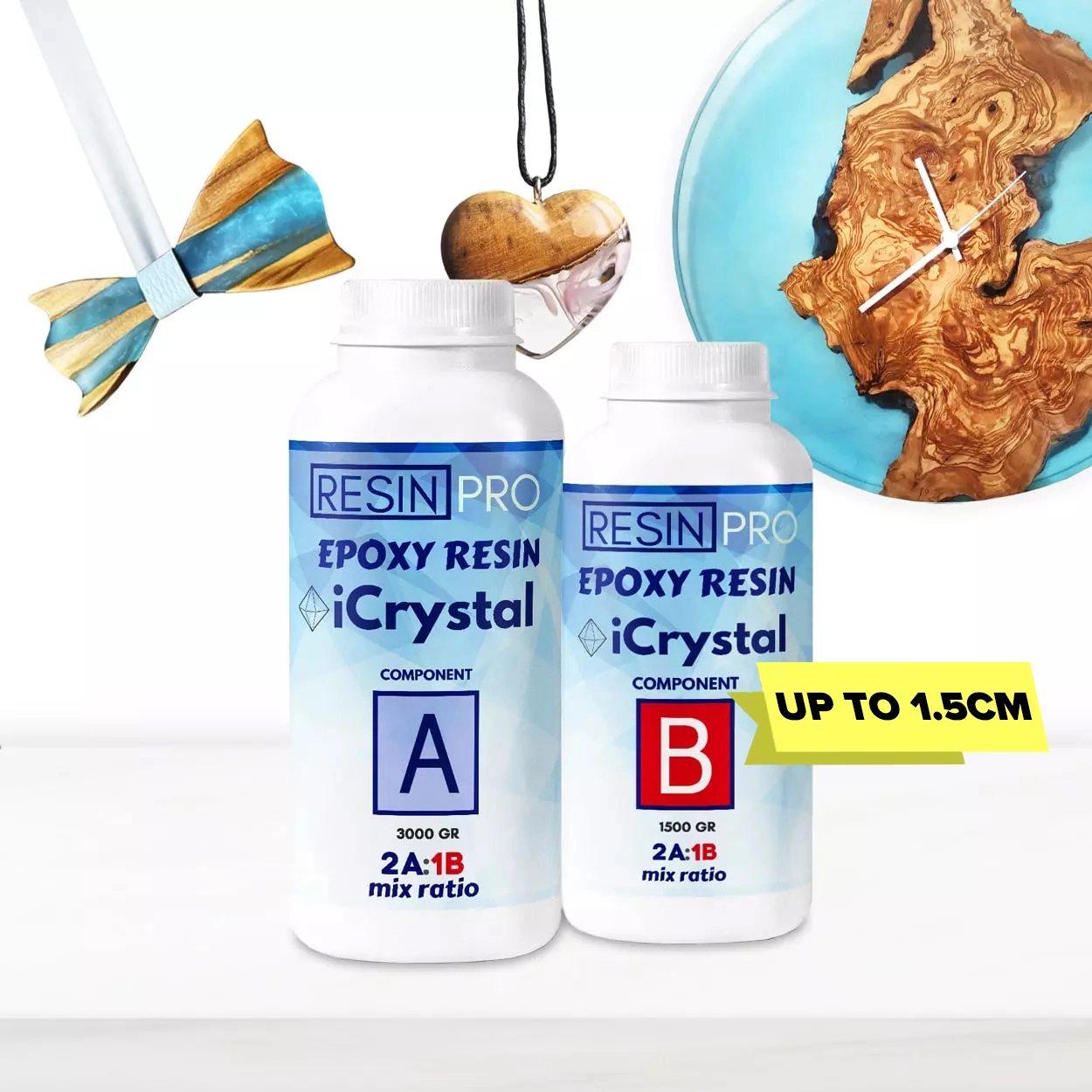 "Icrystal" – Clear Epoxy Resin – Odourless Formula – Up to 1.5cmPrice range: £12.45 through £341.45"Icrystal" – Clear Epoxy Resin provides good quality with perfect transparency and is suitable for use in crafting and finishing surfaces.
 “Epoxytable 10-Ten” – Deep Pour Epoxy Resin for Tables, Up to 10cm CastingPrice range: £35.95 through £351.95Epoxy resin designed for deep pours up to 10cm, suitable for tables and artistic projects with UV resistance and low viscosity.
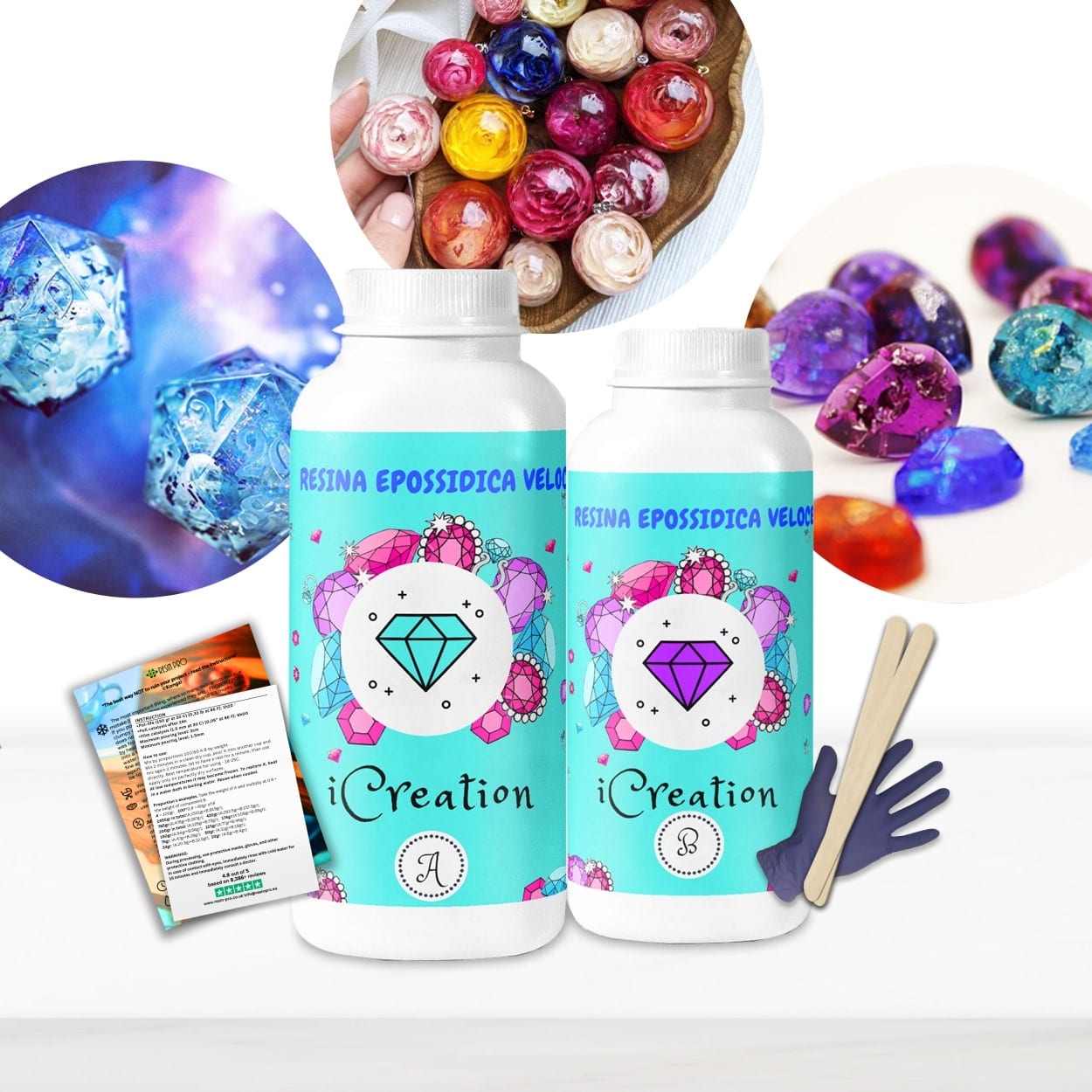 "ICreation" – Fast Epoxy Resin, 6h Demoulding, Transparent Gloss FinishPrice range: £15.95 through £55.95"ICreation" offers a fast-curing epoxy resin with a clear, glossy finish, suitable for jewellery and craft projects.
Frequently Asked Questions
How do I choose the right resin for casting memorial jewellery or small crafts?
Select a multipurpose resin like "Trasparente" for layer thickness up to 2cm or "ICreation" for rapid demoulding in smaller projects.
What synthetic resin should I use for different project sizes and pour thickness?
Use "Trasparente" up to 2cm, "Epoxytable Ten" for deep pours up to 10cm, and "Icrystal" or "ICreation" for thinner or quick-cure requirements.
How can I prevent yellowing or ink-bleed when embedding printed items in synthetic resin?
Seal printed items with acrylic lacquer before embedding in epoxy resin and opt for UV-filtered formulas.
Why might synthetic resin overheat when pouring thick or large batches?
Overheating occurs when pour thickness exceeds recommendations, in hot environments, or when using heat sources that accelerate the cure.
Are these synthetic epoxy resins easy for beginners to use?
Yes, most feature simple mixing ratios and include instructions, making them suitable for newcomers and professionals alike.
On which surfaces can synthetic epoxy resins be used?
They adhere well to wood, ceramics, stone, glass fibre, and other common crafting or construction materials.
What is the difference between working time, demoulding time, and full cure in synthetic resins?
Working time is how long you can manipulate the resin; demoulding time is when items can be removed from moulds; full cure is when the final hardness is reached.