 Free shipping on orders over £29,85
  Shipping Tracking!


 Google
 Facebook
Where should resin cement silk not be applied?
Know the right and wrong surfaces for resin cement silk
When planning a flooring or surface project, choosing the appropriate resin is crucial for durability and the desired appearance. This guide is for anyone considering resin cement silk or similar resins and wants to avoid common application mistakes. We explain which surfaces are suitable, which should be avoided, and why the correct resin makes all the difference to your outcome.
Overview: Where Resin Cement Silk is Unsuited
Resin cement silk and equivalent resins are highly effective for certain flooring solutions, but improper application can result in failure, premature wear, or poor aesthetics. In general, these resins are unsuitable for non-absorbent surfaces, loose gravel, or scenarios where a permeable or specific decorative result is required. Choosing between sealing, binding, or decorative applications is key, and knowing the limits prevents costly errors.

Visual Differences Between Resin Applications
See the difference between sealed concrete, permeable stone surfaces, and artistic resin castings in our gallery. Proper resin selection ensures the right look and performance for every project.
“Resinstone” – For Absorbent Concrete Only
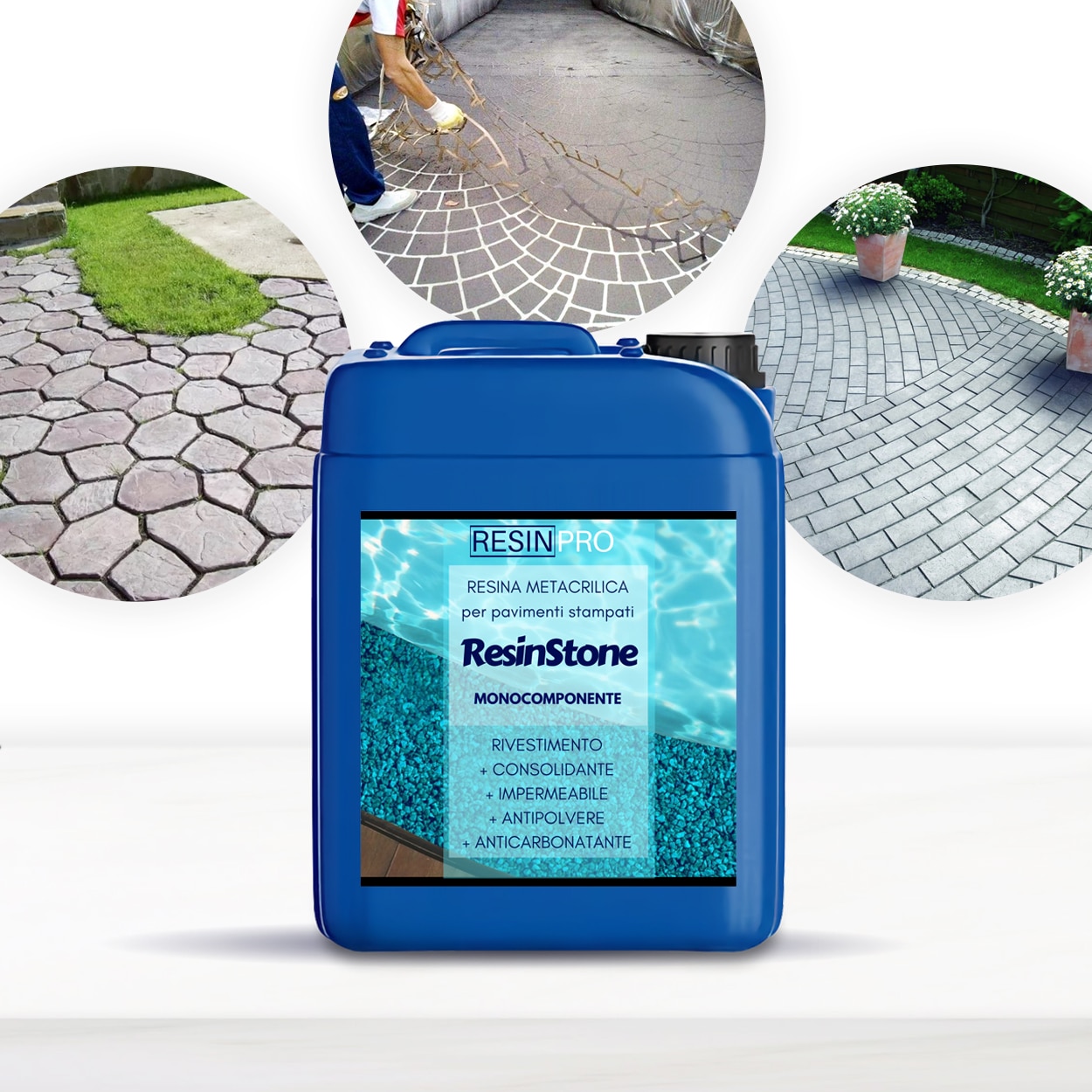
“Resinstone” – One-Component Methacrylic Resin for Concrete Floors and Driveways is designed exclusively for sealing and protecting absorbent concrete surfaces, such as driveways, stamped floors, patios, and garden paths. Waterproof and durable, it penetrates deep into the capillaries of concrete for long-lasting defence against weather, water, and abrasion.
This product should not be applied to loose gravel or any non-absorbent surface. Attempting to use it as a binder for gravel or on surfaces that do not allow absorption will result in weak adhesion and ineffective protection. It is also not suitable where a flexible, permeable, or highly decorative surface is desired.
“Flowstone” – When Permeability Is Required
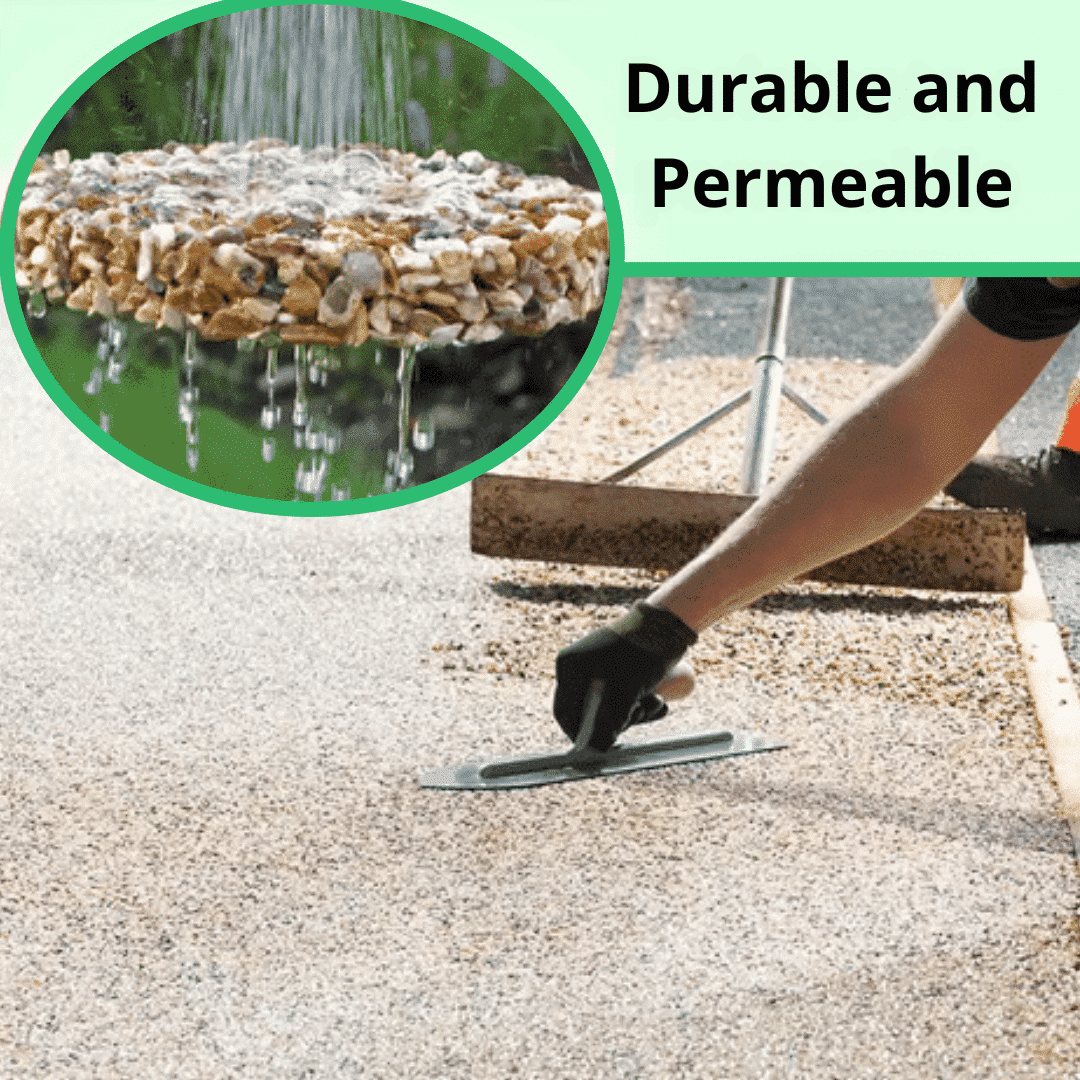
“Flowstone” – Complete Permeable Floor Kit with Pebbles and Resin is a tailored solution for creating permeable, non-slip outdoor surfaces such as footpaths, patios, and driveways. Its design ensures water drains through the floor, preventing puddles and slip hazards. Flowstone is not intended for solid, non-permeable applications or where a typical “cement silk” resin is necessary for surface sealing.
Importantly, the epoxy binder in Flowstone should not be used with white Carrara gravel due to the risk of colour change over time—polyurethane formulas are recommended for white stones. This distinction helps avoid aesthetic deterioration and supports surface longevity.
“Trasparente” Epoxy Binders – Specific Application Needs
For vibrant, decorative surfaces, “Trasparente” – Epoxy Binder for Coloured Pebbles and Grits offers a transparent, UV-stable result. This epoxy resin is suitable for mixing with coloured granules and pebbles prior to application, ideal for decorative permeable paths or feature floors.
However, it must not be poured directly onto loose stones or used for applications requiring thicker pours exceeding 2 cm. The effectiveness comes from thorough pre-mixing with aggregates and proper surface preparation. Avoid using this resin in solid casting projects or on surfaces that are not designed for encapsulated decorative stone systems.
“Trasparente” Casting Resin – Best for Art and Thin Castings
For artistic applications, furniture, river tables, or small coatings, “Trasparente” – Multipurpose Clear Epoxy Resin for Casting – Up to 2cm is your go-to choice. Its crystal-clear, non-toxic formula is perfect for layers up to 2 cm, providing a high-gloss, self-levelling finish.
This resin should not be used for thick castings exceeding 2 cm in a single pour or in projects that require a flexible or highly resilient flexible resin. It is not intended for direct use as a surface binder for aggregates or for large outdoor flooring projects where permeability or mechanical resistance is essential.
Surfaces and Situations to Avoid with Resin Cement Silk
To ensure your surface is long-lasting and aesthetically pleasing, avoid applying resin cement silk (and related resins) on:
- Loose or unbonded gravel—use a dedicated binder like the resin in “Flowstone” after proper mixing
- Non-absorbent surfaces, including dense tiles or sealed substrates
- Indoor floors where permeability is required
- Decorative pebble projects without the correct type of resin binder
- Projects demanding thick pours beyond the rated capacity of the chosen product
Applying these products outside their intended use can result in delamination, yellowing, or a weak surface prone to wear and damage.
Expert Advice: Avoiding Common Resin Application Errors
Always check substrate absorbency, weather conditions, and compatibility with your chosen resin. For technical advice or to clarify if your project requires a binder versus a sealer, our support can help ensure correct results.
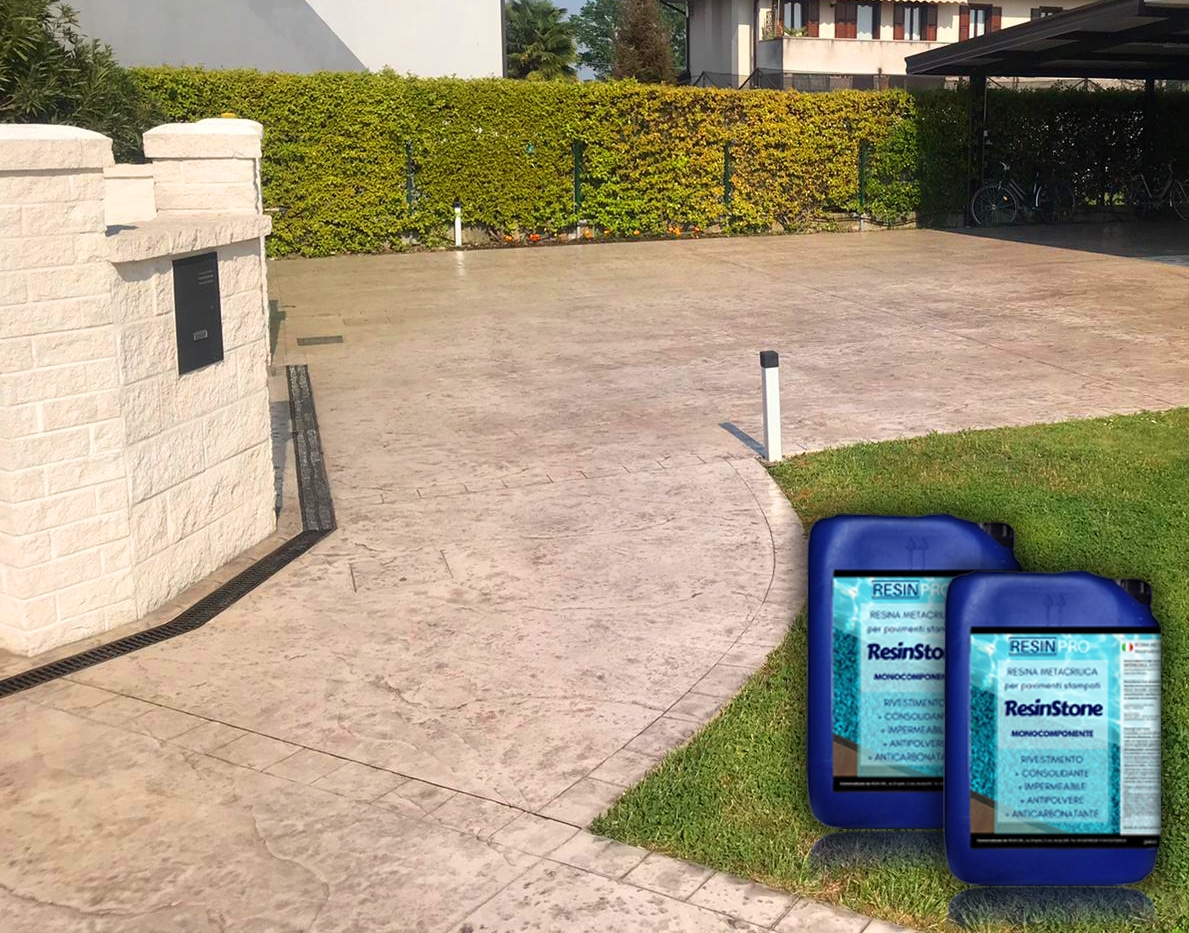
- "Resinstone" – One-Component Methacrylic Resin for Concrete Floors and DrivewaysPrice range: £36.71 through £336.48RESINSTONE is a one-component methacrylic resin designed for sealing concrete floors and driveways with durable, breathable protection.
- "Flowstone" – Complete Permeable Floor Kit with Pebbles and ResinPrice range: £49.95 through £3,915.45"Flowstone" is a kit for durable permeable pebble and resin flooring, designed for driveways and patios in the UK climate with clear application…
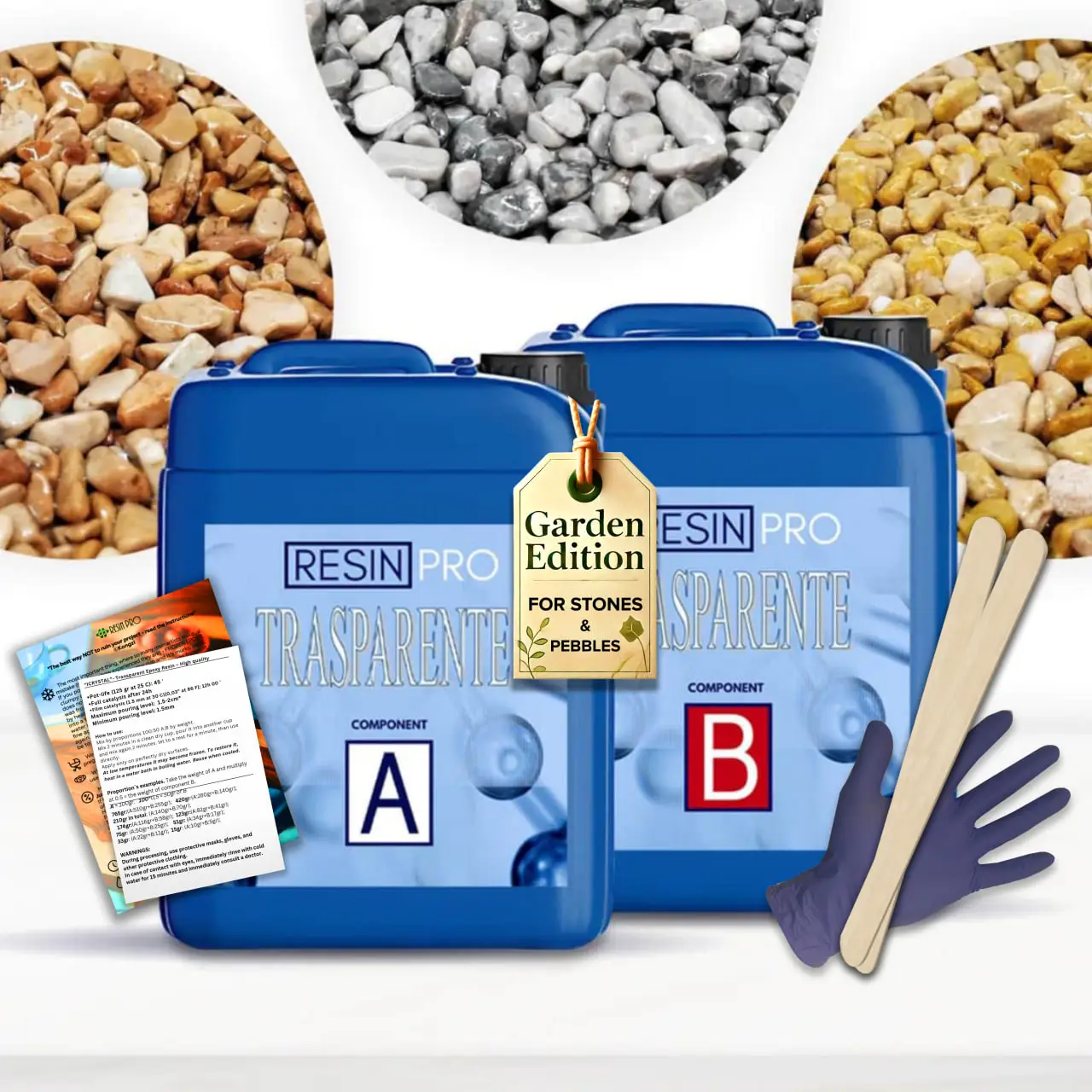 "Trasparente" – Epoxy Binder for Coloured Pebbles and GritsPrice range: £33.45 through £397.95"Trasparente" is a transparent epoxy binder designed for coloured pebbles and grits, providing clear, UV-resistant finishes for decorative floors.
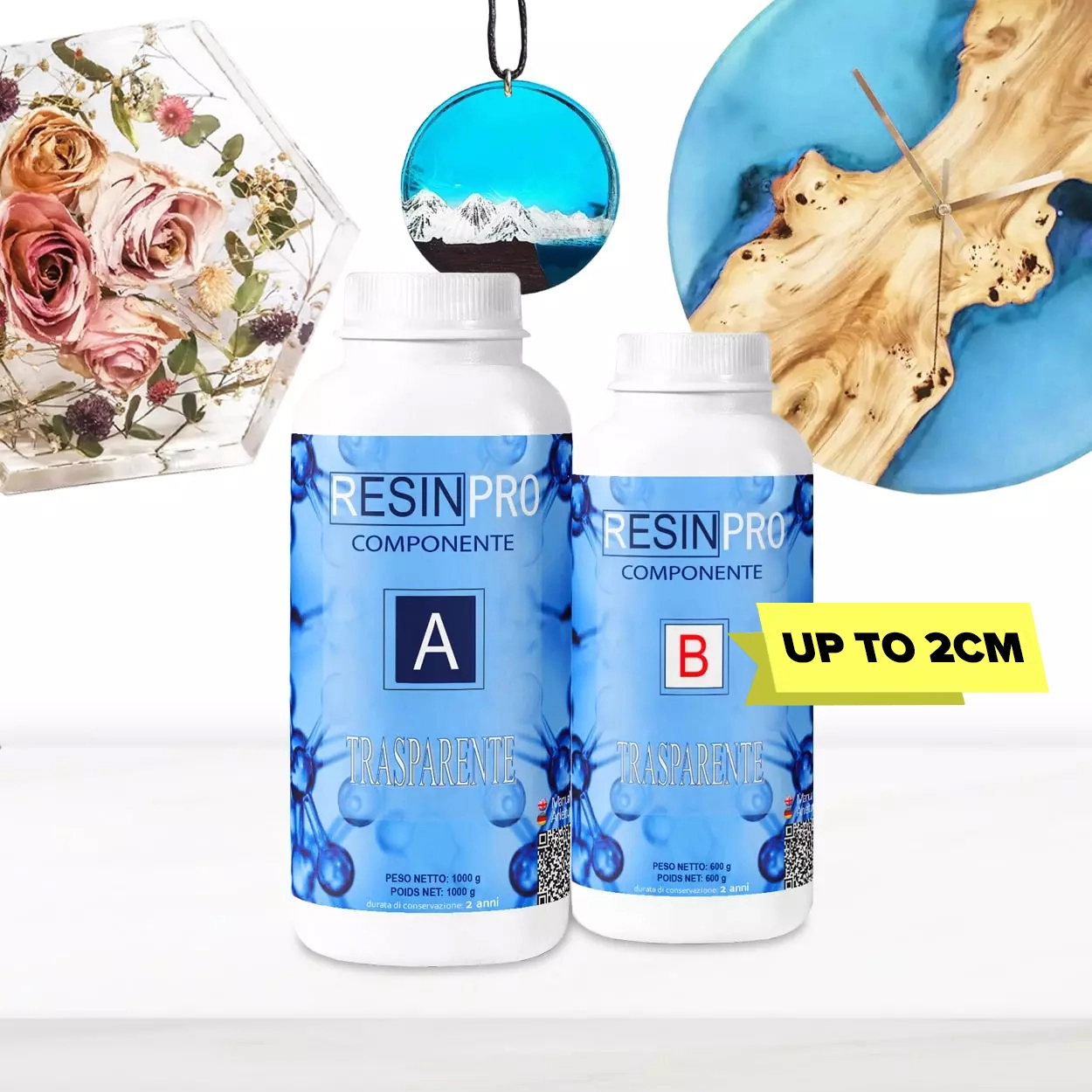 "Trasparente" – Multipurpose Clear Epoxy Resin for Casting – Up to 2cmPrice range: £8.95 through £397.95A clear multipurpose casting epoxy resin up to 2cm thick, designed for detailed castings, tables, and DIY use with a self-levelling finish.
Frequently Asked Questions
Can RESINSTONE be used as a gravel binder for an existing gravel surface?
RESINSTONE should only be used on absorbent concrete, not on loose or existing gravel. For stabilising gravel, use a dedicated stone binder.
Is this product suitable for all coloured pebble sizes?
The epoxy binder is suitable for most coloured aggregates used in decorative floors when mixed at recommended ratios.
Can the epoxy binder be poured directly on loose gravel to reinforce it?
No, epoxy binder must be mixed thoroughly with the stones before application for effective binding and stability.
Should I use epoxy binder for white Carrara gravel floors?
Epoxy binder is not recommended for white Carrara gravel as it may cause yellowing. Polyurethane is a better choice.
Are specific weather conditions required for resin application?
Avoid resin application during very high or low temperatures, and do not apply in high humidity for best results.
What resin is suitable for pouring layers up to 2 cm?
For up to 2 cm pours, use "Trasparente" casting resin. Thicker layers require a resin formulated for deeper pours.
Is "Trasparente" safe and non-toxic for indoor use?
"Trasparente" is certified non-toxic, solvent-free, odourless, and suitable for indoor use on appropriate surfaces.