 Free shipping on orders over £29,85
  Shipping Tracking!


 Google
 Facebook
How to make a furniture coating with epoxy resin?
Step-by-step guide for achieving a durable, glossy resin finish


Transforming furniture with an epoxy resin coating enhances both its appearance and durability. This guide walks you through the essential steps to achieve a smooth, glossy and protective finish on tables, desks, and other flat surfaces. Whether you’re restoring a vintage piece or creating a modern statement, following a clear process ensures optimal results and long-lasting protection.

What You’ll Need
- “Icrystal” – Clear Epoxy Resin – Odourless Formula – Up to 1.5cm – Ideal for thin, clear furniture coatings, particularly smaller surfaces and artistic touches.
- “Trasparente” – Multipurpose Clear Epoxy Resin for Casting – Up to 2cm – Suited to larger surfaces or thicker coats, providing an ultra-clear finish.
- “EpoxyTable 5-Five” – Deep Pour Epoxy Resin for Tables and Large Projects – Up to 5cm – For deep and durable coatings on larger furniture, such as river tables or thick layers.
- “Epoxytable 10-Ten” – Deep Pour Epoxy Resin for Tables, Up to 10cm Casting – For exceptionally thick coatings and artistic effects on statement pieces.
- Mixing containers and stir sticks
- Protective gloves and eye protection
- Spirit level (optional, for even surfaces)
- Masking tape or plastic sheeting for protecting surroundings
- Sandpaper and a lint-free cloth

Visual Inspiration: Resin Furniture Finishes
See how epoxy resin transforms furniture with a glossy, crystal-clear finish. Before-and-after snapshots highlight enhanced wood grain and creative inlays.
Step 1: Prepare the Surface Thoroughly
Clean your work area, ensuring plenty of ventilation and a dust-free environment. Remove all hardware from the furniture and position it on a stable, level surface. Sand the area to remove any old finish, rough up the surface, and wipe down with a lint-free cloth to eliminate dust. Mask off any areas you don’t want coated, such as drawer interiors or undersides, using tape or plastic sheeting.
Ventilation is key—epoxy resins cure best in rooms with airflow, but avoid strong drafts that may introduce dust onto your wet coating.


Step 2: Select and Mix the Epoxy Resin
Choose an epoxy resin based on the thickness of the coating and the type of furniture. For fine, clear layers or small projects, an option like “Icrystal” – Clear Epoxy Resin works excellently. For larger, thicker coatings, opt for “Trasparente” or even “EpoxyTable 5-Five” or Epoxytable 10-Ten for deep pours.
Measure the resin and hardener according to the product instructions—accuracy is crucial. Pour both components into a mixing container and stir thoroughly for the recommended time, scraping the sides and bottom regularly to ensure a consistent blend.
Prepare and test on offcuts first if you’re new to epoxy and want to assess setting times or clarity.
Step 3: Pour and Spread the Epoxy Resin
Slowly pour the mixed resin onto the centre of your furniture surface, letting it naturally flow towards the edges. Use a notched spreader or brush to gently guide the resin and ensure full coverage. Allow excess resin to run off the sides if a full encapsulation is desired. For thicker coatings, ensure you do not exceed the maximum recommended pour depth—if more thickness is needed, pour in multiple layers, allowing each to partially cure between applications.
Work quickly but methodically, using a heat gun or torch in sweeping motions to remove trapped air bubbles from the surface immediately after pouring. Do not linger in one area for too long, or you may scorch the resin.
Choose resin matched to your project thickness—using the right formulation prevents overheating, bubbling, and cloudy results.
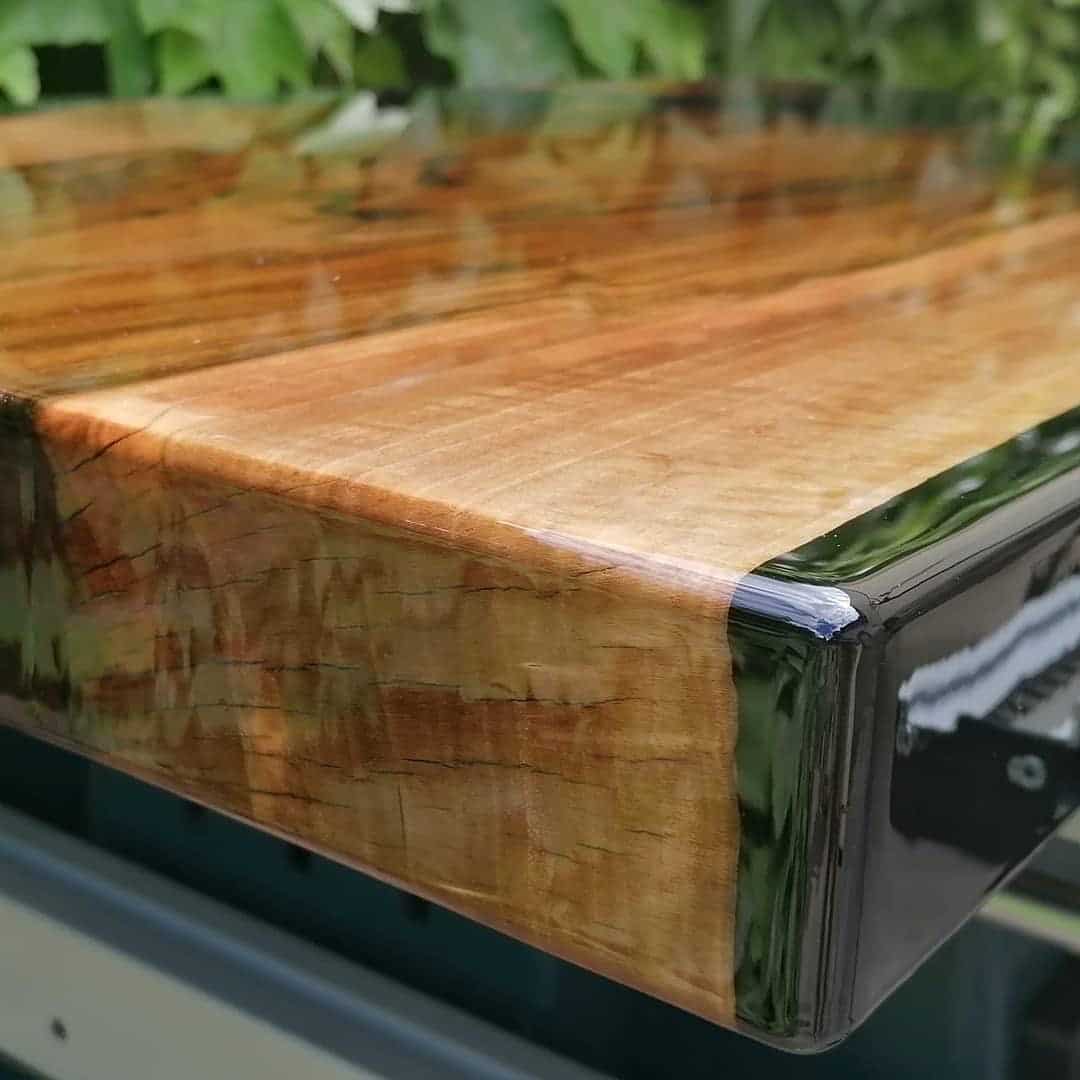

Step 4: Cure, Finish and Protect
Once poured and de-bubbled, protect the curing furniture from dust and contact. Most epoxy resins need to cure undisturbed for at least 24–48 hours (check product instructions for precise times). After full cure, inspect for any imperfections. These can be sanded lightly, then polished or followed by a second thin coat if high gloss is desired.
Install any removed hardware once the epoxy has set fully.
Allow for proper curing time to ensure the surface achieves its full hardness and clarity for long-term durability.
Tips and Common Mistakes to Avoid
- Measure and mix carefully: Uneven ratios or incomplete mixing are top causes of sticky spots or hazy finishes.
- Avoid pouring in high humidity, which can cause cloudiness.
- Don’t rush pouring or spreading—work at a steady pace within the working time of your resin.
- Level and support your work – uneven surfaces cause resin to pool or run off.
- Protect edges and undersides with masking to prevent unwanted drips.
Don’t rush pouring or spreading—the resin’s working time is designed to allow air bubbles to rise and pop before curing begins.

Success Stories: Achieving Durable Resin Surfaces
Project highlights: Tables and statement pieces coated with epoxy resin remain clear, scratch-resistant, and vibrant after years of use. Creative applications include embedded decorations and colourful pigment effects.
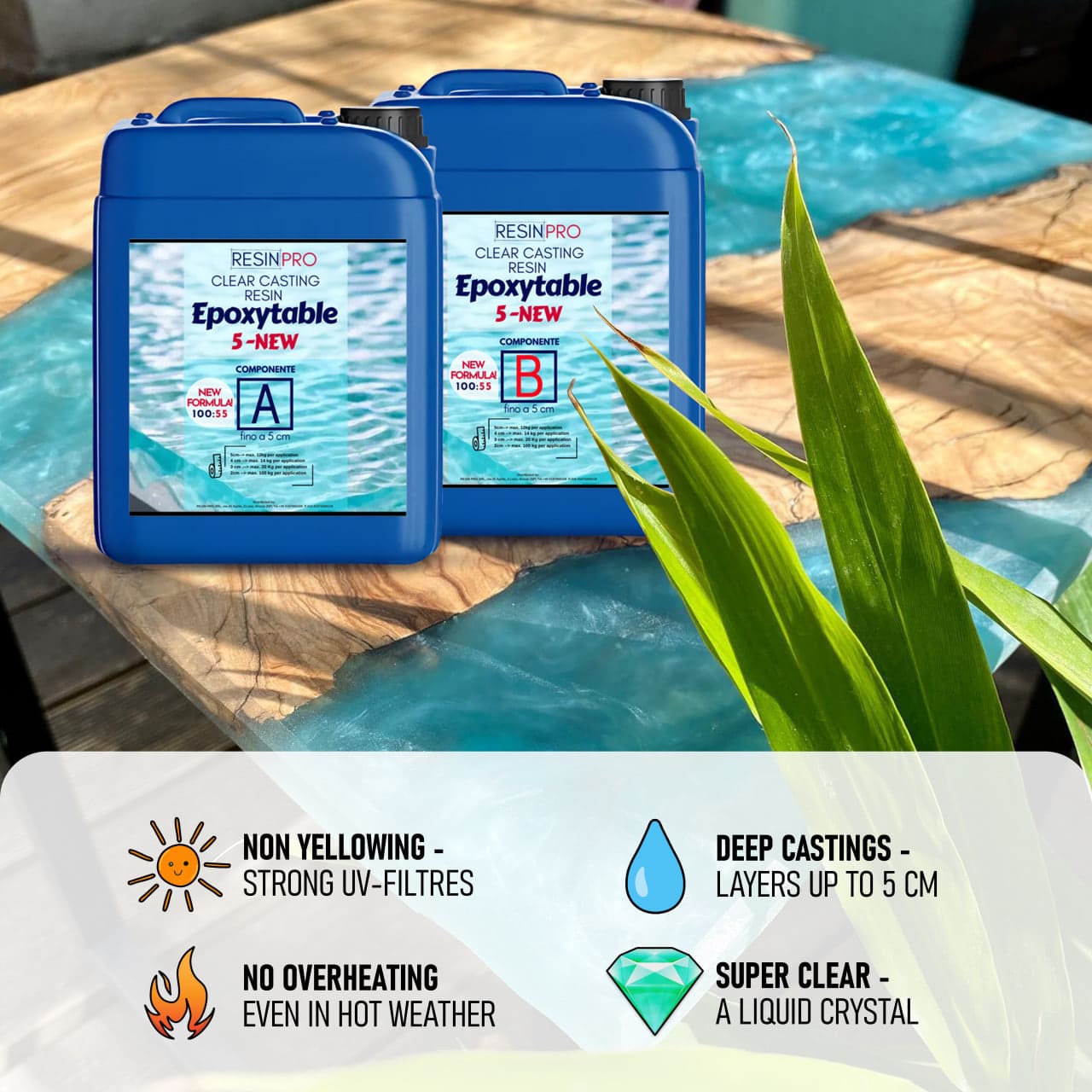
- "EpoxyTable 5-Five" – Deep Pour Epoxy Resin for Tables and Large Projects – Up to 5cmPrice range: £17.95 through £1,154.95"EpoxyTable 5-Five" is designed for deep pour furniture coating projects up to 5cm thickness with durable, clear, and scratch-resistant finish.
- “Epoxytable 10-Ten” – Deep Pour Epoxy Resin for Tables, Up to 10cm CastingPrice range: £35.95 through £351.95Epoxytable 10-Ten is an epoxy resin designed for deep pour furniture coating with casting up to 10cm thickness.
 "Trasparente" – Multipurpose Clear Epoxy Resin for Casting – Up to 2cmPrice range: £8.95 through £397.95The "Trasparente" clear epoxy resin offers a self-levelling, highly transparent finish suitable for detailed furniture and DIY coating projects.
 "Icrystal" – Clear Epoxy Resin – Odourless Formula – Up to 1.5cmPrice range: £12.45 through £341.45"Icrystal" Clear Epoxy Resin offers high transparency and scratch resistance, suitable for furniture coatings and artistic projects.
Frequently Asked Questions
Can I use epoxy resin on any type of furniture?
Epoxy resin works on most solid surfaces including wood, MDF and certain composites. Make sure the material is clean, dry and stable before coating.
How thick should the epoxy coating be?
Depending on the product, a single pour is typically 1–5cm. For thicker finishes, apply in multiple layers and ensure each layer cures properly.
How do I prevent bubbles in epoxy furniture coatings?
Mix resin and hardener thoroughly, pour slowly, and use a heat gun to eliminate surface bubbles immediately after pouring.
Does epoxy resin turn yellow over time?
Quality epoxy resins have UV filters to minimise yellowing. Keep coated furniture out of direct sunlight for best longevity.
Is epoxy resin scratch resistant?
Most furniture epoxy resins offer high scratch resistance to protect against daily wear, but always use coasters and pads for best protection.
Can I use pigments or inclusions with epoxy furniture coatings?
Yes, many users add pigments, glitter or decorative items to customise the finish. Always check compatibility before mixing.
How do I repair damaged epoxy coating on furniture?
Light damage can be sanded smooth and recoated with a thin layer of fresh epoxy resin for a seamless repair.