 Free shipping on orders over £29,85
  Shipping Tracking!


 Google
 Facebook
← Back to How to catalyse resin?
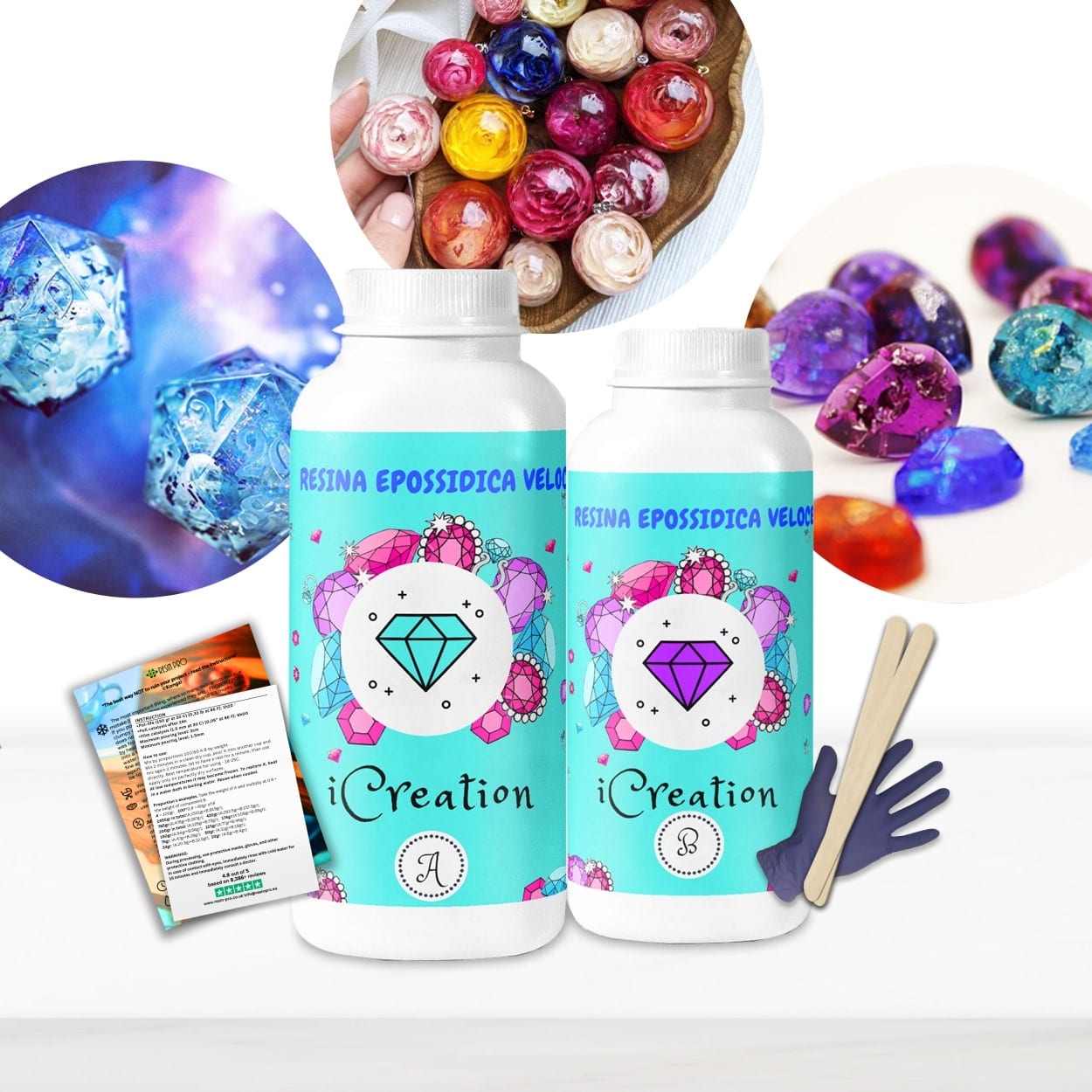
Getting the right ratio when catalysing resin ensures a reliable cure. Both too little and too much catalyst can cause curing issues, affecting your project’s strength, finish, and clarity. Here’s how to avoid common mistakes and achieve the best results.
Why Mixing Ratios Matter
Each resin system is formulated for a specific ratio of resin to hardener (or catalyst). Under-catalysing means not enough hardener is added, which can lead to tacky, slow-curing or even permanently soft results. Over-catalysing, on the other hand, may cause overheating, cracking, cloudiness, or a brittle finish. Always refer to the product instructions for the recommended ratio; for instance, the ICreation Fast Epoxy Resin uses a simple 2:1 mixing ratio, making accurate measurement easy.
Practical Tips for Perfect Mixing
- Measure precisely – Use accurate digital scales or marked mixing cups.
- Mix thoroughly – Scrape sides and base of your mixing vessel to ensure complete blending.
- Check temperature – Work in a stable environment; extremes in temperature can slow curing or create bubbles.
If you need fast turnaround, consider fast-curing resins like ICreation, designed for transparent, glossy projects with rapid 6-hour demoulding.
When This Matters Most
Accurate catalysing is essential for large river tables, deep castings, and projects where clarity and durability are critical. For deep pours, choose purpose-made resins such as EpoxyTable 5-Five or EpoxyTable 10-Ten, both suitable for high-thickness applications when mixed as directed.
Related products
Related guides
Following the correct catalysing methods helps you achieve stable, professional results. For more advice on how to catalyse resin for your next project or troubleshooting, visit our main How to catalyse resin? guide.