 Free shipping on orders over £29,85
  Shipping Tracking!


 Google
 Facebook
← Back to How to make jewellery with resin?
Choosing the right resin is the foundation for making beautiful handcrafted jewellery. With a few main resin types to select from, it pays to know which best matches your style and project needs.
Understanding Your Options: Epoxy vs UV Resin
Epoxy resin and UV resin are the two most popular choices for jewellery making. Epoxy resin is ideal for deeper pours, such as pendants and layered pieces. It’s mixed in equal parts (usually a 1:1 ratio), cures over several hours, and offers superb clarity, making it perfect for embedding decorative items like dried flowers. One excellent starter option is the Evershine Collection Epoxy Resin Kit, which supplies clear resin and accessories in one convenient box.
UV resin, meanwhile, cures rapidly under a UV lamp—typically within 2–3 minutes. It’s great for thin layers, small charms, or when you want to finish a piece quickly. UV resins can give crisp, glossy results with minimal waiting.
How to Choose the Best Resin for Your Project
Decide based on your project’s scale and workflow. If you enjoy making custom pendants, adding inclusions, or crafting multi-layered jewellery, epoxy resin offers flexibility and depth. Kits with simple mixing ratios help beginners avoid measurement errors.
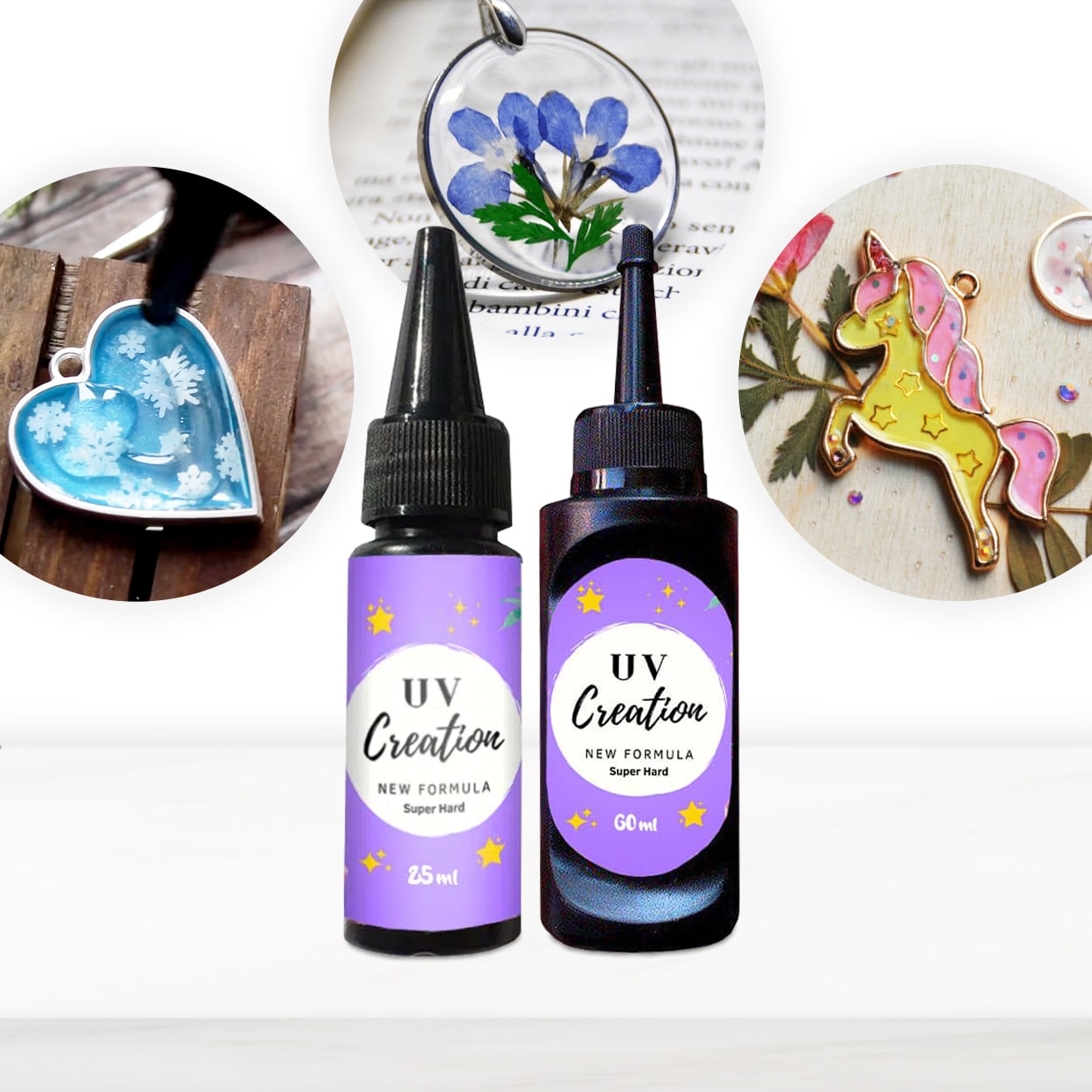
If you prefer to create small, flat pieces or need results fast, a ready-to-use UV resin such as UV–Creation is efficient and delivers a strong, crystal-clear finish. For UV resin, pairing with compatible open bezels can expand your creative options.
When This Matters
Knowing which resin to use is especially important if you’re on a tight schedule, want to create layered or intricately detailed jewellery, or prefer a ready-to-use product. UV resin minimises downtime, while epoxy resin is better for more complex pour-and-cure designs.
Related products
Related guides
Choosing between epoxy or UV resin sets the tone for your jewellery making experience. To explore more techniques and tips, see our full guide on how to make jewellery with resin.