 Free shipping on orders over £29,85
  Shipping Tracking!


 Google
 Facebook
← Back to How to Make a Wood and Resin Table
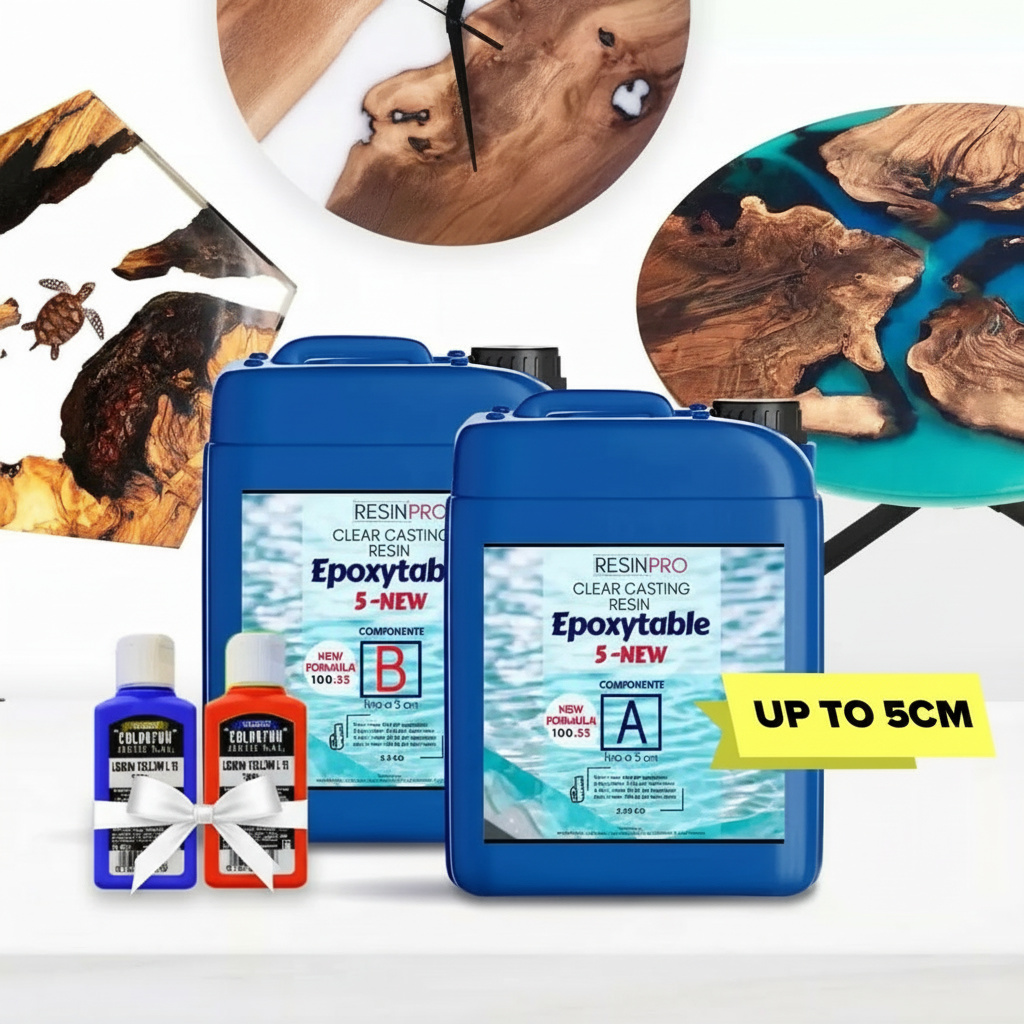
Deep resin pours are a striking feature of wood and resin tables, but they require patience and the right methods. Rushing the curing process can lead to complications that compromise the clarity, strength, and finish of your project.
The Science Behind Slow Curing
When working with thick or deep layers of epoxy resin, the mixture generates heat as it cures—a process known as exothermic reaction. Fast curing can cause excessive heat build-up, leading to yellowing, cracking, or even warping of your table. Choosing a resin formulated for deep pours, such as EpoxyTable 5-Five, helps regulate the curing time and temperature, producing a more stable and flawless result.
How to Pour Deep Resin Safely
- Use the right resin: Select a deep pour epoxy specifically designed for thick layers (up to 5cm for EpoxyTable 5-Five, or up to 10cm for Epoxytable 10-Ten).
- Pour in stages: For tables with a casting depth beyond what a single pour allows, pour the resin in layers, letting each partially cure before the next to avoid excess heat.
- Monitor conditions: Controlled room temperature and using mould release film can improve final results and ease demoulding.
When Slow Curing Matters Most
Slow curing becomes especially important for large surfaces, thick river runs, or any casting where visual clarity and durability are paramount. Attempting to speed things up can leave you with a cloudy, cracked, or uneven surface, undermining the effort invested in your table project.
Related products
Related guides
Taking the time for a proper slow cure ensures your wood and resin table project achieves both beauty and durability. Learn more about safe pouring techniques in our full guide: How to Make a Wood and Resin Table.