 Free shipping on orders over £29,85
  Shipping Tracking!


 Google
 Facebook
← Back to How to epoxy coat wood?
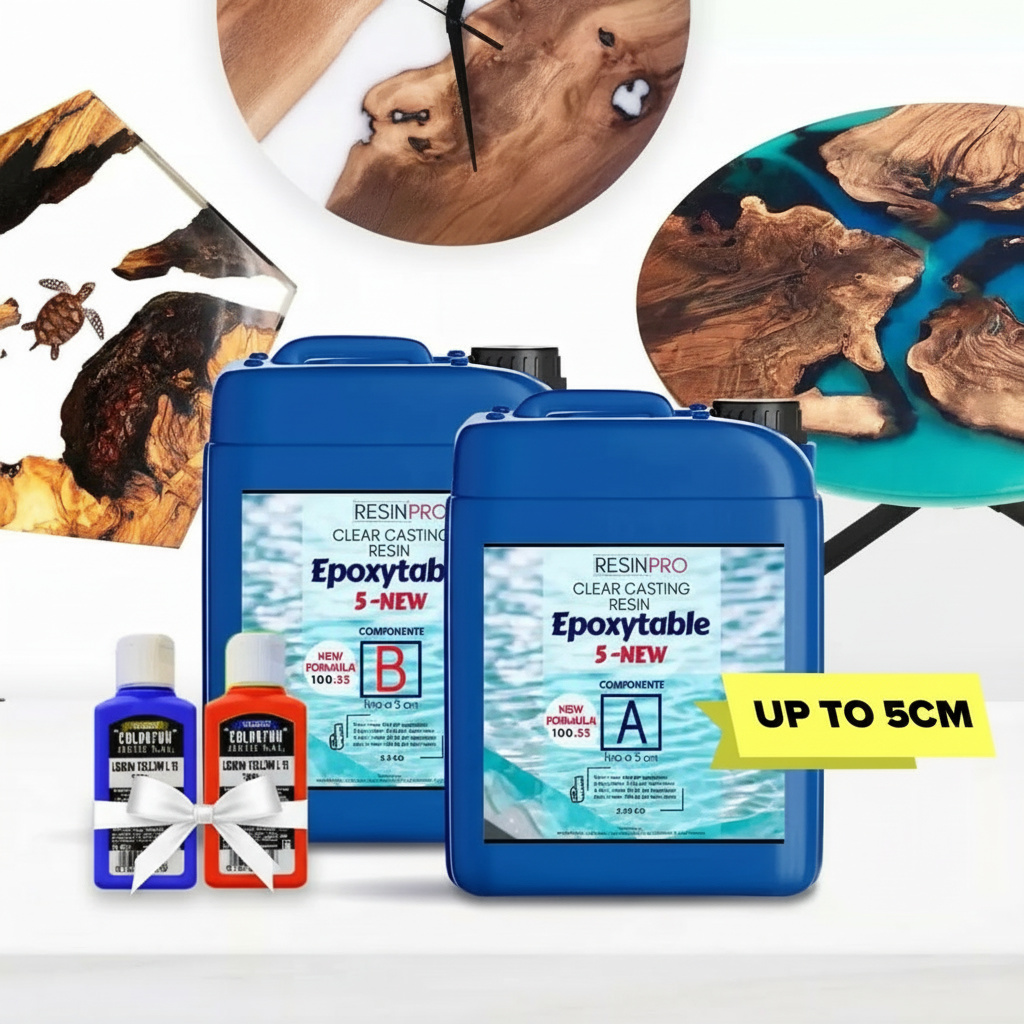
For wood epoxy projects, patience is key—especially when building up multiple layers. Rushing the drying stage between coats can lead to cloudy results, poor adhesion or even long-term surface issues.
Why Allow Full Curing?
Each epoxy layer starts as a liquid, undergoes a gel phase, and finally hardens in what’s known as the curing process. If you add another layer before the previous one has fully cured, you risk trapping moisture or solvents, resulting in a tacky surface and cloudiness. Most high-quality resins, such as EpoxyTable 5-Five, are formulated to level out smoothly, but only when given the necessary time to set hard.
Practical Tips for Layered Epoxy Coating
- Read the manufacturer’s instructions: Always follow the recommended waiting times on your chosen epoxy. Some formulas may require up to 24 hours or more to reach full cure between layers.
- Test before recoating: Lightly touch the surface; it should be hard, not sticky or soft, before applying the next pour.
- Maintain the right environment: Steady temperatures and a dust-free workspace support a clear, smooth finish throughout the curing process.
When This Matters Most
Layering too soon is particularly problematic when embedding items, creating river tables, or aiming for a crystal-clear look. Proper curing between layers ensures lasting strength and consistent shine, while also helping to avoid delamination.
Related products
Related guides
Allowing full curing between layers is a simple step that ensures the professional finish and durability you want for every wood epoxy project. For detailed guides and more tips, visit our main article on how to epoxy coat wood.