 Free shipping on orders over £29,85
  Shipping Tracking!


 Google
 Facebook
How to epoxy coat wood?
Achieve a flawless epoxy wood finish with this step-by-step guide


Epoxy coating delivers a durable, high-gloss finish that both protects and enhances the beauty of wood. Whether you’re working on a statement piece of furniture, reviving a wooden countertop, or undertaking detailed artistic work, a flawless epoxy coat transforms ordinary wood into a beautiful, hard-wearing surface. This guide covers every step – from preparing your workspace to achieving a crystal-clear, bubble-free finish – so you can epoxy coat wood confidently for stunning professional results.
What You’ll Need
- “EpoxyTable 5-Five” – Deep Pour Epoxy Resin for Tables and Large Projects – Up to 5cm for deep coating or casting projects.
- “EpoxyWood” – Wood Restoration Epoxy Resin for Deep Penetration and Waterproofing for reinforcing, sealing, or restoring porous and aged timber.
- “Trasparente” Epoxy Resin Kit 800g + Mica Powder 10g – 10 Colour Variations for ultra-clear, glossy surface finishes or small to midsize wood projects.
- Protective gloves, mixing containers, measuring scales, nitrile gloves, stirring sticks, spirit level, sandpaper (various grits), painter’s tape, plastic sheeting, and a dust-free workspace.

Workspace Preparation and Safe Handling
Set up your workstation in a well-ventilated, dust-free room covered with plastic sheeting or disposable table covers. Wear nitrile gloves, and always read the safety instructions before handling any resin or hardener. Good preparation minimises contamination and supports a smooth application from start to finish.

Step 1: Prepare the Surface
Proper surface preparation is vital to ensure the epoxy adheres as intended and forms a flawless finish. Begin by sanding your wood thoroughly using progressively finer grits until the surface feels very smooth. Eliminate any dust, debris, grease or previous finishes with a lint-free cloth and a suitable cleaner. Pay particular attention to moisture content—Ensure your wood is fully dry and clean before starting, as trapped moisture or dust can cause hazing or poor adhesion in the finished surface.
Step 2: Seal and Reinforce the Wood
If your timber is particularly absorbent, aged, or porous, apply a thin layer of sealing epoxy to act as a barrier. This helps prevent air bubbles emerging during your main pour and stabilises the wood structure. For restoration work, or where deep penetration is desirable, using “EpoxyWood” – Wood Restoration Epoxy Resin for Deep Penetration and Waterproofing allows for excellent reinforcement and waterproofing, especially on older or exterior surfaces. Allow all seal coats to cure fully before proceeding.
Step 3: Mix and Apply Epoxy Resin
Carefully measure your epoxy resin and hardener according to your chosen product’s instructions, using accurate scales for the best results. Pour both parts into a clean container. Mix epoxy thoroughly and avoid rapid, forceful stirring to limit air entrapment. Once the mixture is homogenous and clear, pour slowly over your prepared wood. Use a notched trowel or spreading tool as needed.
For deep-coating or pouring projects, such as river tables, “EpoxyTable 5-Five” – Deep Pour Epoxy Resin is ideal for layers up to 5cm, delivering excellent clarity and minimal bubbles. For fine finishes or smaller works, “Trasparente” Epoxy Resin Kit produces a brilliant, glass-like shine.

Step 4: Level, Cure, and Re-coat
Work in a dust-free, temperature-stable environment to avoid dust and blemishes. Use a spirit level to check the flatness of your coated surface, as epoxy is self-levelling. Remove surface bubbles with a heat gun or torch held several centimetres above the resin shortly after pouring. Don’t rush drying—allow full curing between layers; never apply a fresh coat before the previous layer has set as specified in product guidelines. For multi-layered works, Sand between coats for smooth adhesion using fine grit sandpaper, followed by thorough dust removal before the next pour.

Tips, Common Mistakes, and Troubleshooting
- Always follow manufacturer’s mix ratios and curing times for best results.
- To avoid trapped air and “fish eyes,” run a blow torch lightly over the surface soon after pouring.
- Beware of humidity or cold; low temperatures can affect curing and clarity.
- Sanding between coats ensures new resin adheres perfectly.
- Edge drips can be caught with painter’s tape underneath project borders.
Enhanced Results: Achieving a Professional Epoxy Finish
If you’re aiming for artistic effects, blend in mica powder or colour pigments prior to pouring, as with the “Trasparente” Epoxy Resin Kit. For heavy-duty or outdoor use, extra reinforcement with “EpoxyWood” can protect timber exposed to moisture long-term. Take your time through each phase for the best clarity, adhesion and durability.
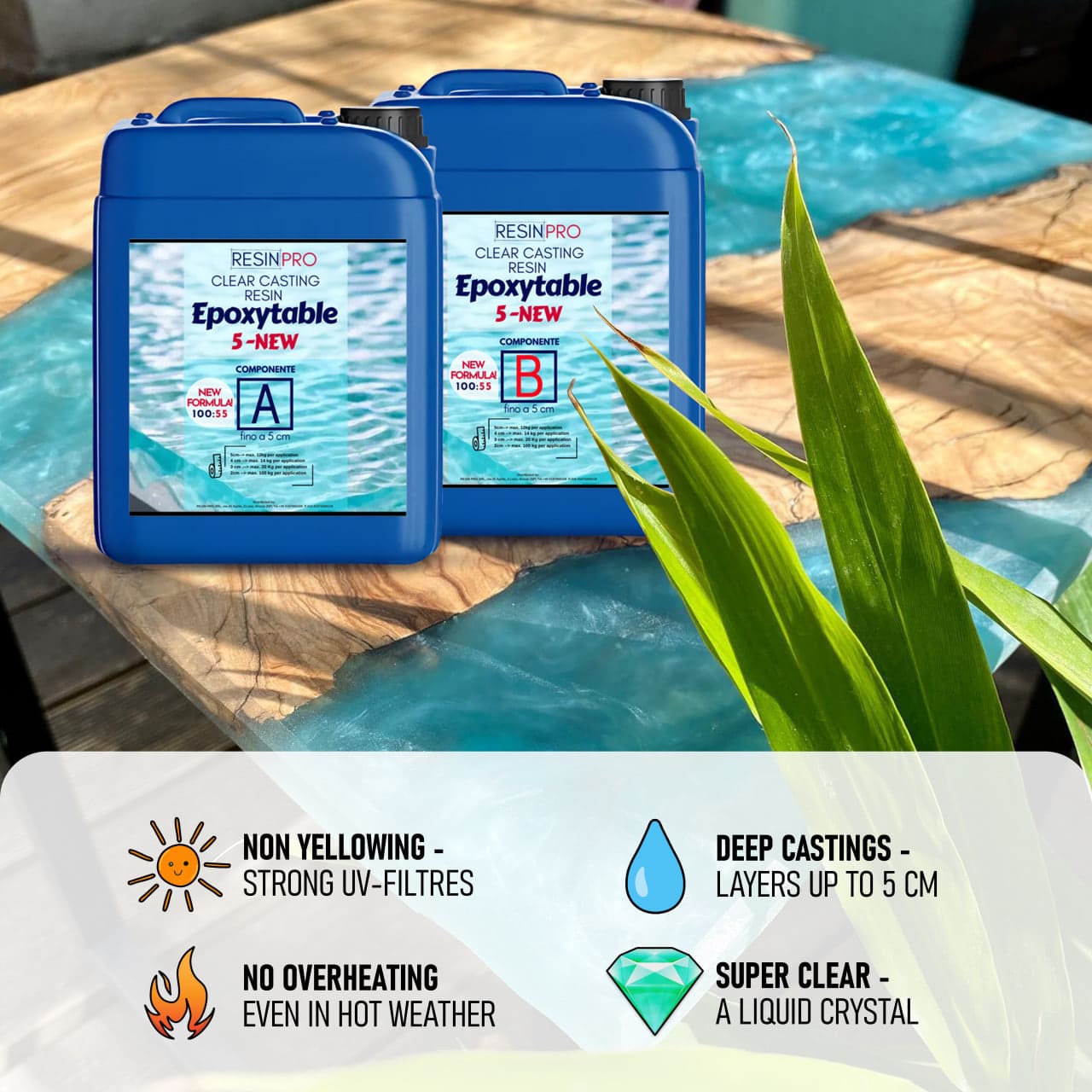
- "EpoxyTable 5-Five" – Deep Pour Epoxy Resin for Tables and Large Projects – Up to 5cmPrice range: £17.95 through £1,154.95"EpoxyTable 5-Five" offers a bubble-free, low viscosity epoxy resin suitable for deep pouring applications up to 5cm thickness.
- “Epoxytable 10-Ten” – Deep Pour Epoxy Resin for Tables, Up to 10cm CastingPrice range: £35.95 through £351.95Epoxy resin designed for deep pours up to 10cm, suitable for creating tables and artistic projects with non-yellowing and bubble-free finish.
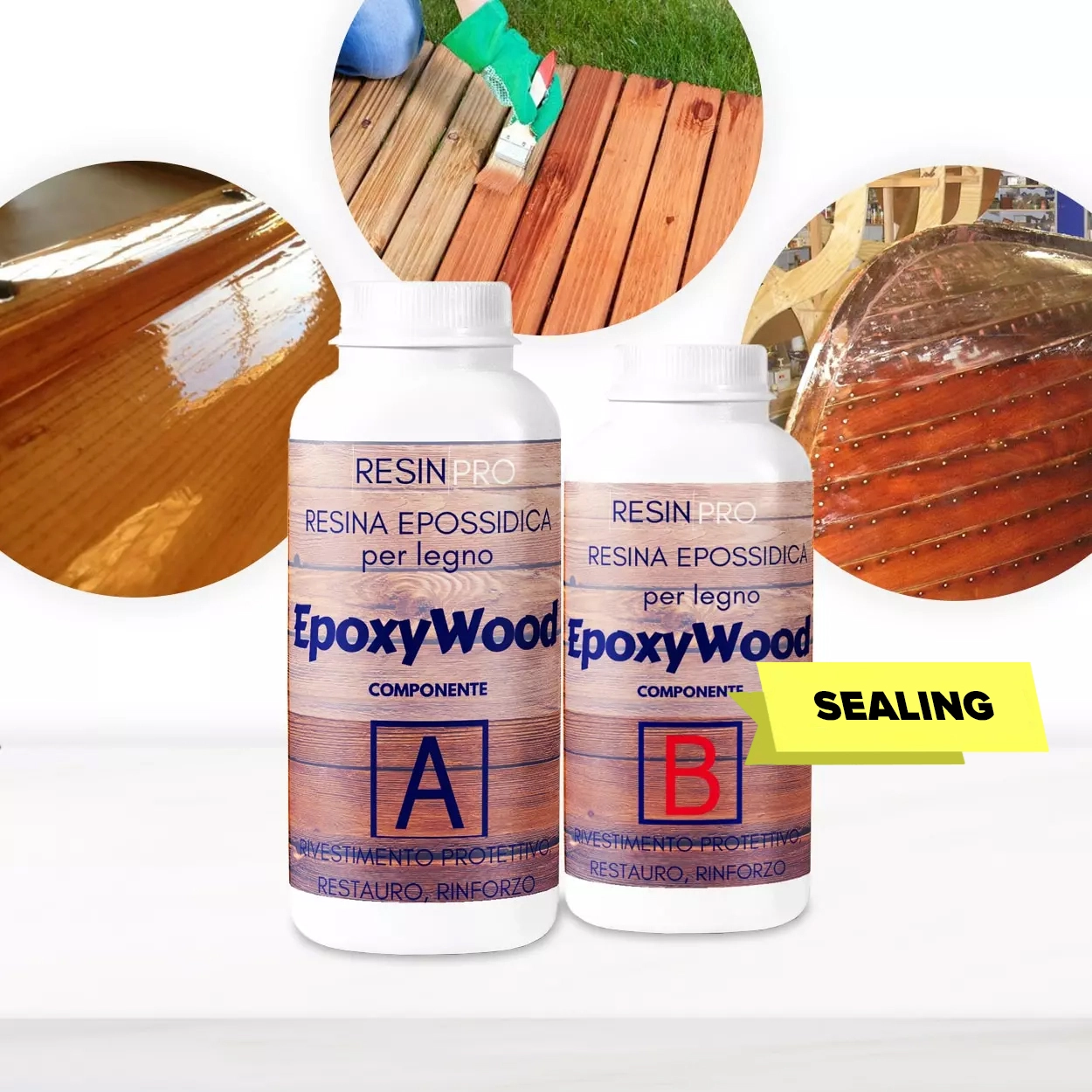 "EpoxyWood" – Wood Restoration Epoxy Resin for Deep Penetration and WaterproofingPrice range: £27.95 through £41.95EpoxyWood is designed for wood restoration with deep penetration and waterproofing, enhancing wood while maintaining its natural appearance.
 "Trasparente" Epoxy Resin Kit 800g + Mica Powder 10g – 10 Colour Variations£20.95"Trasparente" kit offers ultra clear, multipurpose epoxy resin suitable for wood coating and DIY projects under the theme How to epoxy coat wood?
Frequently Asked Questions
What type of epoxy is best for deep pour wood applications?
For deep coatings or castings up to 5–10cm, select a dedicated deep pour epoxy resin formulated for thick layers without overheating or bubbles.
How can I prevent bubbles when coating wood with epoxy?
Seal the wood first to block air release, mix resin slowly to avoid incorporating bubbles, and remove surface bubbles with gentle heat after pouring.
Is epoxy safe for finishing wooden tabletops?
Yes, modern epoxy resins are safe when fully cured, providing a tough and hygienic surface for wooden tables and counters.
How long does epoxy need to cure on wood?
Most epoxies require at least 24–48 hours for initial curing and up to 7 days for full mechanical hardness depending on product and thickness.
What should I do if my epoxy stays sticky or soft?
This usually means the mix ratio was off or curing conditions were poor. Remove the sticky resin and re-coat using correct measurements and conditions.
Can epoxy be sanded or recoated on wood?
Yes, once fully set, epoxy can be sanded smooth and recoated to improve finish or correct imperfections. Always remove dust before recoating.