 Free shipping on orders over £29,85
  Shipping Tracking!


 Google
 Facebook
← Back to How to calculate the amount of epoxy resin?
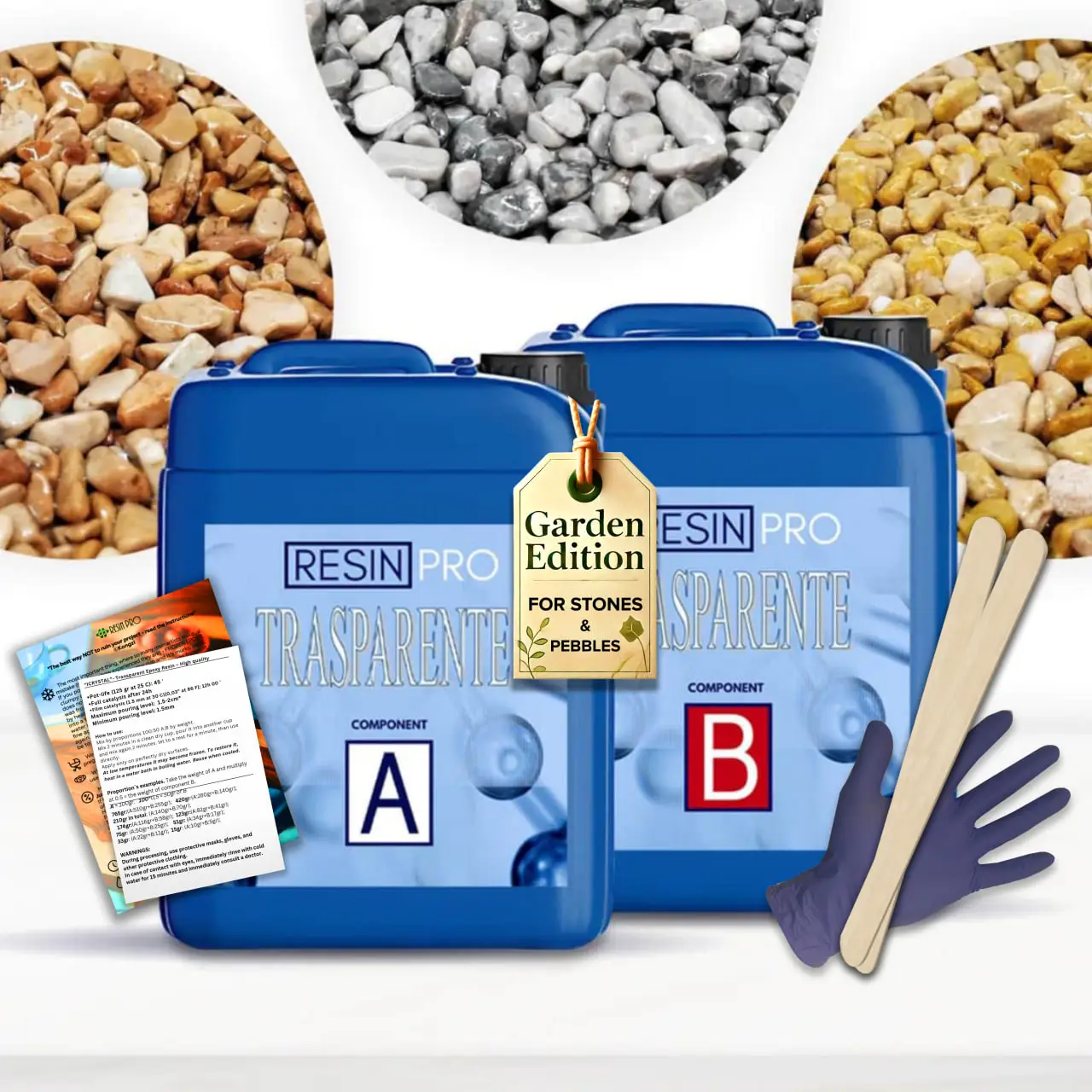
Working out how much epoxy binder to use with decorative pebbles is essential for a strong, durable pebble floor. Getting the ratio right ensures a long-lasting, attractive surface without excess waste or cost.
How Much Epoxy Binder Do You Need?
The typical recommendation is to use epoxy binder at about 3% of the total weight of your pebbles or decorative aggregate. For example, for every 20–25kg of coloured stones, between 400g and 800g of epoxy resin will be required. The exact amount depends on the granule size—finer gravel usually needs a little more resin for full coating, while coarser stones may require slightly less.
- Small pebbles (more surface area): closer to 800g per 25kg
- Larger/granular stones: around 400–600g per 25kg
Mixing and Application Guidance
For best results, the epoxy binder should be thoroughly mixed with the dry, clean pebbles until all surfaces are evenly coated. Only after uniform mixing should the blend be poured and spread to your prepared area. This promotes strong bonding and discourages loose stones after curing. Always check the manufacturer guidance for working times and apply within the recommended temperature range to ensure proper curing. If you’re new to resin flooring, kits like the Flowstone Complete Permeable Floor Kit offer all-in-one solutions with pre-measured resin and stones.
When This Matters: Choosing Binder Type and Colour
It’s especially important to follow these guidelines when using coloured or decorative pebbles, as an incorrect ratio can cause patchy results or weak bonding. For darker or vibrant aggregates, a clear, UV-resistant epoxy like Trasparente Epoxy Binder will keep colours vivid for longer, while white stones may benefit from specialised polyurethane binders.
Related products
Related guides
Getting your epoxy binder ratio right is the foundation for a beautiful and robust pebble floor. For more tips on calculating precise resin quantities for every project, see our full guide on epoxy resin calculations.