 Free shipping on orders over £29,85
  Shipping Tracking!


 Google
 Facebook
How many layers of resin are needed?
Guidance on resin layer thicknesses for perfect results every time

Wondering how many layers of resin you need for your next project? Whether you are crafting a river table, designing intricate jewellery, or casting artistic pieces, the number of resin layers and the thickness of each pour are critical for achieving flawless, durable results. This guide explores the recommended approach for different epoxy resins and project types so you can plan your work with confidence and safety in mind.
Resin Layering Explained: Why Thickness Matters
The correct number of resin layers depends on your project size, mould depth, and the properties of the resin itself. Pouring resin too thickly in a single stage can cause excessive heat, bubbles, or even project failure, while layers that are too thin may slow your workflow unnecessarily. Different products are formulated to allow for safe pouring at varying depths—some enable single deep casts, while others are best applied in incremental layers. Factors such as project length over 100 cm or a resin mass above 8 kg typically require multiple pours to prevent overheating and ensure optimal curing. Always check the manufacturer’s recommended maximum layer thickness for your chosen resin.

See Layering in Action
Watch demonstrations showing correct layering for river tables and castings, revealing how multiple pours create flawless clarity and robust strength in large-scale epoxy projects.
“EpoxyTable 5-Five” – Deep Pour Epoxy Resin up to 5cm
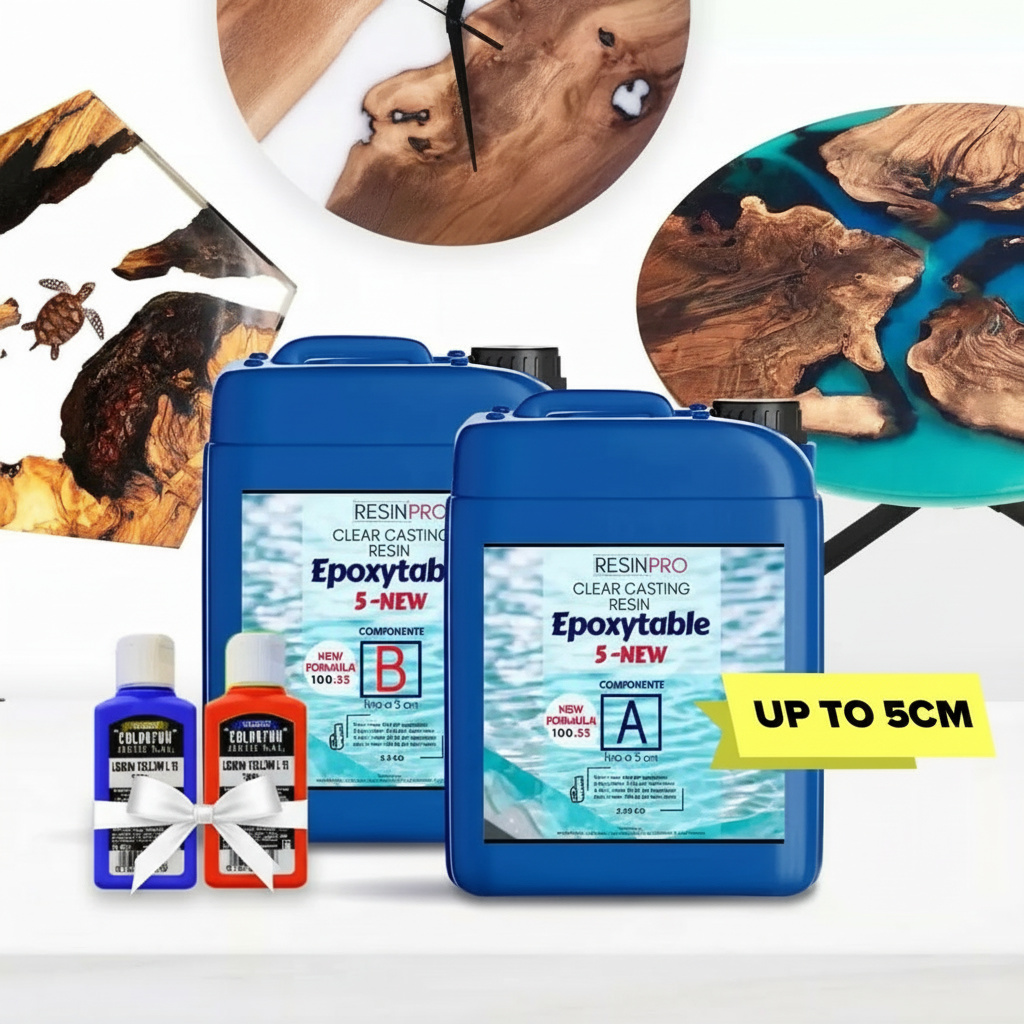
The “EpoxyTable 5-Five” – Deep Pour Epoxy Resin for Tables and Large Projects – Up to 5cm is engineered for casting up to 5cm depth in a single pour. Its low exothermic reaction keeps the curing process stable, meaning you can achieve thick, bubble-free castings with minimal risk of yellowing, thanks to robust UV filters. For tables, countertops, and projects spanning over 100cm or exceeding 8kg in total resin, it’s advisable to divide pouring into several layers—waiting 6–8 hours between each to ensure complete curing and prevent heat build-up. Regularly working within these guidelines ensures a strong, scratch-resistant result and prevents common resin issues like warping or cracks.
“Epoxytable 10-Ten” – Ultra-Deep Casts up to 10cm
For especially large or dramatic castings, “Epoxytable 10-Ten” – Deep Pour Epoxy Resin for Tables, Up to 10cm Casting caters to single pours up to 10cm deep for river tables and similar projects. However, if your design exceeds 100cm on any side or the resin pour totals more than 8kg, casting in 2 or more layers with 6–8 hour intervals is highly recommended. This approach reduces any risk of overheating, preserves the clarity of the cast, and supports the resin’s long working time for error-free application.
“Trasparente” – Multipurpose Clear Resin up to 2cm
If you are working on smaller castings, jewellery, or decorative objects, “Trasparente” – Multipurpose Clear Epoxy Resin for Casting – Up to 2cm is ideal. Each layer should be kept under 2cm thick to maintain its ultra-clear, glassy finish and avoid excessive heat generation. If your design requires further thickness, apply multiple layers, allowing one to cure to the touch before pouring the next. This method is perfect for intricate or shallow pieces where consistent clarity and finish are essential.
“River-Table” – Complete Kit for Layered Projects
For beginners or anyone seeking a bundled solution, the “River-Table” – Complete Kit for Creating Your First Epoxy Resin Table offers all the necessary materials and guidance. The kit’s included epoxy resin is suitable for layers of either 2cm or 5cm, depending on type, and comes with comprehensive instructions covering optimal layering, sealing, and polishing. It’s an excellent starting point for those who wish to master the layering technique safely.
Best Practices for Successful Layered Resin Casts
To ensure the best results, always work within the recommended layer thickness for your epoxy resin and factor in project dimensions and weight. Overloading a single pour can lead to heat damage, while excessive numbers of very thin layers may extend working time unnecessarily. For deep or large projects, plan layered pours, monitor curing times, and make sure your workspace is dust-free and well-ventilated. Choosing the right resin system for your design—whether a deep pour/tabletop formulation or a multipurpose option—makes all the difference in the longevity and quality of your finished work.
Expert Layering Tips
Get professional advice on timing, curing, and environmental factors for layering resin. Learn how each layer’s thickness and cure ensures optimal finish and safety for long-lasting results.
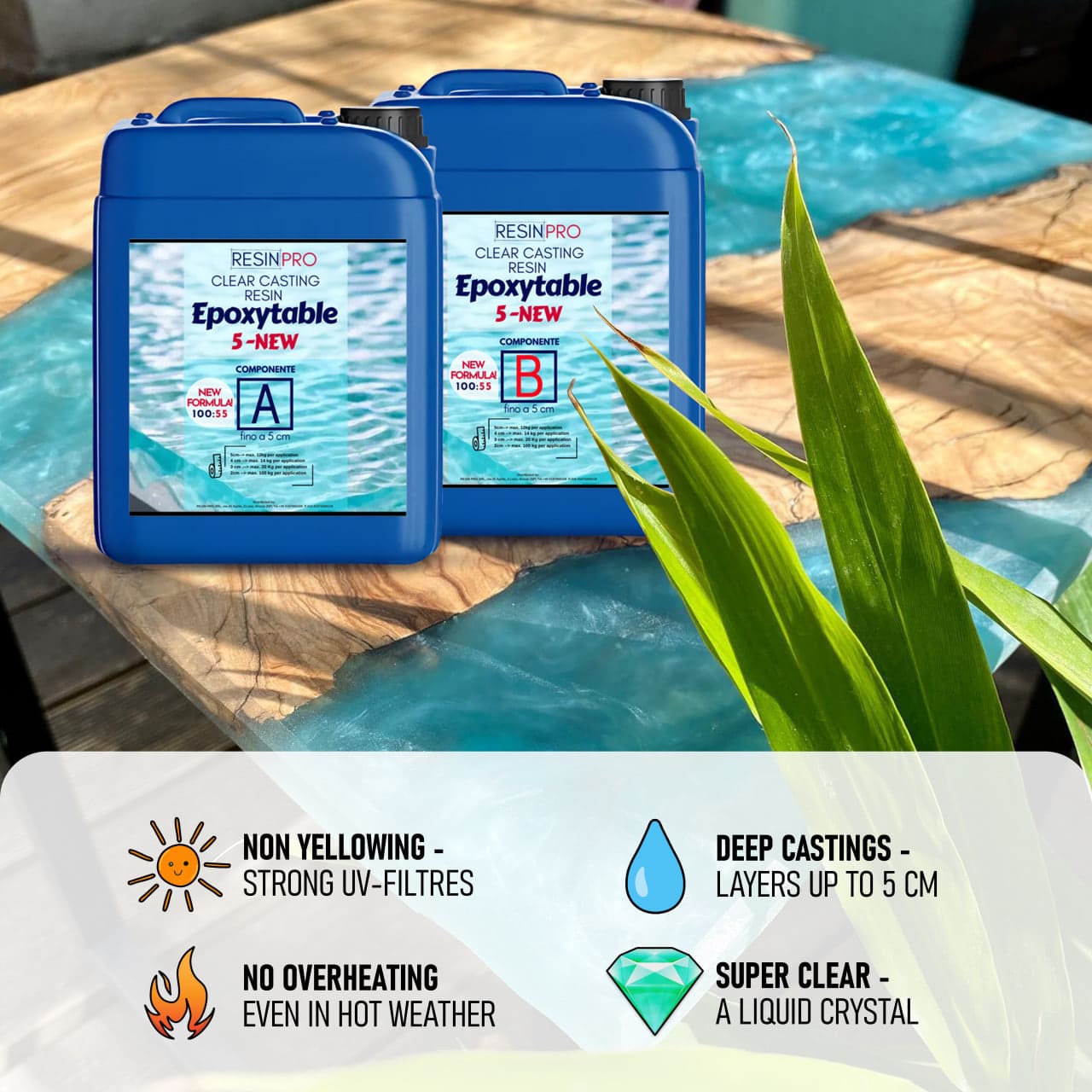
- "EpoxyTable 5-Five" – Deep Pour Epoxy Resin for Tables and Large Projects – Up to 5cmPrice range: £17.95 through £1,154.95EpoxyTable 5-Five is a deep pour epoxy resin designed for tables and larger projects up to 5cm thickness, with low viscosity and UV resistance.
 “Epoxytable 10-Ten” – Deep Pour Epoxy Resin for Tables, Up to 10cm CastingPrice range: £35.95 through £351.95“Epoxytable 10-Ten” is a deep pour epoxy resin suitable for creating tables and other artistic castings up to 10cm thick.
 "Trasparente" – Multipurpose Clear Epoxy Resin for Casting – Up to 2cmPrice range: £8.95 through £397.95"Trasparente" is a clear epoxy resin suitable for casting layers up to 2cm, designed for applications in woodworking, art, and DIY projects requiring…
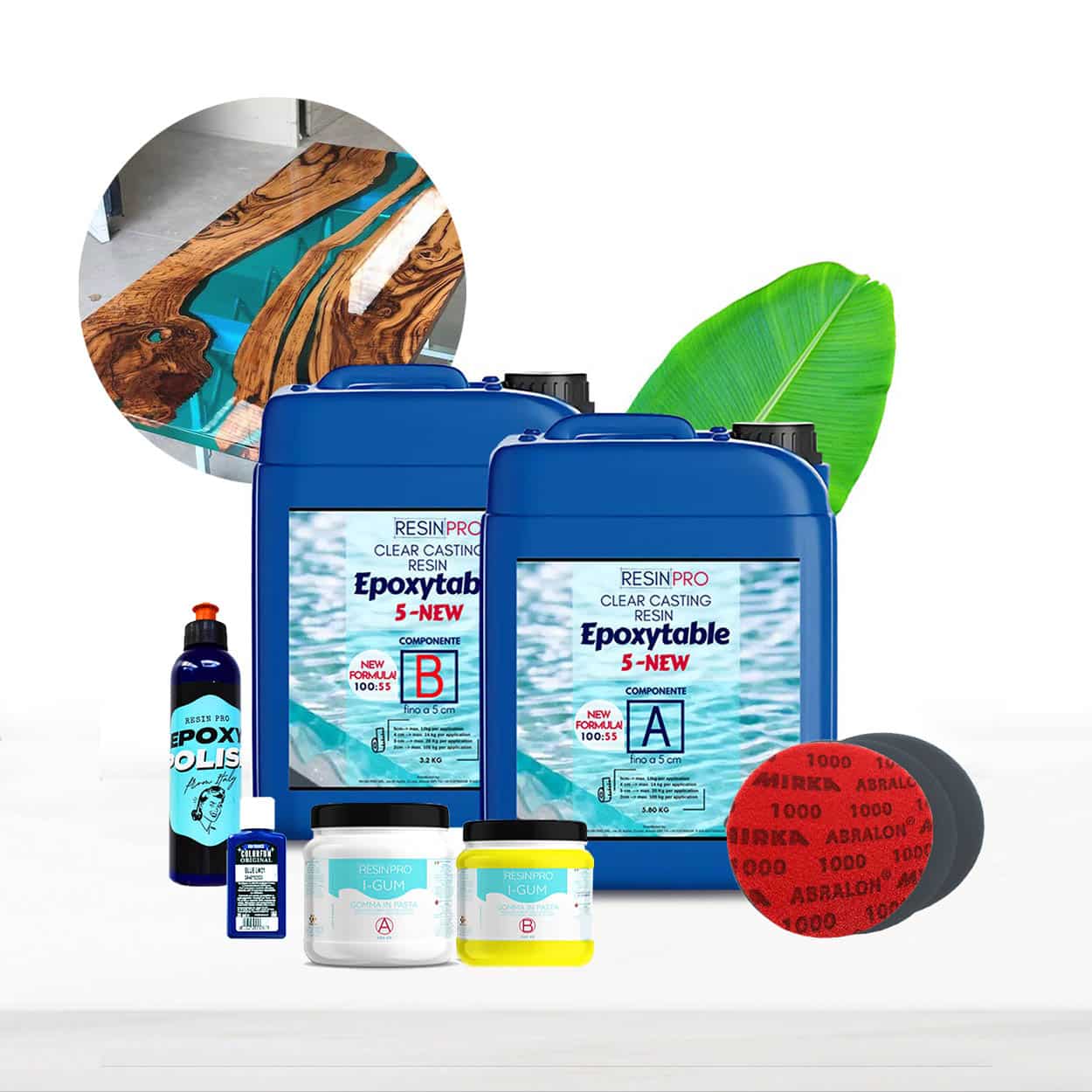 "River-Table" – Complete Kit for Creating Your First Epoxy Resin TablePrice range: £198.45 through £467.45Complete kit designed for creating epoxy resin tables with detailed instructions, pigments and polishing, suitable for both beginners and those with…
Frequently Asked Questions
What is the optimal resin layer thickness for a single pour?
Most resins have a recommended maximum pour thickness—typically 2cm, 5cm, or 10cm—based on formulation. Always follow the product guide.
Should I always pour resin in multiple layers?
Layered pours are recommended when castings exceed safe thickness, overall length, or weight. For deep or large surfaces, layering prevents problems.
How long should I wait between resin layers?
For most deep-pour epoxies, wait 6–8 hours or until the prior layer is firm to the touch. Refer to the specific product instructions.
How do I prevent overheating when using thick resin layers?
Never exceed the recommended pour thickness, and always divide large or heavy projects into successive layers for safety.
How many layers should I use for jewellery casting?
Most jewellery items can be cast in one layer if under 2cm. For deeper pieces, use two or more layers of suitable epoxy.
Can I pour additional resin layers over a cured one?
Yes, as long as the previous layer is tacky or lightly sanded if fully cured. This ensures a strong bond.
When should I layer in large river table projects?
If any side exceeds 100cm or weight surpasses 8kg, pour in multiple layers with time for curing between each.
Is it safe to pour all resin at once?
Only if the total thickness and project mass are within the epoxy’s safe pour limits. Otherwise, risk of heat, cracks, and poor finishes increases.