 Free shipping on orders over £29,85
  Shipping Tracking!


 Google
 Facebook
How much pigment should be added to resin?
Expert advice for perfect colour depth and resin effects


Unsure how much pigment to use for your resin project? Whether you want vibrant opaque colour, delicate stained-glass effects, or striking metallic motion, knowing the right pigment-to-resin ratio is crucial. This guide explains how much pigment to add for brilliant results, the differences between pigment types, and gives tailored recommendations for ResinPro’s range of dyes and effect powders. Ideal for resin artists, crafters, DIYers, or anyone seeking consistently beautiful colour in epoxy creations.
Understanding Pigment Dosage: Types, Effects, and Ratios
Different pigment types require different amounts for optimal results. For liquid colourants, like those used in resin art and professional castings, intense colours and translucency can be easily controlled with precise dosing. Mica and neon pigment powders, on the other hand, offer unique effects—from swirling metallics to bold neon shades—but need careful measurement to avoid losing resin clarity or mechanical properties. Generally, the correct pigment amount depends on your desired final effect:
- Translucent & subtle hues: Start at 1% pigment (by weight or volume) of your total mixed resin.
- Opaque, solid colour: Increase up to 5% for liquid pigments, never exceeding manufacturer guidance.
- Special effects (metallic, neon): Check each powder pigment for their ideal usage rates—usually 5–8g per kg resin for metallics, and up to 15% of resin weight for certain bright powders.
Always begin with a small amount, gradually adding more pigment until the desired intensity is reached. Mixing thoroughly and following safe handling practices ensures colour consistency and resin quality.
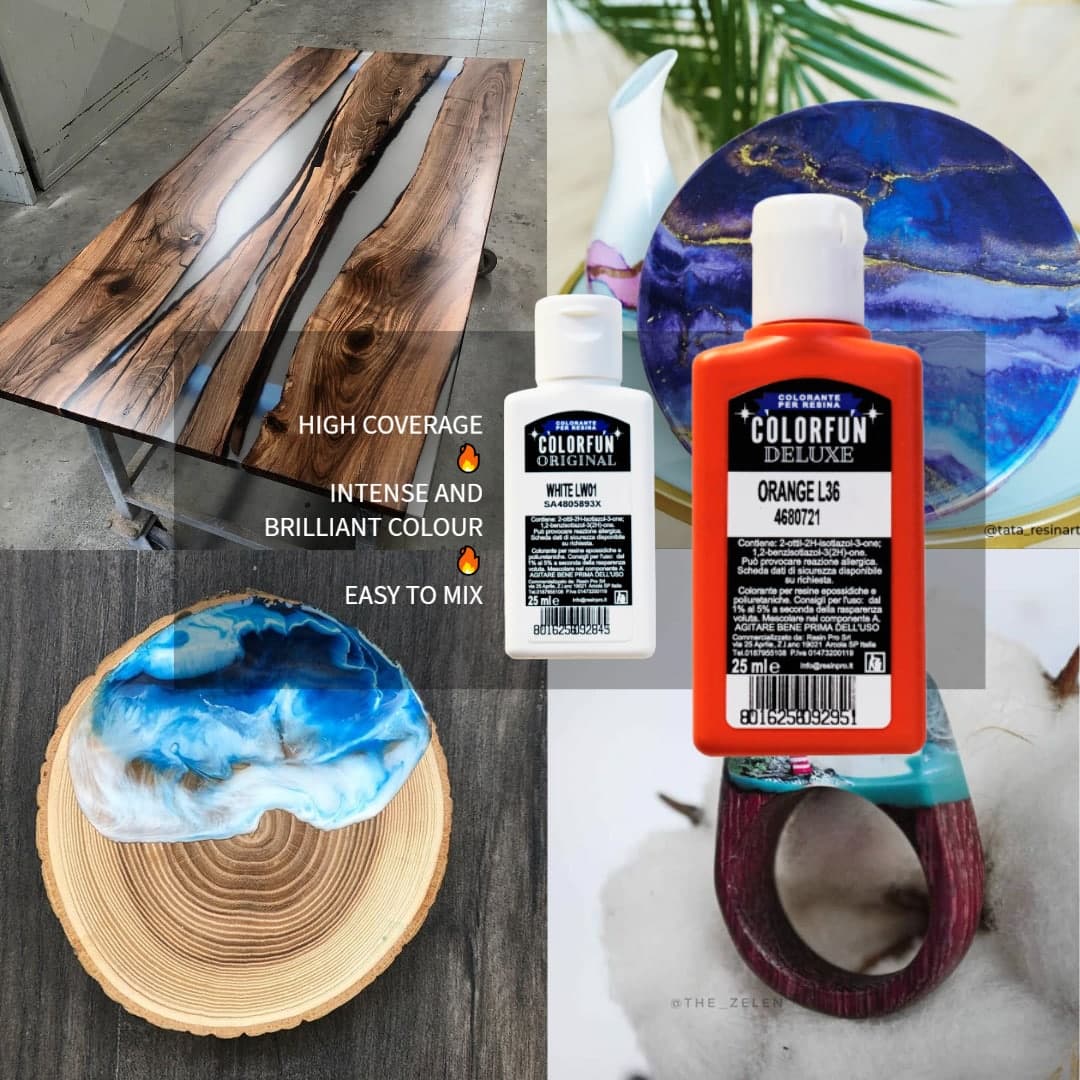
Visualising Pigment Ratios and Effects
See the difference between translucent, opaque, metallic, and neon resin results. Pigment quantity dramatically changes the look and feel of your project—use our gallery to compare side-by-side effects created with exact mixing ratios. From glass-like clarity with a hint of colour to bold, saturated finishes, observe how just a small pigment adjustment transforms your resin art.
“Colourfun” Liquid Epoxy Resin Colourant: For Intense and Adjustable Colour
If your goal is to achieve vivid, deeply pigmented resin or elegant transparency, “Colourfun” – Liquid Epoxy Resin Colourant 25-100ml – High coverage provides a highly concentrated solution. Just a few drops can colour large resin volumes thanks to its exceptional coverage. Highly concentrated for strong, vivid colours and translucent effects, this colourant allows you to fine-tune the saturation from delicate to fully opaque – perfect for art, jewellery, and poured surfaces. For most applications:
- Start at 1% pigment for translucency.
- For solid colour, do not exceed 5% pigment by resin mass.
- One 25ml bottle suffices for colouring 2–3kg resin—making it especially economical for frequent crafters.
“Colourfun” blends easily and is fully compatible with the entire ResinPro range, ensuring even, streak-free results without impacting the mechanical properties of your resin.
“Sahara” Mica Powder Pigment: Metallic Motion & Pearlescent Effects
For projects where shimmering metallic swirls or deep 3D colour are desired, “Sahara” – Mica Powder Pigment Metallic Motion Effect 10g / 100g is ideal. Its Strong Metallic Motion Effect for unique, dimensional colour results creates dramatic, pearlescent finishes that catch the light. To achieve saturated metallic colour:
- Use 5–8g of Sahara mica powder per 1kg resin for a bold effect.
- Best used in transparent resin systems where depth and movement can shine.
This pigment is High Lightfastness maintains vibrant colours over time and maintains its colour through resin curing, even under heat (Thermally Stable for use in heat-generating resin cures). Sahara mica powder is also cruelty-free and vegan-friendly.
Neon Powder Pigments: Brilliant Brights for Art & Jewellery
For striking neon effects in resin, “Neon” – Bright Powder Pigments – 10g offer Pigments have a coloured base providing brilliant neon shades without fluorescence. Achieve playful, vivid colours in jewellery, art, and decorative crafts by following these guidelines:
- Use 10g pigment per 2kg resin for standard brightness.
- For best results, Stir pigments in resin (component A) before adding hardener (component B) to avoid clumping.
- Do not exceed 15% pigment by resin weight to prevent loss of mechanical properties.
Though not glow-in-the-dark, these neon powders truly pop in daylight and remain compatible with most epoxies.
EpoxyTable 5-Five: Resin Choice and Pigment Integration for Large Projects
“EpoxyTable 5-Five” – Deep Pour Epoxy Resin for Tables and Large Projects – Up to 5cm is designed for thick castings and large-scale resin pours. Its low-exotherm formula gives you a long working time, making it easier to achieve even colour and incorporate Colourfun liquid colourants or Sahara metallic powders in bigger projects. Low exothermic reaction allowing thick castings up to 5cm without overheating means pigments remain well-dispersed and vibrant. For large tables or river projects, always mix pigments into the pre-blended resin component (A+B) before pouring.
Tips for Achieving Uniform Colour in Resin Projects
To ensure brilliant, consistent results every time:
- Mix pigment thoroughly before adding hardener (for powder pigments, especially).
- Gradually build up intensity—it’s easier to add more pigment than to fix oversaturated resin.
- Observe maximum loading guidance (e.g., 5% for liquids, 15% for powders) to maintain resin’s curing and strength.
- Always test a small sample to preview the end result—especially with new pigment-resin combinations.
Consult each product’s instructions for best results, and experiment within the recommended guidelines to find your perfect hue.
Practical Colour Mixing Inspiration
Explore finished projects using Colourfun, Sahara, and Neon pigments in various resin systems. Notice the uniform distribution of colour, subtle transitions with lower pigment loads, and dramatic metallic or neon effects in larger castings. Let these creations inspire your next resin table, artwork, or jewellery piece – and guide your own pigment choices for professional results every time.
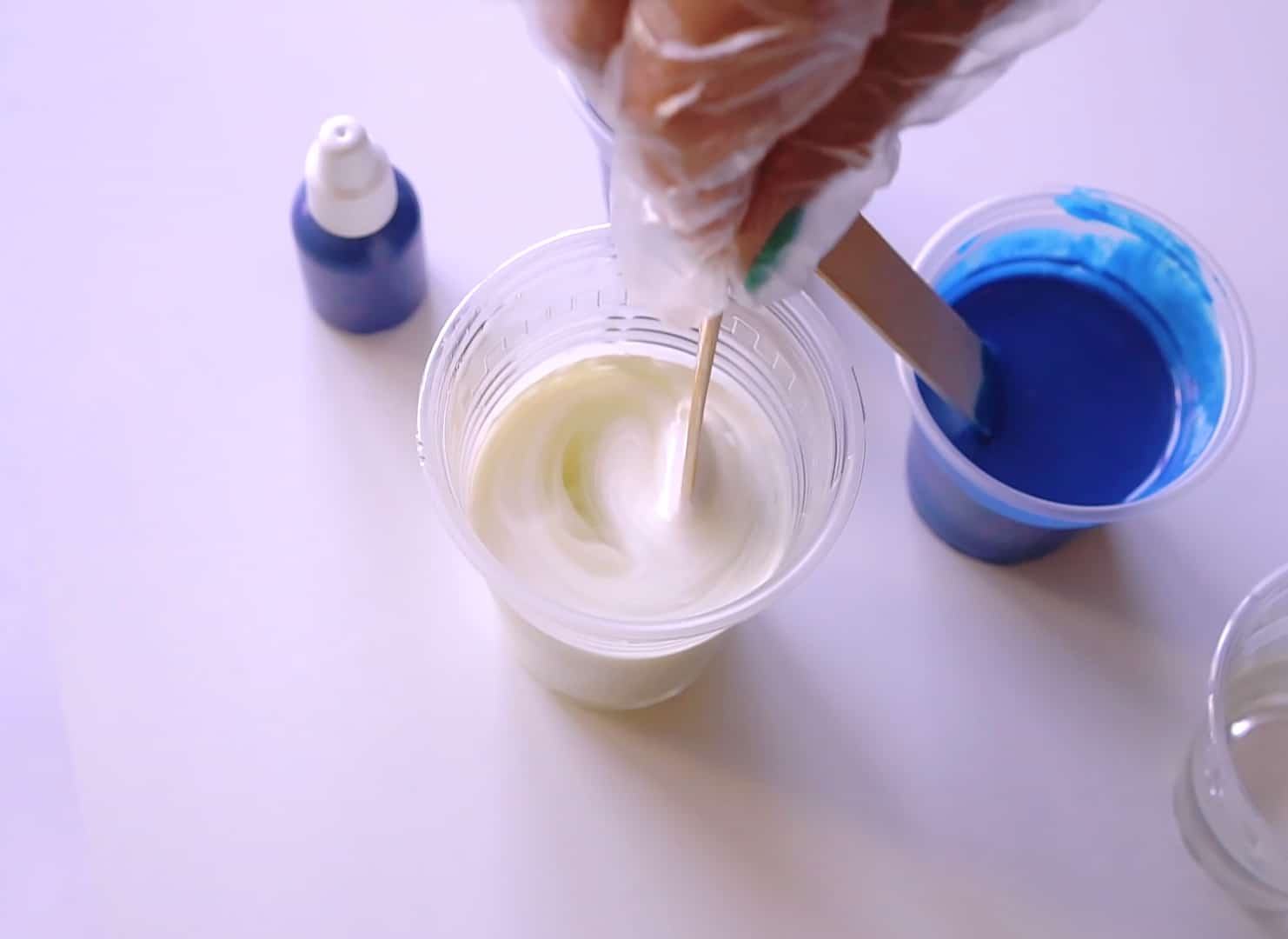
- "Colourfun" – Liquid Epoxy Resin Colourant 25-100ml – High coveragePrice range: £3.95 through £10.45"Colourfun" colourant provides intense pigments suitable for resin art projects with adjustable colour intensity and compatibility across Resin Pro…
 "Sahara" – Mica Powder Pigment Metallic Motion Effect 10g / 100gPrice range: £3.95 through £12.45"Sahara" mica powder pigment is formulated for use with transparent resins to create dynamic metallic motion effects and deep pearlescent sheens.
 “Neon” – Bright Powder Pigments – 10g“Neon” pigments are suitable for resin and DIY decoration, providing a bright neon effect without glowing in the dark.
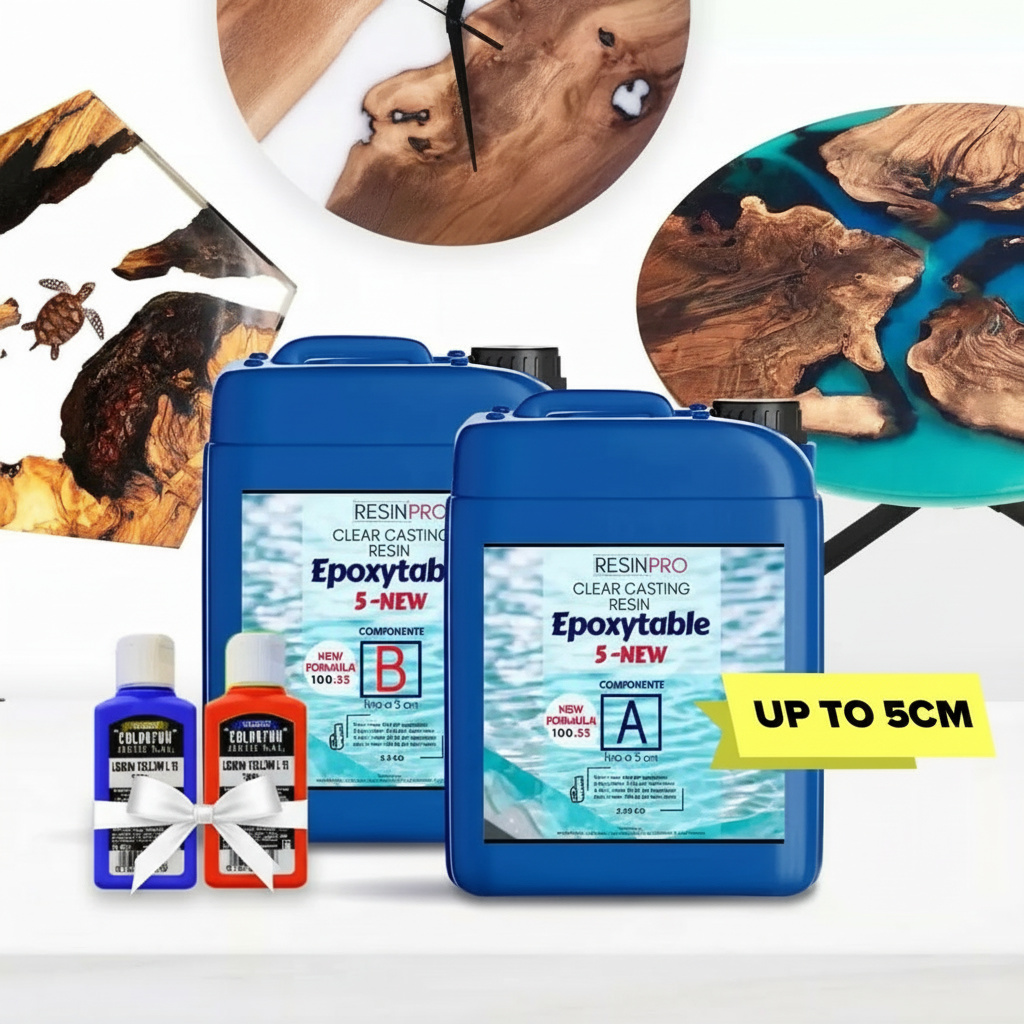 "EpoxyTable 5-Five" – Deep Pour Epoxy Resin for Tables and Large Projects – Up to 5cmPrice range: £17.95 through £1,154.95"EpoxyTable 5-Five" is designed for large projects and tables, featuring deep pour capabilities and strong UV resistance.
Frequently Asked Questions
How much liquid pigment should I add for opaque versus translucent resin effects?
Use around 1% pigment by resin mass for translucent effects and up to 5% for opaque colours. Gradually add pigment and test as you go.
Can I mix liquid, mica, and neon pigments together in resin?
Yes, you can combine pigment types, but start with the recommended ratios for each and test compatibility in a small batch.
How do I avoid pigment clumps when mixing into resin?
Dissolve powder pigments thoroughly in resin component A before adding hardener. Mix slowly and evenly for best dispersion.
What is the maximum pigment amount I can add to resin without affecting curing?
Do not exceed 5% for liquid pigments and 15% for powder pigments by resin weight. Exceeding this can affect resin properties.
Which pigment should I use for glow-in-the-dark resin effects?
The Neon pigments are not fluorescent or phosphorescent. Use specialist glow-in-the-dark powders designed for resin if needed.
Should pigment be added while resin is warm or at room temperature?
Always add pigments at room temperature for consistent results and to avoid premature curing.