 Free shipping on orders over £29,85
  Shipping Tracking!


 Google
 Facebook
← Back to How to distinguish polyester resin from epoxy resin?
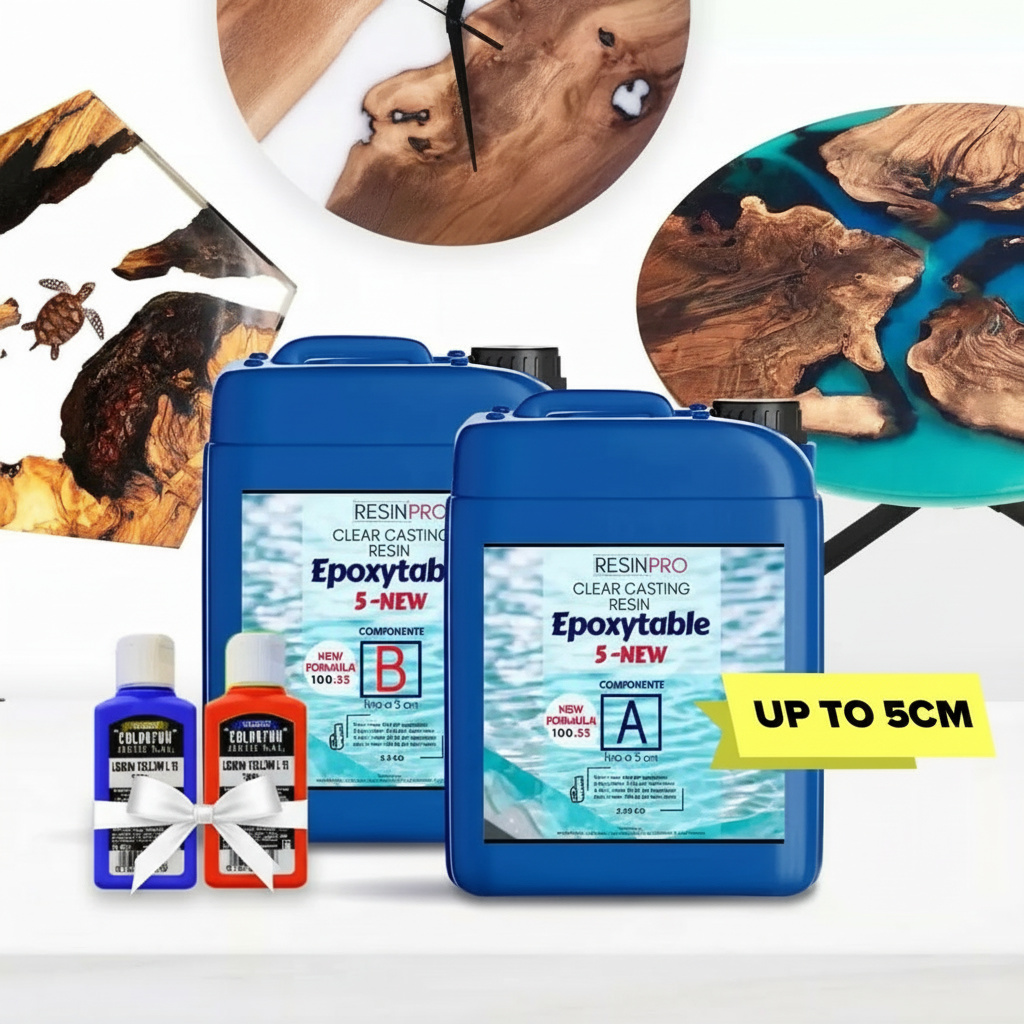
When pouring epoxy resin for casting or table projects, understanding the role of a low exothermic reaction is essential for achieving both safety and professional-looking results. This guides you through what this term means and why it matters for your resin work.
What Does Low Exothermic Reaction Mean?
During curing, epoxy resins generate heat in a chemical reaction known as exotherm. A ‘low exothermic reaction’ refers to resins that only produce mild heat as they harden. This feature helps to avoid issues such as warping, yellowing, or even cracking—especially in thicker or larger projects.
Choosing the Right Low Exotherm Epoxy for Your Project
If your project involves deep pours, like making river tables or decorative castings up to several centimetres thick, a low exotherm resin is critical. For instance, EpoxyTable 5-Five is formulated for pours up to 5cm, ensuring controlled temperature during curing. For even deeper applications to 10cm, “Epoxytable 10-Ten” provides a safe, clear pour with minimal heat build-up. Using a multipurpose clear resin like Trasparente is best kept for thinner layers around 2cm, as higher exotherm can lead to overheating in thicker sections.
When Low Exothermic Reaction Matters Most
- Deep-pour applications (2–10cm thickness)
- Large tabletop or furniture pieces with significant resin volume
- Projects where bubble-free, clear results and even curing are vital
Related products
Related guides
Choosing an epoxy resin with a low exothermic reaction not only protects your projects from common curing issues but also helps distinguish the best solution for your needs. For more insight on how resin types differ, see our main guide on how to distinguish polyester resin from epoxy resin.