 Free shipping on orders over £29,85
  Shipping Tracking!


 Google
 Facebook
← Back to How do you catalyse cast synthetic resin?
It’s disappointing to discover that your resin project has stubbornly stayed sticky or soft. Fortunately, most curing issues have straightforward reasons, and with a few checks you can fix problems and prevent them next time.
Why Resin Fails to Cure
Resin curing relies on precise mixing ratios, appropriate layer thickness, and correct temperature. The most common issues include:
- Incorrect mixing ratios – Too much or too little hardener can prevent full curing.
- Pours that are too thick – Many resins aren’t formulated for deep casting, which can keep the centre soft.
- Cool curing environments – If your workspace is too cold, the reaction slows or stalls altogether.
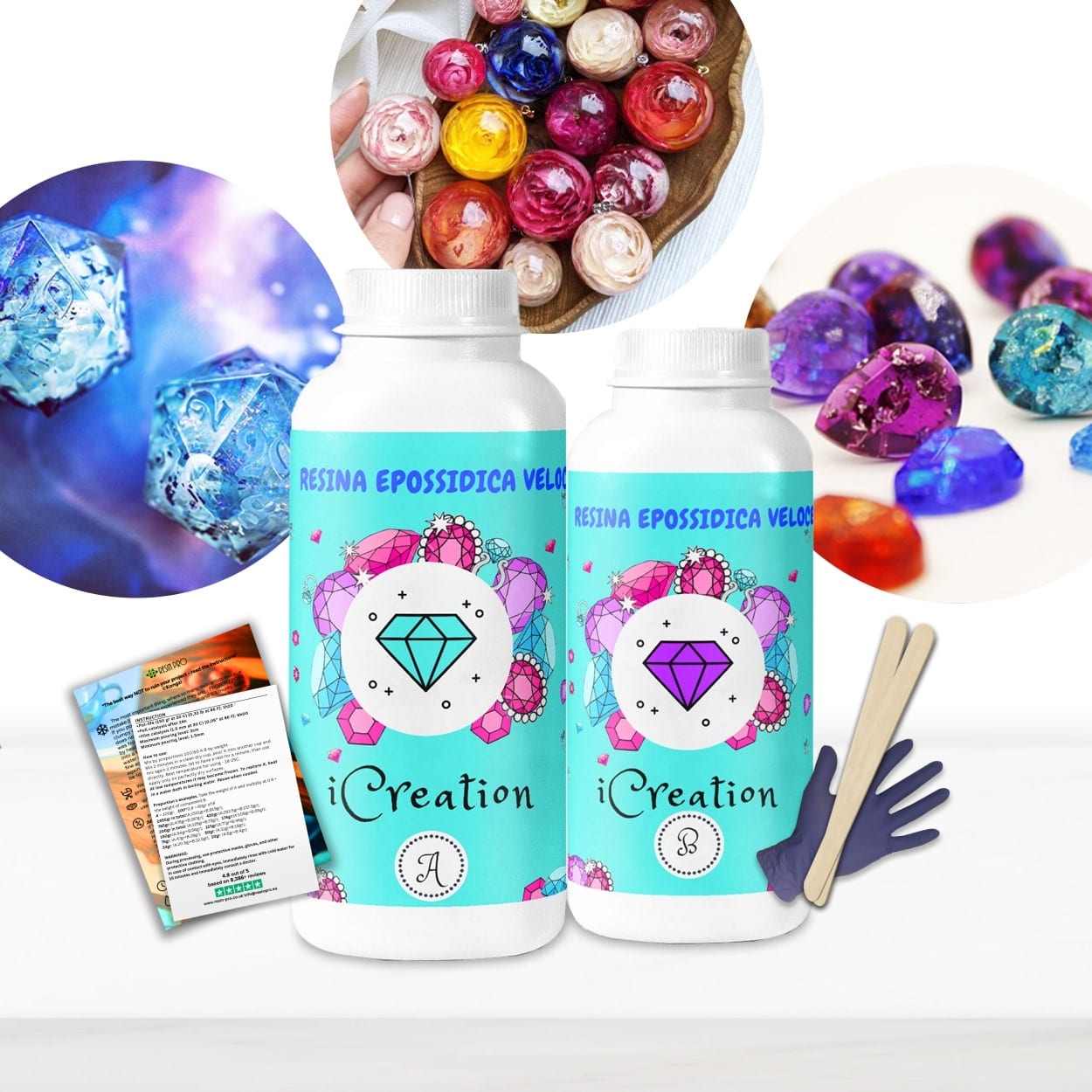
Always follow your product’s instructions for best results. For instance, ICreation fast epoxy cures reliably within a set timeframe when used as directed.
How to Fix Uncured or Tacky Resin
If you spot uncured patches, first check your ratios and mixing. Sometimes gentle warming (for example, with a heat lamp) helps a sluggish cure if temperature was the problem. Unfortunately, if the mix ratios were wrong, scraping off and starting over with a fresh batch is often necessary. Avoid adding more hardener to partially set resin—it won’t cure as hoped.
For smaller surface issues, you can try removing the sticky layer before re-coating, but ensure the conditions are right before attempting a fix.
Tips for Better Curing Results
- Always read the specific instructions, especially regarding ratio and maximum recommended pour thickness.
- Use digital scales or accurate measuring cups to prevent mixing errors.
- Keep your workspace warm and free from draughts for the duration of the cure.
- Choose a resin suited to your project—some, like “One-2-One” resin, are easier for beginners and require less fuss over measurement.
When This Matters Most
Getting curing right is crucial for jewellery, deep pours, and functional crafts where strength and clarity are essential. Attention to the basics avoids wasted effort and ensures each piece reaches its full potential.
Related products
Related guides
If you’re experiencing ongoing curing issues or want tips for working with fast or UV-cure options, explore our main guide on how to catalyse cast synthetic resin for further advice and product recommendations.