 Free shipping on orders over £29,85
  Shipping Tracking!


 Google
 Facebook
← Back to How do you work with resin for a sink countertop?
Achieving a glass-smooth countertop or artistic resin surface often comes down to careful preparation between coats. Sanding is the secret to getting that flawless, professional resin finish you’re aiming for.
Why Sand Between Resin Coats?
Sanding between coats of resin is essential for both appearance and adhesion. A fresh resin layer won’t bond as well to a glossy surface, so gently sanding helps each new layer grip and smooths out imperfections, bubbles, or dust nibs from previous pours. This leads to a visually unified, mirror-like result.
How to Sand for the Best Result
- Wait for the resin to fully cure before sanding (cure time varies, usually 12–24 hours).
- Use fine-grit sandpaper (typically 320–600 grit) and sand lightly in circular motions.
- Clean thoroughly to remove all sanding dust before adding the next layer—this can be done with a slightly damp, lint-free cloth or isopropyl alcohol.
- Avoid coarse grit, which can create visible scratches that may show through the final coat.
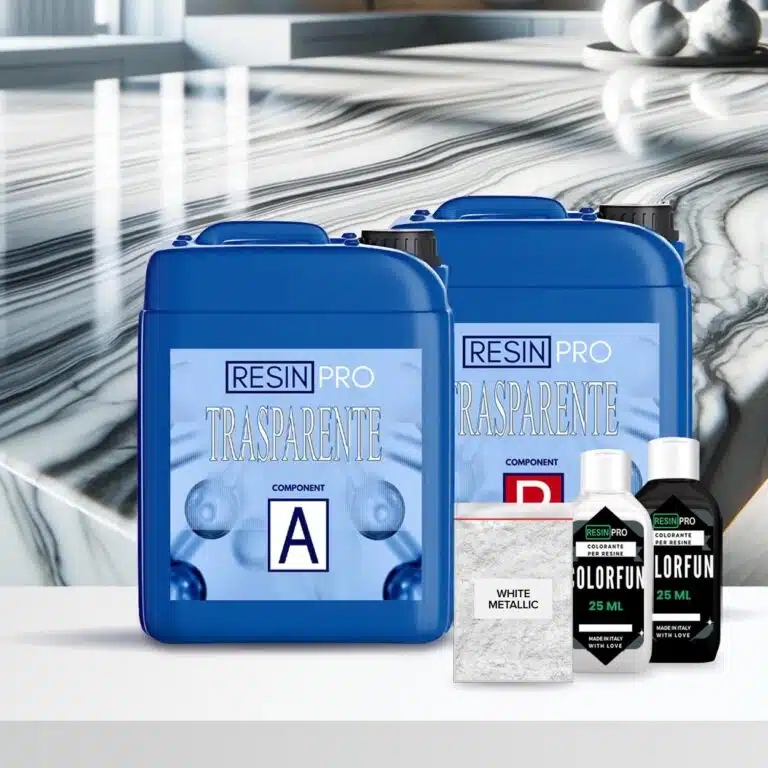
For intricate finishes or large surfaces, kits like the Stone Effect Collection – Marble Epoxy Resin Countertop Kit are designed to forgive beginner errors and work seamlessly with proper sanding techniques.
When Meticulous Sanding Matters Most
If you’re after a high-gloss, ultra-smooth finish—especially for countertops around sinks or kitchen worktops—sanding ensures every new coat conceals imperfections and retains the clarity and durability resin is known for. Skipping this step can result in cloudy, uneven surfaces or poor inter-coat adhesion.
Related products
Related guides
Taking the time to sand between resin coats truly elevates your results, especially for statement pieces like sink countertops. For more guidance on working with resin for countertops and what products best support a flawless finish, explore our main guide on how to work with resin for a sink countertop.