 Free shipping on orders over £29,85
  Shipping Tracking!


 Google
 Facebook
← Back to Can I Buy Decorative Aggregate Online?
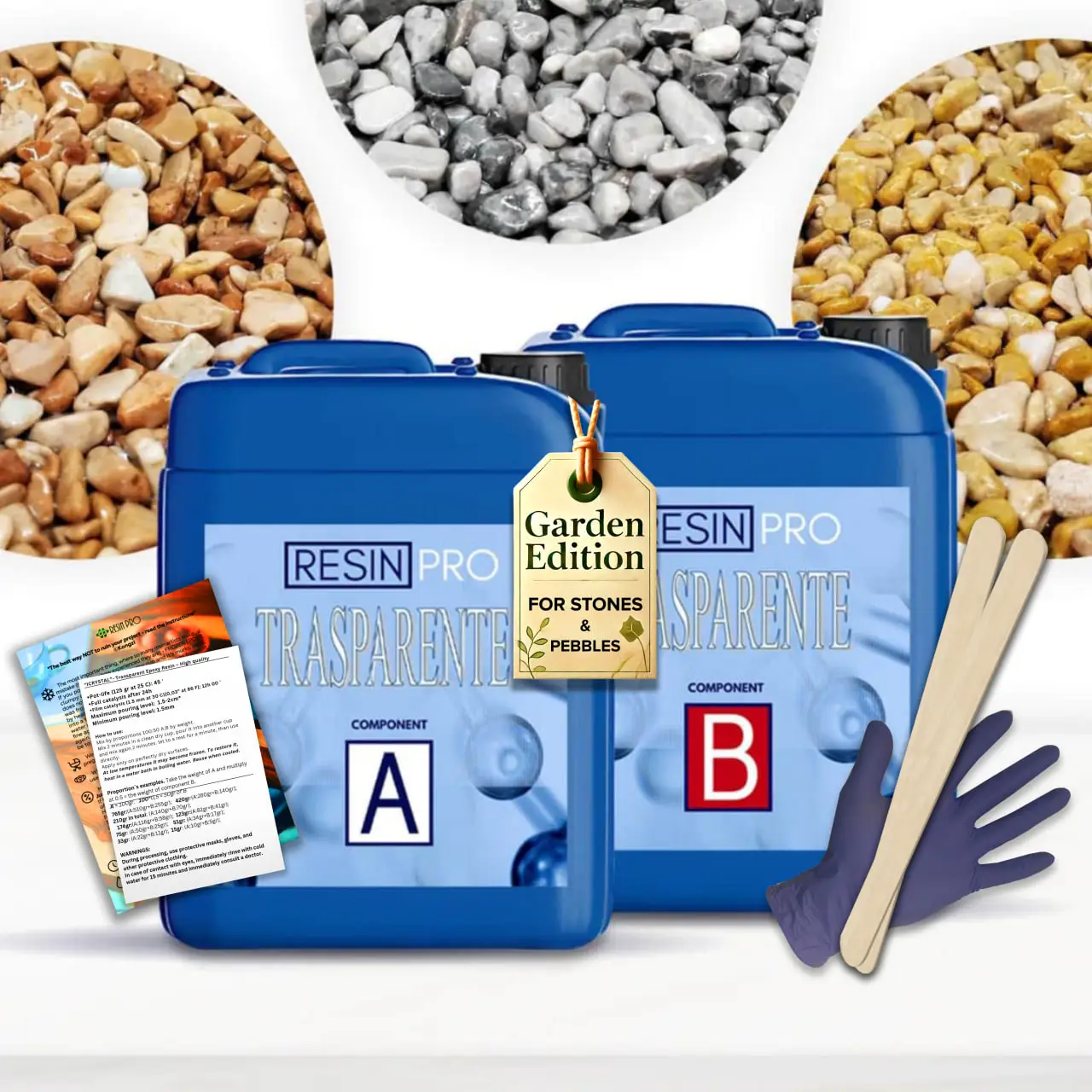
Deciding on the best binder for your decorative stone, pebble, grit, or gravel surface is essential to create safe, visually appealing, and durable outdoor spaces. This guide explains how to choose between epoxy and polyurethane binders, and how to achieve a professional result with the right mix and technique.
Epoxy vs Polyurethane Binders for Decorative Aggregates
The two most popular binders for stone, pebbles, and gravel are transparent epoxy and polyurethane resins. Epoxy binders, such as “Trasparente”, are ideal for coloured aggregates, providing a crystal-clear, UV-resistant finish that enhances the vibrancy of warm or dark stones. Polyurethane binders like Polirock are a top choice for light or white stones, offering excellent UV stability and resistance to yellowing.
- Epoxy: Best for coloured or darker aggregates, driveways, and decorative paths.
- Polyurethane: Preferred for white or pale stones, staying clear and non-yellowing outdoors.
Mix Ratios and Grit Size: Key Application Tips
For optimal binding strength and clarity, a 3% resin to stone weight ratio is commonly recommended. This ensures even coating and secure adhesion without excess resin pooling. The recommended aggregate size for decorative pebble and gravel surfaces is 4-8mm—an ideal range for stability, permeability, and a smooth appearance.
- Weigh both resin and aggregate carefully to maintain consistent results.
- Mix thoroughly to ensure even binder coverage across all particles.
When Binder Choice Matters
Your choice of binder is especially important when appearance, weather resistance, and safety all matter. For example, using a non-yellowing binder keeps white stones looking pristine, while a UV-stable epoxy keeps coloured paths vibrant season after season.
Related products
Related guides
Selecting the right binder and following proper application steps are essential for creating lasting decorative aggregate surfaces. For more options and advice on buying decorative aggregate online, visit our main guide on decorative aggregate selection.