 Free shipping on orders over £29,85
  Shipping Tracking!


 Google
 Facebook
← Back to What are epoxy quartz powder-based resin paints?

If you’re planning to use epoxy quartz powder-based resin paints outdoors, one of the most important questions is whether these finishes will resist yellowing when exposed to sunlight. Let’s explore how UV resistance in epoxy works and how to make the right choice for decorative and exterior surfaces.
Why Yellowing Happens in Epoxy Resin Paints
Standard epoxy resins can develop a yellowish tint if exposed to UV rays for extended periods. This discolouration occurs because the hardener in epoxy is sensitive to sunlight, which gradually impacts the clarity and colour integrity of the coating. For outdoor finishes—especially those highlighting coloured or dark aggregates—visible yellowing can detract from the presentation over time.

Choosing UV-Resistant Epoxy for Outdoor Use
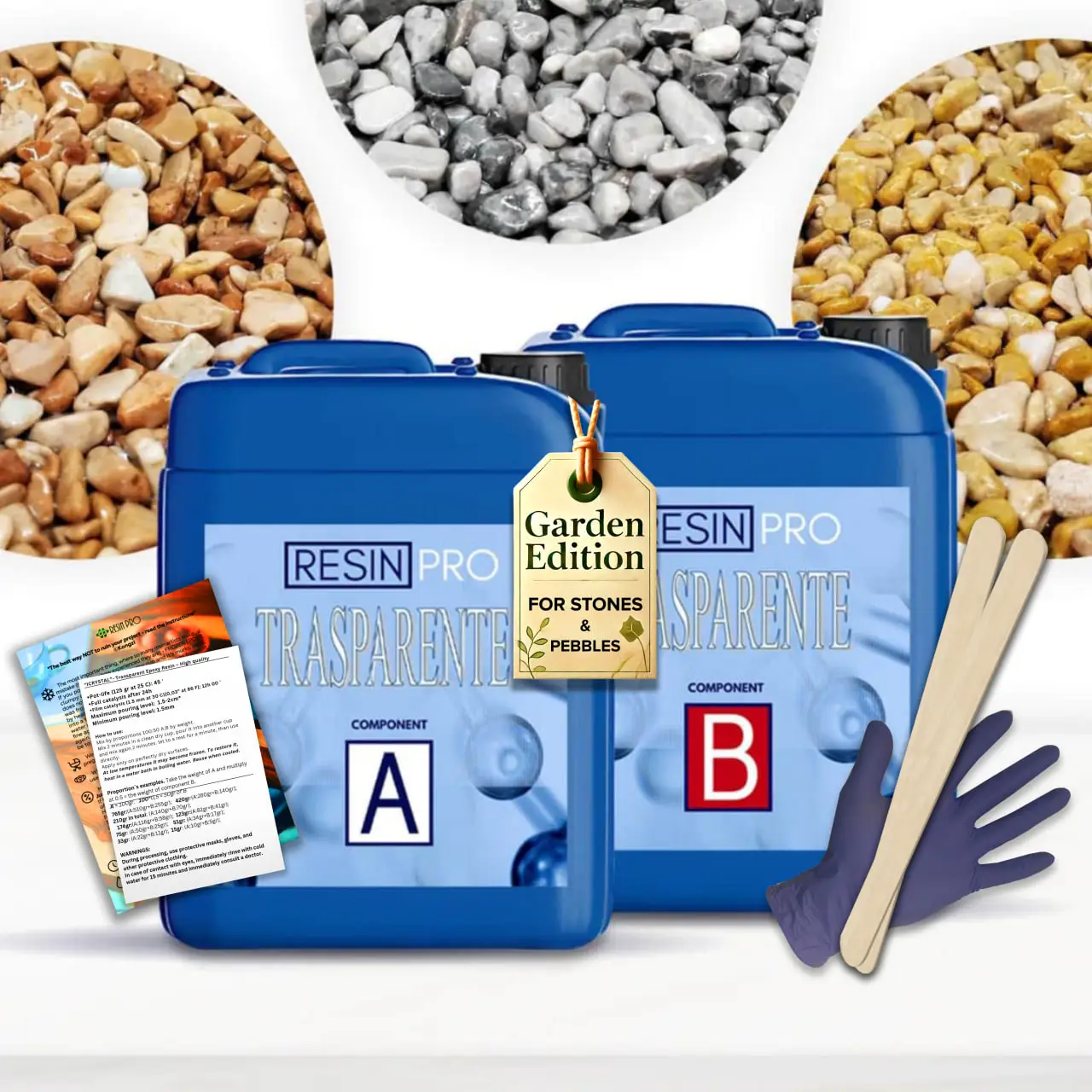
Modern resin systems offer UV-resistant, non-yellowing epoxy options that are designed to preserve their transparency, even on sunny exteriors. When selecting a product for driveways, paths, or decorative pebble flooring, always check that the epoxy is specifically formulated for UV stability. Transparent binders like “Trasparente” – Epoxy Binder for Coloured Pebbles and Grits include enhanced UV resistance, making them a suitable choice for lasting looks outdoors. These are particularly recommended when working with vibrant or darker stones, where fading or yellowing is most noticeable.
When UV Protection Matters Most
UV resistance is essential for any exposed resin surface, but it’s especially crucial on south-facing driveways, patios, and walkways that receive direct sunlight. Opt for non-yellowing binders if you want to ensure your decorative finish maintains its original colour and clarity year after year.

Related products
Related guides
Opting for a UV-resistant, non-yellowing epoxy ensures your outdoor quartz resin projects look their best for longer. For more details on selecting and applying epoxy quartz powder-based resin paints, visit our main guide here.