 Free shipping on orders over £29,85
  Shipping Tracking!


 Google
 Facebook
← Back to How to catalyse resin?
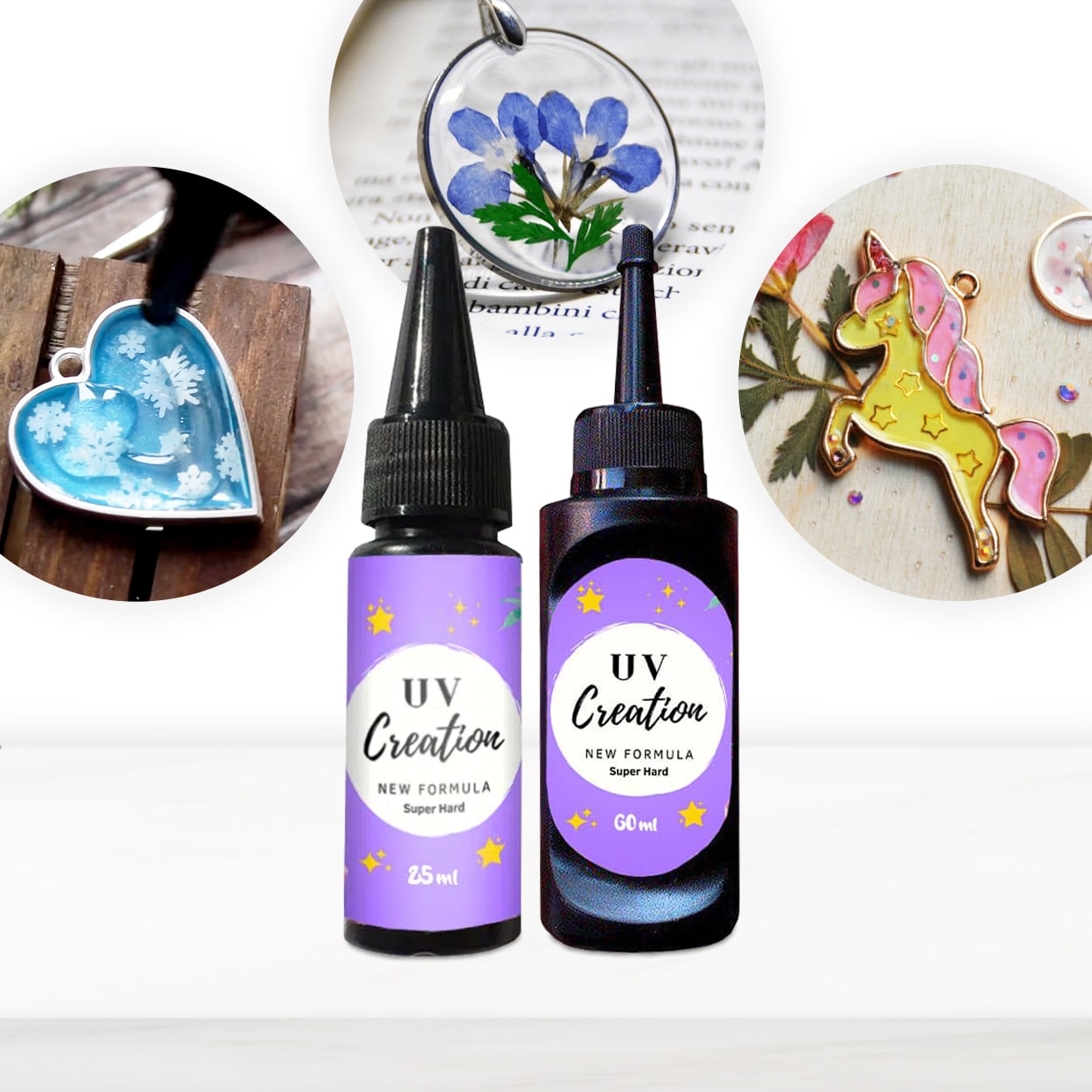
Choosing the right resin for your craft project often starts with understanding how each type cures. UV and epoxy resins use very different catalysing methods, each with its own advantages.
How UV and Epoxy Resins Are Catalysed
UV resin is a single-component product that is ready to use directly from the bottle—no mixing required. It hardens only when placed under a UV lamp, which typically takes just 2–3 minutes. This makes it ideal for quick-turnaround work, such as jewellery making and small moulds.
Epoxy resin, by contrast, comes as two parts: resin and hardener. These must be measured out and mixed—commonly using a precise ratio (for example, 2:1 for products like ICreation Fast Epoxy Resin). Once mixed, the chemical reaction starts and the resin begins to cure, with demoulding usually possible from 6–12 hours depending on the formulation.
Which to Use: Practical Guidance
- UV resin suits small, intricate projects or situations where you want rapid results, such as pendants, charms, or craft embellishments. Its ease of use means you can build up layers or make quick corrections.
- Epoxy resin is preferred for larger castings, doming, or projects needing thicker pours. It provides greater working time before it hardens, allowing for more elaborate designs or careful positioning of inclusions.
Remember, always work in a well-ventilated space and follow the manufacturer’s instructions for safe and reliable results.
When This Difference Matters
Speed and project size are key factors. If you’re working on detailed or time-sensitive creations where instant curing is helpful, UV resin saves significant time. For larger, deeper, or more complex pieces, epoxy resin offers flexibility and superior clarity in thicker pours.
Related products
Related guides
Understanding the difference between UV and epoxy resin catalysing methods allows you to select the best resin for your specific task. For more guides on working safely and efficiently with resin, return to our How to catalyse resin? hub.