 Free shipping on orders over £29,85
  Shipping Tracking!


 Google
 Facebook
← Back to How do you make resin cement?
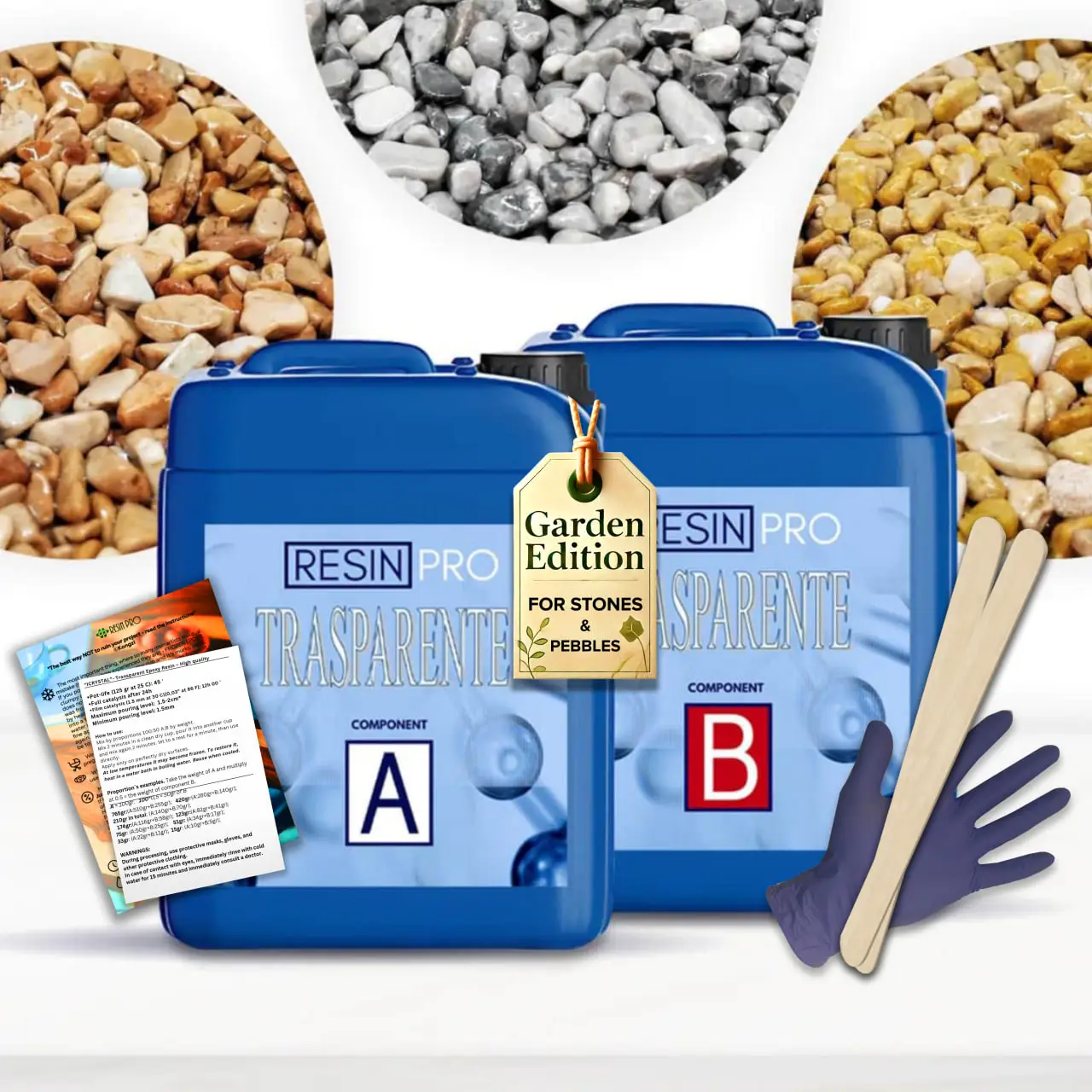
Choosing the right aggregate is essential for achieving a high-quality, attractive, and durable resin cement surface, whether for decorative paths, driveways, or bespoke interior finishes. The right combination of resin and stone not only affects the look but also the longevity and stability of your project.
Popular Aggregate Types for Resin Cement
The most common aggregates used in resin cement include dry, clean pebbles, coloured gravels, and natural stone chippings. These can be sourced in a variety of colours and sizes to match the desired project appearance. For example, coloured pebbles are ideal for creating vibrant or warm-toned surfaces, while natural-tone gravel brings a classic, subtle look.
- Coloured pebbles: Perfect for modern, bespoke paths or highlight features when combined with transparent resin, such as the “Trasparente” – Epoxy Binder for Coloured Pebbles and Grits.
- Natural gravel: Offers a more understated appearance, suitable for traditional gardens or permeable driveways.
- Decorative chippings: Create textural contrast and additional slip resistance in outdoor applications.
How to Select the Right Aggregate Size and Finish
Aggregate size is more than just an aesthetic choice—it’s crucial for bonding and surface stability. Typically, stones between 2mm and 10mm work well for outdoor or flooring applications. Smaller sizes are recommended for tighter, smoother finishes, while larger stones provide more texture but can be harder to achieve an even layer. Make sure all stones are thoroughly cleaned and completely dry before mixing with resin to promote uniform adhesion and prevent moisture from interfering with the curing process.
Matching Aggregate with Your Resin Binder
Compatibility between aggregate and binders is key for optimal results. For coloured, dark, or vibrant aggregates, pair them with a transparent, UV-resistant resin—such as “Trasparente” – Epoxy Binder—to showcase the stone’s colour without compromise. If using lighter stones (like white marble), consider a non-yellowing polyurethane or a low-yellowing epoxy if guided by your kit or supplier (“Flowstone” Complete Kit offers both options with tailored advice).
When Aggregate Choice Matters Most
The impact of your aggregate choice is especially noticeable in projects prone to weather exposure, heavy foot traffic, or where decorative aesthetics are prominent. Selecting the wrong type or size can lead to problems with drainage, colour fading, or even weakened surfaces over time.
Related products
Related guides
Careful selection of aggregate ensures your resin cement surfaces remain striking and sturdy. For a deeper dive into all aspects of resin cement projects, visit our main guide on making resin cement.