 Free shipping on orders over £29,85
  Shipping Tracking!


 Google
 Facebook
How to calculate epoxy resin quantity?
Calculating the correct amount of epoxy resin is essential for achieving a flawless finish in any casting, tabletop, or flooring project. Whether you’re working with moulds, river tables, or permeable floors, knowing how much resin you’ll need helps you avoid waste and ensures every layer is consistent and durable. This guide explains the step-by-step process to determine epoxy resin quantity for any shape or scale.
Accurate resin quantity ensures smooth casting and perfect results

What You’ll Need
- “Trasparente” – Multipurpose Clear Epoxy Resin for Casting – Up to 2cm
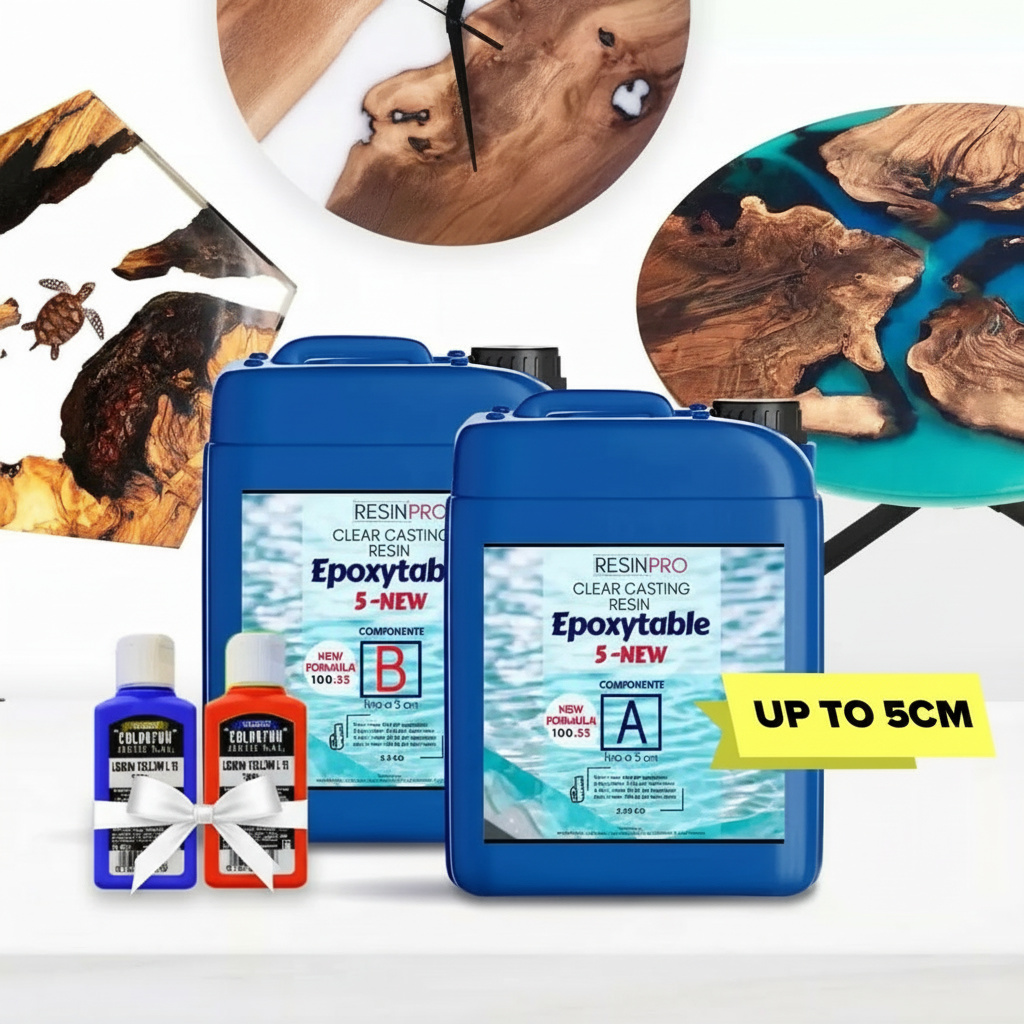
- “EpoxyTable 5-Five” – Deep Pour Epoxy Resin for Tables and Large Projects – Up to 5cm
- “Epoxytable 10-Ten” – Deep Pour Epoxy Resin for Tables, Up to 10cm Casting
- “Flowstone” – Complete Permeable Floor Kit with Pebbles and Resin
- Calculator or measuring tape
- Mixing containers and stirring sticks
- Protective gloves
- Pen and paper for calculations

Volume Makes All the Difference
Calculating resin quantity accurately prevents product waste and project hiccups. A simple volume check keeps your results predictable and professional. Always double-check your measurements and choose the right resin for the job’s thickness and shape—accuracy at this stage saves you both time and money.

Step 1: Measure Your Surface Area and Thickness
Accurate measurements are the foundation of a successful resin project. Begin by establishing the length, width, and intended thickness (or depth) of the area you’ll be pouring. For round or irregular shapes, measure the diameter (for circles) or average width. For objects with complex geometry, break the shape into smaller rectangles, circles, or other simple forms, calculate each volume separately, then total the results. Write all numbers down for reference.
Step 2: Calculate the Required Volume
Depth and shape matter most when determining resin volume. For rectangular or square surfaces, multiply length × width × thickness (in centimetres) to obtain the volume in cubic centimetres (cm³). For circular surfaces, use π × (radius²) × thickness. If you’re working with a kit like “Flowstone” – Complete Permeable Floor Kit with Pebbles and Resin, product guidance indicates optimal thickness and will often specify litre or kilo coverage per square metre. Remember: 1,000 cm³ = 1 litre of resin. For layered or deep pours, ensure you do not exceed the manufacturer’s recommended thickness per pour. For example, “Trasparente” is suitable for up to 2cm; for deeper casts, consider “EpoxyTable 5-Five” for up to 5cm or “Epoxytable 10-Ten” for up to 10cm.
Step 3: Mix a Little Extra and Allow for Losses
Mix slightly more than calculated to account for resin left behind in containers, absorption by porous surfaces, and any small calculation errors. As a rule of thumb, add around 10% to your calculated total. This safety margin prevents running short during a pour, which could leave noticeable seams or surface irregularities. Kits such as “EpoxyTable 5-Five” or “Epoxytable 10-Ten” provide detailed instructions to guide you on recommended overages and mixing procedures for best results.

Step 4: Consider Surface Absorption and Sealing
Certain materials such as bare wood, porous concrete, or some pebbles will absorb more resin than smooth, non-absorbent surfaces. Account for surface absorption by sealing wood or concrete with a thin primer layer of your chosen resin before the main pour. This not only prevents bubbles but reduces unintended resin loss into the surface. For permeable floors like those created with the “Flowstone” – Complete Permeable Floor Kit, follow product recommendations closely for optimal coverage.

Tips, Common Mistakes, and Troubleshooting
Don’t rush your calculations: Careful measurement and calculation are key to project success—misjudging area or thickness leads to waste or unfinished surfaces. Always check that you’re using the correct resin for your required pour depth. For deeper projects, layer multiple pours if needed to avoid overheating and ensure clarity. If a calculation feels complex, consult product-specific guides or reach out to support—each resin, such as “Trasparente” or “EpoxyTable 5-Five”, comes with its own mixing and pour recommendations tailored to help users avoid common pitfalls.
Visualise Your Project’s Success
Planning out your layers and accounting for real-world losses ensures that your casting or coating comes out perfect, every time. Whether you’re working with a detailed surface or a thick river table, seeing the process through with careful measurements guarantees a smooth, bubble-free finish and lasting durability.
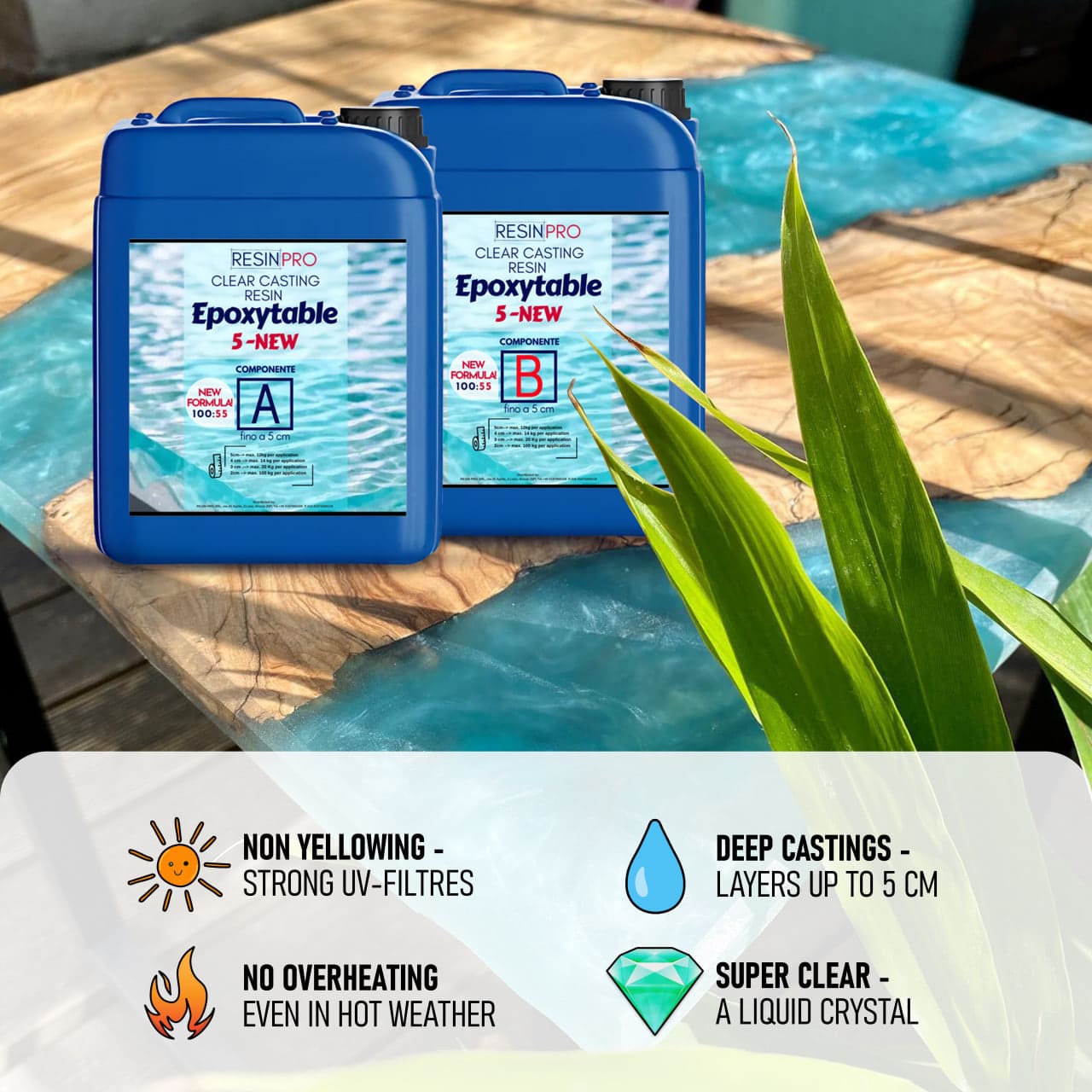
- "EpoxyTable 5-Five" – Deep Pour Epoxy Resin for Tables and Large Projects – Up to 5cmPrice range: £16.85 through £1,099.85"EpoxyTable 5-Five" is a deep pour epoxy resin for tables and large projects, designed for layers up to 5cm with clarity and durability.
- “Epoxytable 10-Ten” – Deep Pour Epoxy Resin for Tables, Up to 10cm CastingPrice range: £33.85 through £334.85“Epoxytable 10-Ten” resin is designed for super-deep pour projects such as tables with casting depths up to 10cm.
 "Flowstone" – Complete Permeable Floor Kit with Pebbles and ResinPrice range: £42.85 through £3,389.85Flowstone is a durable, permeable pebble and resin kit designed for UK driveways, footpaths and patios with guidance for appropriate resin use.
 "Trasparente" – Multipurpose Clear Epoxy Resin for Casting – Up to 2cmPrice range: £8.45 through £948.85"Trasparente" offers an ultra-clear formula suitable for detailed castings up to 2cm depth with a self-levelling, glossy finish.
Frequently Asked Questions
How do I measure the amount of epoxy resin needed?
Measure length, width, and thickness, multiply them for volume, and add a safety margin for wastage and absorption.
Should I mix extra resin for safety?
Yes, it is recommended to mix around 10% more than calculated to prevent running short due to absorption or container losses.
Which epoxy resin should I use for deeper casts?
Choose 'EpoxyTable 5-Five' for up to 5cm depth and 'Epoxytable 10-Ten' for projects requiring pours up to 10cm thick.
Should I seal bare wood before pouring epoxy?
Yes, sealing with a thin resin layer prevents excessive absorption and bubble formation for a smoother pour.
How do I calculate resin volume for odd shapes?
Break the project into simple shapes, calculate their volume individually, then add the totals for your overall figure.
What's the right epoxy for different surfaces?
Select a product suited for your material and thickness: 'Trasparente' for thin pours, 'EpoxyTable 5-Five' or '10-Ten' for deeper layers.
How is resin quantity determined for Flowstone floors?
Follow the product's guide based on desired thickness and surface area for the most accurate results.