 Free shipping on orders over £29,85
  Shipping Tracking!


 Google
 Facebook
← Back to How do you calculate the amount of epoxy resin?
If you’re working with porous materials, such as bare wood, stone, or concrete, you may find your epoxy resin soaks in more than expected. Adjusting your calculation ensures full coverage and helps you avoid running out of resin partway through your project.
Why Porous Surfaces Need Extra Resin
Unlike sealed or non-porous surfaces, materials like raw timber, MDF, or cement can absorb a portion of your mixed epoxy, reducing the amount left for a smooth final layer. This absorption can lead to dry-looking patches or uneven finishes if not anticipated.
How Much to Increase For Absorption
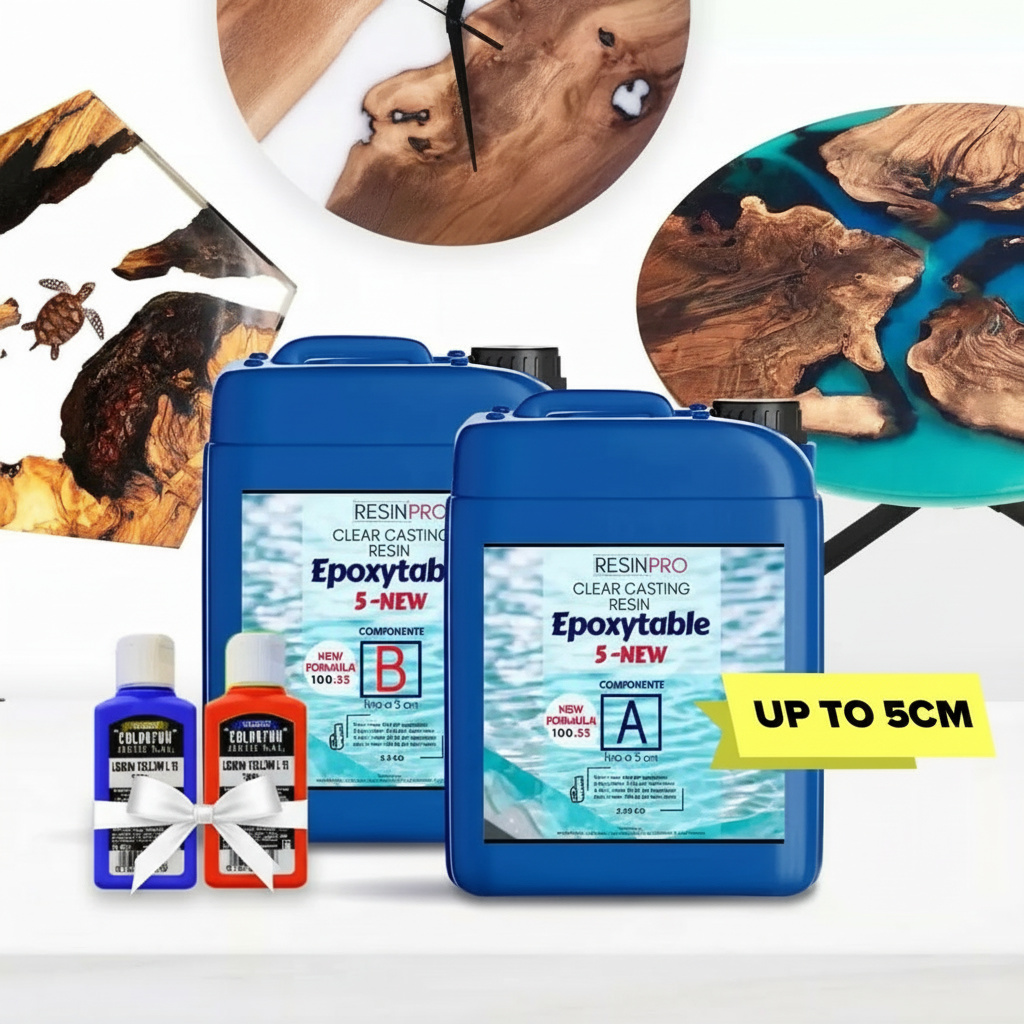
When preparing your resin calculation for porous substrates, it’s sensible to add a buffer to your estimated amount. A small increase—typically 10–20% extra—can compensate for resin that is soaked up during application. If you’re unsure, it’s better to have a little more on hand, especially for large table pours or floor coatings. Products like the EpoxyTable 5-Five are suitable for projects where coverage and absorption are concerns.
Tips for Working With Porous Materials
- Consider sealing very absorbent surfaces first with a thin layer of resin to minimise later uptake.
- Always factor in extra resin for your initial coat—particularly important for large projects or where the finish will be exposed and visible.
- For unique projects like pebble flooring, kits such as the Flowstone Complete Kit include surface-specific guidance.
When This Matters
Adding extra resin is crucial when working with raw wood, concrete, or unsealed stone, or when aiming for a flawless, bubble-free finish on showpiece projects.
Related products
Related guides
Factoring in the absorbency of your chosen surface makes resin calculation more reliable and helps ensure professional results. For more details about determining the right amount of epoxy for any type of project, see our main guide on how to calculate the amount of epoxy resin.