 Free shipping on orders over £29,85
  Shipping Tracking!


 Google
 Facebook
How do you calculate the amount of epoxy resin?
Volume calculation made easy for tables, floors, and more.
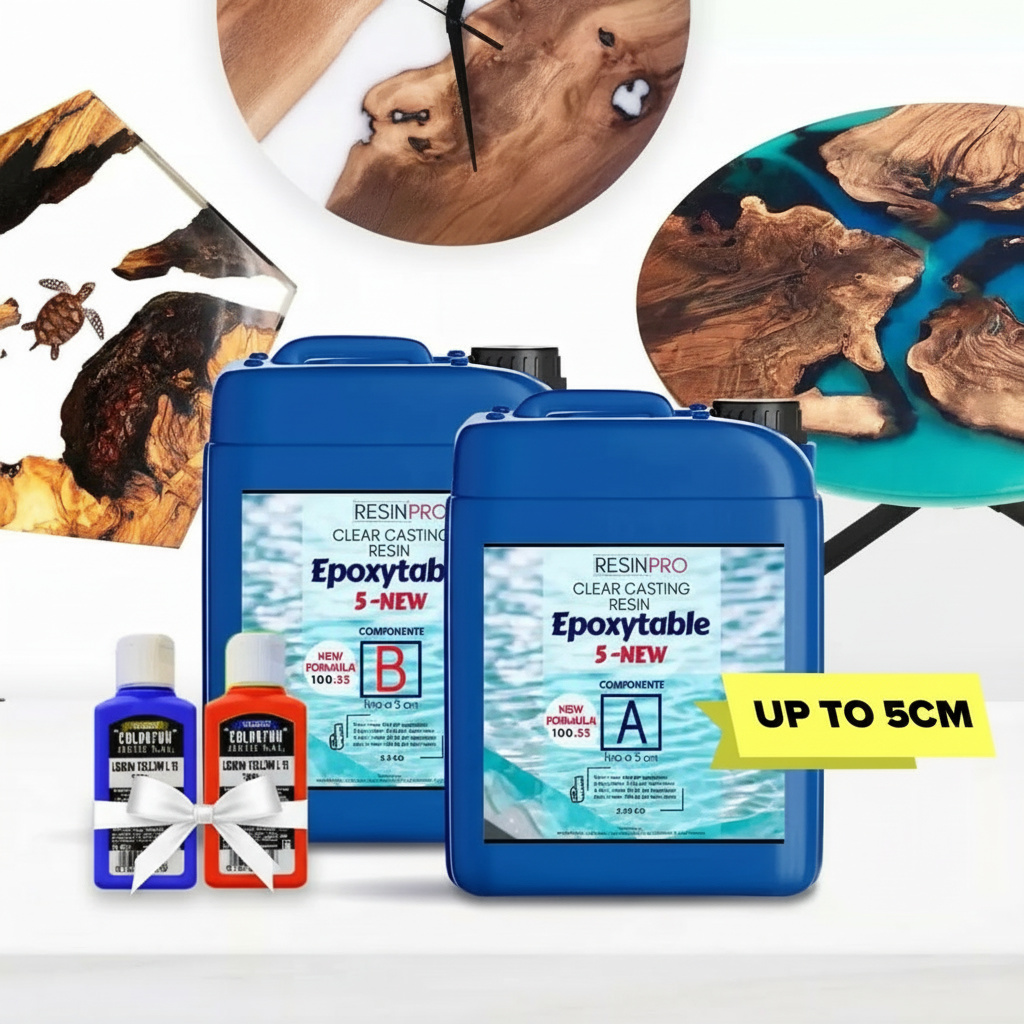

Knowing exactly how much epoxy resin you need is the key to a successful project, whether you’re crafting a river table, installing a permeable pebble driveway, or pouring resin for jewellery. This page explains the factors involved in determining resin quantity, highlights the most suitable product types, and guides you in choosing the perfect ResinPro resin for your application.
Understanding Resin Volume Calculation for Your Project
Accurate epoxy resin calculation depends on your project’s shape, size, and resin type. Tables and large castings require attention to thickness and pour limits. Outdoor pebble flooring mixes aggregate and resin in set proportions, while handcraft projects are usually based on mould volume. Factors such as mixing ratio by weight or volume, maximum casting thickness, and surface porosity all play a part in the total amount needed. Selecting the right resin up front helps avoid waste and ensures professional results.

See How Much Resin You Need
Visualise different resin projects and compare finished results to estimate quantity requirements with confidence. Take cues from real examples using EpoxyTable 5-Five and Epoxytable 10-Ten, alongside Flowstone outdoor kits.
Deep Pour Tables: Resin Choices for Accurate Calculation
For deep pour table projects, such as river tables or thick artistic castings, the resin you choose must match the pour depth. “EpoxyTable 5-Five” – Deep Pour Epoxy Resin for Tables and Large Projects – Up to 5cm is ideal for projects with pouring depths between 2cm and 5cm. Its low viscosity formula results in bubble-free finishes, and clear instructions specify maximum single-pour thickness for safe curing.
For ultra-thick casts up to 10cm, “Epoxytable 10-Ten” – Deep Pour Epoxy Resin for Tables, Up to 10cm Casting is formulated with a low exothermic reaction, making it safe for especially deep projects. Both products specify the pour maximum and mixing ratios, so accurate resin quantities can be calculated based on your table’s volume: length × width × height (in cm), then converted to litres (divide by 1,000), and finally by weight (multiply by resin density, typically 1.1g/cm³ unless otherwise specified in technical data).
Permeable Pebble Floors: Resin-to-Aggregate Ratios
When calculating for outdoor surfaces like driveways, patios, or footpaths, resin usage combines both the base area and traditional resin-to-aggregate ratios. “Flowstone” – Complete Permeable Floor Kit with Pebbles and Resin makes this straightforward. Each kit is specified for a certain surface area and includes clear resin guidance—typically, the product details or an online calculator inform you how much resin to use per square metre based on desired thickness and the aggregate size. The type of aggregate also influences resin choice: low-yellowing epoxy for coloured stones, or non-yellowing polyurethane for white aggregates, ensuring long-lasting finish and durability.
Small Craft Projects and Jewellery: Resin Volume Made Simple
Handcrafting jewellery or small decorative pieces involves much smaller resin quantities, where calculation needs to be both precise and easy. “One-2-One” – Epoxy Resin for Handcraft, 1:1 Mixing Ratio is perfect for this, with a simple 1:1 ratio by volume—just measure equal parts resin and hardener to fill your mould or coating area. This makes determining the right amount quick and virtually error-free, especially for beginners and intricate designs.
Key Tips for Precise Epoxy Calculations
Always measure your project’s dimensions carefully and remember to account for product-specific maximum pour depths and mixing ratios. For large surfaces or deep castings, break pours into multiple layers if necessary and allow recommended curing time between each. When working with pebble floors, follow kit guidance and never exceed advised ratios to ensure permeability and strength. For crafts, double-check mould volumes before mixing to reduce waste.
Expert Insight: Achieve Professional Results
Measure accurately and respect maximum pour depths for your chosen resin. Perform a small test pour if uncertain. Use only trusted resin brands for dependable curing, durability, and clarity. Refer to One-2-One for simple crafts, or stick to EpoxyTable 5-Five for tables.
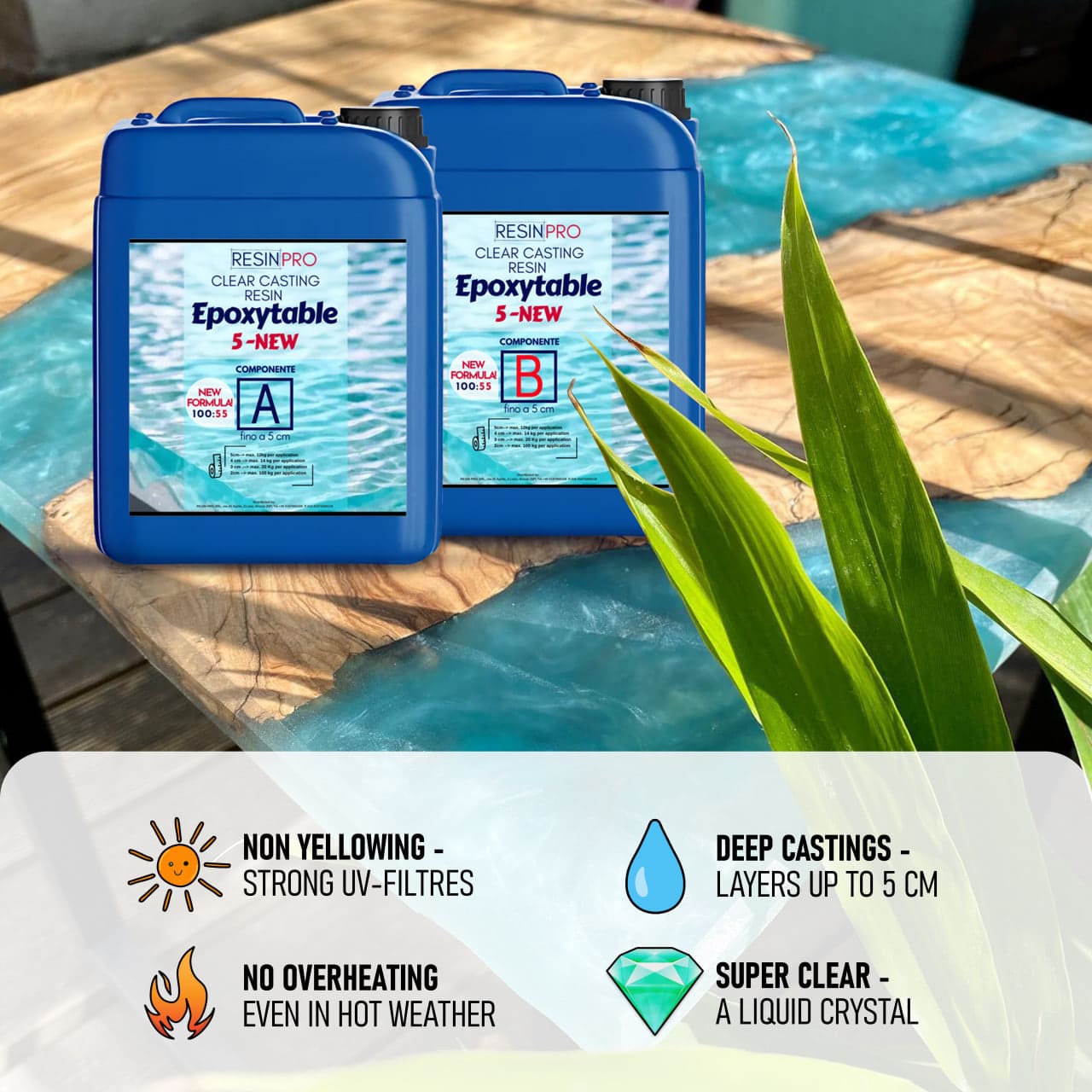
- "EpoxyTable 5-Five" – Deep Pour Epoxy Resin for Tables and Large Projects – Up to 5cmPrice range: £16.85 through £1,099.85EpoxyTable 5-Five is a deep pour resin designed for tables and large projects, offering high transparency and UV resistance.
 “Epoxytable 10-Ten” – Deep Pour Epoxy Resin for Tables, Up to 10cm CastingPrice range: £33.85 through £334.85“Epoxytable 10-Ten” is designed for deep pour applications, suitable for creating tables with castings up to 10cm thickness.
 "Flowstone" – Complete Permeable Floor Kit with Pebbles and ResinPrice range: £42.85 through £3,389.85"Flowstone" offers a durable, permeable pebble and resin floor kit with simple guidance for UK outdoor driveways and paths.
 "One-2-One" – Epoxy Resin for Handcraft, 1:1 Mixing RatioPrice range: £14.85 through £56.85"One-2-One" – Epoxy Resin is suitable for jewellery and decorative projects with an easy 1:1 mixing ratio.
Frequently Asked Questions
How do I calculate the resin needed for a large table project?
Multiply the table length, width, and desired thickness to find volume in cm³, then convert to litres and check the product's recommended maximum pour depth.
How do I determine the amount of resin required for a permeable pebble floor?
Follow the guidance provided in each Flowstone kit as it’s designed for a specific area and resin-to-pebble ratio. Different thicknesses may require kit adjustments.
Why do some resins use weight ratios and others use volume ratios?
Mixing ratios depend on resin formulation; some require precision by weight (e.g., 100:55), while others are balanced for volume (1:1) to simplify measurement.
Can I pour more than the recommended thickness at once?
It’s not advised. For safe curing, always respect the product's maximum pour depth and, if needed, work in layers with curing time between pours.
How much epoxy resin do I need for a small craft or jewellery piece?
Measure your mould’s internal volume using water, then mix an equal volume of resin and hardener if using a 1:1 system like One-2-One.
How long should I wait between layered resin pours?
Allow the recommended period—often 6–8 hours—between each pour to ensure proper curing and structural integrity.
Should I increase the resin amount when working with porous surfaces?
Yes, slightly increase the total if the substrate is porous, as more resin will be absorbed during application.