 Free shipping on orders over £29,85
  Shipping Tracking!


 Google
 Facebook
How to calculate the amount of epoxy resin?
Ensure you buy the correct resin volume for your project
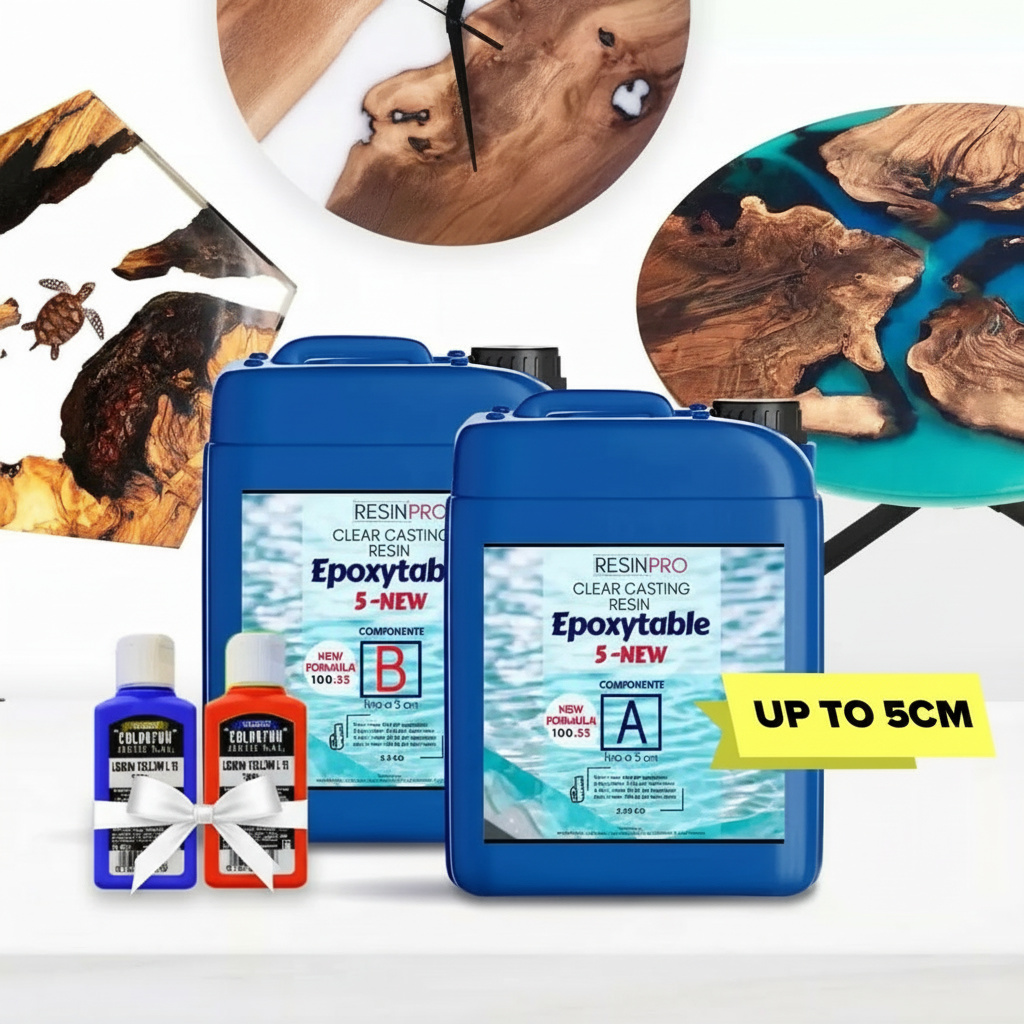
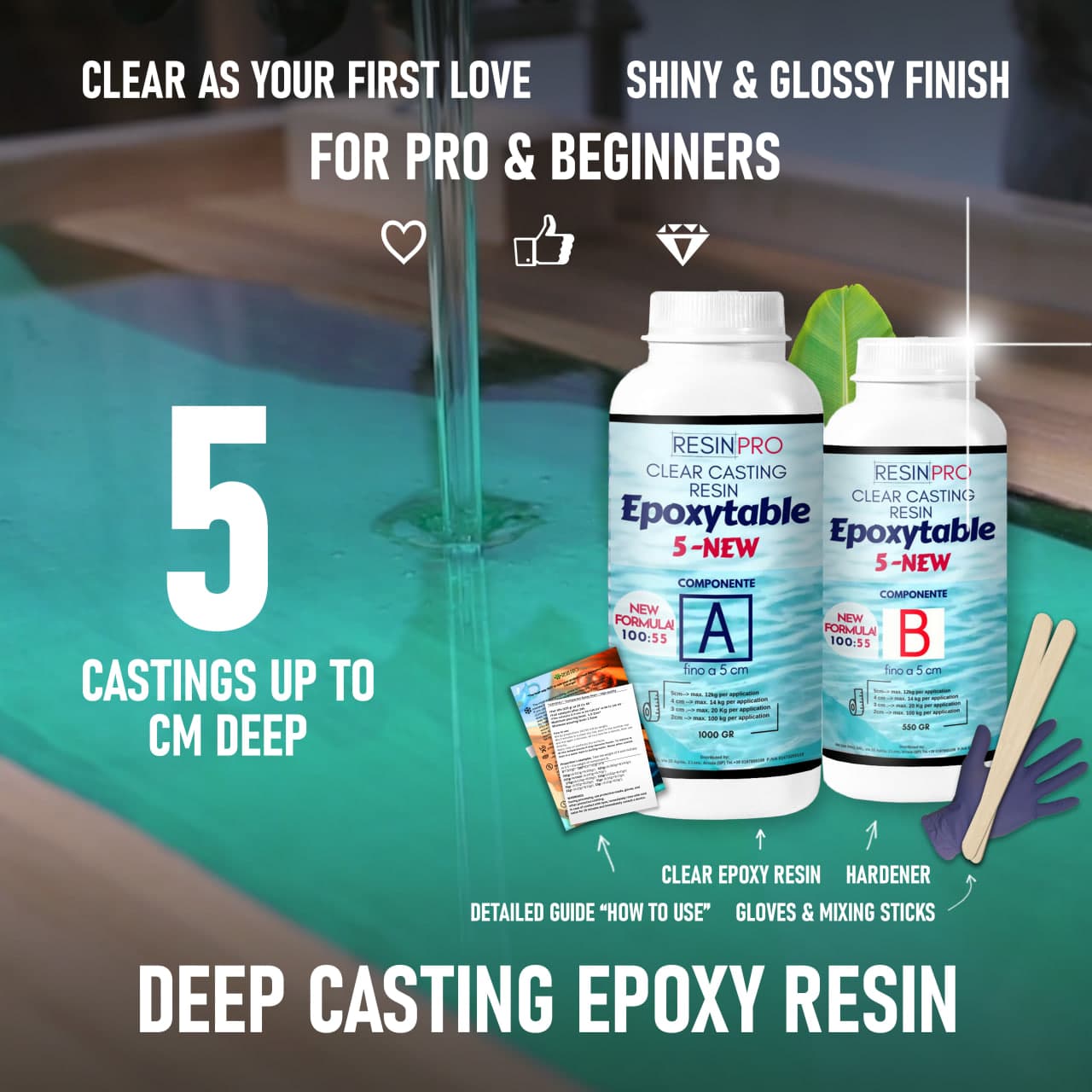
Calculating the exact amount of epoxy resin required is crucial for a successful project, whether you’re working on river tables, large castings, permeable flooring, or artistic surfaces. This guide is tailored for makers, professionals, and DIYers who want to ensure precise resin estimation to avoid waste and guarantee a smooth application. Here, you’ll find the key considerations and top product options that make measuring resin quantities straightforward for any application.
Epoxy Resin Calculation Overview and Comparison
The correct epoxy resin quantity depends on your project’s surface area, thickness, and the type of resin being used. Table castings, decorative river tables, permeable floors, and pebble binders each have their own requirements. Low exothermic reactions and viscosity play a role in how deep you can pour or how easily the resin blends with aggregates. “EpoxyTable 5-Five” – Deep Pour Epoxy Resin for Tables and Large Projects – Up to 5cm is ideal for medium-thickness projects, while “Epoxytable 10-Ten” – Deep Pour Epoxy Resin for Tables, Up to 10cm Casting is engineered for deeper pours. For floors, solutions like “Flowstone” – Complete Permeable Floor Kit with Pebbles and Resin and “Trasparente” – Epoxy Binder for Coloured Pebbles and Grits come with detailed mixing and coverage guidance for precise calculation.

Visual Guide to Epoxy Resin Volumes
See how different resin thicknesses and finishes look in real projects. Our gallery will help you visualise the outcome and make quantity calculations easier for any type of casting or flooring.
“EpoxyTable 5-Five” – Deep Pour Epoxy Resin for Tables and Large Projects – Up to 5cm
This epoxy resin is developed for projects needing up to 5cm thickness in a single pour, supporting medium to large-scale tables and creative castings. Its low exothermic reaction allows thicker applications without overheating, and the long working time means you can pour and spread the resin with ease. The simple 100:55 (weight) mixing ratio further simplifies your calculation. If you need advice on working with larger surfaces or want a resin trusted by thousands, “EpoxyTable 5-Five” – Deep Pour Epoxy Resin for Tables and Large Projects – Up to 5cm is a reliable choice.
“Epoxytable 10-Ten” – Deep Pour Epoxy Resin for Tables, Up to 10cm Casting
For exceptionally deep river tables or artistic resin work, “Epoxytable 10-Ten” allows single pours up to 10cm thick. This is an optimal solution where the volume calculation is critical—especially when working on very thick or oversized projects. It maintains a low exothermic reaction and provides a working window that supports careful measurement and preparation. Find it on the resins for tables and surfaces finishes section, or go directly to “Epoxytable 10-Ten” – Deep Pour Epoxy Resin for Tables, Up to 10cm Casting for full information.
“Flowstone” – Complete Permeable Floor Kit with Pebbles and Resin
When calculating materials for outdoor, decorative, or permeable stone floors, the “Flowstone” – Complete Permeable Floor Kit with Pebbles and Resin streamlines the estimation. Each kit matches a specific surface area, and product guidance covers the right resin-to-stone mix for optimal drainage and durability, making quantity calculation and application more accessible, even for large outdoor spaces.
“Trasparente” – Epoxy Binder for Coloured Pebbles and Grits
This clear epoxy binder is intended for combining with coloured pebbles and grits in flooring. If you’re looking to calculate binder quantities, “Trasparente” – Epoxy Binder for Coloured Pebbles and Grits includes practical recommendations, like using around 3% resin by weight of your stones. This ensures a bubble-free, secure, and decorative result without running short or wasting material.
Tips for Accurate Epoxy Resin Calculation
Always measure your project’s length, width, and planned pouring depth. Use the standard volume formula (Length x Width x Height) to estimate litres needed, accounting for the resin’s mixing ratio. For flooring, refer to product instructions on appropriate binder-to-stone ratios, and factor in surface texture and porosity for best results. When in doubt, slightly overestimate to prevent shortages mid-application.
Pro Tips for Calculating Epoxy Resin
Double-check all your surface measurements and choose a resin with the right pouring depth for your task. Calculate a small surplus to account for absorption or minor spillage in creative or uneven projects.
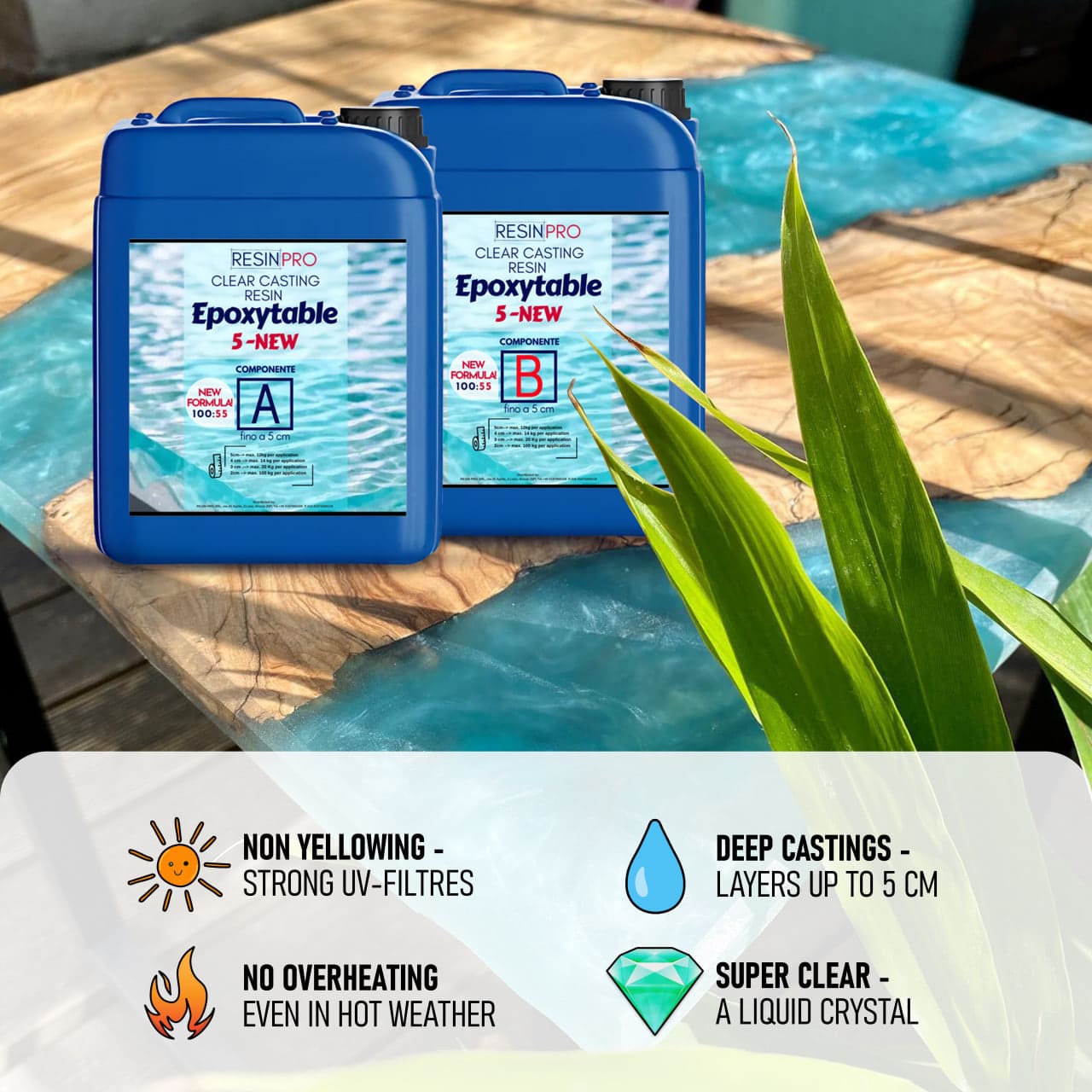
- "EpoxyTable 5-Five" – Deep Pour Epoxy Resin for Tables and Large Projects – Up to 5cmPrice range: £16.85 through £1,099.85"EpoxyTable 5-Five" is designed for deep pour casting projects up to 5cm, suitable for tables and large artistic items.
 “Epoxytable 10-Ten” – Deep Pour Epoxy Resin for Tables, Up to 10cm CastingPrice range: £33.85 through £334.85“Epoxytable 10-Ten” is designed for deep casting up to 10cm, suitable for tables and large artistic projects in this context.
 "Flowstone" – Complete Permeable Floor Kit with Pebbles and ResinPrice range: £42.85 through £3,389.85Flowstone offers a durable, permeable pebble and resin flooring kit with clear guidance for UK conditions and multiple colour options.
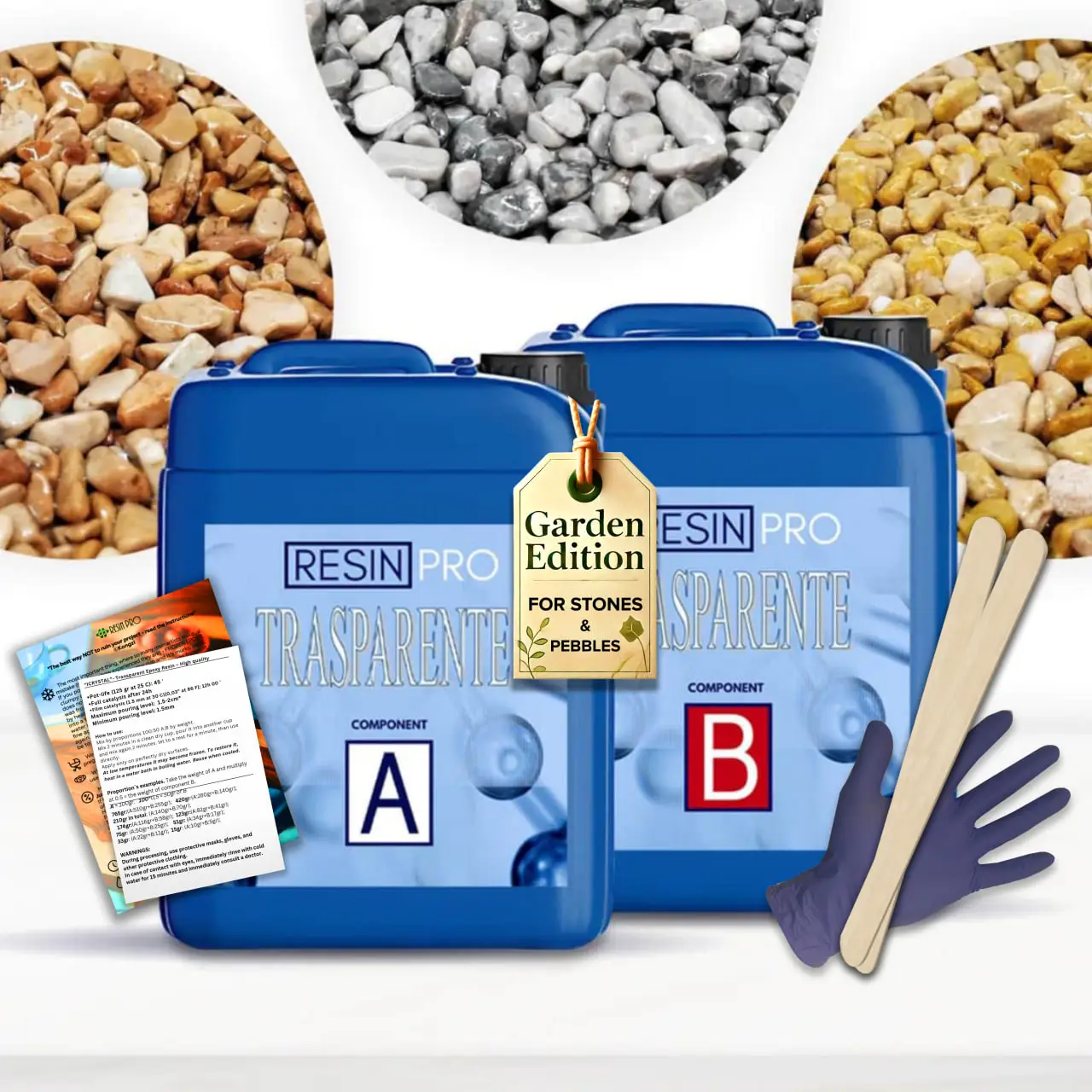 "Trasparente" – Epoxy Binder for Coloured Pebbles and GritsPrice range: £31.85 through £948.85"Trasparente" is a clear epoxy binder designed for coloured pebbles and grits, suitable for natural aggregates in flooring projects.
Frequently Asked Questions
Which epoxy resin should I use for casting thicker than 2cm?
For castings between 2cm and 5cm, use EpoxyTable 5-Five. For castings up to 10cm, Epoxytable 10-Ten is recommended.
Is it necessary to layer the pour when casting large or thick projects?
Yes, layer pours when one side exceeds 100cm or if total resin weight is above 8kg. Wait 6–8 hours between layers to prevent overheating.
What is the mixing ratio for EpoxyTable 5-Five resin?
The correct mixing ratio is 100 parts resin to 55 parts hardener by weight.
Can this resin be used for projects with embedded objects like seashells or stones?
Yes, pour a thin first layer and let it partially set before embedding objects to reduce bubble formation.
How to select epoxy resin based on project size?
For up to 5cm thick, use EpoxyTable 5-Five; for up to 10cm, choose Epoxytable 10-Ten. For pebble or permeable floors, use binders like Trasparente or Flowstone kits.
How should I calculate the amount of resin binder for a coloured pebble floor?
Use about 3% resin binder by stone weight. For 20–25kg aggregate, use 400–800g epoxy, varying with granule size.
Can I install a permeable floor myself?
Yes, installation is straightforward for most users. For large surfaces, a cement mixer can simplify the process.