 Free shipping on orders over £29,85
  Shipping Tracking!


 Google
 Facebook
How do you thin RC epoxy resin?
Choosing the right resin for thinning and smooth RC finishes


Thinning epoxy resin for RC modelling projects can greatly affect clarity, curing speed, and the ease of application. This page guides hobbyists and DIYers through selecting the best epoxy resin when thinning is required, comparing formulas, mixing ratios, viscosity, and end-use suitability for a flawless RC finish.
Comparing RC Epoxy Resins for Thinning
Not all epoxy resins behave the same when thinned for RC (radio-controlled) models or dynamic hobby work. Key distinctions include viscosity (thickness), recommended mixing ratios, and lofted features such as clarity and UV resistance. Some formulas are designed to flow smoothly in thin layers, while others support deep pours. Choosing the right resin will depend on whether you need easy mixability, ultra-clear results, or resistance to yellowing over time.
Visual Examples of Thinned Epoxy Resin in RC Work
Observe the clarity and flow in various RC model finishes using different epoxy resins. Notice how low-viscosity and carefully mixed thinned resins result in bubble-free, glossy surfaces that highlight fine details without compromising the structure. These examples serve as reference points for what can be achieved with the right product and technique.
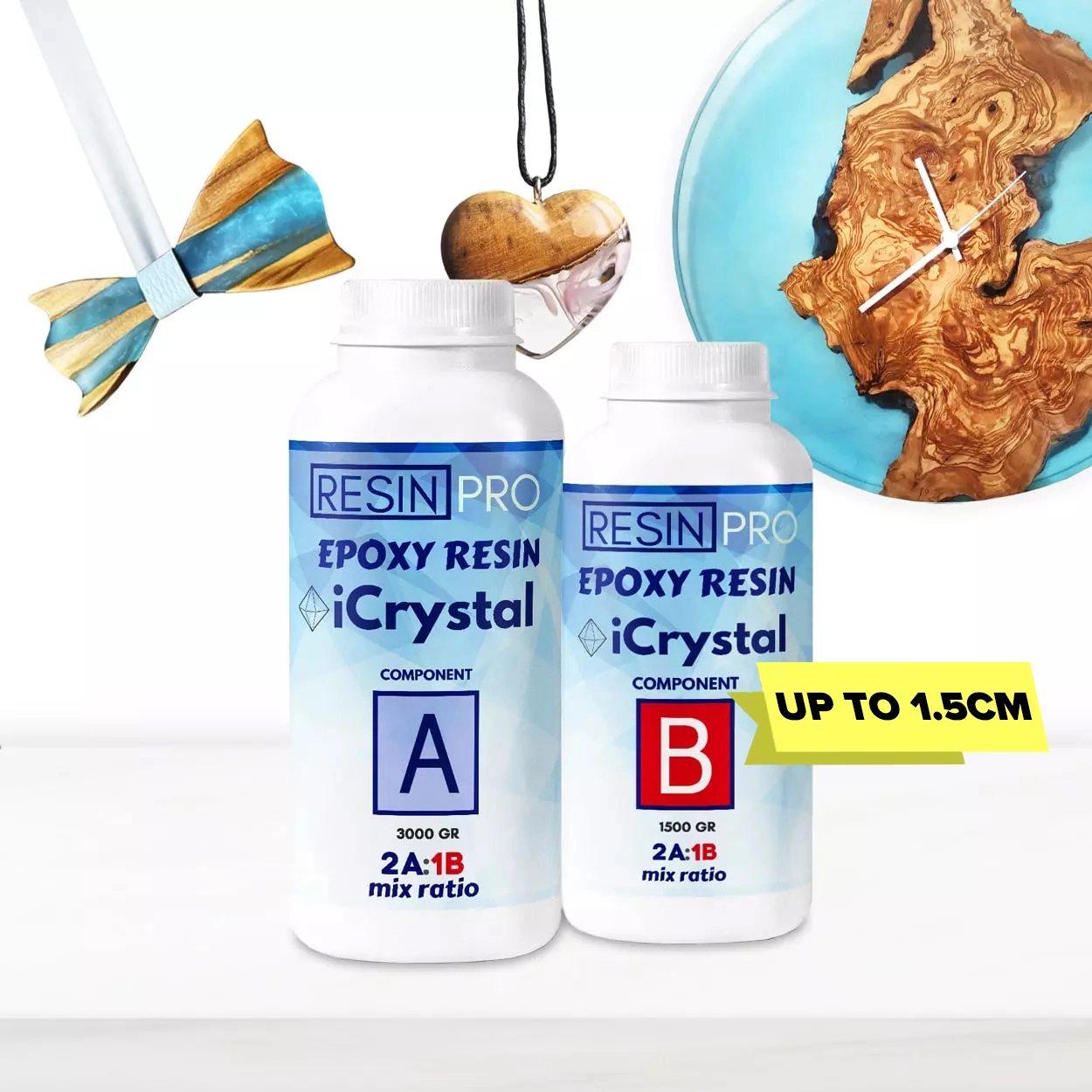
“Icrystal” – Clear Epoxy Resin – Odourless Formula – Up to 1.5cm
The “Icrystal” – Clear Epoxy Resin – Odourless Formula – Up to 1.5cm offers a crystal clear finish suitable for both beginners and professionals. Its odourless formula with 2:1 mixing ratio for ease of use makes it ideal for hobbyists working in enclosed spaces or those sensitive to chemical smells. Added UV filtering provides a UV filter included to protect from yellowing, with 10 years warranty, ensuring your RC models retain their clarity for a decade or more. This resin’s high scratch resistance means your projects stay pristine, while its manageable viscosity makes for easier thinning when required by your application technique.
“One-2-One” – Epoxy Resin for Handcraft, 1:1 Mixing Ratio
The “One-2-One” – Epoxy Resin for Handcraft, 1:1 Mixing Ratio stands out for its easy 1:1 by volume mixing ratio reduces preparation errors. This makes it especially suitable for those new to resin work or users who prefer straightforward, hassle-free thinning and mixing. With a medium viscosity suitable for detailed decorative work and includes UV filter for resistance to yellowing with 10-year warranty, it’s popular in crafting and jewellery but translates well to RC model coatings that need controlled flow and a flawless finish.
“EpoxyTable 5-Five” – Deep Pour Epoxy Resin for Tables and Large Projects – Up to 5cm
When working on larger RC projects or seeking deep, bubble-free layers, “EpoxyTable 5-Five” – Deep Pour Epoxy Resin for Tables and Large Projects – Up to 5cm is notable for its allows deep casting up to 5 cm with low exothermic reaction preventing overheating. The strong UV filters support resistance to yellowing for up to 5 years and high mechanical resistance for scratchproof surface suitable for furniture use bring an extra dimension to resin-cast RC bodies or bases, especially where clarity and freedom from bubbles are crucial. Its lower viscosity compared to standard craft resins offers an advantage when thinning is necessary, as it tends to self-level and release bubbles more readily.
“Epoxytable 10-Ten” – Deep Pour Epoxy Resin for Tables, Up to 10cm Casting
The “Epoxytable 10-Ten” – Deep Pour Epoxy Resin for Tables, Up to 10cm Casting is engineered for extra-thick pours, but its suitable for castings up to 10 cm thickness with low exothermic reaction and super low viscosity ensures bubble-free finish and long working time make it relevant when thinning is needed for large volume RC projects or base layers. Its strong UV filters provide non-yellowing clarity guaranteed for 5 years, so even heavily thinned layers remain optically clear over time. Use this when you need maximum working time and pour depth without sacrificing finish quality.
Tips for Thinning and Applying RC Epoxy Resin
When thinning epoxy resin for RC use, always follow the manufacturer’s instructions for ratio and mixing procedure—never add generic solvents or thinners unless specifically advised. If your goal is a more fluid consistency, consider resins with built-in low viscosity, such as “EpoxyTable 5-Five” or “Epoxytable 10-Ten,” which are designed for bubble-free flow without sacrificing transparency. For small, delicate components, opt for resins with a balanced viscosity like the “Icrystal” or “One-2-One” options. Remember, excessive thinning can compromise cure strength and surface integrity. Always conduct a small test pour before committing to your main project.
Expert Advice for Smooth Resin Application
Use scales or precise measuring tools for mixing and always mix slowly to avoid trapping air. Avoid over-thinning as it can cause weak spots or tackiness on RC models. Where possible, choose purpose-formulated resins for your intended thinned application to ensure a reliable, durable result.

- "Icrystal" – Clear Epoxy Resin – Odourless Formula – Up to 1.5cmPrice range: £11.65 through £954.85"Icrystal" transparent epoxy resin offers high transparency and scratch resistance, suitable for tables and surfaces in projects with this thinning…
- "One-2-One" – Epoxy Resin for Handcraft, 1:1 Mixing RatioPrice range: £14.85 through £56.85ONE-2-ONE epoxy resin features an easy 1:1 volume mixing ratio and medium viscosity for crafting clear, gloss-finished jewellery and decorative…
 "EpoxyTable 5-Five" – Deep Pour Epoxy Resin for Tables and Large Projects – Up to 5cmPrice range: £16.85 through £1,099.85"EpoxyTable 5-Five" is designed for deep pour projects like tables, offering non-yellowing properties and a mechanical resistant surface.
 “Epoxytable 10-Ten” – Deep Pour Epoxy Resin for Tables, Up to 10cm CastingPrice range: £33.85 through £334.85“Epoxytable 10-Ten” epoxy resin is designed for deep pour projects, suitable for castings up to 10cm thick with low viscosity and UV resistance.
Frequently Asked Questions
What is the best mixing ratio for RC epoxy thinning?
Always follow the resin manufacturer’s recommended ratio, such as 2:1 or 1:1 by volume.
Can you thin epoxy resin with solvents for RC use?
Most resins should not be thinned with generic solvents as this can affect curing and clarity.
Which resin is best for thin, clear RC model layers?
"Icrystal" epoxy resin offers high transparency for thin applications with minimal odour.
Will thinning epoxy resin affect bubble release?
Resins with lower viscosity, such as deep pour formulas, help bubbles escape more easily.
How can you achieve a bubble-free finish on RC parts?
Mix slowly and use low-viscosity resin; pour in thin layers for best results.
Is UV resistance important for RC epoxy surfaces?
Yes, UV resistance keeps resin surfaces transparent and prevents yellowing over time.