 Free shipping on orders over £29,85
  Shipping Tracking!


 Google
 Facebook
How to make a garage entrance floor with resin?
Plan, prepare, and pour a lasting resin-bound entrance floor

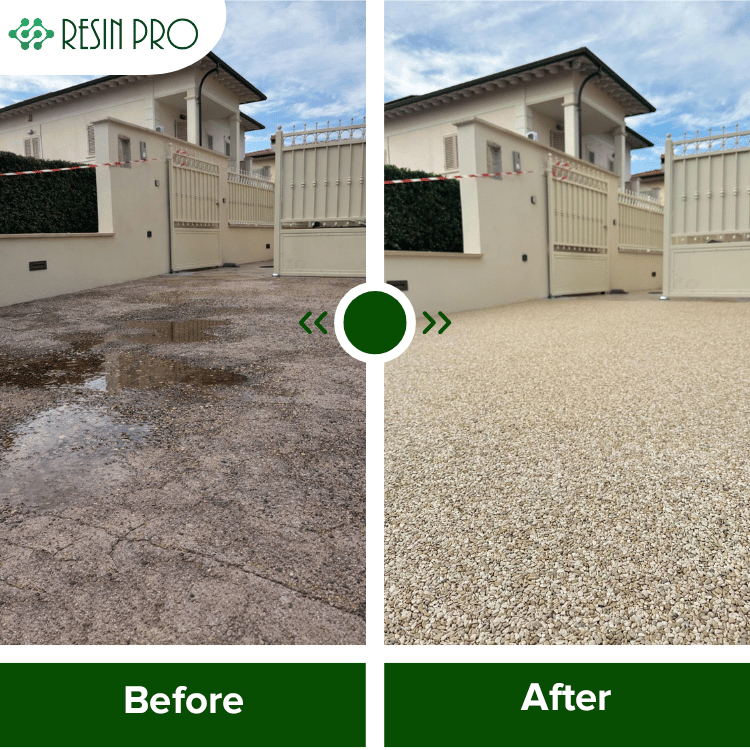
Building a tough and attractive resin-bound garage entrance floor offers enhanced protection against the elements, long-term durability, and impressive visual appeal. This guide explains the process from initial preparation to applying a professional-quality resin finish, ensuring superior drainage and slip resistance for UK conditions.
What You’ll Need
- “Flowstone” – Complete Permeable Floor Kit with Pebbles and Resin – for creating robust, water-draining surfaces on driveways and garage entrances
- “Polirock” – Polyurethane Binder for White Stones, 2kg Two-Component Kit – ideal for clear, non-yellowing binding of white or natural stone aggregates
- “Trasparente” – Epoxy Binder for Coloured Pebbles and Grits – for durable finishes with coloured grits or dark stone aggregates
- “Resinstone” – One-Component Methacrylic Resin for Concrete Floors and Driveways – provides deep sealing and weather protection for concrete bases
- Protective gloves, mask, and goggles
- Mixing bucket or cement mixer
- Flat trowel and spiked roller
- Vacuum or broom
- Water and mild detergent
- Masking tape or edge strips (if needed)
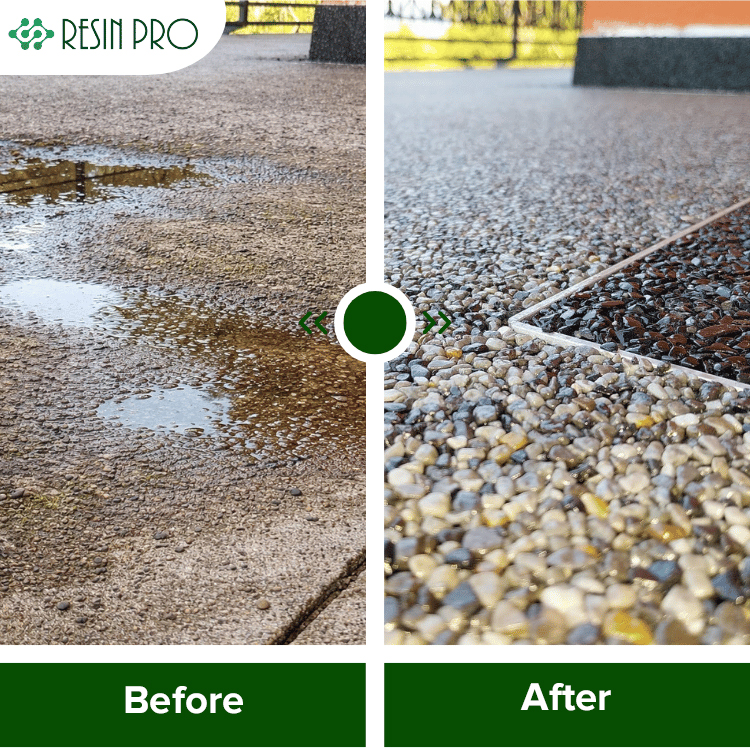
Mixing Pebbles and Resin: Visual Guide
See how aggregates are evenly coated with resin for a consistent, lasting garage floor. Proper mixing ensures no dry spots and enhances durability. Uniformly mixed resin-bound pebbles prevent early breakdown and maintain top performance over time.
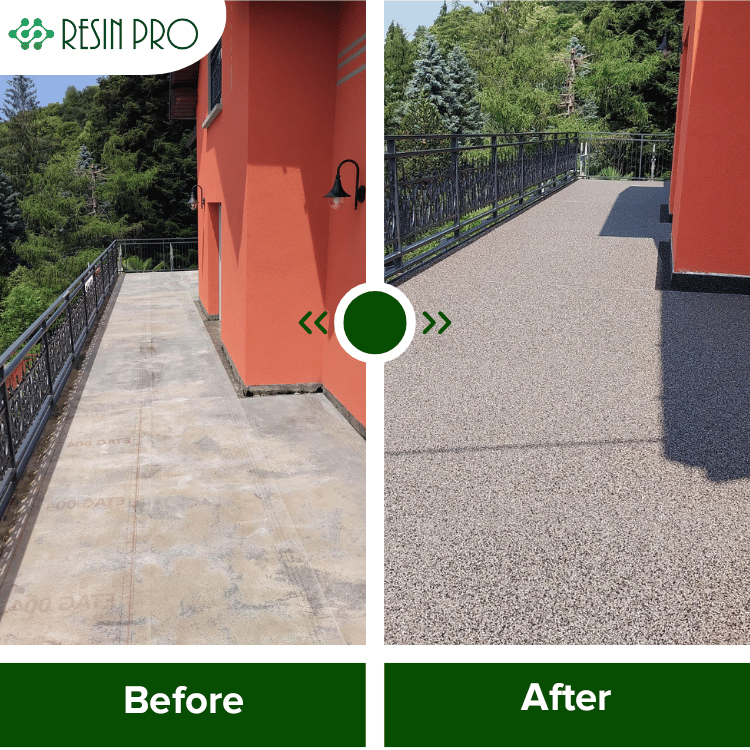
Step 1: Prepare and Clean the Substrate
Begin by thoroughly cleaning the existing garage entrance surface, whether it is concrete or a previously prepared base. Remove all loose debris, dust, grease, and oil stains with a stiff broom and, if necessary, a mild detergent solution. Allow the substrate to dry completely; resin will not bond properly to damp or contaminated surfaces.
Inspect the area for cracks or uneven spots and repair as needed to ensure a firm, stable base. If working with a concrete foundation, consider sealing it first with “Resinstone” – One-Component Methacrylic Resin to enhance water resistance and improve adhesion.
Step 2: Select and Mix Your Resin and Aggregates
Decide on the right binding system for your floor’s design and durability needs. For mixed coloured or dark stones, use a UV-resistant product such as “Trasparente” – Epoxy Binder for Coloured Pebbles and Grits. If you prefer a bright, non-yellowing look with white stones or want clear binding, choose “Polirock” – Polyurethane Binder for White Stones.
Accurately weigh both the resin and dry, clean stone aggregate for the right ratio. Mix the resin components first as instructed, then add to the stones, stirring thoroughly with a trowel or low-speed mixer until each stone is evenly coated and glistens – avoiding pockets of dry materials. For larger surfaces, using a cement mixer can help achieve consistent results.
Step 3: Pour and Spread the Resin Mixture
Pour the bound aggregate mixture onto your prepared garage entrance area. Use edge strips or masking tape to define boundaries and keep edges tidy. Spread the mixture evenly with a flat trowel, pressing lightly to create a uniform thickness and level finish. Aim for at least a 15–20 mm depth for drive-over surfaces. Compact gently but avoid overworking, as this can force the resin to the surface and affect permeability.
If installing a full system, the “Flowstone” – Complete Permeable Floor Kit combines both resin and aggregate for a reliably draining finish. Work methodically in small sections to maintain clean edges and prevent the mixture setting before finishing.

Step 4: Finishing Touches and Curing
Pass over the freshly laid surface with a spiked roller or a lightly oiled float to remove air bubbles and enhance bond between stones. Double-check around drains or slopes to avoid puddling.
Allow the floor to cure fully according to your resin’s instruction – typically 10–24 hours before walking and 48 hours before driving. Protect the area from rain, excessive dust, or traffic until the curing process completes. This ensures resilience against UK weather and promotes a longer-lasting finish.
Tips and Common Mistakes to Avoid
Choose the Right Resin for Your Surface: Pick a stone binder suited to your aggregate’s colour and your exposure needs to prevent yellowing or early wear.
Thoroughly Clean and Prepare the Substrate: Skip this and you risk poor adhesion or surface failures.
Ensure Even Mixing and Application: Incomplete mixing results in weak bonding or patchy appearances.
Let the Floor Cure Fully Before Use: Premature use can damage the resin and affect permeability or appearance.
Check weather forecasts and only work during mild, dry periods for the best result. Always wear protective gear and ventilate your workspace.
Cured Resin-Bound Garage Entrance in Detail
This close-up reveals the look and performance of a fully set resin-bound garage entrance floor. Notice the seamless bond between pebbles and resin, which delivers permeability, strength, and safety even in harsh UK weather.
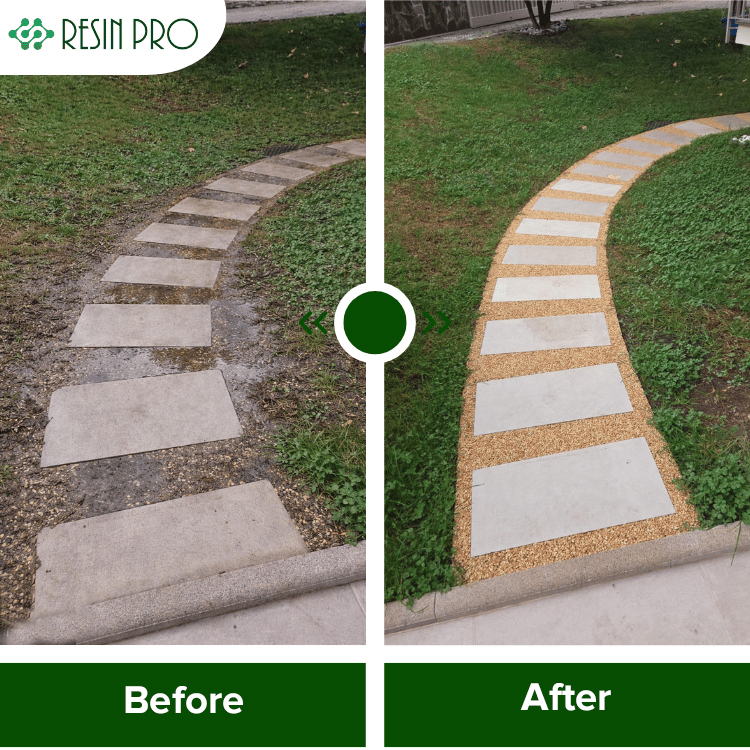
- "Flowstone" – Complete Permeable Floor Kit with Pebbles and ResinPrice range: £42.85 through £3,389.85Flowstone is a durable, permeable pebble and resin kit suitable for driveways and patios, with guidance for lasting colour and simple application.
- "Polirock" – Polyurethane Binder for White Stones, 2kg Two-Component Kit£58.85"Polirock" polyurethane binder creates durable, clear, and weather-resistant outdoor stone surfaces suitable for decorative garage floors.
 "Trasparente" – Epoxy Binder for Coloured Pebbles and GritsPrice range: £31.85 through £948.85"Trasparente" is a transparent epoxy binder suitable for coloured pebbles and grits with UV resistance, designed for use in flooring projects.
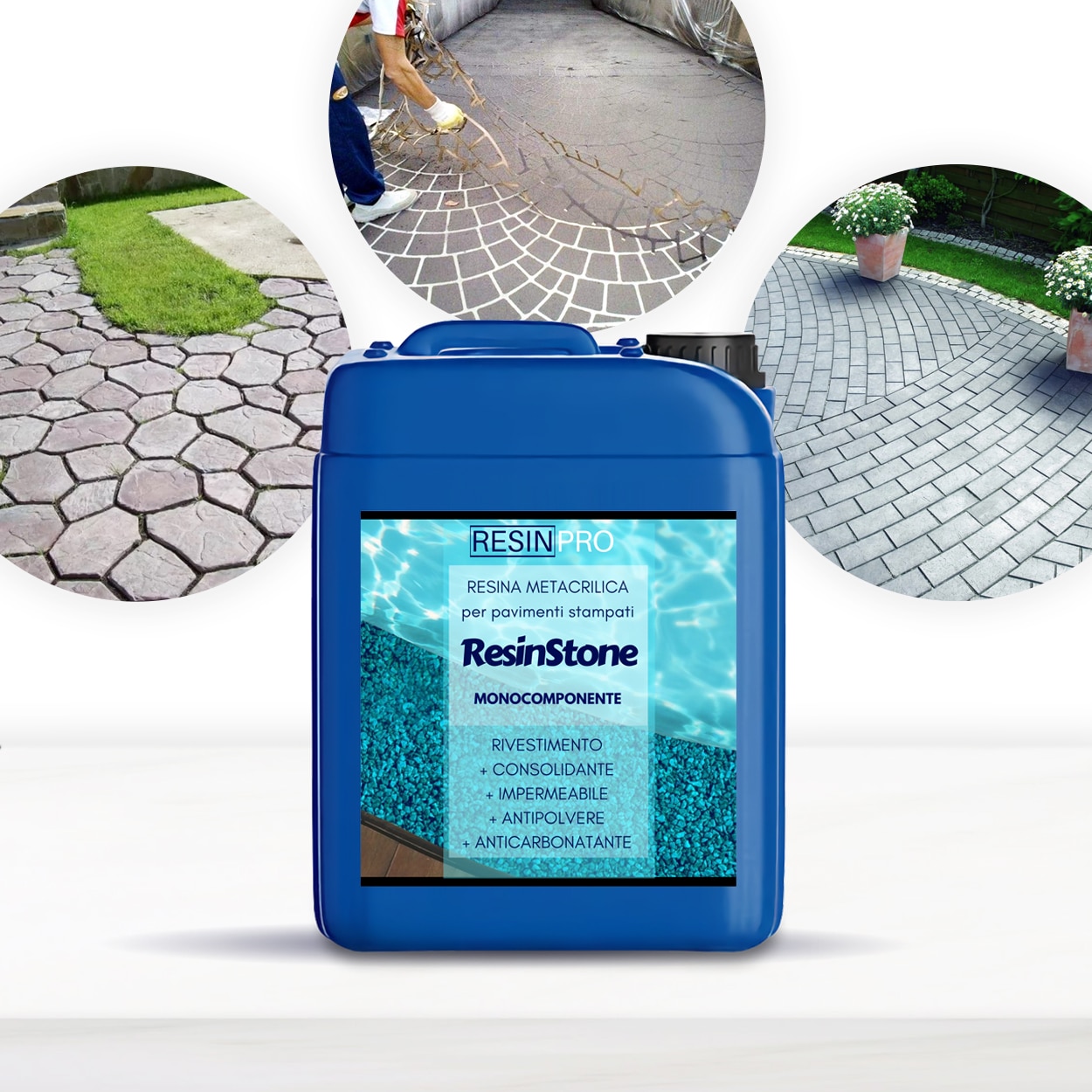 "Resinstone" – One-Component Methacrylic Resin for Concrete Floors and DrivewaysPrice range: £29.85 through £59.85"Resinstone" is a one-component methacrylic resin designed for sealing and protecting concrete floors and driveways, suitable for garage entrance…
Frequently Asked Questions
Which resin is best for a garage entrance exposed to UK weather?
Use a UV-resistant epoxy or polyurethane resin designed for exterior use and drainage, such as those in the Flowstone or Polirock product lines.
Can I apply resin on an old concrete garage entrance floor?
Yes, but the concrete must be thoroughly cleaned and dry before application. Repair cracks and consider a primer like Resinstone for best adhesion.
How long should I wait before using a resin garage floor?
Most resin-bound surfaces allow pedestrian access in 10–24 hours and vehicle use after 48 hours, depending on climate and product.
Is the finished resin garage entrance floor slip resistant?
Resin-bound surfaces are designed to be slip-resistant thanks to the exposed aggregates, making them safe for vehicle and foot traffic.
Do I need a professional to install a resin garage entrance floor?
With proper preparation and step-by-step guidance, DIY installation is entirely feasible, especially using complete kit systems.
When is the best time to apply resin to a garage entrance floor?
Apply resin in mild, dry weather—avoid very high or low temperatures and high humidity to ensure proper curing and long-term adhesion.