 Free shipping on orders over £29,85
  Shipping Tracking!


 Google
 Facebook
How to glue resin to metal
Step-by-step process for durable resin and metal bonds


Bonding resin to metal is a common requirement for jewellery, craft, and repair projects. Achieving a strong, clean join demands well-prepared materials and the right adhesive application technique. In this guide, we’ll walk you through the entire process, ensuring your resin-to-metal bonds are both lasting and visually attractive.
What You’ll Need
- “Klebfix” – Two-Component Fast Epoxy Glue 2K, 25g Syringe: A fast-setting, transparent two-part epoxy glue for bonding plastics, metal, resin and more with short set times and durable resistance.
- “FixExpress” – Two-Component Epoxy Glue 500g: A fast-curing two-component epoxy glue suitable for bonding metal and other materials with high mechanical strength.
- “Mixer Nozzle” – For Mixing Epoxy Glue, 50ml, Araldite 2000 Series Compatible: A plastic epoxy mixer nozzle sized for 50ml Araldite 2000 series cartridges.
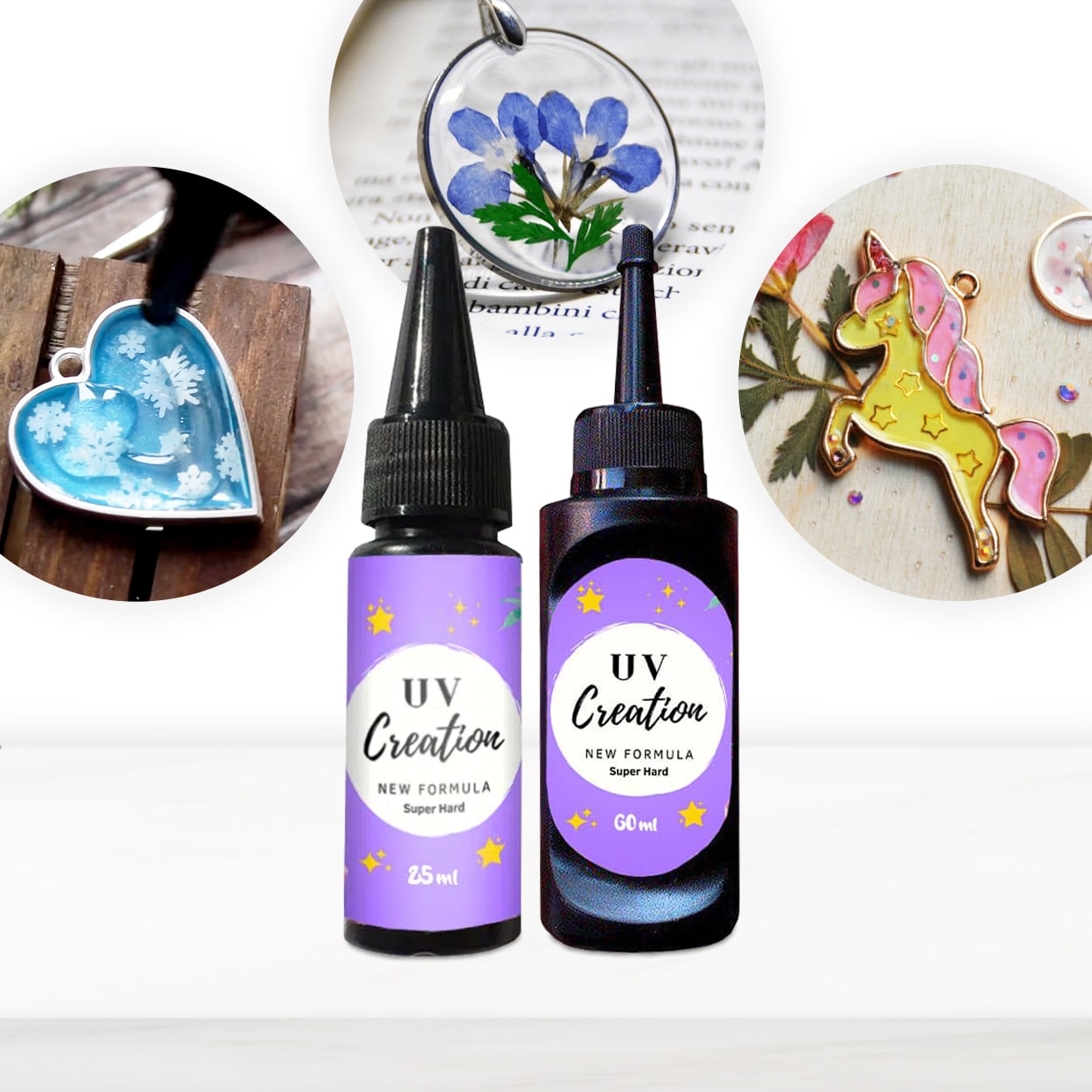
- “UV–Creation” – Fast Acrylic Resin, 3 Minute UV Cure: A fast-curing UV acrylic resin designed for jewellery crafters seeking quick and clear finishes.
- Rubbing alcohol or acetone (for cleaning)
- Fine sandpaper (240–400 grit)
- Mixing stick or applicator
- Clamps or adhesive putty (for holding pieces together)
- Protective gloves

Visualising good surface prep and adhesive mixing
See step-by-step visuals of cleaning, sanding, and thorough mixing for reliable metal-to-resin adhesion.

Step 1: Prepare the Surfaces
Proper surface preparation is the foundation of any successful adhesive bond. Begin by cleaning both the resin and metal pieces with rubbing alcohol or acetone to remove dust, grease, or fingerprints. For the metal, lightly roughen the bonding area with fine sandpaper—this enhances grip for the adhesive. Similarly, scuff the contact surface of the cured resin if it is glossy. Remove all sanding dust before proceeding.
Thorough surface preparation is crucial for adhesion; skipping this step can lead to early joint failure.
Step 2: Select and Mix Your Adhesive
For bonding resin to metal with strength and clarity, a two-part epoxy adhesive is recommended. Mix the components according to pack instructions. If using a cartridge system, a “Mixer Nozzle” – For Mixing Epoxy Glue offers consistent, mess-free mixing for even application. For jewellery creations or very rapid repairs, select a UV-curable resin and ensure you have a suitable UV lamp for activation.
Mix only as much epoxy as you can use within the working time to avoid waste.
Step 3: Apply the Adhesive
Dispense a thin, even layer of the mixed adhesive onto one of the prepared surfaces. Avoid over-application, as this may lead to weak bonds or unsightly residue at the join. Press the resin firmly against the metal, ensuring full contact across the bonding area. If using “UV–Creation” – Fast Acrylic Resin, apply resin, position the joint, and immediately cure with your UV lamp on all exposed resin areas.
Clamping or securing materials prevents shifting during curing; use a gentle clamp, tape, or adhesive putty as needed.

Step 4: Cure and Finish
Allow the adhesive to cure for the full recommended time before handling. Epoxy glues generally set in 5 minutes, but mechanical strength improves with longer curing. UV resin cures fast under light, but wait a few minutes before stressing the bond. Remove any excess adhesive promptly with a toothpick or cloth before it hardens for a clean finish.
Always allow adhesives to cure for the full recommended time for best bond strength and durability.
Tips, Common Mistakes, and Troubleshooting
Work in a dust-free, well-ventilated area for reliable results. Never rush surface preparation steps or skip mixing instructions. If the bond fails early, check for contamination or insufficient roughening. For very small or intricate parts, use a pointed applicator for precision. Over-application of adhesive can weaken the final bond and make clean-up difficult.
Bonding outcomes and troubleshooting close-ups
Before/after examples of well-bonded, clean joints, plus tips for avoiding common adhesive errors.

- "Klebfix" – Two-Component Fast Epoxy Glue 2K, 25g Syringe£22.85The "Klebfix" two-component epoxy glue sets quickly and forms strong bonds for repair and bonding tasks on resin and metal surfaces.
- "FixExpress" – Two-Component Epoxy Glue 500g£25.45"FixExpress" epoxy glue is designed for rapid repairs and strong adhesion on various materials including metal.
- "Mixer Nozzle" – For Mixing Epoxy Glue, 50ml, Araldite 2000 Series Compatible£1.45This mixer nozzle is designed for 50ml Araldite 2000 series cartridges commonly used with epoxy glue.
- "UV–Creation" – Fast Acrylic Resin, 3 Minute UV CurePrice range: £7.85 through £59.85"UV–Creation" is a ready-to-use, fast-curing acrylic UV resin suitable for jewellery making with a clear, glossy finish.
Frequently Asked Questions
What adhesive is best for bonding resin to metal?
Two-part epoxy adhesives and UV-curing resins work well for bonding resin to metal surfaces, offering both strength and clarity.
How should I prepare resin and metal before applying adhesive?
Clean both surfaces with alcohol and lightly roughen them with fine sandpaper for optimal adhesion.
How long should I wait before handling the glued parts?
Allow epoxy adhesives to cure for at least 5 minutes and UV resins until fully hardened using a UV lamp.
Is it effective to use UV cure resin for joining metal and resin?
UV resin can bond metal to resin, particularly in jewellery making, provided the join receives enough UV light.
Why does the adhesive sometimes fail on metal surfaces?
Poor surface prep, oil contamination, or insufficient roughening can prevent strong adhesion between epoxy and metal.
What is the best way to remove excess glue before it hardens?
Wipe away excess with a cloth or toothpick immediately after application, before the adhesive cures.
Is clamping necessary when bonding resin to metal?
Clamping helps prevent shifting during curing and can improve bond strength; use light pressure to avoid damaging the pieces.