 Free shipping on orders over £29,85
  Shipping Tracking!


 Google
 Facebook
How do you put resin on the floor?
Step-by-step guide for a durable resin floor finish

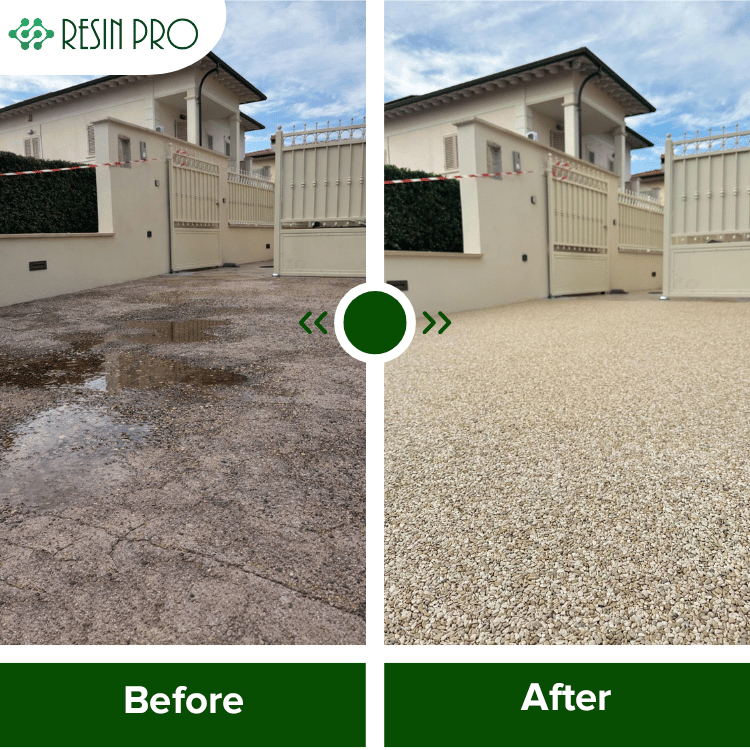
Looking to achieve a seamless, durable, and attractive resin floor? Whether revitalising an old surface or constructing something new, applying resin to a floor delivers a sleek, waterproof, and low-maintenance finish suitable for driveways, patios, garages, and decorative indoor spaces. This guide will walk you through the essential steps for a professional resin floor application, covering preparation, mixing, and finishing for a surface that lasts.
What You’ll Need
- “Epoxyprimer” – Universal Water-Based Two-Component Epoxy Floor Primer: For maximum adhesion and substrate preparation.
- “Flowstone” – Complete Permeable Floor Kit with Pebbles and Resin: Ideal for outdoor driveways, patios, and permeable projects.
- “Trasparente” – Epoxy Binder for Coloured Pebbles and Grits: For creating decorative, coloured pebble resin floors.
- “Resinstone” – One-Component Methacrylic Resin for Concrete Floors and Driveways: For sealing and protecting concrete substrates.
- Appropriate aggregates (decorative pebbles, grits, or stones as required)
- Mixing buckets, trowel or float, roller/brush, gloves, masking tape
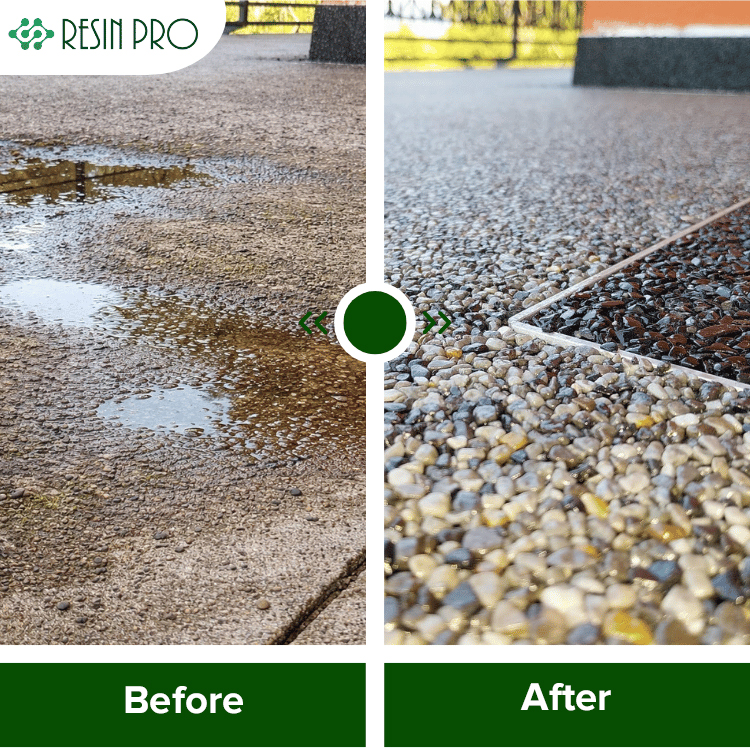
Essential Tools and Surface Preparation Visuals
See how the right tools and careful surface prep set the foundation for flawless resin floors. From primer application to edge masking, each step builds long-lasting results.
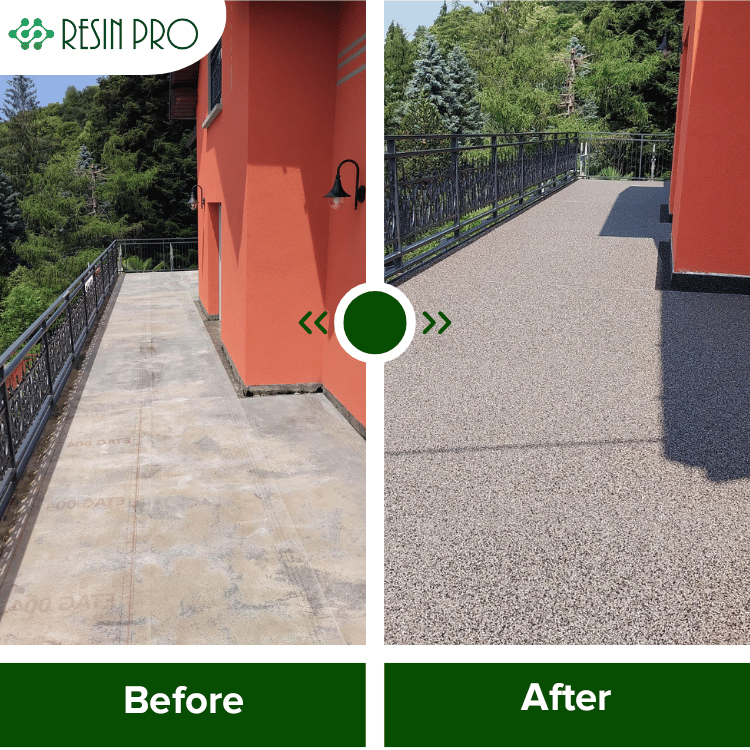
Step 1: Assess and Prepare the Substrate
Ensure your substrate is clean, dry, and stable before beginning. Remove all dust, grease, debris, or loose material from the floor surface, and repair any cracks or holes with an appropriate filler. The success of your resin coating depends heavily on this initial preparation, especially for concrete, screed, or tiles. Choose a dry day for outdoor work and ensure no moisture is present.
For new concrete, allow complete curing (at least 28 days) before applying resin. Undercut any sharp edges and mask off surrounding walls or features to achieve neat edges and prevent accidental runs.
Step 2: Prime for Adhesion
When working on porous or absorbent substrates, priming is crucial to ensure the resin bonds well and prevents bubbling. “Epoxyprimer” – Universal Water-Based Two-Component Epoxy Floor Primer is ideal for this step, providing reliable adhesion to concrete, screeds, wood, and tiles.
Use a roller or brush to apply the primer evenly, covering the entire area. Allow the primer to cure fully (usually 24–48 hours) before moving to resin application. Good ventilation and dust-free conditions are essential during this stage.
Step 3: Prepare and Mix Resin Components
Select the right resin kit for your needs. For permeable outdoor floors such as patios or driveways, the “Flowstone” – Complete Permeable Floor Kit with Pebbles and Resin provides a balanced combination of resin and aggregate, with guidance for binder choice based on aggregate colour.
For decorative, vibrant stone finishes, choose “Trasparente” – Epoxy Binder for Coloured Pebbles and Grits paired with your selection of coloured stones.
Mix resin and aggregate thoroughly and pour promptly to avoid premature curing. Follow kit instructions closely on the ratio of resin to stones, and mix in manageable batches if working on large areas.

Step 4: Apply the Resinous Mixture Evenly
Once mixed, work the mixture across the surface to your desired thickness using a trowel or float. Apply even pressure to achieve a smooth, level finish without air pockets. For permeable systems, take care to maintain open structure for effective drainage.
Continue blending and smoothing the resin and aggregate, working steadily to ensure joints between areas are seamless. Use masking tape to define edges for sharp lines, especially around borders or features.
If your aim is sealing and enhancing an existing concrete surface rather than overlaying with stones, you can apply “Resinstone” – One-Component Methacrylic Resin for Concrete Floors and Driveways by roller or brush for an even, waterproof finish.

Step 5: Curing and Final Checks
Allow the resin floor to set in line with product recommendations—always protect the area from dust, rain, pets, or foot traffic during curing. Allow the floor to cure undisturbed for full strength; most systems reach initial set in hours but require up to 48 hours for full performance.
Remove masking tape before the resin is fully cured for neat edges. After curing, inspect the floor for any missed spots or imperfections and address if needed. The result should be a robust, attractive surface ready for years of use.
Tips, Troubleshooting & Common Mistakes
Wear appropriate PPE throughout for safety. One common mistake is applying thick resin layers on unprimed or damp substrates, which can trap moisture and lead to failure. Always check the weather and avoid humid or rainfall-prone days for outdoor projects.
Mix only as much product as you can use within the working time to prevent waste. For very large areas, mechanical mixers and assistance can make application much easier. Read all instructions on each resin product carefully to avoid bubbles, patchiness, or yellowing.
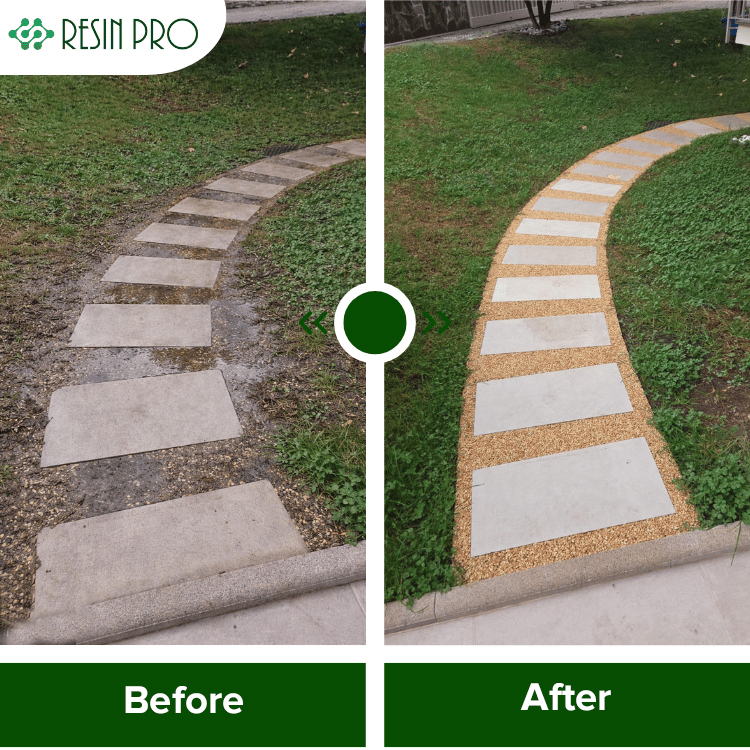
Real-Life Project Advice and Common Pitfalls
Explore completed floors and troubleshooting examples—perfect your technique and avoid typical DIY mistakes for smooth, reliable finishes every time.
- "Flowstone" – Complete Permeable Floor Kit with Pebbles and ResinPrice range: £42.85 through £3,389.85"Flowstone" offers a durable, permeable pebble and resin system designed for outdoor floors with guidance for UK conditions.
- "Trasparente" – Epoxy Binder for Coloured Pebbles and GritsPrice range: £31.85 through £948.85Epoxy binder designed for coloured pebbles and grits, providing a clear, durable finish suitable for flooring applications.
 "Epoxyprimer" – Universal Water-Based Two-Component Epoxy Floor PrimerPrice range: £148.84 through £272.45"Epoxyprimer" is a water-based epoxy floor primer designed to support adhesion for various substrates, suitable for floor resin applications.
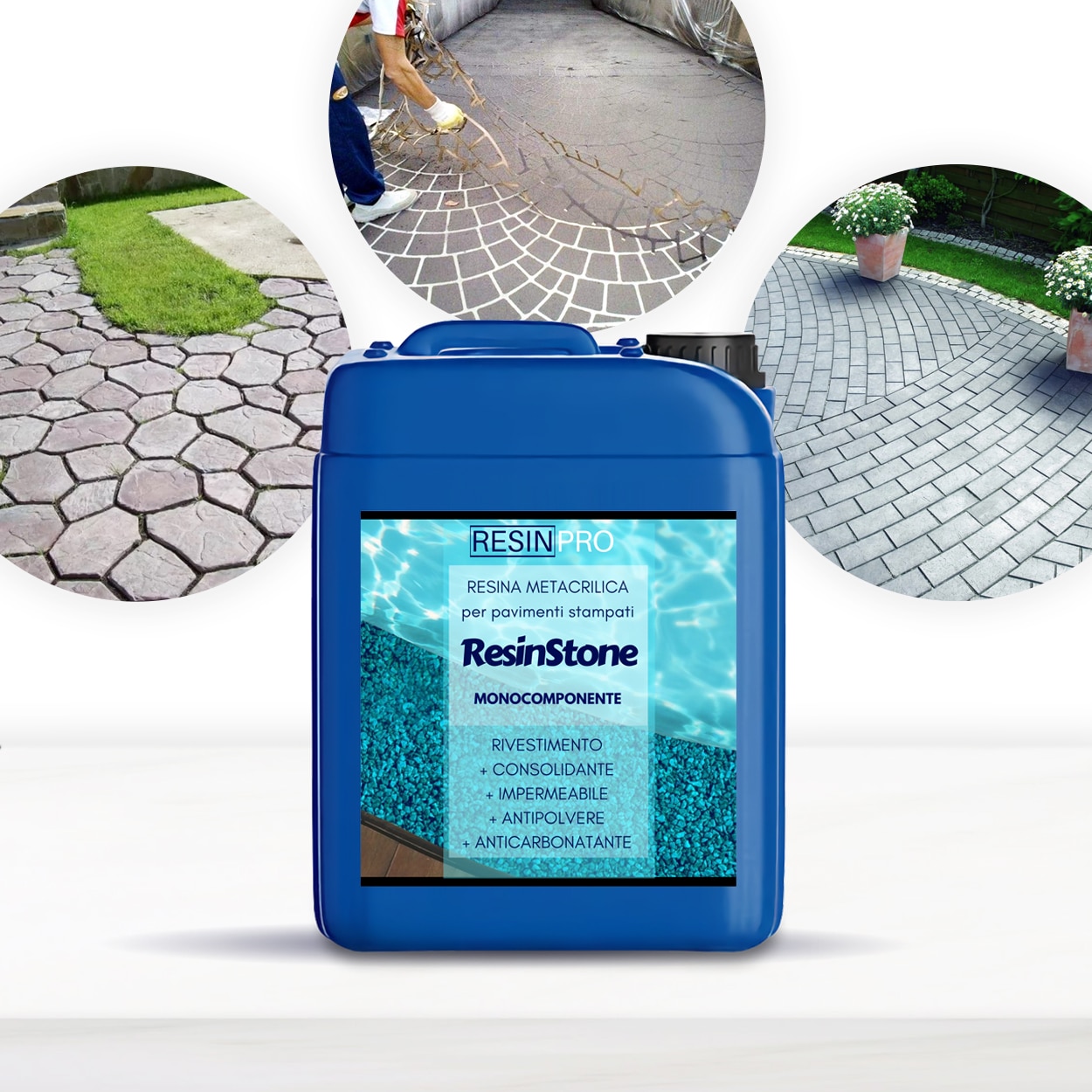 "Resinstone" – One-Component Methacrylic Resin for Concrete Floors and DrivewaysPrice range: £29.85 through £59.85"Resinstone" is a one-component methacrylic resin suitable for sealing and protecting concrete floors and driveways.
Frequently Asked Questions
Can I put resin on an old concrete floor?
Yes, provided the concrete is sound, clean, and dry. Repair cracks and use a suitable primer before resin application.
How long does a resin floor take to cure?
Initial setting may occur in a few hours, but full mechanical and chemical strength is achieved after 24–48 hours, depending on conditions.
Do I need to prime before applying resin to floors?
Yes, priming ensures proper bonding and prevents bubbles, especially on porous or absorbent substrates such as concrete or screed.
Can I use resin on driveways and garages?
Absolutely. Select the appropriate resin type for either permeable, decorative, or sealing applications depending on the area.
What weather conditions are best for applying resin floors?
Mild, dry conditions are ideal. Avoid extreme heat, cold, or high humidity for the best resin curing and adhesion.
How do I clean tools after using resin?
Clean tools immediately with a suitable solvent or soapy water before the resin cures. Hardened resin is difficult to remove.