 Free shipping on orders over £29,85
  Shipping Tracking!


 Google
 Facebook
How to apply resin to floors?
A step-by-step guide to beautiful and durable resin flooring

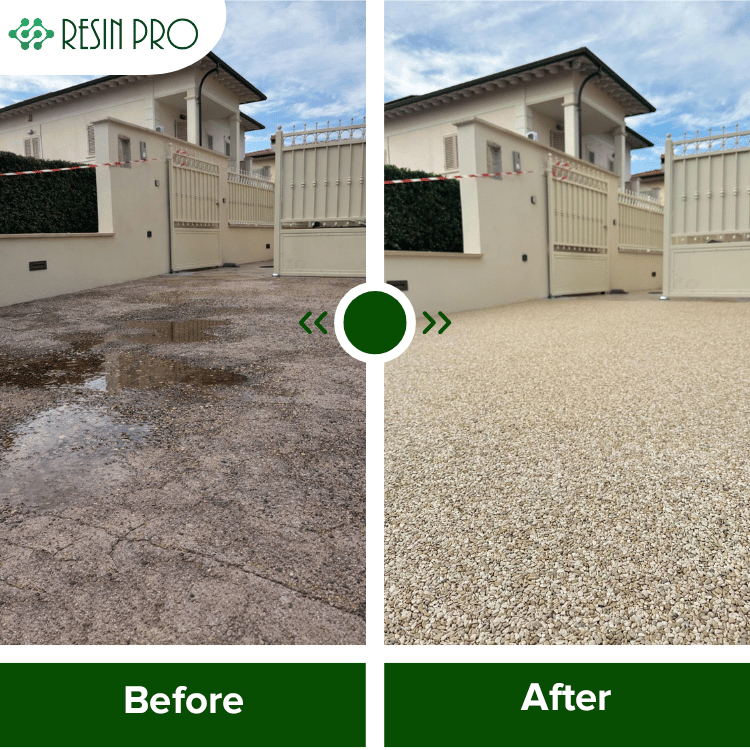
Resin floors offer an attractive, hardwearing finish suitable for both indoor and outdoor spaces, including concrete bases, decorative pebble driveways, and permeable paths. This guide walks you through each step of resin floor application so you can create a smooth, long-lasting surface, whether you’re upgrading your home interior or refreshing external areas.
What You’ll Need
- “Epoxyprimer” – Universal Water-Based Two-Component Epoxy Floor Primer: A universal primer for concrete, screeds, tiles, and timber substrates.
- “Flowstone” – Complete Permeable Floor Kit with Pebbles and Resin: Provides all materials necessary for durable, permeable outdoor resin pebble surfaces.
- “Trasparente” – Epoxy Binder for Coloured Pebbles and Grits: Transparent binder for vibrant, UV-resistant pebble and grit surfaces.
- “Resinstone” – One-Component Methacrylic Resin for Concrete Floors and Driveways: For sealing and protecting concrete surfaces in driveways or patios.
- Protective gloves, safety glasses, and a mask
- Mixing buckets and stirrers
- Rollers, brushes, or spatula (depending on resin type)
- Cleaning materials and solvent (if required for the specific resin system)

Essential Tools and Coverage Examples
Floor preparation and correct tool usage are crucial for a professional finish. Use rollers and spatulas that suit your chosen resin system and always wear protective gear. Typical resin consumption ranges from 100 to 300 g/m² for primers — ensure you order sufficient material for your floor area.
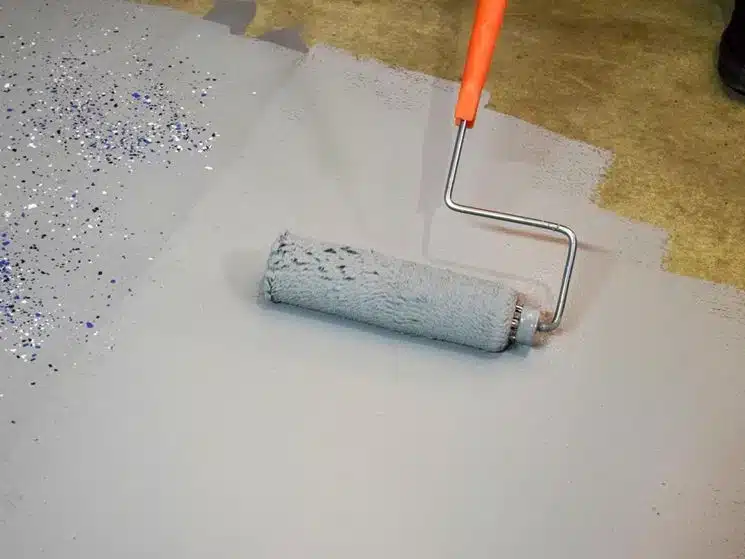
Step 1: Prepare the Floor Surface
Start by ensuring your floor or driveway is stable, clean, and dry. Remove all dust, grease, laitance, and old paint using a vacuum, mop, or suitable floor cleaner. For damaged or uneven surfaces, repair cracks or holes with an appropriate repair mortar and allow to cure fully. Level out the floor where necessary to create a smooth, uniform surface for optimal adhesion.
For concrete, screeds, timber, or tiles, thoroughly check for moisture—resin should not be applied if there is any rising damp or surface moisture present, as this affects bonding.
Step 2: Prime the Substrate
Priming maximises the bond between the base and your resin finish, helping to prevent lifting or bubbling. For versatile floors such as screed, ceramic tiles, or timber, you can use the “Epoxyprimer” – Universal Water-Based Two-Component Epoxy Floor Primer. Mix the primer components as directed, and apply evenly with a roller or brush. Ensure full coverage, especially on porous or slightly uneven areas. Allow the primer to cure for the recommended time (typically 24–48 hours) before proceeding.
Step 3: Mix and Apply Resin Binder
Once the primer is cured and the floor is ready, measure and mix your chosen resin system according to the manufacturer’s instructions. For outdoor permeable pebble or decorative aggregate finishes, the “Flowstone” – Complete Permeable Floor Kit with Pebbles and Resin contains all needed resins, graded aggregates, and mixing guidance. Alternatively, the “Trasparente” – Epoxy Binder for Coloured Pebbles and Grits is suited for coloured or dark decorative stones.
Pour mixed resin and aggregates into a clean bucket and thoroughly blend until every stone is fully coated. Spread the mixture over the prepared, primed surface using a trowel or float. Work methodically in small areas to maintain consistency, compacting the surface for an even level and attractive finish. For interior spaces or sealed concrete, use the “Resinstone” – One-Component Methacrylic Resin as a standalone sealer—apply evenly using a roller or airless spray for quick, uniform results.
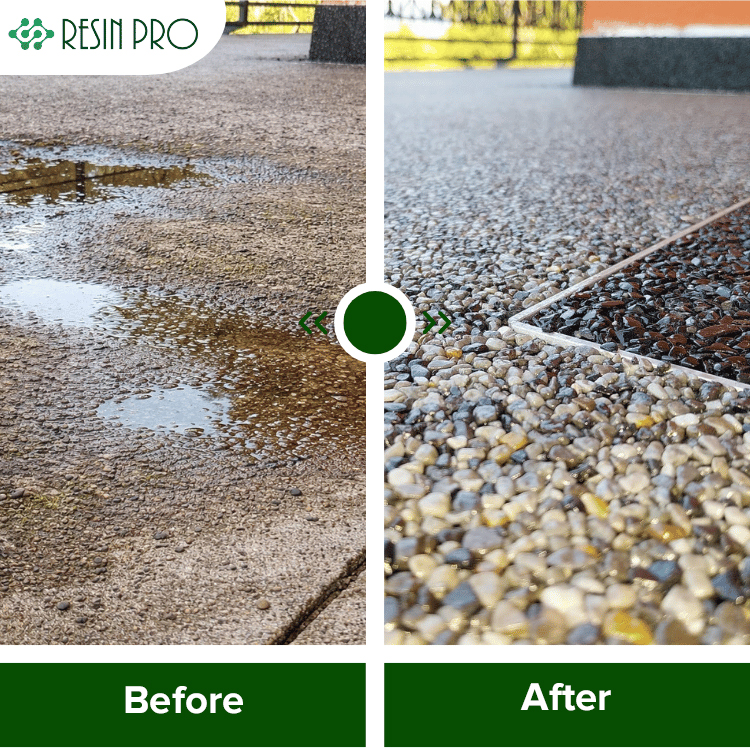
Step 4: Curing and Finishing Touches
Leave the applied resin floor to cure undisturbed. The curing time will depend on the specific product—refer to your resin system’s instructions for precise timings and temperature requirements. Avoid foot or vehicle traffic until curing is complete, usually ranging from 12 to 48 hours. Once hardened, inspect your surface for uniformity and touch up any small imperfections as needed. Clean tools promptly with the designated solvent or soap and water.
Tips, Common Mistakes, and Troubleshooting
- Proper surface preparation is essential: Inadequate cleaning or repair will result in poor adhesion and patchy surfaces.
- Ensure adequate ventilation: Especially in enclosed spaces and during curing, open windows or use fans for air movement.
- Do not rush curing time: Premature use of the floor can lead to permanent marks or weakened finish.
- Watch for substrate compatibility: Use the right primer or resin system for your flooring material to prevent delamination.
- Mix resin thoroughly and accurately: Undermixing or inaccurate ratios can cause sticky, tacky, or soft patches.
Visual Inspiration and Project Success Stories
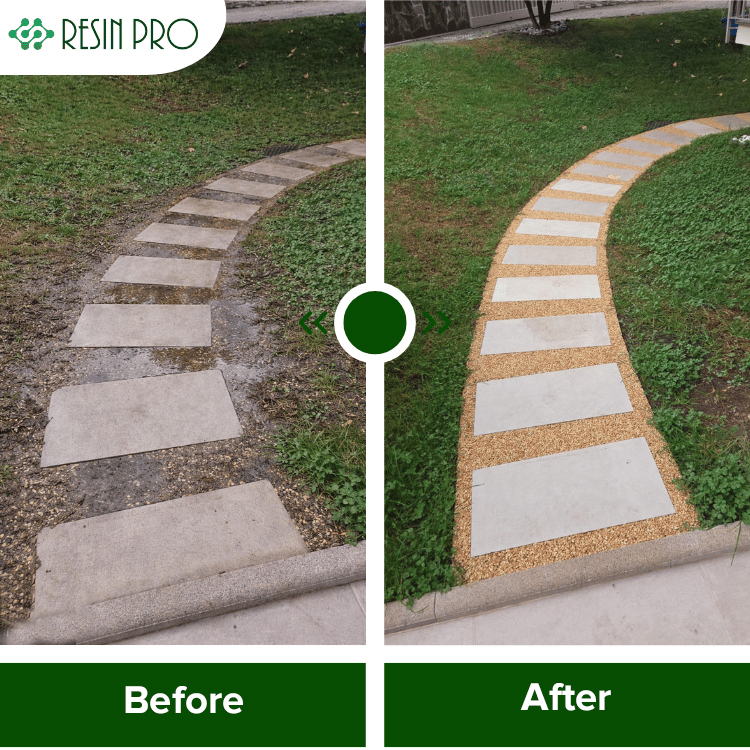
Browse project photos and user stories to see real-life resin floor transformations for driveways, home interiors, and garden paths. From modern kitchens to weatherproof outdoor surfaces, resin flooring offers endless possibilities for creative and practical designs.

- "Epoxyprimer" – Universal Water-Based Two-Component Epoxy Floor PrimerPrice range: £148.84 through £272.45Epoxyprimer is a water-based two-component epoxy floor primer suited for concrete, timber, tiles, and screeds with a simple application process.
- "Flowstone" – Complete Permeable Floor Kit with Pebbles and ResinPrice range: £42.85 through £3,389.85Flowstone kit provides a durable, permeable pebble and resin floor solution with detailed guidance for effective application.
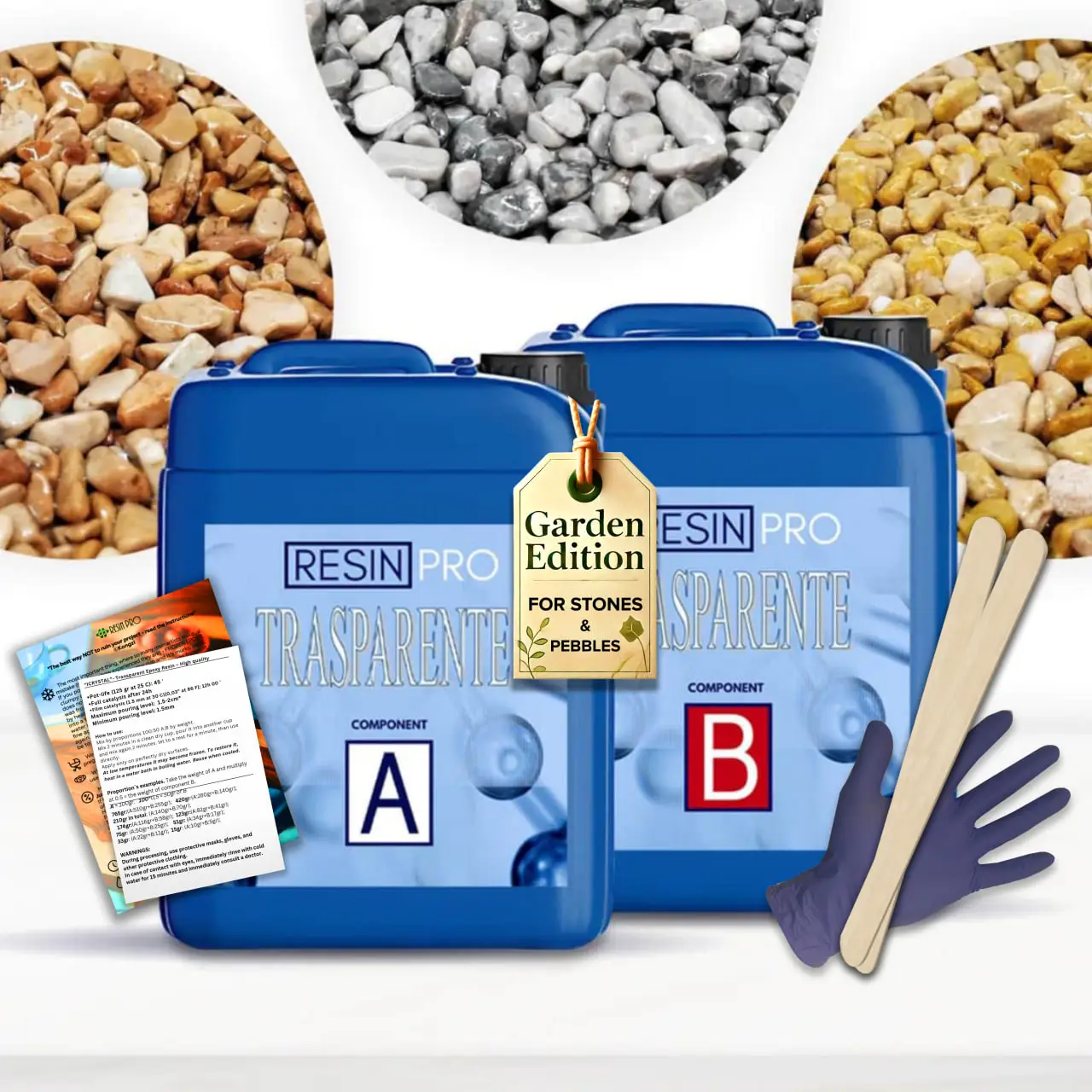 "Trasparente" – Epoxy Binder for Coloured Pebbles and GritsPrice range: £31.85 through £948.85"Trasparente" is a transparent epoxy binder suitable for coloured pebbles and grits, providing clear, UV-stable results for floor applications.
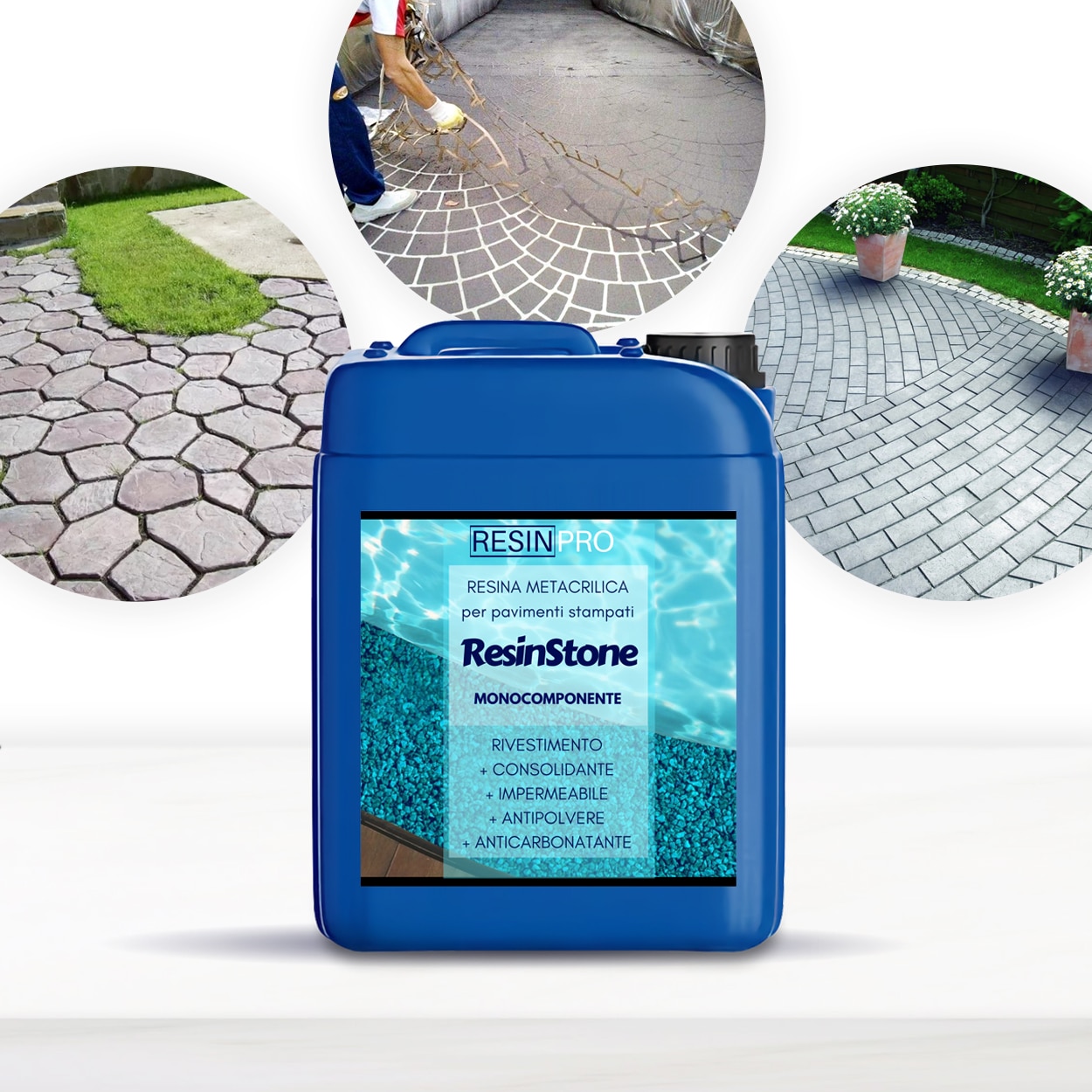 "Resinstone" – One-Component Methacrylic Resin for Concrete Floors and DrivewaysPrice range: £29.85 through £59.85RESINSTONE is a one-component methacrylic resin designed for sealing and protecting concrete floors and driveways.
Frequently Asked Questions
Can resin be applied on old concrete floors?
Yes, once thoroughly cleaned and repaired. A compatible primer promotes strong adhesion and lasting results.
Do I need to prime my floor before applying resin?
Priming is highly recommended to maximise bonding and reduce the risk of bubbles or peeling, especially on porous or varied substrates.
How long does a resin floor take to cure?
Curing times range from 12 to 48 hours depending on the product and conditions. Avoid walking or driving on the surface until fully set.
Is resin flooring DIY-friendly?
Many resin floor systems are suitable for confident DIYers. Just follow safety rules and step-by-step guidance for best results.
How can I prevent yellowing or cloudiness in my resin floor?
Choose a UV-resistant resin and mix accurately. Use appropriate binders for coloured stones to avoid discolouration.
Can resin be used indoors and outdoors?
Yes, select a resin system suitable for your environment—indoor primers for interiors and weather-resistant binders for outdoor surfaces.