 Free shipping on orders over £29,85
  Shipping Tracking!


 Google
 Facebook
How do you cover a terrace with resin?
Step-by-step guide to long-lasting outdoor flooring
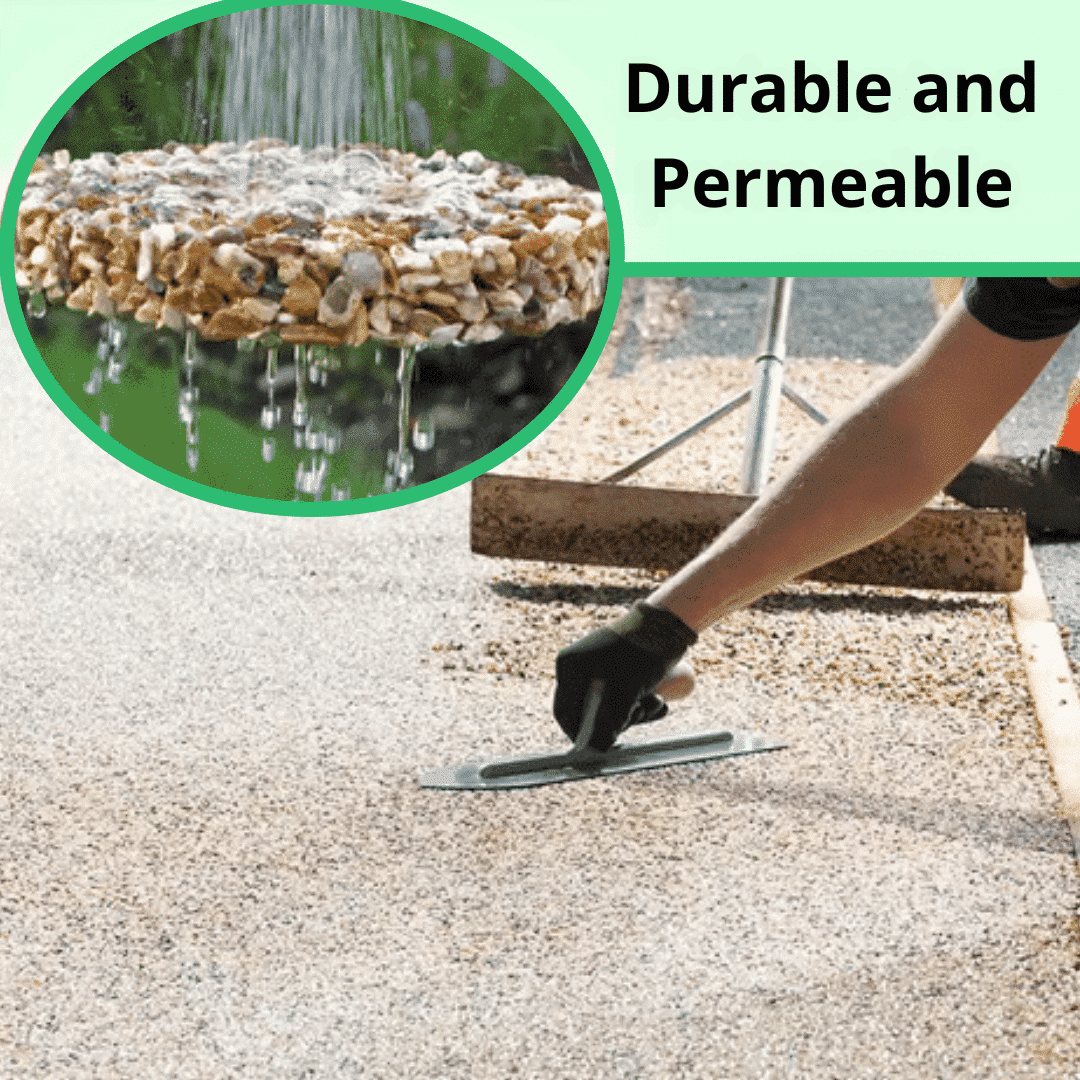
Resin coverings offer a durable, attractive solution for upgrading your terrace, making it resistant to weather and easy to maintain. This guide provides a step-by-step approach to achieve a seamless resin finish, whether you are seeking a natural stone effect or a protective membrane over concrete. Suitable for homeowners and DIY enthusiasts, you’ll learn how to avoid common pitfalls and achieve a professional result.
What You’ll Need
- “Flowstone” – Complete Permeable Floor Kit with Pebbles and Resin: Complete kit for continuous, drainage-capable pebble flooring outdoors
- “Trasparente” – Epoxy Binder for Coloured Pebbles and Grits: Clear, UV-resistant epoxy binder for coloured and dark aggregates
- “Polirock” – Polyurethane Binder for White Stones, 2kg Two-Component Kit: Polyurethane resin for weather-resistant, permeable white stone surfaces
- “Resinstone” – One-Component Methacrylic Resin for Concrete Floors and Driveways: Methacrylic resin for sealing and protecting concrete terraces
- Clean water and detergent
- Paddle mixer or cement mixer (for large areas)
- Trowel, screed bar, and protective gloves
- Aggregates (pebbles, coloured grits, or white stones as desired)
- Masking tape and sheeting for edge protection
- Protective clothing and suitable footwear
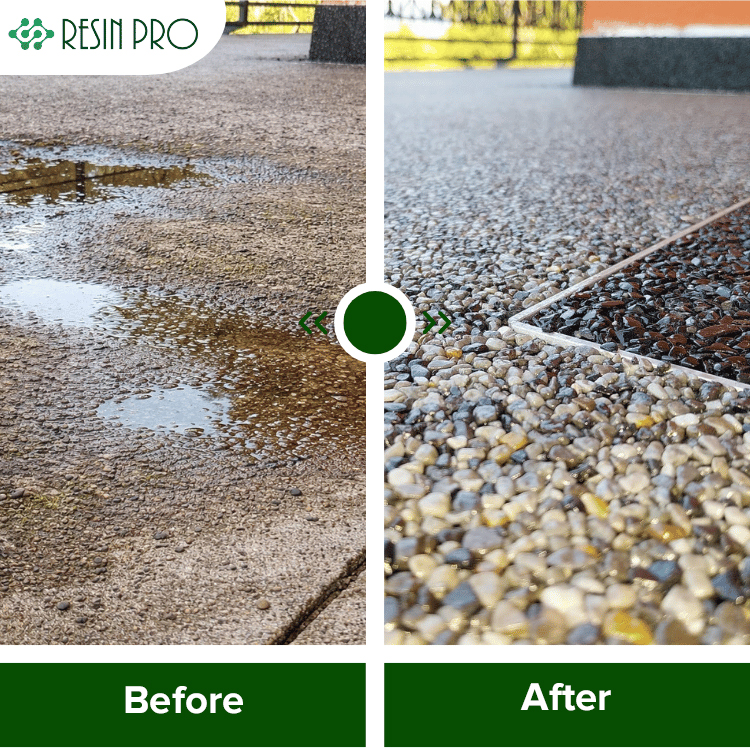
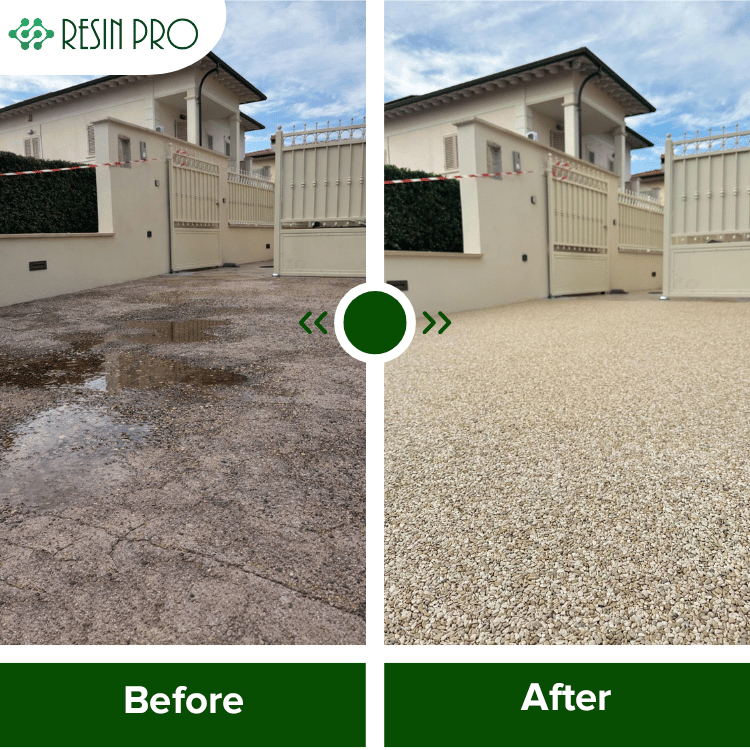
Visual Inspiration: Resin Terrace Transformations
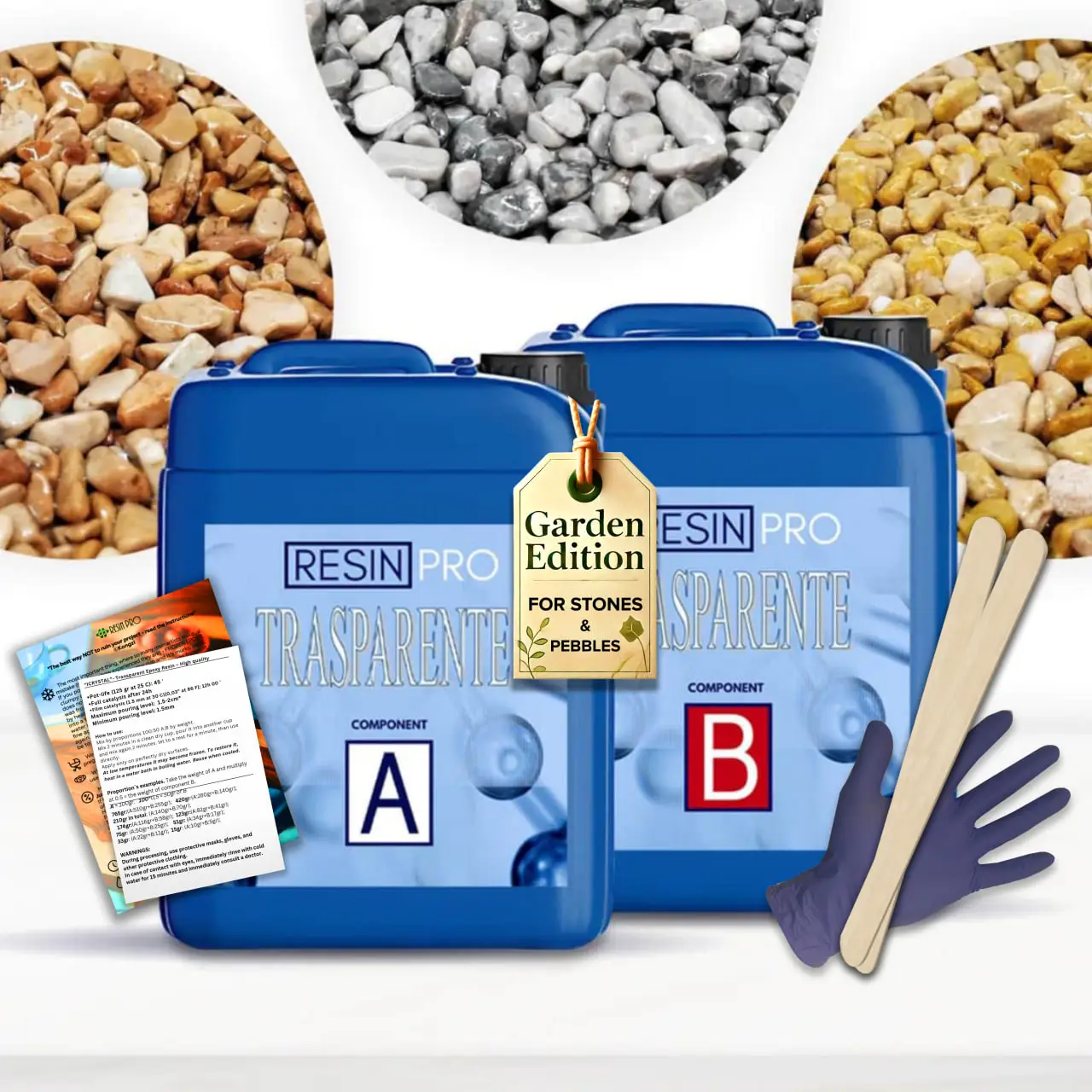
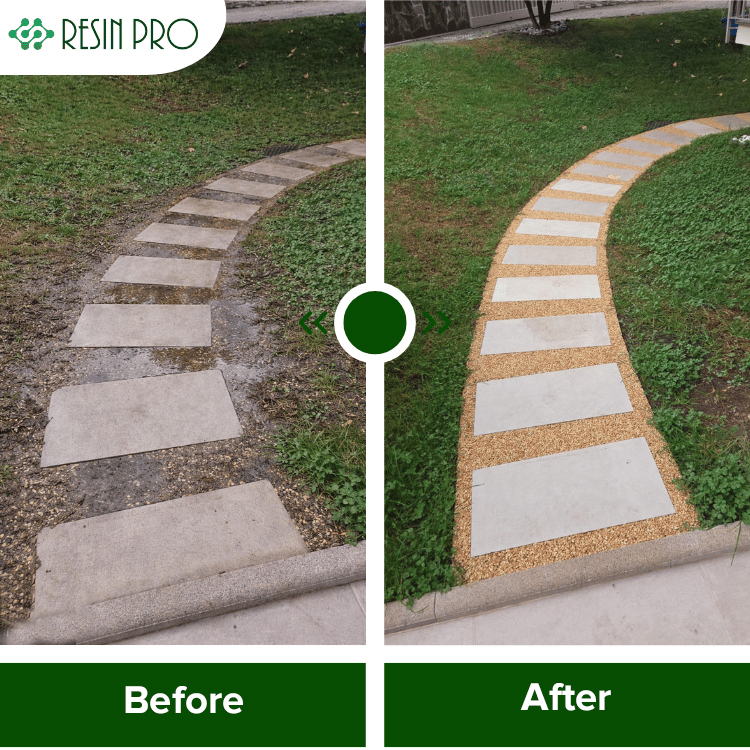
See completed resin terrace projects for ideas on aggregate colours, finishes, and practical edging solutions. A variety of pebble and stone effects are possible, suited for both modern and traditional outdoor spaces. Before and after images can provide helpful design insight for your own project.
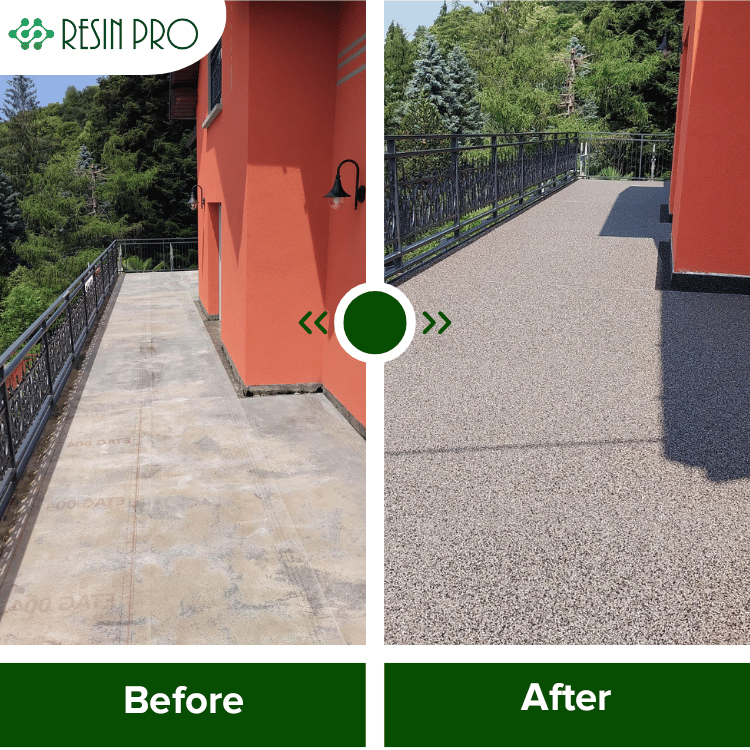
Step 1: Thoroughly clean and prepare the terrace surface
Begin by removing all furniture, potted plants, debris, and any previous coatings from the terrace surface. Sweep up dust and loose material, then wash the area with water and a mild detergent to remove grease, moss, or algae. Stubborn stains may require gentle scrubbing. Allow the terrace to dry fully before proceeding. Cracks or holes should be filled and smoothed, as defects can impact the final result. Proper preparation is crucial for optimal resin adhesion and long-term durability.
Step 2: Select the right resin system for your substrate
Decide on the type of finish and substrate you have. For a natural or decorative pebble effect, a resin binder mixed with aggregates is ideal. For sealing and protecting bare concrete, opt for a methacrylic resin. Epoxy binders are best suited for coloured aggregates, while polyurethane binders ensure a clear, non-yellowing finish on white stones. Assess the expected foot traffic and weather exposure to help guide selection.
Step 3: Mix aggregates with resin for pebble finishes
If you are installing a pebble or stone surface, combine your chosen aggregates with the correct resin binder using a paddle mixer or cement mixer. Mix until every stone is fully coated. Follow all blending ratios indicated in your chosen kit. For example, use “Polirock” – Polyurethane Binder for White Stones, 2kg Two-Component Kit for white stones to avoid yellowing, or “Trasparente” – Epoxy Binder for Coloured Pebbles and Grits if using coloured pebbles. Prompt mixing and spreading are important, as some resins begin curing quickly.

Step 4: Apply resin in mild, dry weather conditions
Plan to carry out the resin application in mild, dry weather, avoiding very cold, very hot, or particularly humid days. Protect wall edges, drains, and adjacent surfaces with masking tape and sheeting. Spread the resin (or resin/aggregate mixture) evenly over the terrace using a trowel or screed bar, keeping the layer consistent in thickness. Press down lightly to achieve a tightly packed, level surface. If you are using a methacrylic resin for bare concrete—such as “Resinstone” – One-Component Methacrylic Resin for Concrete Floors and Driveways—apply according to product instructions, ensuring full film coverage and no puddles.
Step 5: Curing and finishing touches
Allow the resin or resin-bound surface to cure as recommended, typically leaving it undisturbed for at least 12 to 24 hours. Prevent access by people and pets during this period. Avoid placing heavy objects or dragging items until the resin is fully dry and hardened, which may take longer in cool or damp conditions. Once cured, check edges and expansion joints for any gaps and fill as needed. Remove temporary edge masking and clean any remaining residue to reveal your finished terrace surface.
Tips, Common Mistakes, and Troubleshooting
Thoroughly clean and prepare the terrace surface before applying any resin; neglect can lead to poor adhesion. Select the right resin system for your substrate—using the wrong binder may result in yellowing or weak bonding. Always mix aggregates with resin for pebble finishes rather than pouring resin over loose stones. Apply resin in mild, dry weather conditions for the best results; avoid damp or extreme temperatures. If you encounter patchiness or uneven curing, check that resin and aggregates were mixed well and conditions were suitable. Common mistakes to avoid and troubleshooting tips: rushing preparation, ignoring weather recommendations, and using incompatible materials can undermine your results.
Showcase: Finishing Touches and Curing Phases
Real-life examples of resin-bound and resin-sealed terraces demonstrate curing progress, the clarity of the finish, and integration with exterior features. Look at step-by-step installation and final cured results to set expectations for your new terrace surface.
- "Flowstone" – Complete Permeable Floor Kit with Pebbles and ResinPrice range: £49.95 through £3,915.45Flowstone kit provides a permeable pebble and resin flooring system with detailed resin guidance for durable outdoor surfaces.
- "Trasparente" – Epoxy Binder for Coloured Pebbles and GritsPrice range: £33.45 through £397.95"Trasparente" is a clear, UV-stable epoxy binder designed for coloured pebbles and grits, suitable for decorative outdoor flooring.
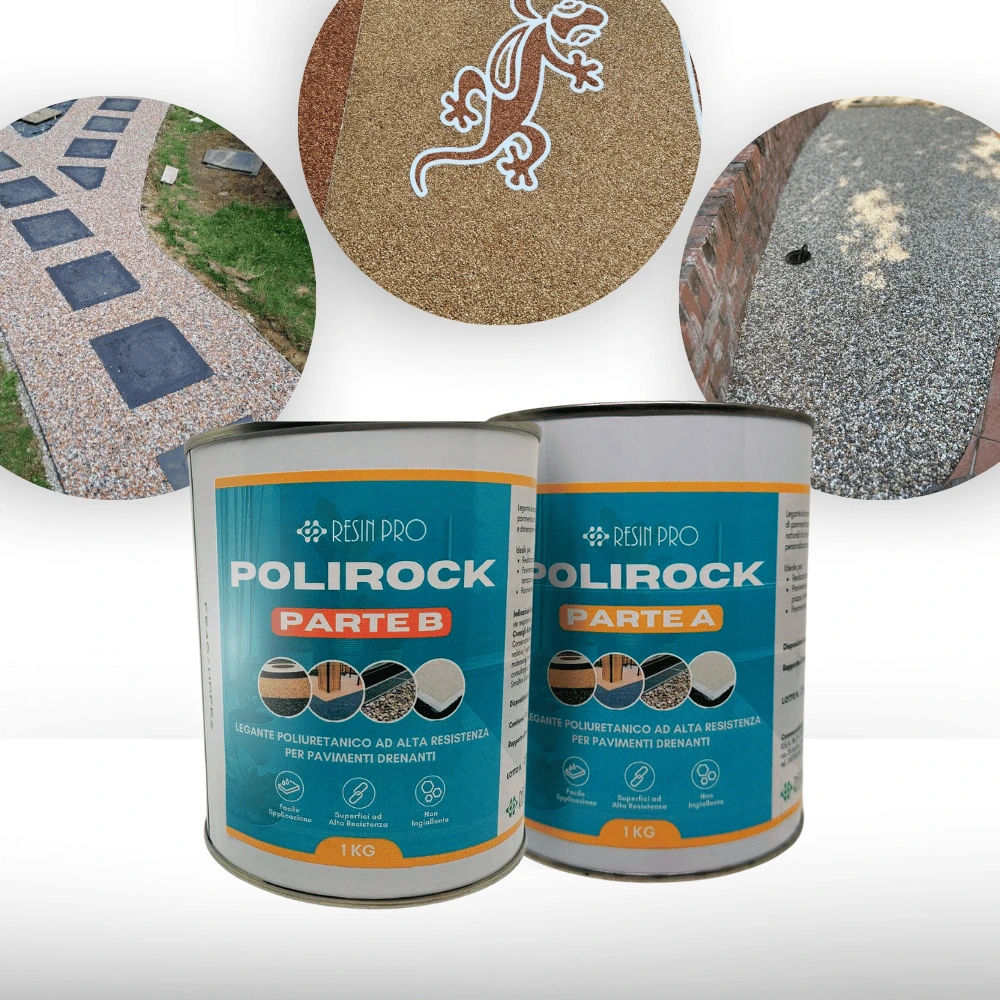 "Polirock" – Polyurethane Binder for White Stones, 2kg Two-Component Kit£61.95The "Polirock" kit creates durable, clear, and permeable stone surfaces, suitable for safe outdoor terraces and pathways.
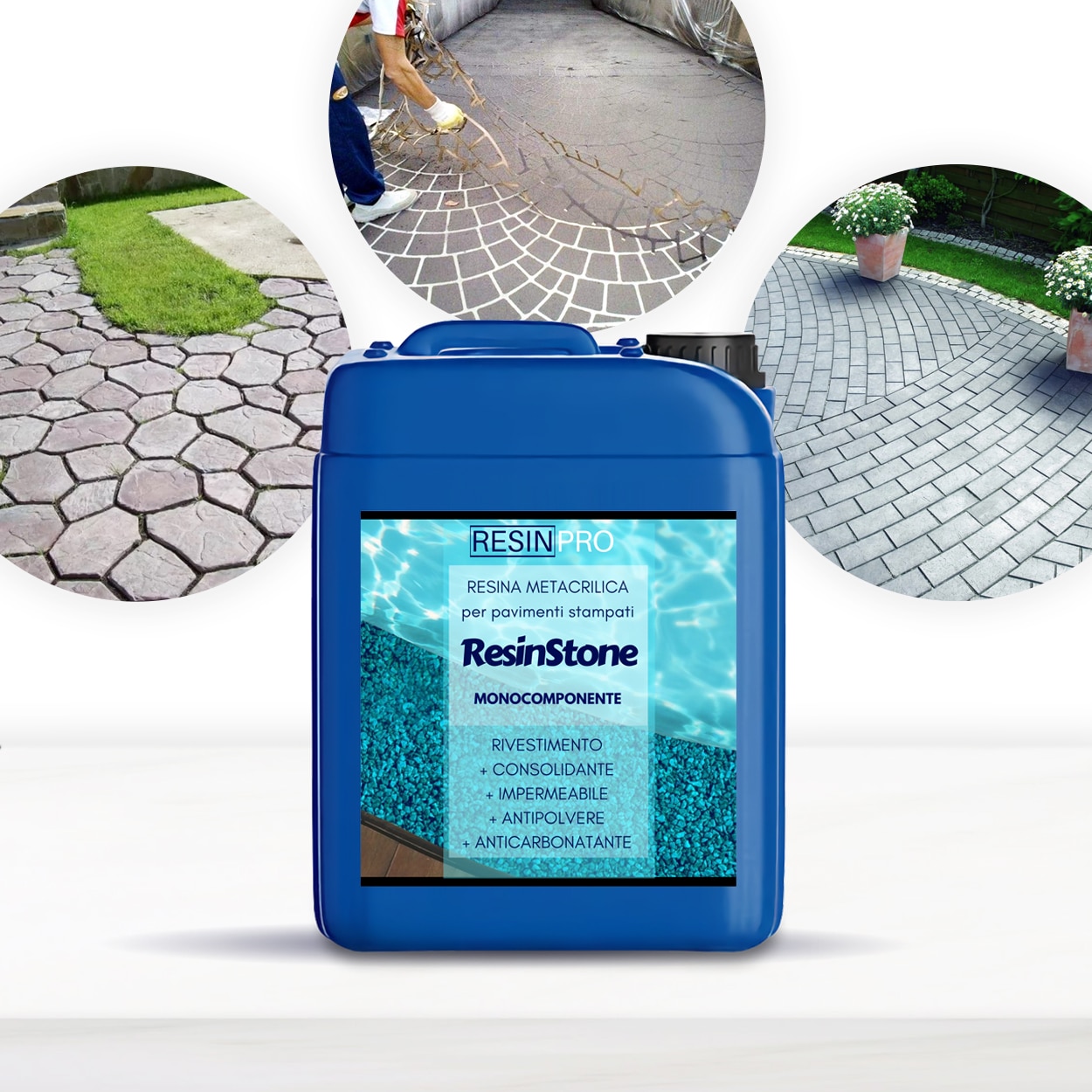 "Resinstone" – One-Component Methacrylic Resin for Concrete Floors and DrivewaysPrice range: £36.71 through £336.48Resinstone is a one-component methacrylic resin designed for sealing and protecting concrete floors in line with covering a terrace with resin.
Frequently Asked Questions
Which resin should I use for covering a terrace?
Use an epoxy binder for coloured pebbles, a polyurethane binder for white stones, or methacrylic resin for sealing concrete.
What weather conditions are best for applying resin?
Apply resin on dry, mild days, avoiding very cold, hot, or humid conditions to ensure strong curing and adhesion.
How long does it take for a resin terrace to cure?
Most resin-bound and resin-sealed surfaces are walkable in 12–24 hours, but may need up to 48 hours to reach full hardness.
Can I apply terrace resin myself or do I need a professional?
DIY installation is possible for most resin terrace solutions, but large or complex projects may benefit from professional help.
Can resin be used on loose gravel?
Loose gravel must be mixed with resin before application; pouring resin directly over loose stones is ineffective.
How do I maintain a resin terrace surface?
Sweep regularly and wash with mild detergent. Inspect edges for wear and avoid harsh chemicals to prolong surface life.
Are resin terraces anti-slip?
Resin-aggregate systems such as polyurethane or epoxy-bound pebbles generally provide an anti-slip surface suitable for outdoor use.