 Free shipping on orders over £29,85
  Shipping Tracking!


 Google
 Facebook
← Back to How many liters can I make with one kg of silicone rubber?
Accurate measurement is essential when working with silicone rubber for mould making. Getting the quantity right helps you achieve a flawless mould and reduce avoidable waste.
Mixing Too Much Silicone Rubber
Preparing an excess amount of silicone rubber might seem like an easy way to avoid running short. However, unused silicone usually cures quickly and cannot be stored for later use, resulting in wasted material—and additional cost. To avoid this, calculate the volume needed for your project and prepare just a little extra for insurance. Many experienced makers keep their overages minimal, enough for a thin top-up if needed.
The Risks of Mixing Too Little
If you underestimate and mix too little silicone, you run the risk of incomplete coverage. This often leads to defects, trapped air bubbles, or vulnerable weak spots in the finished mould. Topping up with a fresh batch may not bond seamlessly to the initial pour, especially after partial curing, so it’s best to avoid this if precision is crucial. Planning is key: always measure your form or model and allow for a small margin over the calculated volume.
Practical Mixing and Pouring Tips
- Double-check the measurements of your mould form before mixing.
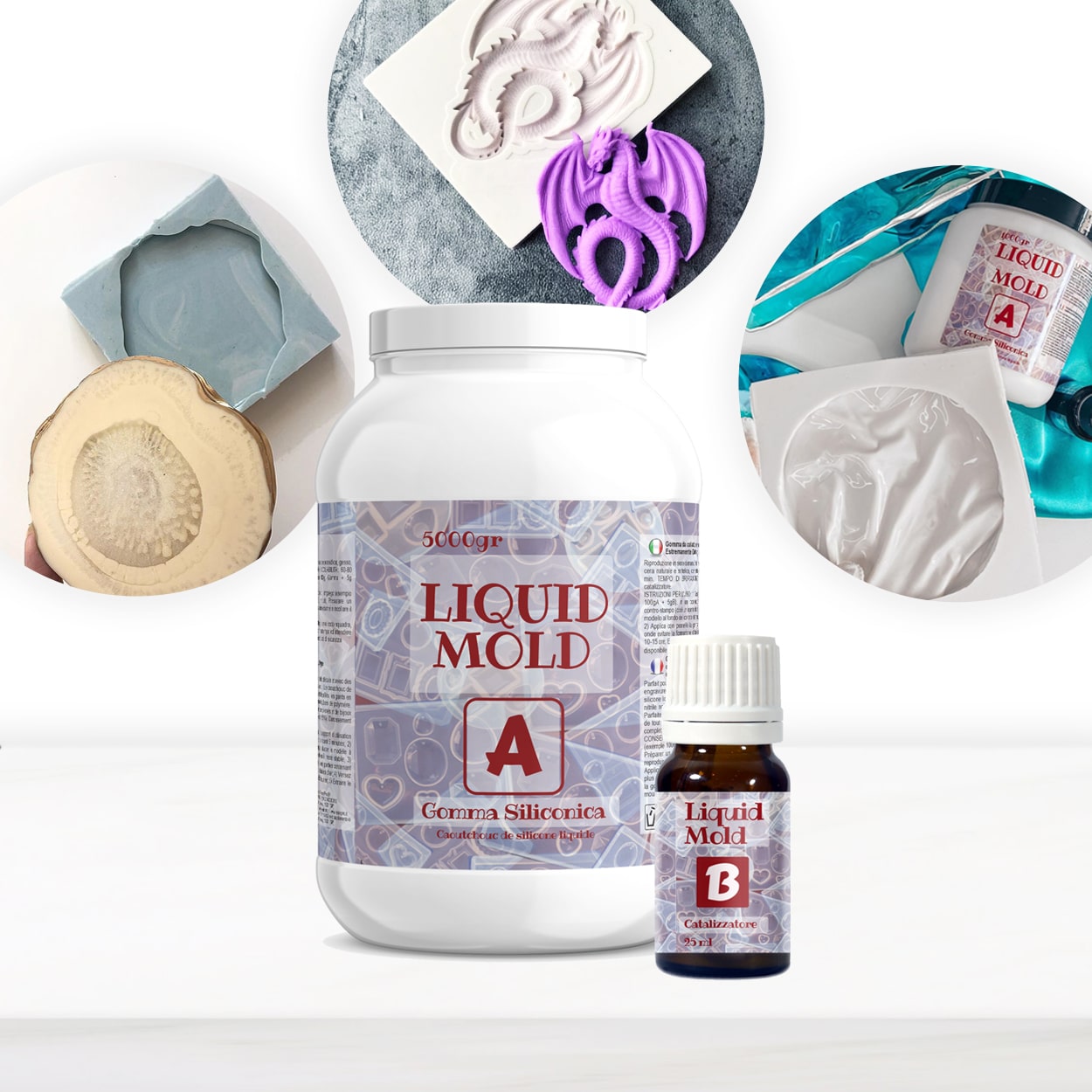
- For liquid products such as “Liquid Mould” – Casting Liquid Silicone Rubber, mix both parts only as much as you need, plus 5–10% extra.
- For putty types, split your batch in advance to avoid surprises.
- Mix thoroughly to ensure an even cure but avoid trapping air. Work steadily and pour promptly.
When Getting the Volume Right Matters
Meticulous measurement is particularly important for detailed or high-value pieces, where incomplete fills can lead to expensive rework. Whether you are making a large, intricate mould or a simple tray, having a small buffer built into your calculations saves time and frustration.
Related products
Related guides
Correctly calculating and mixing your silicone rubber minimises waste and ensures high-quality results. For more on selecting volumes and optimising material use, see our main guide on how many litres can be made from one kg of silicone rubber.