 Free shipping on orders over £29,85
  Shipping Tracking!


 Google
 Facebook
How to avoid defects in epoxy resins?
Expert tips for flawless, crystal-clear epoxy resin finishes

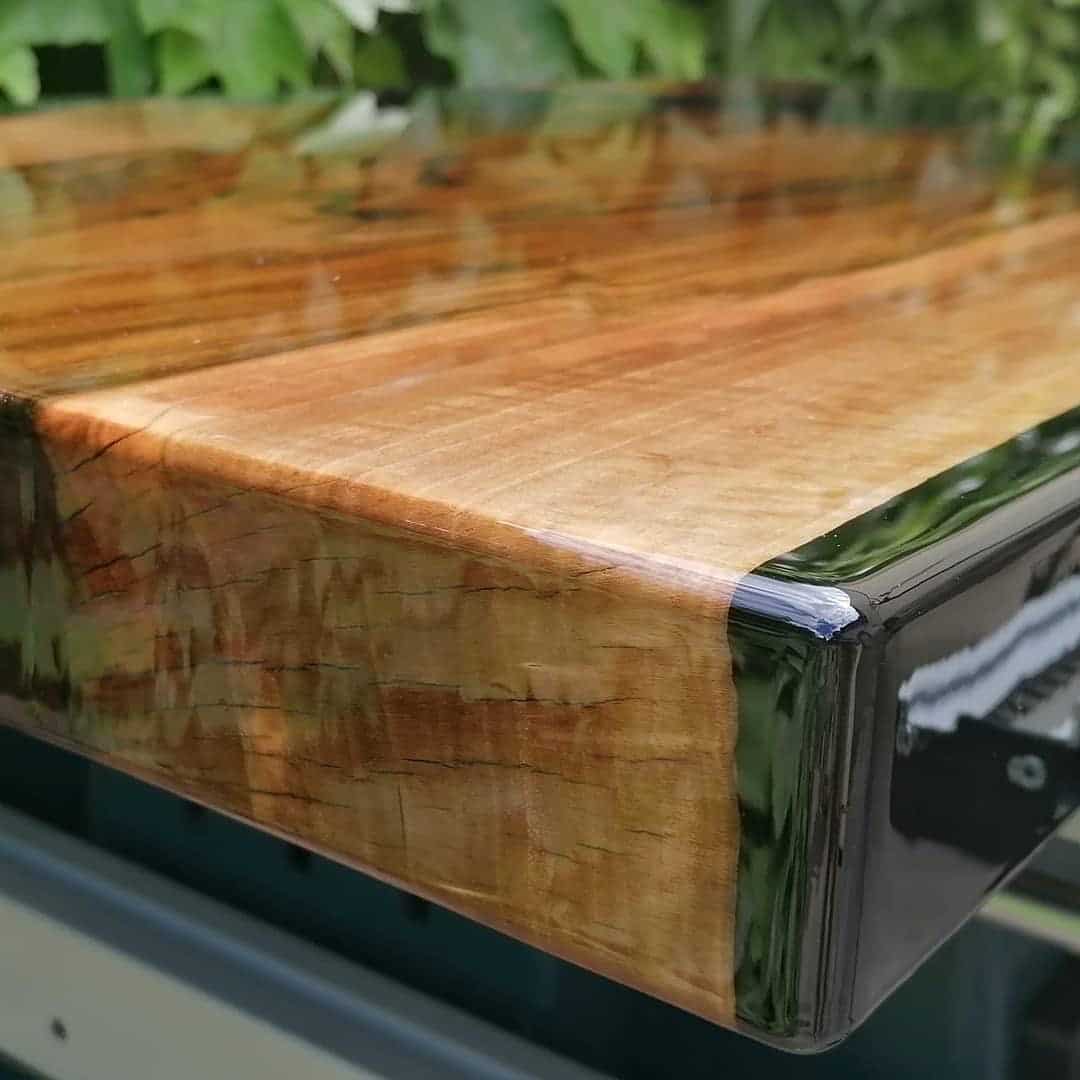
Epoxy resin projects are renowned for their dazzling shine and professional finish—yet even experienced creators can encounter frustrating defects such as bubbles, cloudiness, yellowing or uneven surfaces. This guide walks you through the essential measures and proven best practices to prevent the most common issues in epoxy resin pours, ensuring your results are consistently crystal-clear and flawless whether you are making art, jewellery, or furniture.
What You’ll Need
- “Liquidissima” – Epoxy Resin For Creations & Jewellery – For intricate moulds and small pieces requiring high clarity
- “Icrystal” – Clear Epoxy Resin – Odourless Formula – Up to 1.5cm – For furniture coatings, artistic surfaces and clear layers
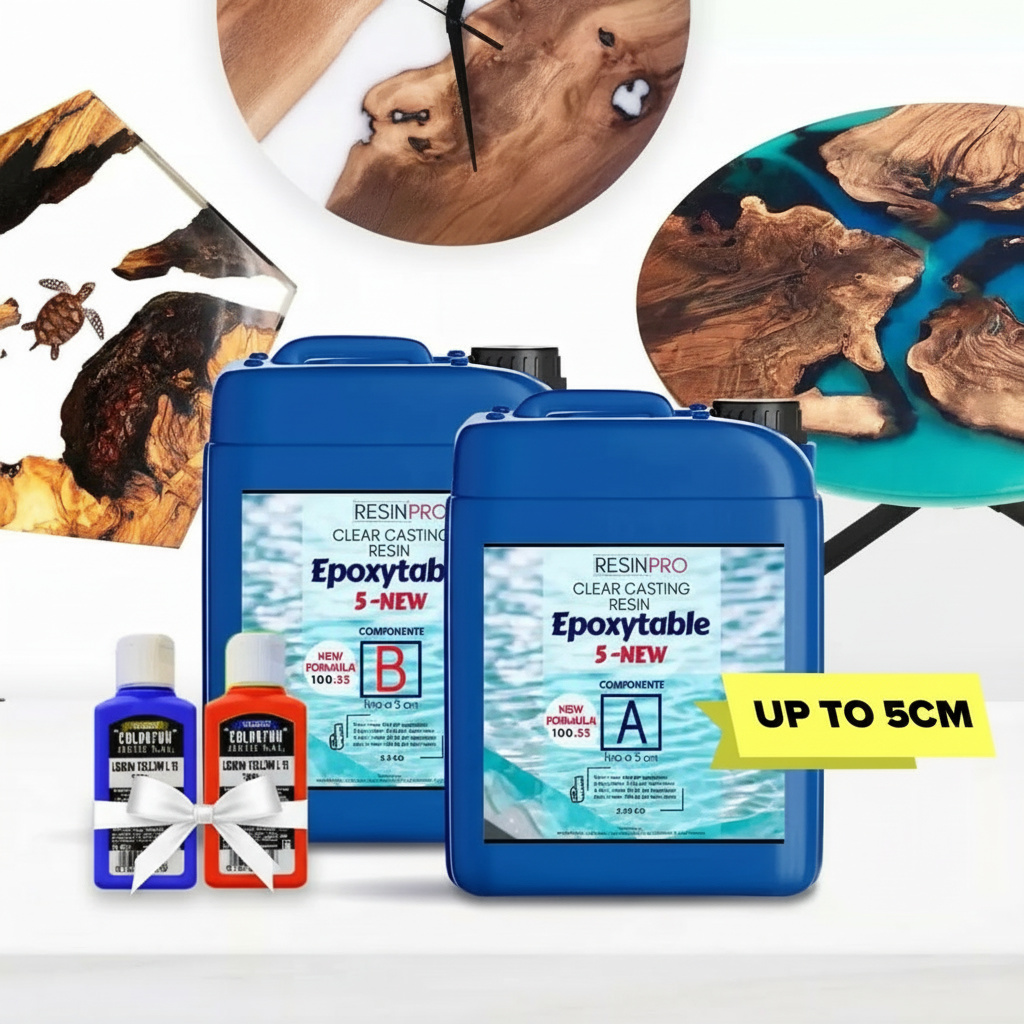
- “EpoxyTable 5-Five” – Deep Pour Epoxy Resin for Tables and Large Projects – Up to 5cm – For thicker castings in medium to large projects
- “Epoxytable 10-Ten” – Deep Pour Epoxy Resin for Tables, Up to 10cm Casting – For ultra-deep pours in river tables, large castings
- Accurate digital scales
- Mixing cups and stirring sticks
- Personal protective equipment (PPE): gloves, goggles, mask
- Plastic sheeting or drop cloth for workspace protection
- A bubble removal tool (heat gun or torch, as appropriate)
- Lint-free wipes

Choosing the Right Resin for Every Project
Different projects require different resin types. For deep tables or artwork, opt for a deep-casting resin like “Epoxytable 10-Ten” or “EpoxyTable 5-Five”. For intricate art and jewellery, a low-viscosity resin such as “Liquidissima” enables perfect detail. For protective surface finishing, “Icrystal” offers clarity and easy handling. Always select a resin that matches your project’s pour thickness and transparency needs to minimise defects.
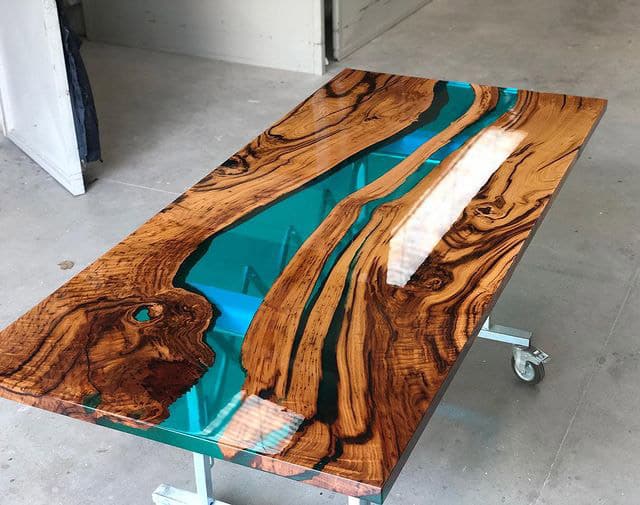
Step 1: Always measure resin and hardener precisely
Accurate measurement is a fundamental step in avoiding sticky surfaces, improper curing, or haziness. Carefully read the instructions for your resin system; many require precise weight ratios rather than volume, especially for professional formulations. Use a digital scale to weigh both components with accuracy. Pouring one component even slightly off ratio can result in soft spots or a tacky finish, so never estimate by eye.
Remember that each resin, such as “Icrystal” – Clear Epoxy Resin – Odourless Formula – Up to 1.5cm, is designed for specific mixing ratios which must not be altered.
Step 2: Mix slowly and thoroughly
Once measured, combine your resin and hardener in a clean mixing cup. Mix at a steady, gentle pace, scraping the sides and bottom frequently to ensure full homogenisation. This approach minimises air entrapment, helping to keep bubbles from forming and lingering in your final piece. Hasty or incomplete mixing may lead to unmixed streaks that never harden, so take the extra minute for thoroughness.
If you’re working on small or detailed moulds, a slow-pouring, bubble-reducing formulation such as “Liquidissima” – Epoxy Resin For Creations & Jewellery supports a flawless, bubble-free finish.
Step 3: Pour in layers appropriate for your resin
Thicker pours generate more heat; exceeding your resin’s maximum casting depth risks exothermic reactions, cracking, and clouding. Always check the manufacturer’s recommendations for layer thickness. For deep pours (e.g., river tables), select a dedicated product and pour no more than the specified maximum—some resins like “EpoxyTable 5-Five” – Deep Pour Epoxy Resin for Tables and Large Projects – Up to 5cm or “Epoxytable 10-Ten” – Deep Pour Epoxy Resin for Tables, Up to 10cm Casting are suited for successively thicker layers.
Let each layer cure or gel before adding the next to prevent internal bubbles, shifting, or overheating—a common mistake in large castings.
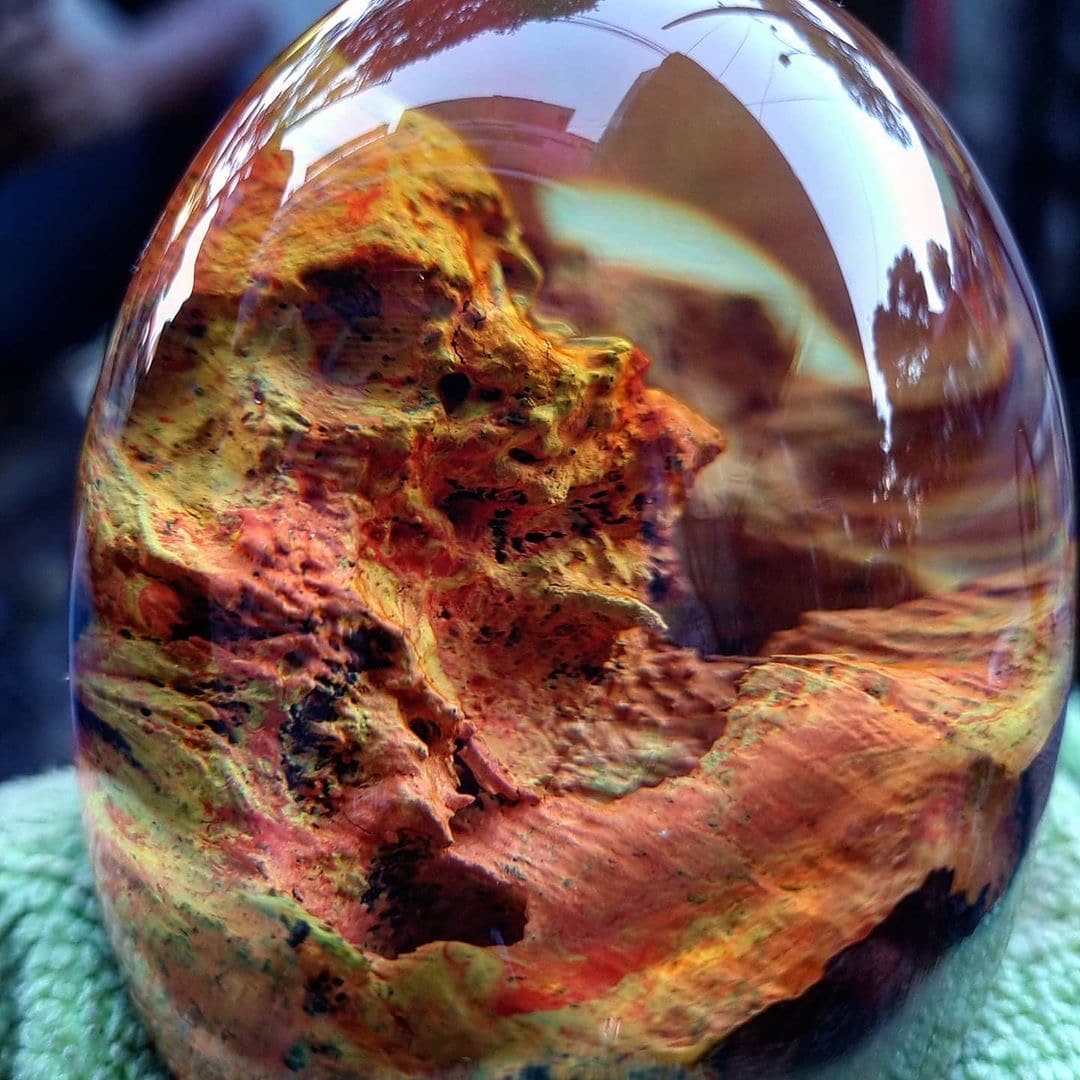
Step 4: Control your environment
Resin cures best within a specific temperature and humidity range, typically between 18–25°C and below 60% humidity. Excessive cold slows curing, causing haze or stickiness, while heat accelerates reaction and may trap bubbles or cause yellowing. Choose a workspace with stable conditions and avoid pouring in damp, dusty, or drafty areas.
Protecting your poured surface from airborne dust is also crucial—use plastic covers or work in a clean, closed space. Odourless products such as “Icrystal” – Clear Epoxy Resin – Odourless Formula – Up to 1.5cm help ensure a smoother indoor workflow.
Step 5: Remove surface dust and debris beforehand
Contamination from dust, oils, or moisture on your workspace, tools, or inclusions (like wood or stones) can lead to fish eyes or imperfect finishes. Always wipe down moulds and surfaces with lint-free wipes and, where possible, pre-seal porous items that will be embedded in the resin.
Before pouring, inspect all materials closely—this simple habit saves significant post-cure frustration and ensures greater clarity in jewellery or artwork, especially when using clear resins.
Tips, Common Mistakes, and Troubleshooting
Avoid mixing too vigorously: Quick stirring causes excessive bubbles, which can migrate to the surface and become trapped. Slow and steady wins the race.
Don’t exceed recommended layer depths: Pouring too thick at once stresses the formula and leads to defects such as cracks, overheating, or trapped bubbles, especially for deep pours.
Pop bubbles promptly: After pouring, use a heat gun or torch, waved lightly over the resin, to remove surface bubbles. Too much heat can burn the resin; practice gentle, steady passes and prioritise ventilation.
Select the right resin for your project: Defects are often a result of using an unsuitable formula; always pick a resin matched to your desired thickness, clarity and end use.
Curing and Aftercare for Defect-Free Results
After pouring, let the resin cure undisturbed. Avoid touching, covering with cloths or moving your piece until completely set. Curing times vary by resin and environment; always refer to product instructions. Once cured, sand gently if needed and apply a final polish for best clarity and shine.

- “Epoxytable 10-Ten” – Deep Pour Epoxy Resin for Tables, Up to 10cm CastingPrice range: £35.95 through £351.95“Epoxytable 10-Ten” is designed for deep pours up to 10cm, suitable for tables and artistic projects with low exothermic reaction and UV resistance.
- "EpoxyTable 5-Five" – Deep Pour Epoxy Resin for Tables and Large Projects – Up to 5cmPrice range: £17.95 through £1,154.95"EpoxyTable 5-Five" resin is designed for deep pour projects like tables, providing bubble-free castings and scratch-resistant surfaces.
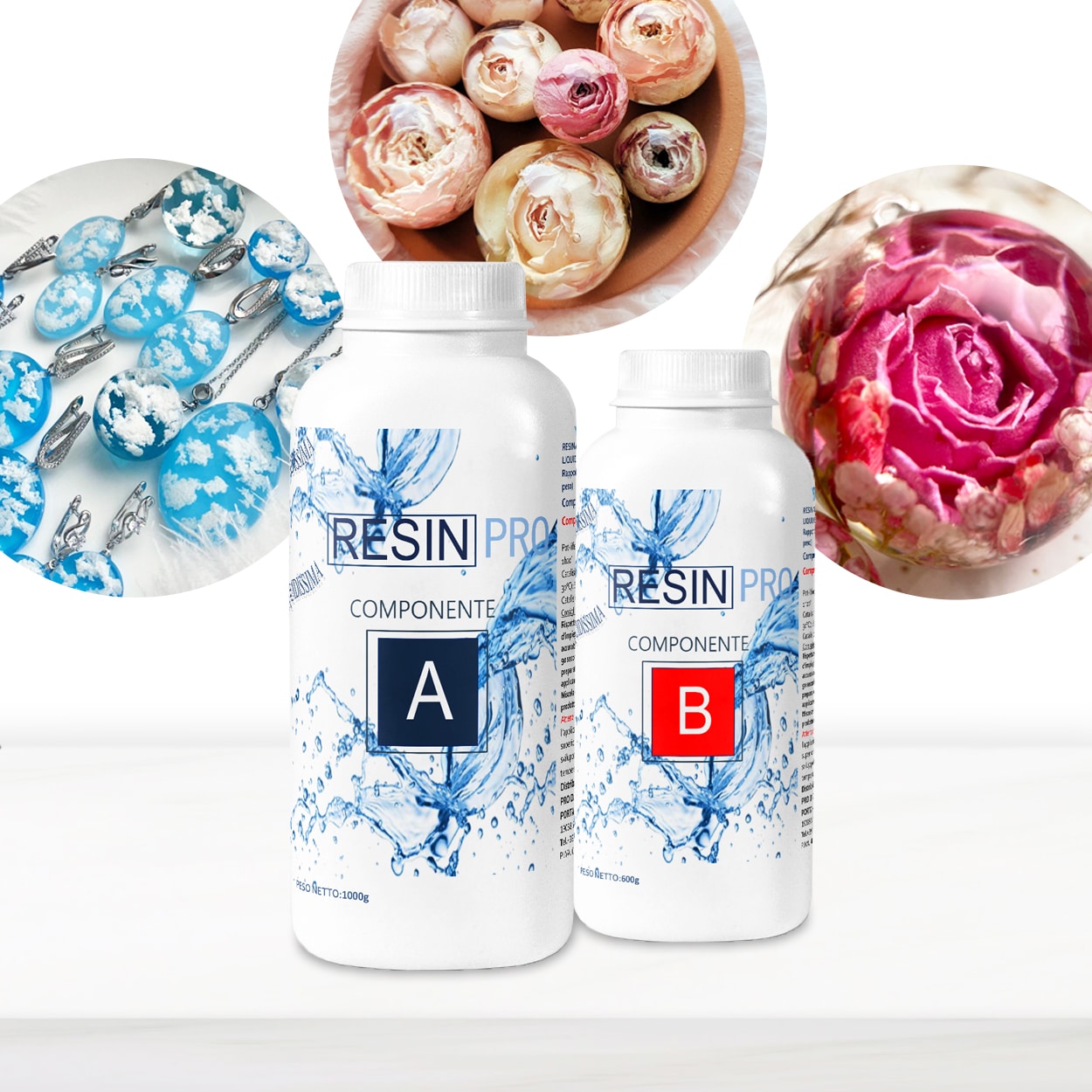 "Liquidissima" – Epoxy Resin For Creations & JewelleryPrice range: £12.85 through £31.85"Liquidissima" epoxy resin offers high transparency and extended working time, suitable for intricate moulds in jewellery making.
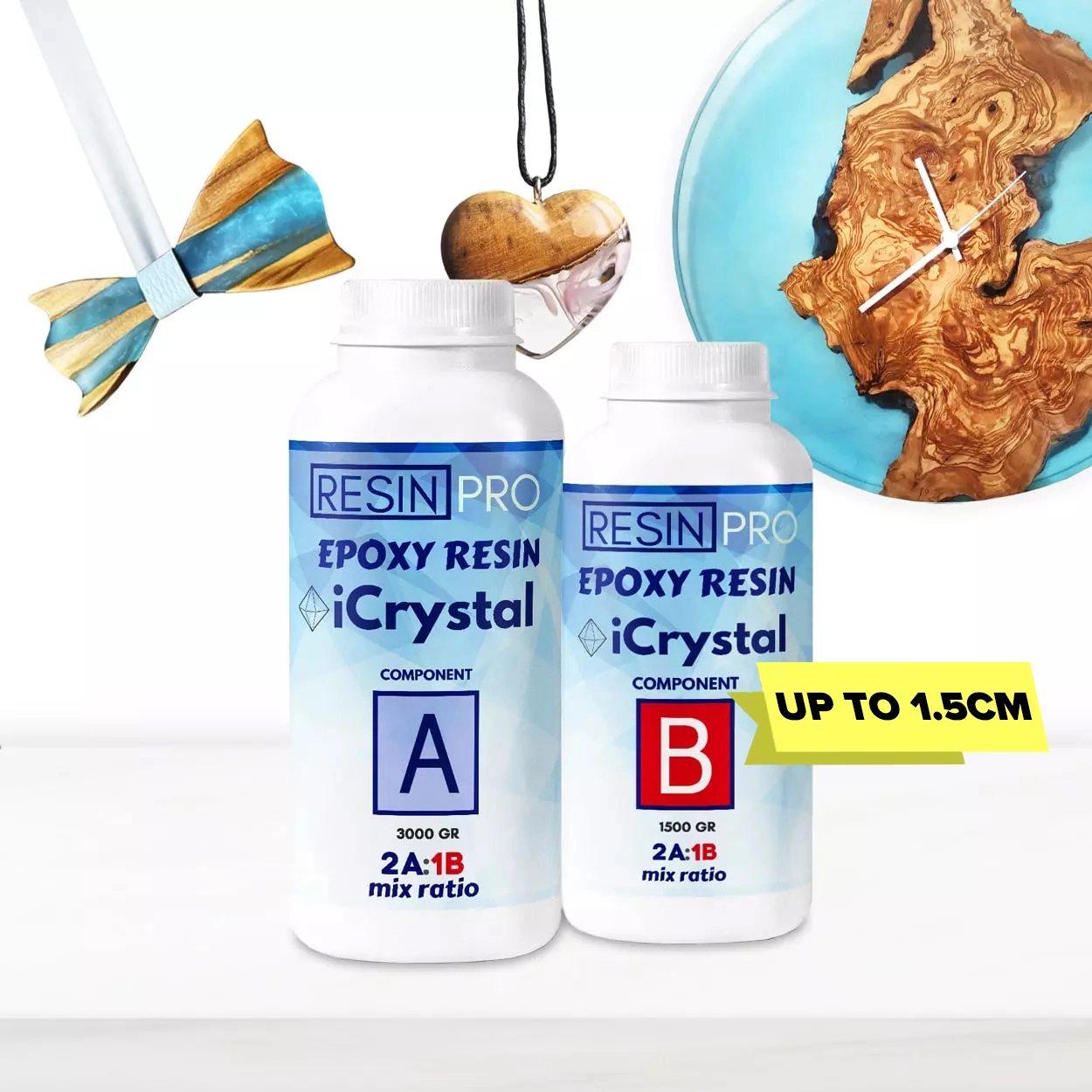 "Icrystal" – Clear Epoxy Resin – Odourless Formula – Up to 1.5cmPrice range: £12.45 through £341.45"Icrystal" clear epoxy resin is odourless and designed for coatings with good transparency and scratch resistance.
Frequently Asked Questions
How do I prevent bubbles in my epoxy resin?
Mix the components slowly and pour carefully. Use a heat gun or torch to gently remove bubbles from the surface after pouring.
Does humidity affect the finish of cured epoxy?
High humidity may cause hazing and blushing. Always pour epoxy in a dry, controlled environment for the best finish.
Why is my epoxy resin sticky or unevenly cured?
Sticky areas result from incorrect mixing ratios or incomplete mixing. Measure carefully and mix thoroughly to avoid this.
How do I safely remove surface bubbles?
Gently pass a heat gun or torch a few centimetres above the resin just after pouring. Avoid prolonged direct heat.
How thick can I pour epoxy resin in one layer?
Each resin has a maximum pour depth. For example, "EpoxyTable 5-Five" can be poured up to 5cm per layer. Exceeding this can cause overheating or cracks.
How can I prevent yellowing over time?
Use resins with UV filters and avoid prolonged sun exposure for the finished work. "Icrystal" and deep pour resins include UV protection.