 Free shipping on orders over £29,85
  Shipping Tracking!


 Google
 Facebook
How do you lay a resin floor?
A clear, stepwise approach to achieving smooth resin floors
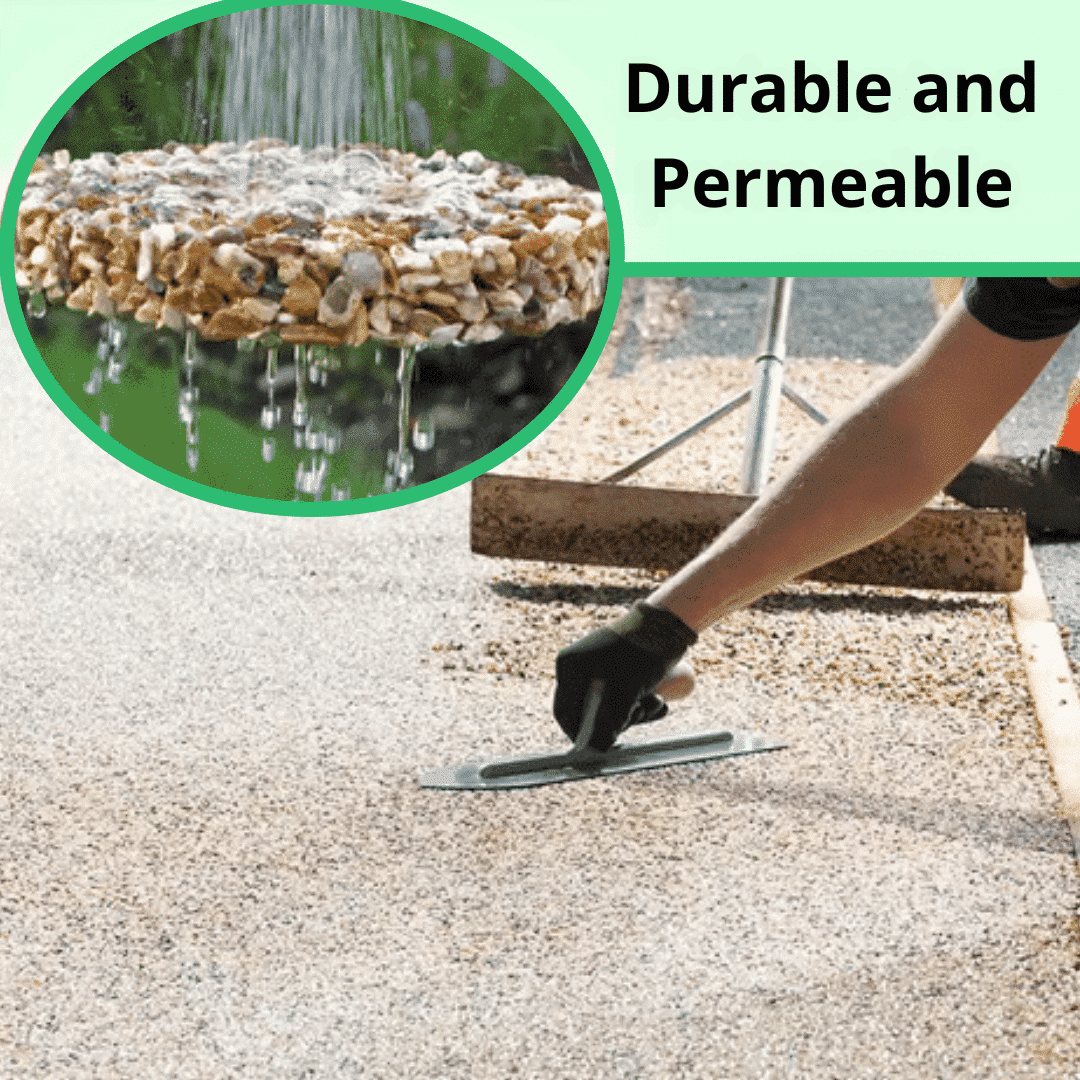
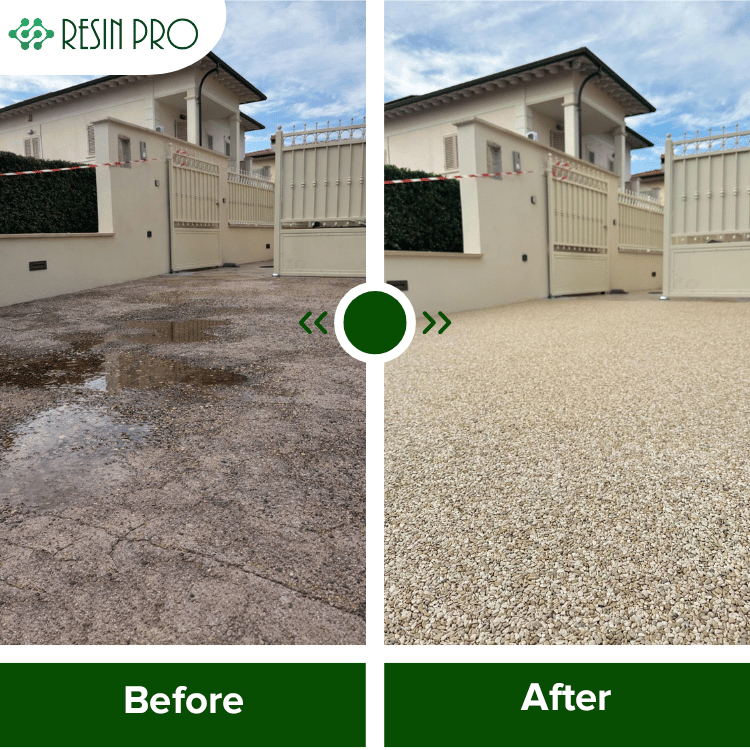
Laying a resin floor provides a modern, durable, and seamless finish for indoor and outdoor spaces. Whether you’re covering a concrete substrate or creating a decorative area with pebbles, the right technique ensures long-lasting results. This detailed guide will walk you through all the key stages, from preparation to curing, so you can achieve flawless, functional resin flooring.
What You’ll Need
- “Epoxyprimer” – Universal Water-Based Two-Component Epoxy Floor Primer – for priming a range of floor bases including concrete and tile.
- “Trasparente” – Epoxy Binder for Coloured Pebbles and Grits – for binding coloured pebbles or decorative grits if you’re creating a stone effect surface.
- “Flowstone” – Complete Permeable Floor Kit with Pebbles and Resin – an all-in-one solution for permeable decorative outdoor floors.
- “Resinstone” – One-Component Methacrylic Resin for Concrete Floors and Driveways – ideal for sealing or finishing concrete bases.
- Protective gloves, goggles, and overalls
- Rollers, brushes, or spatulas for application
- Mixing tools (drill with paddle or cement mixer for large areas)
- Sandpaper or grinder (for substrate preparation)
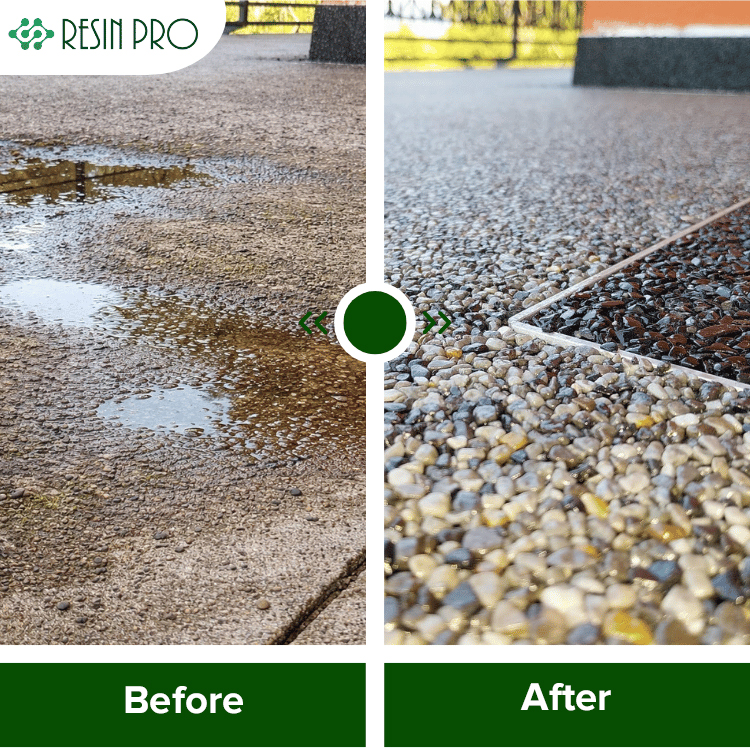
Floor surface preparation and planning
Proper surface preparation is essential for a flawless resin floor. Remove all dust, oil, or loose particles and smooth out irregularities before priming. Thorough cleaning and repair set the stage for maximum adhesion and finished durability.
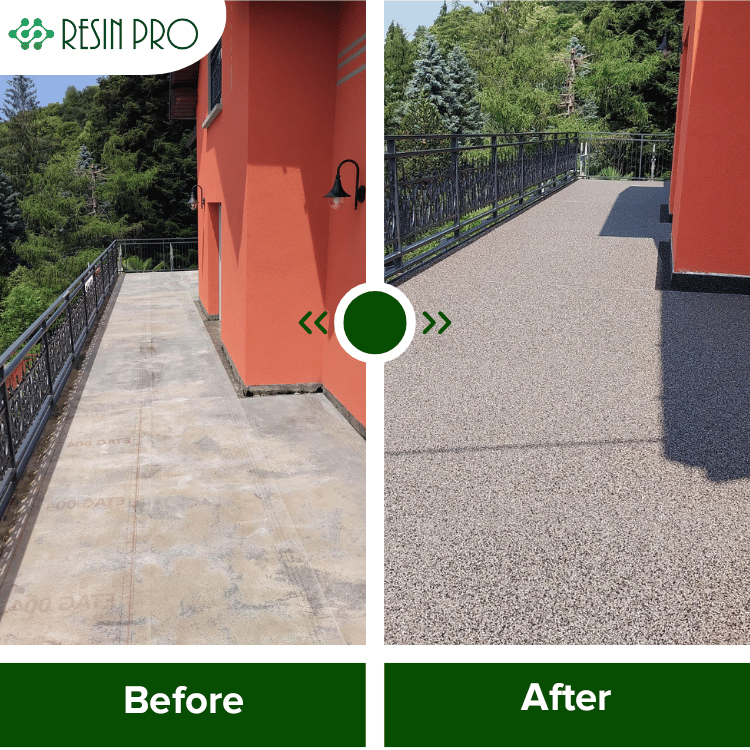
Step 1: Prepare the Flooring Substrate
Begin by inspecting your existing floor. It must be clean, dry, and free from oil, grease, and loose debris. New concrete should be fully cured—typically at least 28 days. If required, mechanically abrade (by sanding or grinding) to open the surface and remove laitance. Sweep or vacuum thoroughly. Existing tile or screed should be degreased and lightly abraded to improve adhesion. Repair cracks or holes using a suitable filler before continuing.
Wear suitable gloves and safety eyewear when handling resins.
Step 2: Prime the Surface
Priming ensures a strong bond between the substrate and your resin floor while reducing the risk of bubbles or detachment. Choose a primer appropriate for your base material. For most bases including concrete, tiles, screed, or timber, a two-component system such as “Epoxyprimer” – Universal Water-Based Two-Component Epoxy Floor Primer is suitable. Mix components according to instructions and apply with a roller or brush for an even film. Allow to cure thoroughly (24–48 hours) before proceeding.
Step 3: Mix and Spread the Resin (or Resin-Pebble Blend)
If you are applying a classic resin floor, prepare the chosen resin exactly as directed, mixing thoroughly for an even blend. For decorative or permeable finishes, you may need to blend the resin with aggregates. For coloured pebble or grit floors, use a low-viscosity, transparent binder such as “Trasparente” – Epoxy Binder for Coloured Pebbles and Grits to encapsulate the stones. With a permeable solution for outdoor areas, a kit like “Flowstone” – Complete Permeable Floor Kit with Pebbles and Resin provides all required materials and clear mixing ratios.
Ensure that your chosen resin system matches your substrate type and environment. Work in manageable sections to prevent resin from curing before you finish spreading.

Step 4: Level, Trowel, and Finish
Evenly pour or spread the resin (or resin-stone mix) onto the prepared and primed surface. Use a notched trowel, spiked roller, or float to achieve the desired thickness—usually between 2–4 mm for indoor, thicker if applying a decorative pebble system outdoors. For stone blends, press down gently to ensure encapsulation and a flat, stable finish. Work methodically to avoid uneven patches or trapped air. Remove tape before the resin hardens to get crisp edges.
For concrete surfaces needing sealing or protection, especially outdoors, consider finishing with a methacrylic resin like “Resinstone” – One-Component Methacrylic Resin for Concrete Floors and Driveways to enhance durability.

Step 5: Allow to Cure and Protect the Surface
Curing times vary depending on resin type, ambient temperature, and thickness applied, but most resin floors should be left undisturbed and dust-free for at least 24 hours. Decorative or permeable floors may become walkable after around 10–24 hours, but avoid heavy traffic until fully cured. If possible, keep pets and children away in this period.
Control ambient temperature and humidity during application. Never rush the curing process—proper hardening is essential for floor performance and lifespan.
Tips, Troubleshooting, and Common Mistakes
Always read your product’s instructions and safety datasheet before starting. Common mistakes include uneven mixing, applying on damp surfaces, and working outside the ideal temperature range.
If air bubbles appear, use a spiked roller (for standard resin pours) while the layer is still wet. Over-thick applications may prolong curing and increase risk of defects. For best results, perform a small test area before tackling the whole floor, especially with decorative or permeable kits. If in doubt, seek technical support for challenging substrates like very porous concrete or unusual tiles.
Common issues when laying resin floors
Typical problems like poor adhesion, bubbling, or yellowing often result from damp substrates, hurried mixing, or selecting the wrong resin for outdoor areas. Control environmental factors and follow mixing instructions for best results.
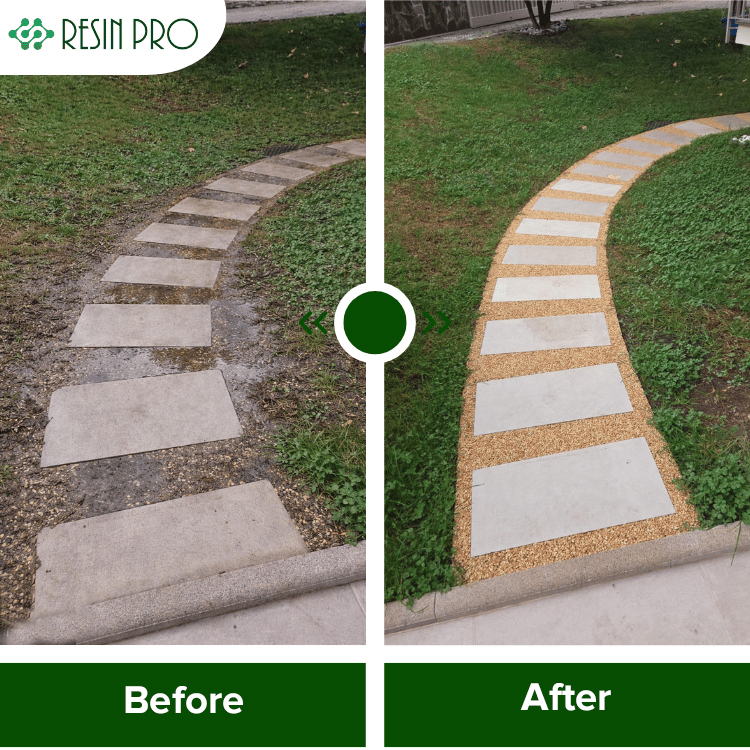
- "Flowstone" – Complete Permeable Floor Kit with Pebbles and ResinPrice range: £49.95 through £3,915.45"Flowstone" offers a durable, permeable pebble and resin floor kit suitable for outdoor UK spaces, with user guidance for resin choice and…
- "Epoxyprimer" – Universal Water-Based Two-Component Epoxy Floor PrimerPrice range: £156.45 through £286.45"Epoxyprimer" is a water-based two-component epoxy floor primer designed for reliable adhesion and durability for various substrate types.
 "Trasparente" – Epoxy Binder for Coloured Pebbles and GritsPrice range: £33.45 through £397.95"Trasparente" is a transparent epoxy binder designed for coloured pebbles and grits, suitable for creating durable decorative pebble floors.
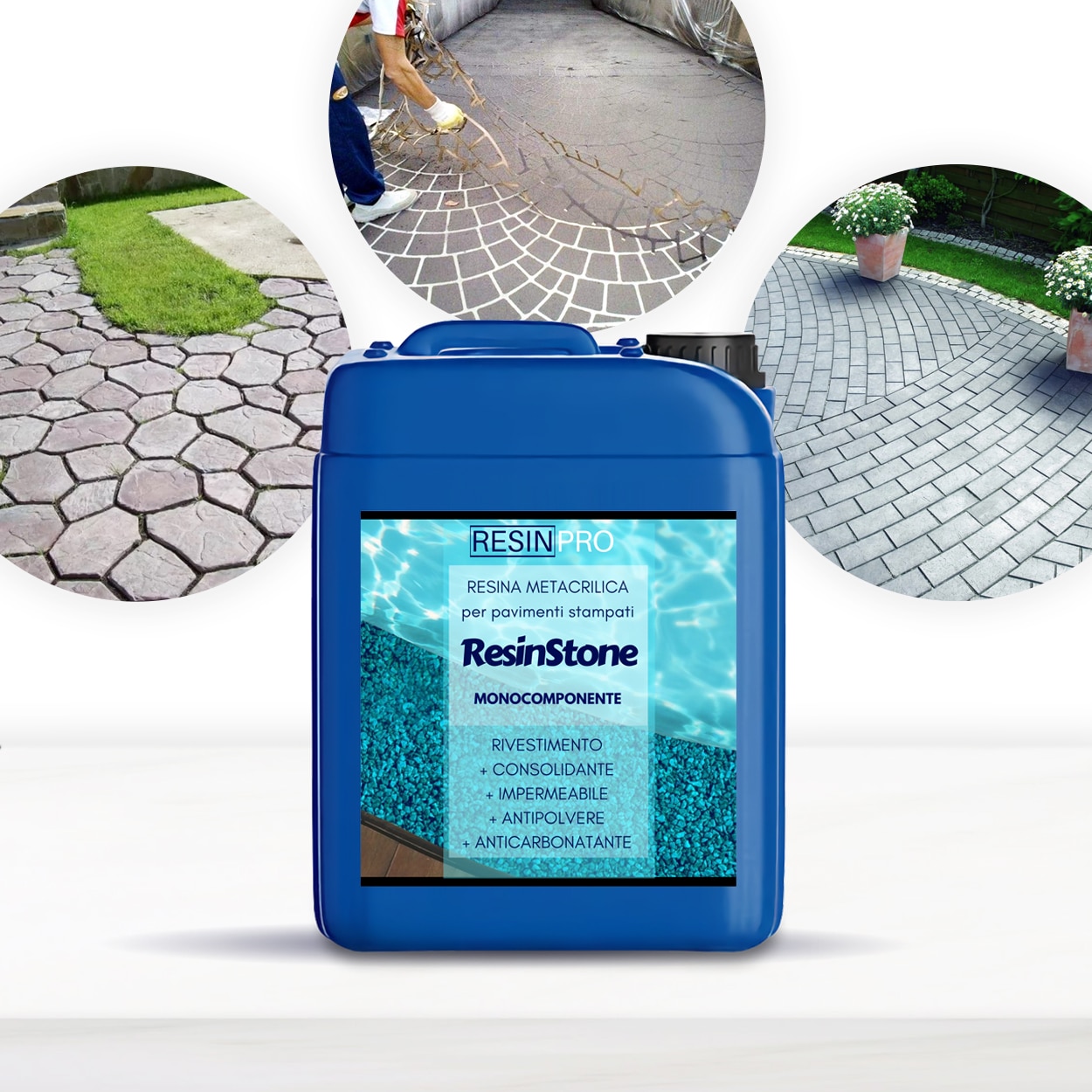 "Resinstone" – One-Component Methacrylic Resin for Concrete Floors and DrivewaysPrice range: £36.71 through £336.48"Resinstone" is a one-component methacrylic resin designed for sealing and protecting concrete floors and driveways with waterproof and durable…
Frequently Asked Questions
Can I lay a resin floor myself?
Yes. With good substrate preparation and by following step-by-step instructions, most DIYers can achieve professional-looking resin flooring results.
How long does a resin floor take to cure?
Most resin floors are touch-dry in 10–24 hours. Wait for full cure (up to 48 hours or as advised) before permitting heavy traffic.
Should I use a primer before laying resin?
Yes. Primers promote adhesion, reduce bubbles, and help ensure the resin system bonds firmly to the base.
How do I fix bubbles in the resin floor?
While wet, use a spiked roller to release bubbles. Prevent bubbles by priming and ensuring dry, dust-free surfaces.
What temperature should I apply resin flooring?
Resin application is best undertaken at 15–25°C with moderate humidity. Avoid extremes to prevent curing issues.
Is the method different for outdoor resin floors?
Yes. Outdoor floors often need permeable or UV-stable resin systems and careful substrate drainage planning.