 Free shipping on orders over £29,85
  Shipping Tracking!


 Google
 Facebook
How is epoxy resin obtained?
Understanding the origins and types of epoxy resin for every project

Are you interested in the origins, production process, and varieties of epoxy resin? This page explains how epoxy resin is manufactured and highlights the key differences between popular types used in flooring, woodworking, food-contact, and decorative projects. Whether you’re a hobbyist, professional, or simply curious about epoxy, you’ll find clear answers to help you choose the right resin for your next application.
Understanding How Epoxy Resin is Made
Epoxy resin is a thermosetting polymer obtained through the chemical reaction of monomers containing epoxy groups (oxirane rings). These are typically produced by reacting epichlorohydrin with bisphenol-A or other compounds, resulting in resins that cure into tough, durable materials. The specific formulation, hardeners, additives, and purity levels determine each epoxy resin’s suitability for different applications, such as food-contact safety, UV stability, or deep penetration into wood. Understanding these differences enables users to select the right product for their exact needs.
Visualising the Epoxy Resin Production Process
Epoxy resin begins its journey as a molecular reaction between epichlorohydrin and bisphenol compounds. Images of laboratory setups and large-scale resin blending highlight the precision required to obtain the clarity, purity, and performance properties needed for specialist products.
Epoxy Resins for Decorative and Permeable Pebble Flooring
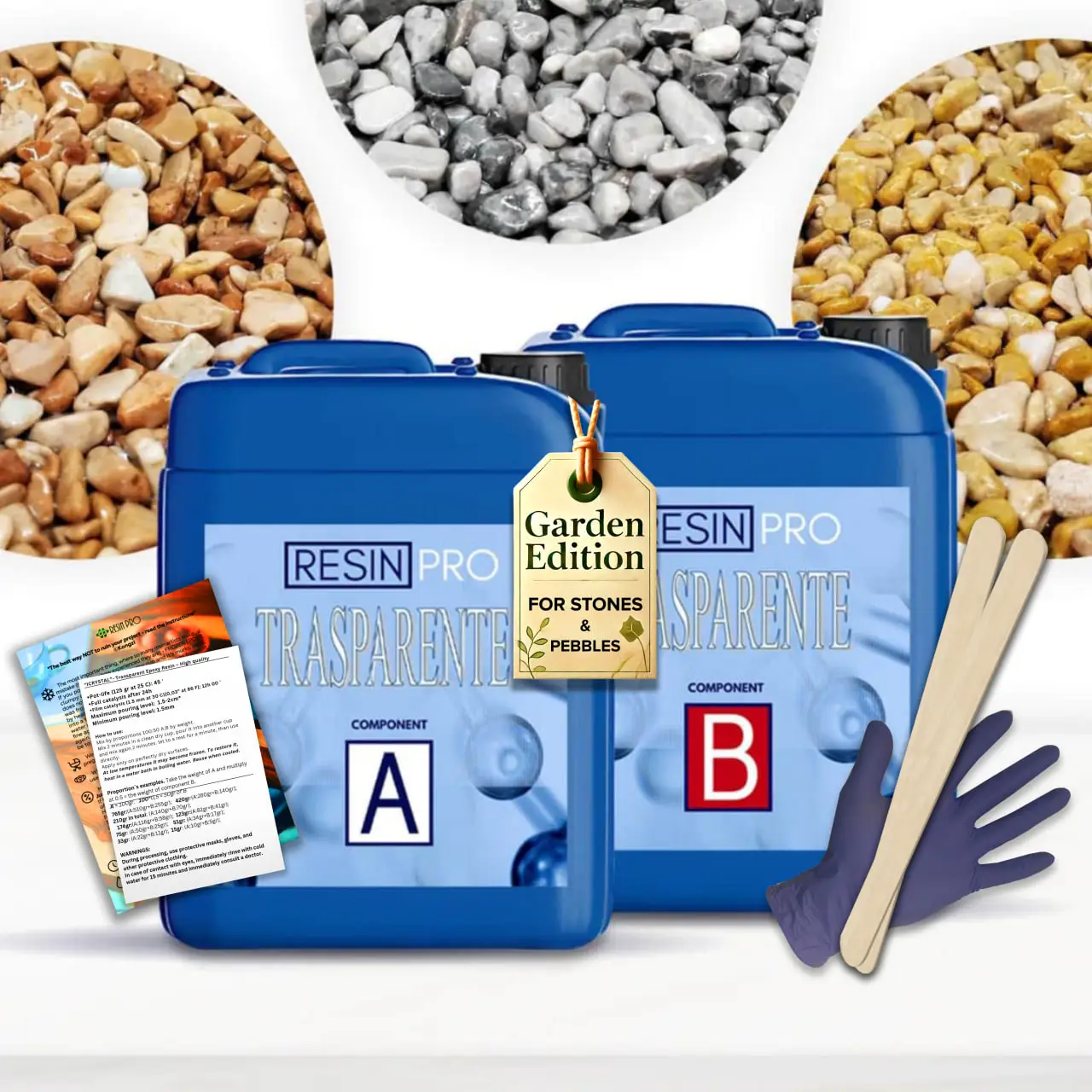
If you require a transparent, UV-resistant binder for coloured pebbles and grits in outdoor environments, “Trasparente” – Epoxy Binder for Coloured Pebbles and Grits stands out. This two-part system delivers a crystal-clear, bubble-free result, ensuring the colours of aggregates remain sharp. It’s formulated with a cycloaliphatic amine hardener to guarantee resistance to yellowing, even when exposed to direct sunlight, making it ideal for outdoor spaces such as driveways, permeable paths, and designer flooring. As a clear example of how epoxy resin is obtained and tailored, “Trasparente” showcases both versatility and safety—it’s even certified non-toxic after curing.
Epoxy Resins for Wood Restoration and Deep Penetration
For reinforcing and waterproofing wood, “EpoxyWood” – Wood Restoration Epoxy Resin for Deep Penetration and Waterproofing exemplifies the advanced uses of epoxy technology. EpoxyWood is crafted for ultra-low viscosity, permitting it to soak deeply into the wood structure, reinforcing and waterproofing it from the inside out. This resin is solvent-free, cruelty-free, and gives wood a warm, straw-yellow finish that enriches the grain while offering long-term defence against moisture. Its production reflects careful control and selection of monomers and hardeners for optimum performance in marine and restoration settings.
Certified Epoxy Resins for Food-Contact Surfaces
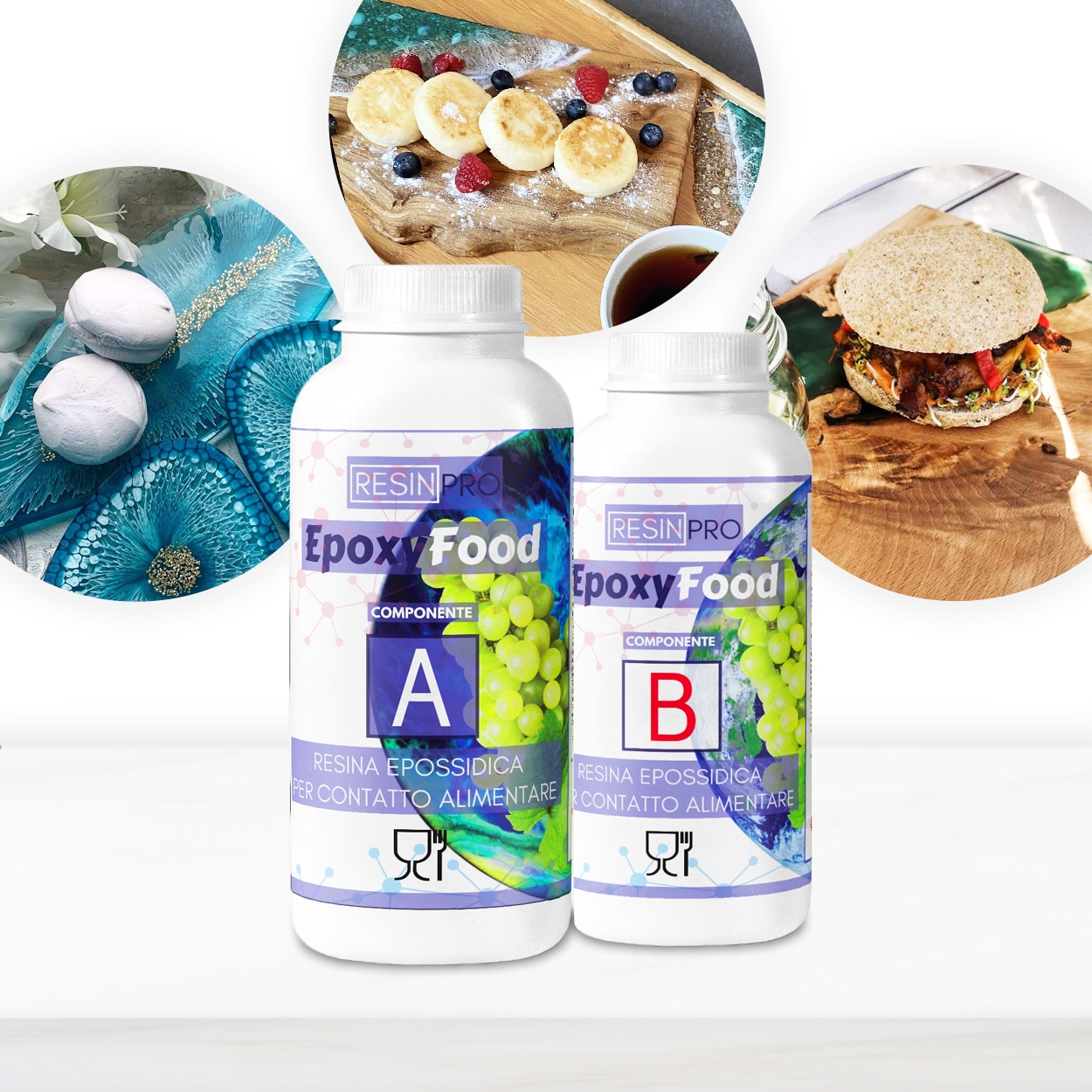
Special formulations such as “EpoxyFood” – Certified Clear Food Contact Epoxy Resin for Coating show how the production process can be optimised for demanding uses. EpoxyFood is independently certified to meet European food safety regulations, ensuring it is non-toxic and odourless. Achieving such certification depends on both the purity of the initial chemicals and precise manufacturing standards, resulting in a resin that’s perfect for coating plates, boards, and kitchen surfaces. This variety demonstrates not just how epoxy resin is obtained, but how it is refined for specific safety and performance needs.
Epoxy Resin for Crystal-Clear Artistic and Protective Coatings
For artists and makers who prioritise clarity, scratch resistance, and odourless workspaces, “Icrystal” – Clear Epoxy Resin – Odourless Formula – Up to 1.5cm is an excellent choice. Its highly transparent formula and easy 2:1 mixing ratio support flawless coatings on tables, artwork, and small castings. Its UV filter, offering a 10-year anti-yellowing warranty, and practical thickness of up to 1.5 cm per layer are achieved by adjusting the balance of epoxy molecules and hardeners during manufacturing. This provides a shining example of how the resin-making process can be steered to meet the needs of artists and hobbyists.
Choosing the Right Epoxy Resin for Your Application
Selecting the right epoxy resin depends on your intended use, safety needs, and performance requirements. Consider whether your project requires UV stability for outdoor settings, food-contact certification, deep penetration into wood, or maximal clarity for decorative finishes. For pebble flooring, products like “Trasparente” ensure durable, vivid results. Artistic or table projects benefit from the scratch resistance of “Icrystal”, while restoration or marine repair is best addressed with “EpoxyWood”. Food-safe needs call for “EpoxyFood”. Always check the manufacturer’s technical information to align a resin’s properties with your specific project demands.
See Epoxy in Every Application
From crystal-clear art pieces to robust pebble flooring, epoxy resin delivers stunning results when chosen with care. Project galleries and instructional images underline the diversity of applications, from food-safe coatings to deep-penetrating wood sealants.

- "Trasparente" – Epoxy Binder for Coloured Pebbles and GritsPrice range: £33.45 through £397.95"Trasparente" is a transparent epoxy binder designed for coloured pebbles and grits, suitable for clear, UV-stable flooring finishes.
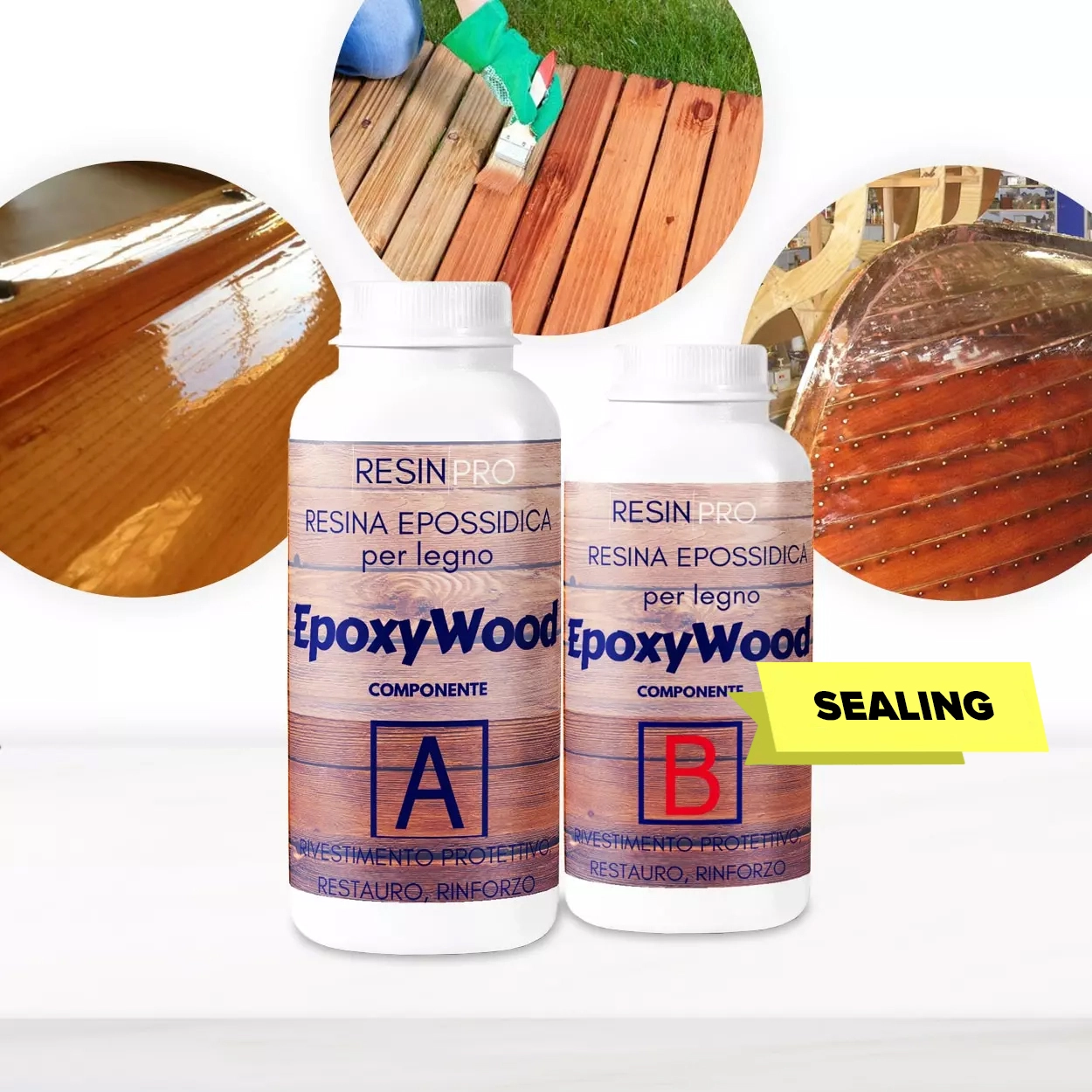 "EpoxyWood" – Wood Restoration Epoxy Resin for Deep Penetration and WaterproofingPrice range: £27.95 through £41.95"EpoxyWood" is designed for wood restoration with deep penetration and waterproofing, suitable for repairing and protecting wood surfaces.
- "EpoxyFood" – Certified Clear Food Contact Epoxy Resin for CoatingPrice range: £20.95 through £146.95EpoxyFood is a certified transparent resin suitable for food contact, offering clarity and a gloss finish for coatings.
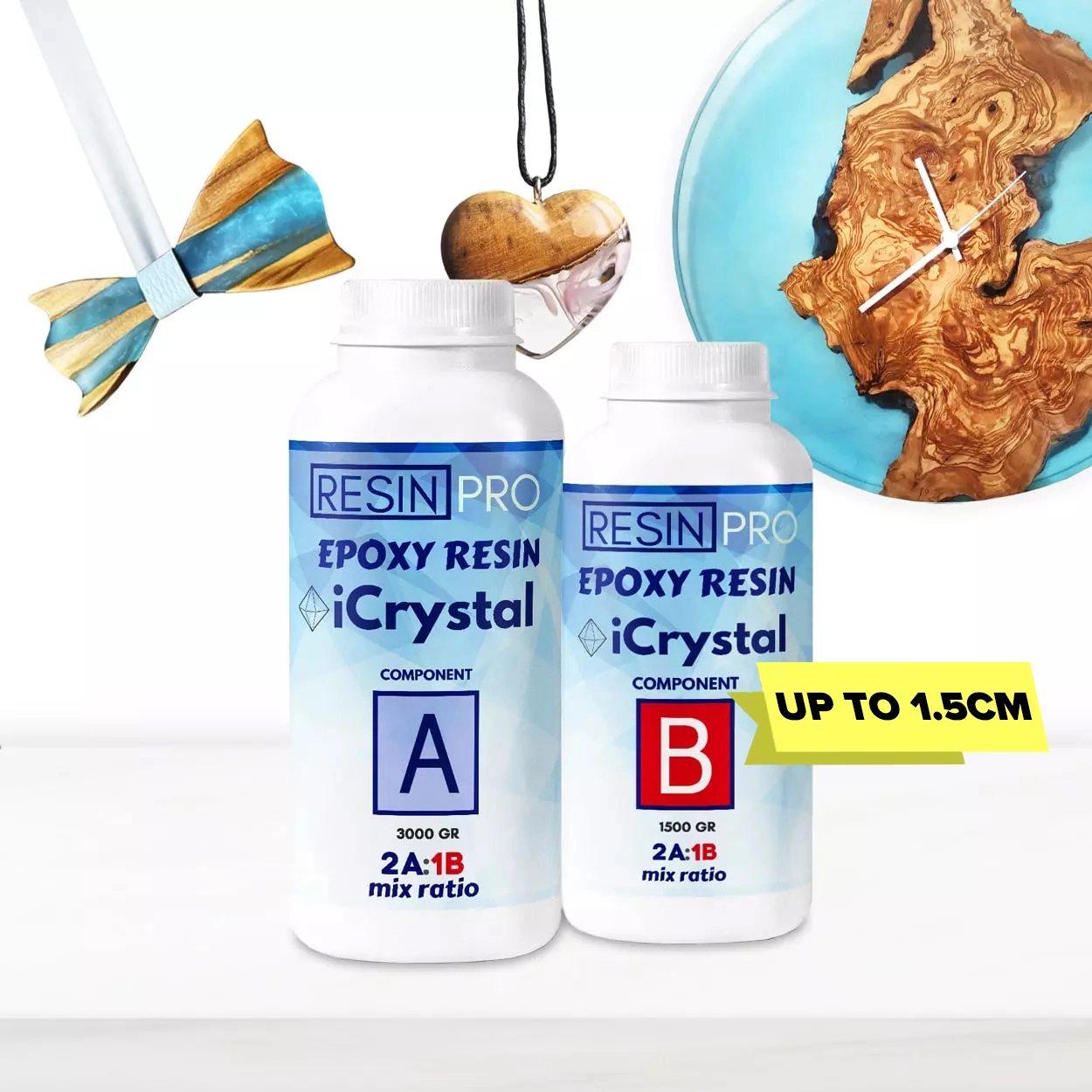 "Icrystal" – Clear Epoxy Resin – Odourless Formula – Up to 1.5cmPrice range: £12.45 through £341.45"Icrystal" is a transparent epoxy resin designed for clear, odourless use with good scratch resistance, suitable for tables.
Frequently Asked Questions
How is epoxy resin created in a factory?
Epoxy resin is made by reacting epichlorohydrin with bisphenol or other chemicals, followed by purification and blending with hardeners to obtain the required properties.
Which epoxy resin suits each application?
The right type depends on your needs: UV-resistant for outdoor projects, food-safe for contact with food, deep-penetration for wood, or clear for art and surfaces.
Are flooring resins different from artistic resins?
Yes. Flooring resins focus on strength and UV resistance, while artistic resins prioritise clarity, lower odour, and a smooth finish.
Can epoxy resin be food safe?
Special formulations like EpoxyFood are certified for food contact, provided they are mixed precisely and applied as instructed.
Is epoxy resin environmentally friendly or vegan?
Some resins, such as Icrystal and EpoxyWood, are cruelty-free and vegan-friendly, but check each product’s documentation for eco-information.
What makes some epoxy resins crystal clear?
Crystal-clear resins use highly pure base chemicals and additives such as UV filters, plus careful blending and degassing during production.
Can I use the same resin for all projects?
No. Properties like flexibility, safety, and resistance vary—choose based on your project’s demands, not a one-size-fits-all approach.