 Free shipping on orders over £29,85
  Shipping Tracking!


 Google
 Facebook
How to use table resin?
Step-by-step method for flawless resin table casting


Creating a resin table can transform a living space or workshop, blending durability with unique artistic value. Whether you’re a beginner or an experienced DIYer, using table resin effectively is essential for stunning, resilient results. This guide will help you achieve seamless pours, vivid clarity, and robust surfaces suitable for dining tables, river tables, or bespoke worktops.
What You’ll Need
- “EpoxyTable 5-Five” – Deep Pour Epoxy Resin for Tables and Large Projects – Up to 5cm: For medium to large projects up to 5cm thick.
- “Epoxytable 10-Ten” – Deep Pour Epoxy Resin for Tables, Up to 10cm Casting: For particularly deep pours or very thick tabletops.
- “River-Table” – Complete Kit for Creating Your First Epoxy Resin Table: Ideal for first-time table projects with instructions and essentials included.
- “Trasparente” – Multipurpose Clear Epoxy Resin for Casting – Up to 2cm: Suited for smaller tables or detailed casting layers.
- Mixing containers, stirring sticks, protective gloves, release tape or formwork lining, pigments (optional), polishing kit, and PPE (mask or goggles).

Essential Equipment for Resin Table Casting
Set up your workspace with robust gloves, accurate mixing scales, plenty of mixing sticks, and formwork materials to ensure smooth application. Lay out all resins, pigments, and safety gear before starting, and keep your instructions close to hand. Preparation and organisation minimise errors and create safer, cleaner results.

Step 1: Prepare the Surface and Workspace
Start by ensuring that both your wooden surface and resin working area are perfectly dry, stable, and free of dust. Any moisture or oily residue can interfere with proper adhesion or cause milky resin finishes. Level the workpiece so that the resin distributes evenly, especially when making river tables or filling freeform voids.
Seal any knots or cracks in your timber with a clear primer or a thin resin layer. This will prevent trapped bubbles from surfacing during the main pour. Always set up in a well-ventilated but dust-free room, and protect yourself with gloves and eye protection from the outset.
Step 2: Build and Seal the Formwork
Construct a frame around your tabletop using melamine-board, strong tape, or similar smooth non-stick surfaces to contain the pour. Every edge and joint must be sealed thoroughly to prevent leaks—this is especially critical for resin pours deeper than 2cm, where resin seeks out any escape routes as it settles. Release film or wax can help un-mould your cure without damage.
If you’re new to resin tables, a kit such as the “River-Table” – Complete Kit for Creating Your First Epoxy Resin Table provides sealing materials and release liners to simplify build-up and demoulding.
Step 3: Measure, Mix, and Add Pigments
Thoroughly read the mixing instructions for your chosen resin product and weigh each component with precision. Small deviations compromise strength, clarity, or curing. Add pigments or colour powders slowly, mixing until fully dispersed but avoiding over-mixing which introduces excess bubbles.
Mix with care to avoid bubbles. For deep pours up to 5cm or 10cm, choose a formula such as EpoxyTable 5-Five or Epoxytable 10-Ten; for shallower work, Trasparente is ideal.

Step 4: Pour the Resin in Stages
When ready, slowly pour the mixed resin into your formwork across the surface or ‘river’ area. Pour in suitable thickness for your resin: up to 2cm for multipurpose resins and up to 5cm or 10cm for deep pour epoxies. For especially large tables or those exceeding the recommended pour depth, work in multiple stages—each separated by the manufacturer’s advised interval (usually 6–8 hours).
Lightly use a heat gun or torch to encourage bubbles to rise and burst, but do not overheat or linger in one area. Allow enough time for the resin to self-level and start to gel before disturbing the surface or moving your project.

Step 5: Finishing, Demoulding, and Polishing
Once fully cured, carefully remove your table from the formwork, taking extra care with edges. Some edges may require gentle sanding or trimming to achieve your desired outline. Clean with a soft cloth and apply a dedicated resin polish or the finishing kit included in some starter packs for a pristine, scratch-resistant sheen.
If imperfections or raised dust appear, further sanding and multiple grades of polishing pads can restore clarity. Allow the finished piece to condition for several days before subjecting it to heavy use.
Tips and Troubleshooting for Table Resin Projects
Work in a dust-free, dry environment to avoid imperfections on your cured surface. Never pour thicker than your resin allows in a single layer—deeper pours risk overheating, bubbles, or soft cures. If you notice cloudiness, excessive bubbles, or warping, it may trace back to humidity, improper mixing ratios, or using non-deep-pour products for thick castings.
Avoid thick single pours beyond your resin’s specification. Always read your product’s manual and test on a small sample if unsure. Cleaning spills with isopropyl alcohol and using dedicated tools ensures repeatable results with every new project.
Visual Guide: Flawless Table Resin Finishing
Showcase the clarity and depth that’s possible with slow, careful pouring and proper polishing. Edge finishing and sanding bring out the shine—use fine-grit pads and polishing cream for best effect. Examine your results under natural light for the truest appearance of your table’s surface.
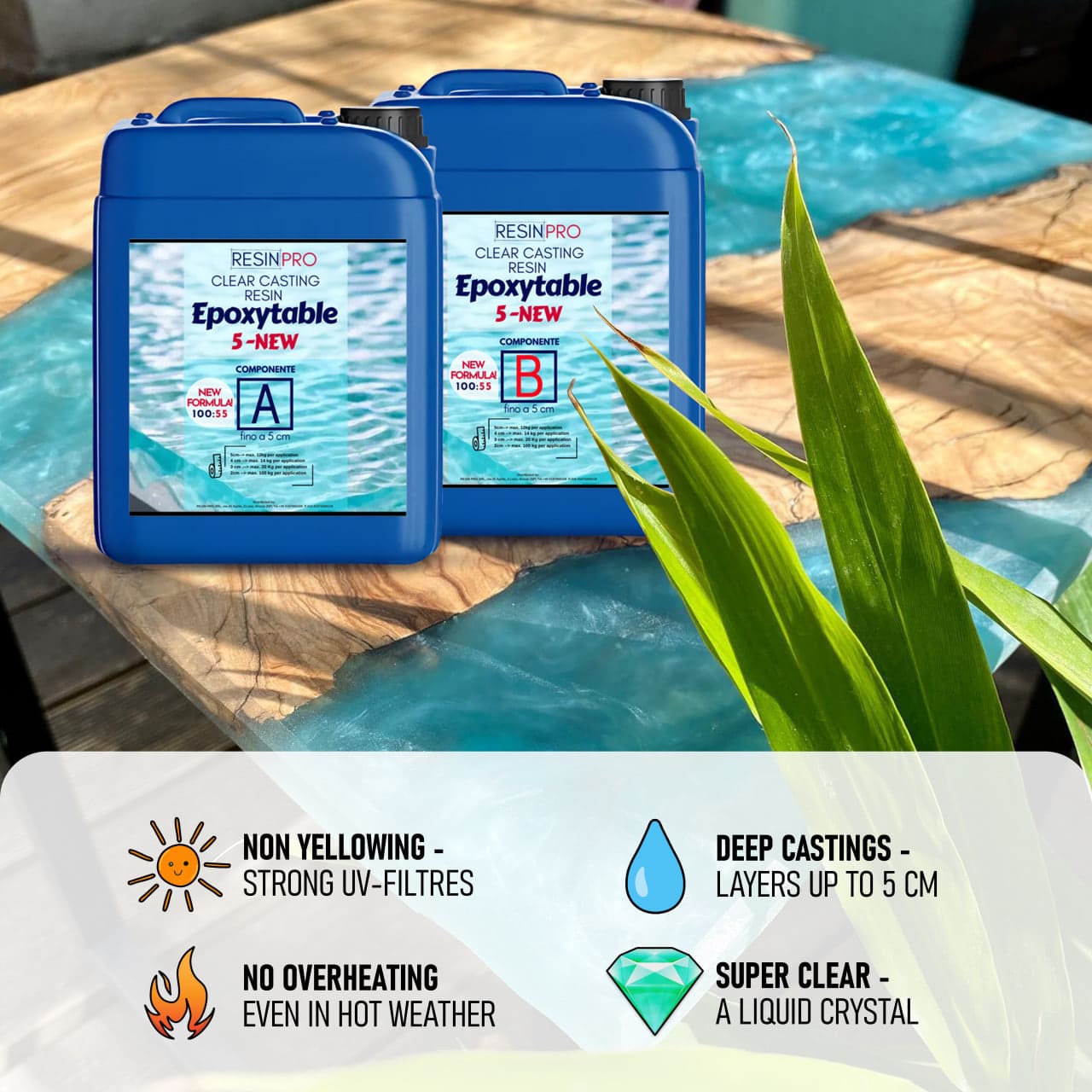
- "EpoxyTable 5-Five" – Deep Pour Epoxy Resin for Tables and Large Projects – Up to 5cmPrice range: £17.95 through £1,154.95"EpoxyTable 5-Five" is designed for deep pours up to 5cm, suitable for tables and large projects requiring clarity and resistance.
- “Epoxytable 10-Ten” – Deep Pour Epoxy Resin for Tables, Up to 10cm CastingPrice range: £35.95 through £351.95“Epoxytable 10-Ten” is an epoxy resin suited for deep table resin pouring up to 10cm, designed with low viscosity and UV resistance.
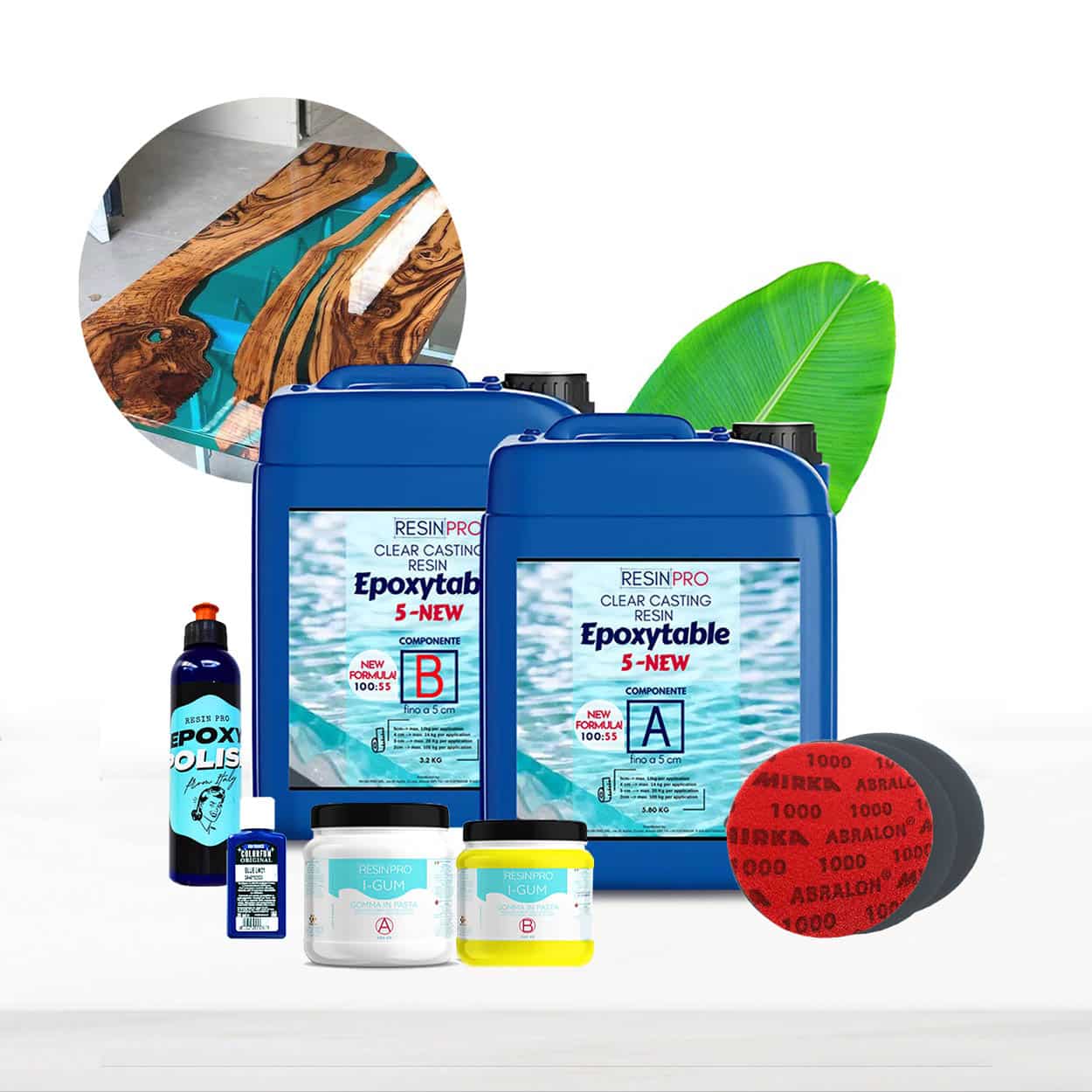 "River-Table" – Complete Kit for Creating Your First Epoxy Resin TablePrice range: £198.45 through £467.45"River-Table" kit provides materials and instructions for creating a wood and resin table in a how to use table resin? context.
 "Trasparente" – Multipurpose Clear Epoxy Resin for Casting – Up to 2cmPrice range: £8.95 through £397.95This clear epoxy resin suits detailed castings and tables with up to 2 cm layers, providing a glossy, self-levelling finish.
Frequently Asked Questions
What is the difference between deep pour and regular table resin?
Deep pour resins are designed for casting thicker layers, up to 5cm or 10cm, while regular table resins are for thinner coats. Always match your resin type to your project's thickness.
How do I avoid bubbles when using table resin?
Mix thoroughly and pour slowly. Use a heat gun or torch gently after pouring to raise and pop any trapped bubbles.
Which resin should I use for my table project?
Choose based on pour depth: up to 2cm, use multipurpose clear resin; up to 5cm or 10cm, choose a deep pour table resin like EpoxyTable Five or Ten.
How long does table resin take to cure?
Cure times vary, but most tabletops take 24–72 hours to harden, with full strength reached after 7 days. Always refer to product instructions.
Can I pour my resin table in layers?
Yes, especially for deep tables. Pour each layer only after the previous one has partially cured as specified by the product instructions.
Why is my cured resin table cloudy?
Cloudiness is often due to moisture, incorrect resin ratios, or trapped air. Work in a dry environment and follow mixing instructions carefully.