 Free shipping on orders over £29,85
  Shipping Tracking!


 Google
 Facebook
How do you use resin to create a tabletop?
A comprehensive guide from surface prep to flawless finish
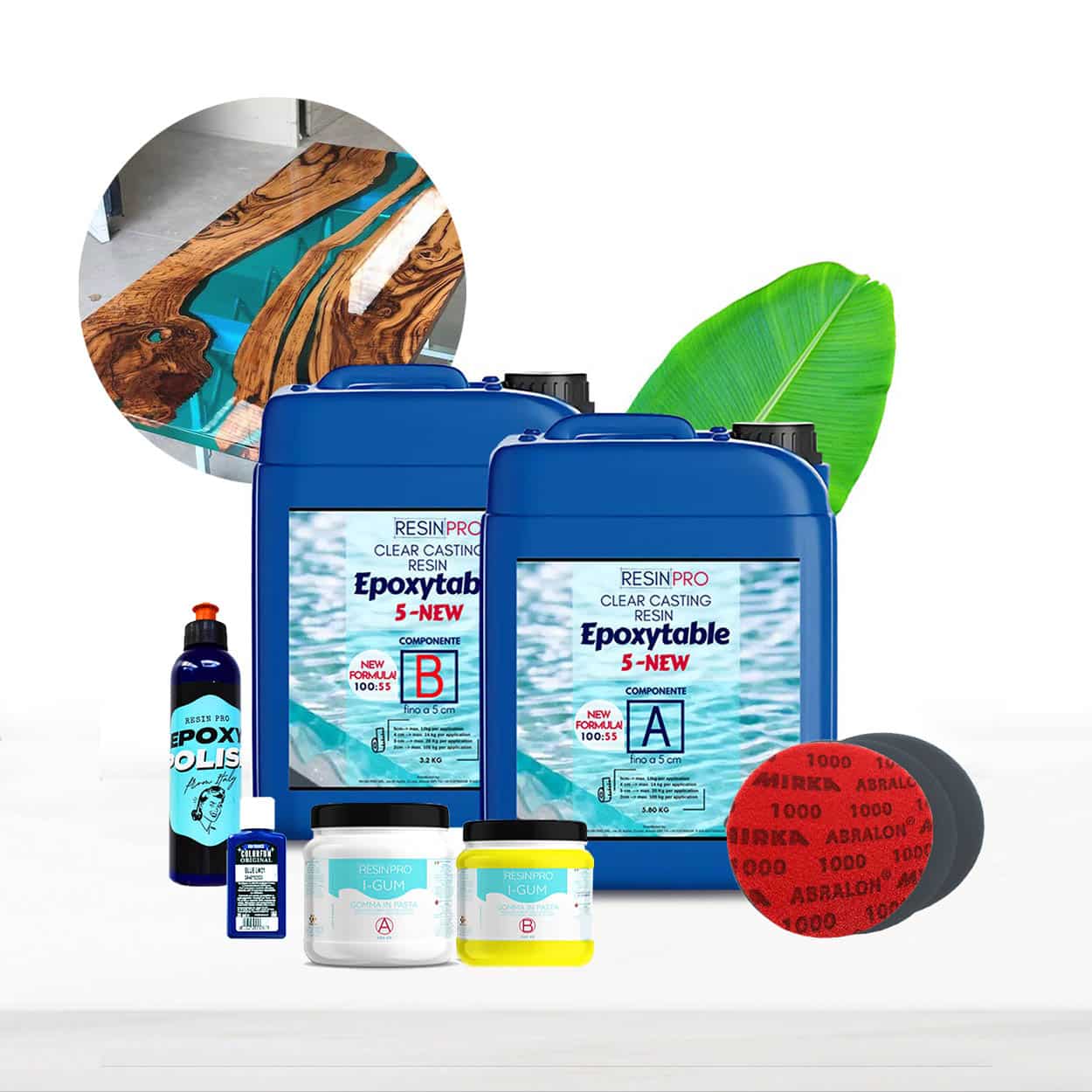
Creating a resin tabletop is a rewarding DIY project that allows you to design a unique, glossy, and highly durable surface for your home or business. This guide walks you through each stage, from preparation to the finishing touches, helping you avoid common pitfalls and achieve a stunning, professional-grade result.
What You’ll Need
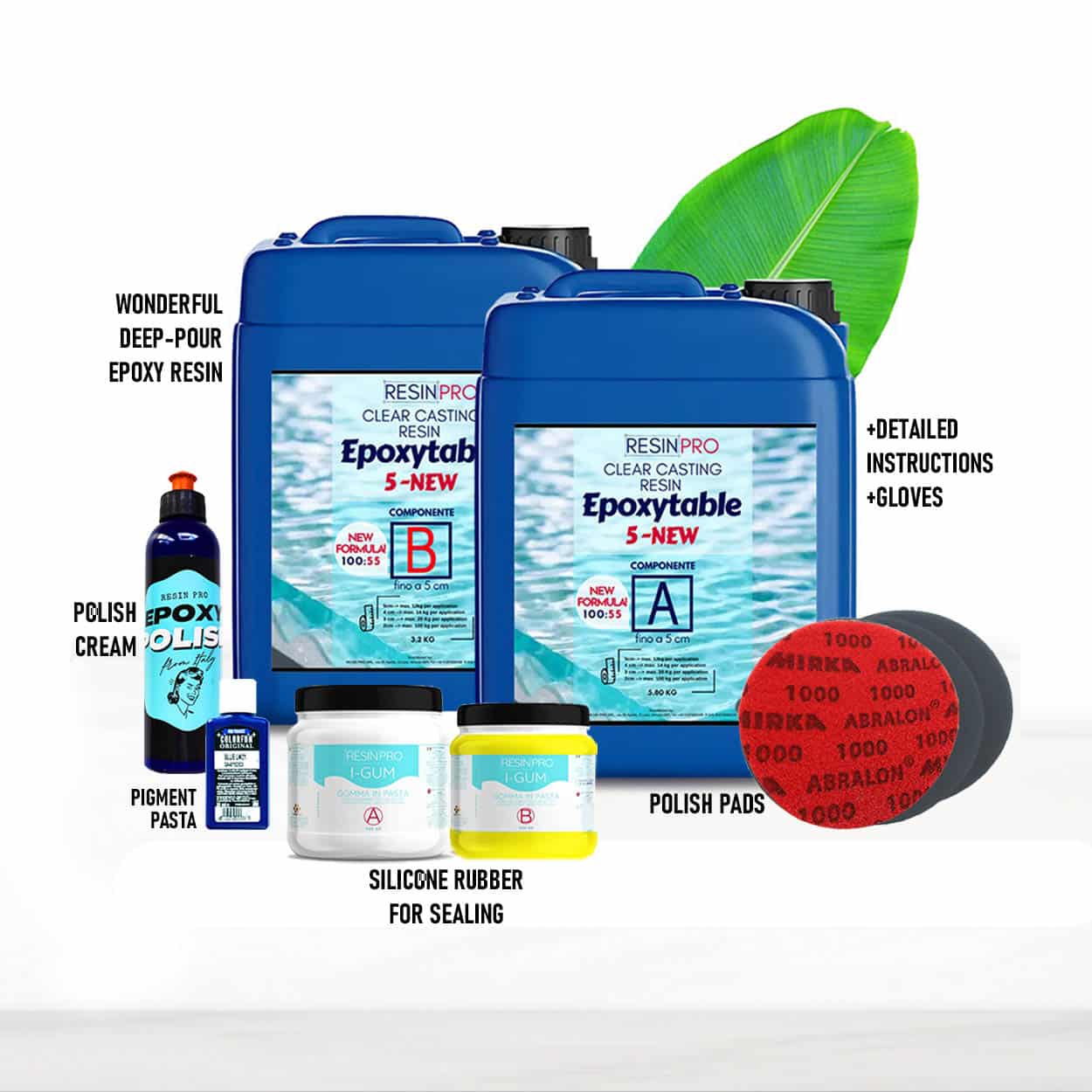
- “River-Table” – Complete Kit for Creating Your First Epoxy Resin Table – suitable for beginners seeking all-in-one convenience.
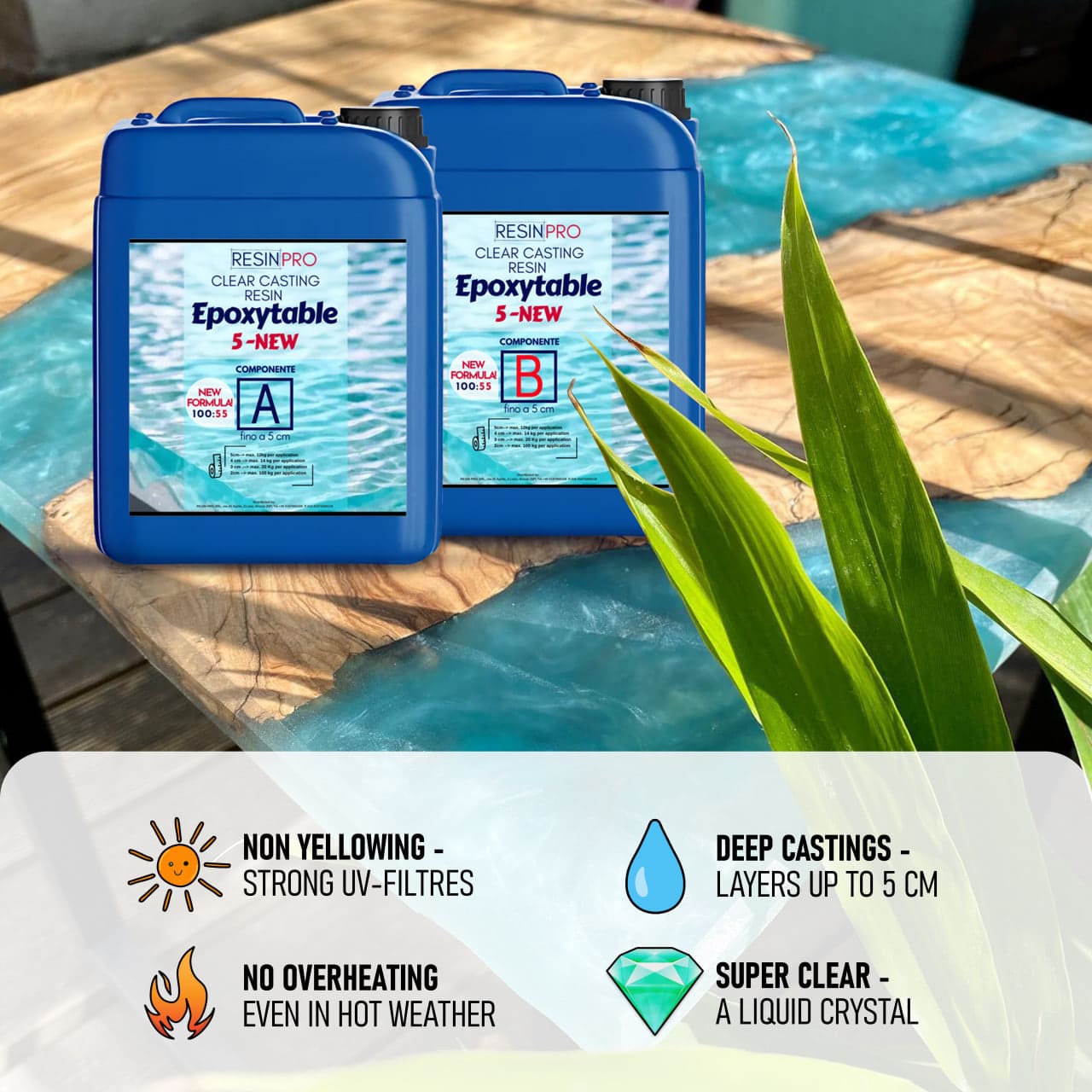
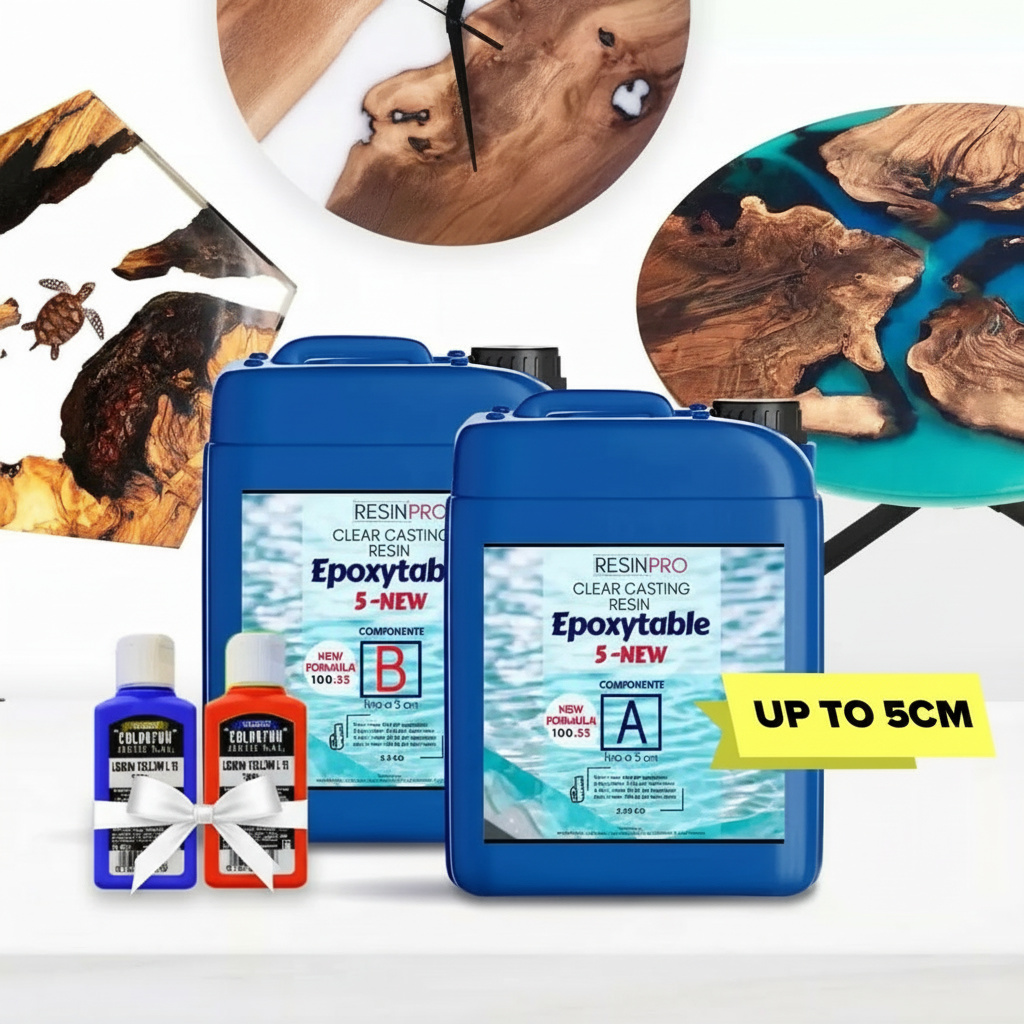
- “EpoxyTable 5-Five” – Deep Pour Epoxy Resin for Tables and Large Projects – Up to 5cm – ideal for table pours up to 5cm thick.
- “Epoxytable 10-Ten” – Deep Pour Epoxy Resin for Tables, Up to 10cm Casting – designed for extra deep pours in thick tabletops.
- “Stone Effect Collection” – Marble Epoxy Resin Countertop Kit – for achieving professional marble and stone finishes.
- Timber or existing tabletop (well dried and flat)
- Mixing tools (buckets, spatulas, and a powerful drill mixer if pouring large volumes)
- Sanding equipment (assorted grits)
- Personal protective equipment (gloves, respirator or mask, and goggles)
- Level and spirit level
- Release tape or silicone for formwork sealing, if needed
- Painter’s plastic and masking tape for protecting work area

Workspace Preparation and Resin Tools in Action
See workspace setups, surface prep techniques, and professional mixing methods that ensure both clarity and durability for your resin tabletop projects.
Step 1: Prepare the Surface and Workspace
Plan your workspace and protect surrounding surfaces. Start by ensuring your timber slab or tabletop is dry, flat, and free of dust. Sand down any rough spots using medium to fine grit abrasives, then wipe thoroughly to remove all debris. Set up your workspace in a dust-free area with good ventilation, making sure it is completely level—an uneven base will cause resin to pool or run.
Cover flooring and nearby fixtures with painter’s plastic. Use masking tape to secure edges you don’t want coated. If casting in a mould or using a live-edge slab, seal the formwork with a release agent or silicone to prevent leaks.

Step 2: Select and Mix Your Resin
Choose your resin based on the thickness you intend to pour. For full beginners or smaller tables, the “River-Table” – Complete Kit for Creating Your First Epoxy Resin Table offers everything in a single package, including pigments and polishing tools. For standard pours up to 5cm, “EpoxyTable 5-Five” provides optimal clarity and bubble-free results. For very thick castings, “Epoxytable 10-Ten” is specially designed for pours up to 10cm and prevents overheating.
Measure your resin and hardener precisely, following the manufacturer’s mixing ratio. Blend components slowly using a drill mixer to avoid introducing excess air. Scrape sides and bottom of your container as you mix to ensure a consistent cure.
Step 3: Pouring and Layering the Resin
Once mixed, pour the resin slowly over your tabletop surface or into the formwork. Aim for a steady, even application to minimise bubbles. For extremely large or deep tables, allow proper curing between layers to avoid defects. If the project exceeds the recommended thickness per pour (5cm for “EpoxyTable 5-Five” or 10cm for “Epoxytable 10-Ten”), pour in multiple layers—waiting 6–8 hours between each to ensure structural integrity and prevent overheating.
If creating special effects or marble finishes, consider the “Stone Effect Collection” kit, which includes pigments and additives for professional results. Work gently with colourants and a heat gun or torch to disperse bubbles and create visual texture.


Step 4: Curing and Demoulding
Allow the resin to cure undisturbed as per the kit instructions (typically 24–72 hours at room temperature). Protect the surface from dust by tenting it with plastic sheeting. Test for full cure before removing from the formwork or unclamping.
Demould carefully—avoid prising up sharp edges, as this can crack or chip the cured resin. Any minor flaws can be sanded out prior to final finishing.
Step 5: Sanding and Polishing the Finish
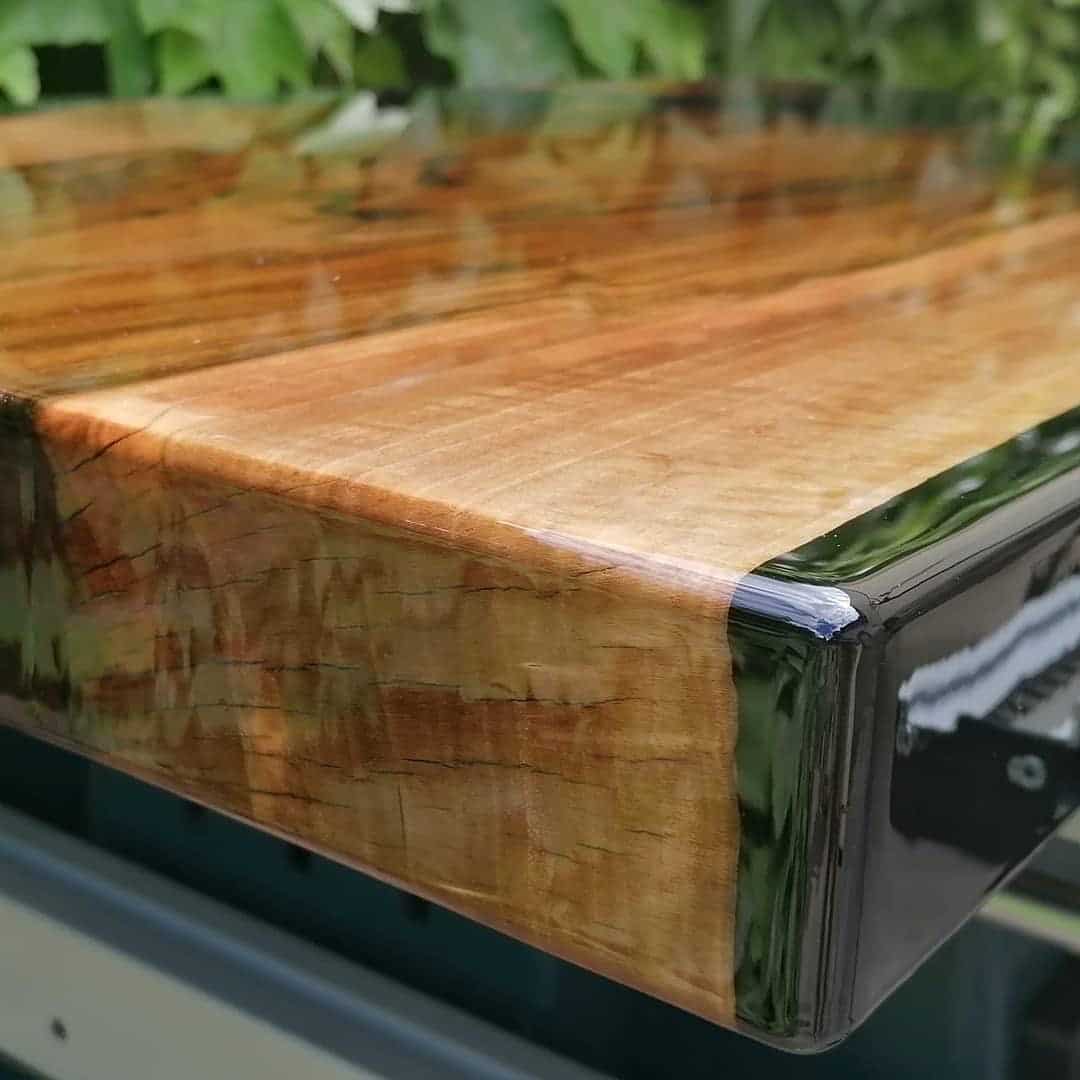
Begin by sanding the cured surface with progressively finer grit sandpaper (start around 360 grit and finish up to 4000 grit). Maintain a light touch and keep the process gentle to avoid swirl marks. Clean away all sanding dust before moving on.
Polish thoroughly for a crystal-clear finish using specialised polishing cream and pads if included, as supplied in the “River-Table” kit. Work with circular motions and inspect under bright lighting to check for uniform gloss.

Tips, Common Mistakes, and Troubleshooting
- Measure resin and hardener accurately—incorrect ratios cause sticky or soft patches.
- Always allow full cure between layers; rushing can result in cloudy or uneven results.
- Work in a dust-free area and shield the surface as it cures.
- Take your time with sanding and polish gradually—do not skip grits.
Close-ups of Polished Resin Tabletops and Special Effects
Explore finishing details, polished surfaces, and creative marble or river effects as inspiration for your own resin tabletop design.

- "River-Table" – Complete Kit for Creating Your First Epoxy Resin TablePrice range: £198.45 through £467.45Complete kit for creating wood and resin tables with epoxy resin, sealant, polishing kit and pigments, suitable for beginners under 'How do you use…
- "EpoxyTable 5-Five" – Deep Pour Epoxy Resin for Tables and Large Projects – Up to 5cmPrice range: £17.95 through £1,154.95"EpoxyTable 5-Five" is designed for deep pour casting up to 5cm and is suitable for creating and coating tabletops and furniture.
- “Epoxytable 10-Ten” – Deep Pour Epoxy Resin for Tables, Up to 10cm CastingPrice range: £35.95 through £351.95“Epoxytable 10-Ten” is designed for deep resin castings up to 10cm, suitable for tabletops and detailed projects.
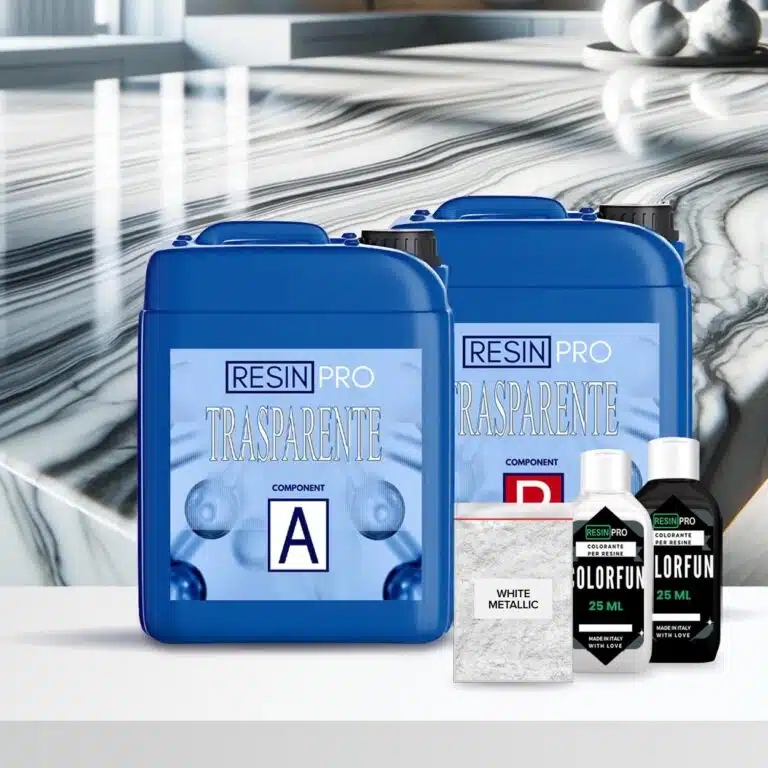 "Stone Effect Collection" – Marble Epoxy Resin Countertop KitPrice range: £57.95 through £272.95"Stone Effect Collection" is an epoxy resin countertop kit suitable for kitchens and bathrooms offering professional marble and stone effects.
Frequently Asked Questions
Which resin type and pour thickness should I use for my tabletop?
Use dedicated table epoxy like EpoxyTable 5-Five for up to 5cm pours or Epoxytable 10-Ten for deeper pours. For starter projects, a kit like the River-Table Complete Kit is ideal.
How do I minimise bubbles in my resin pours?
Mix resin slowly and pour steadily. Use a heat gun or torch after pouring to release trapped air for a flawless surface.
How long does the resin take to cure on a tabletop?
Cure times vary, but most epoxies require 24–72 hours at room temperature before handling or finishing.
How can I create colour effects or marble patterns?
Use a kit such as the Stone Effect Collection, which includes pigments and tools designed for marble and decorative effects on countertops.
What’s the best method to sand and polish a resin tabletop?
Sand using progressively finer grits, then polish with a resin-specific polishing cream for a glossy, even result.
How do I avoid yellowing or UV damage on my resin tabletop?
Choose a resin formulated with UV filters, such as EpoxyTable 5-Five or Epoxytable 10-Ten, for long-term clarity.