 Free shipping on orders over £29,85
  Shipping Tracking!


 Google
 Facebook
How are epoxy resins made?
Discover the chemistry and applications behind epoxy resin products

Are you curious about how epoxy resins are manufactured and what makes each type unique? This guide delves into the science and processes behind epoxy resin production, examining the raw materials, chemical reactions, and the impact of formulation on practical uses. Whether you are a maker, artist, or professional installer, understanding resin creation helps you pick the ideal product for your specific need.
Epoxy Resin Manufacturing: Overview and Comparison
Epoxy resins are formed when epoxide monomers react with specialised hardeners, resulting in a tough, versatile polymer. Much of their performance and suitability stems from choices made during formulation—like the base chemicals, additives for UV stability, food safety, or viscosity. Each product’s chemistry is tailored to a use, from clarity for decorative floors to resistance in composite applications. Key differences arise in ingredient purities, the ratio of base to hardener, and inclusion of stabilisers or special certifications.
The Manufacturing Journey: From Raw Materials to Finished Resin
Epoxy resin production starts with precise mixing of epoxide monomers and hardeners in clean lab environments. Additives such as UV filters or food-safe agents are incorporated to meet targeted performance needs. The formulation is batch-tested to guarantee clarity, cure time, and safety before packaging for DIY or professional use.
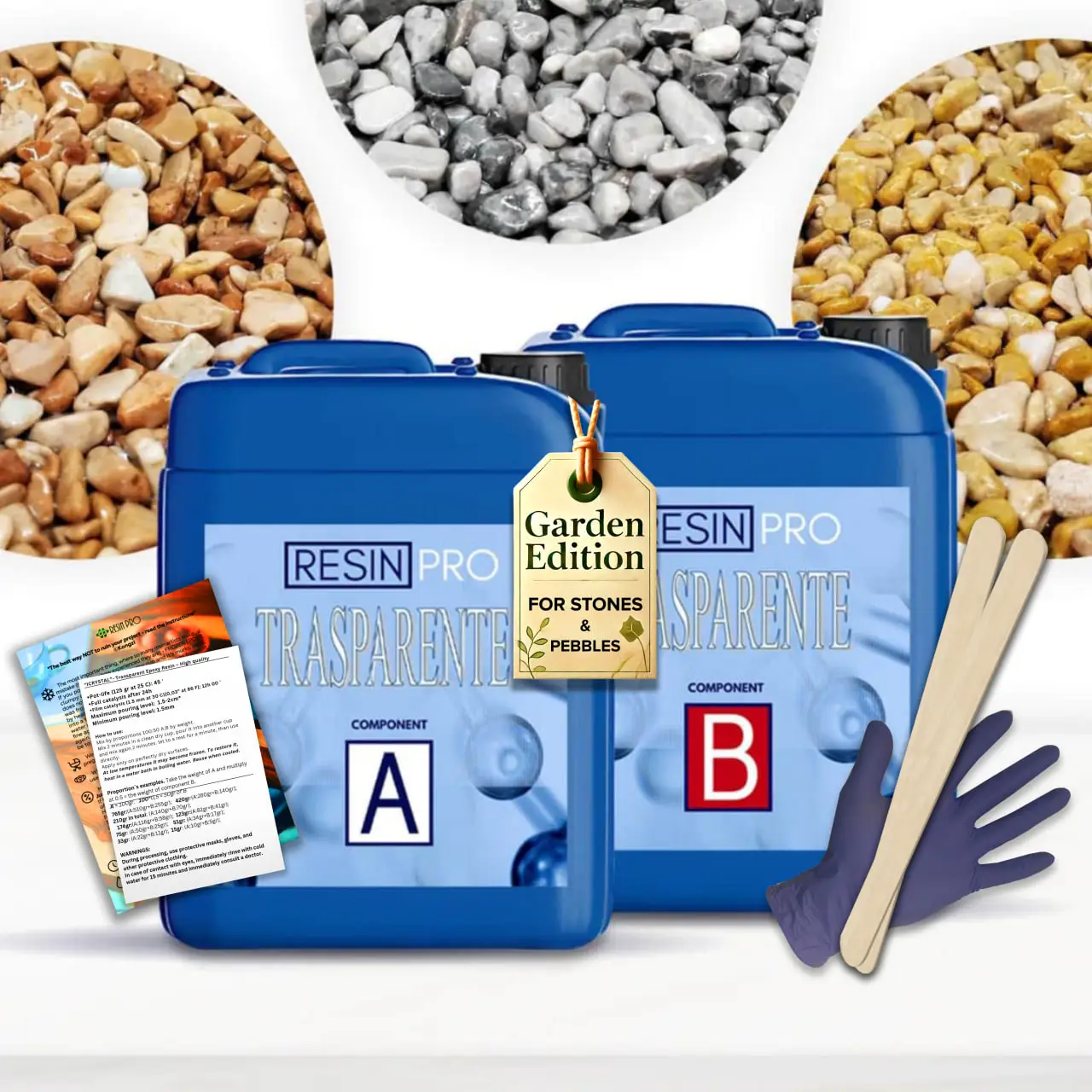
“Trasparente” – Epoxy Binder for Coloured Pebbles and Grits
“Trasparente” – Epoxy Binder for Coloured Pebbles and Grits is an example of an epoxy resin specifically engineered for use with coloured aggregates. This two-component system delivers a crystal-clear, bubble-free finish by using a cycloaliphatic amine hardener and integrated UV stabilisers. Its low viscosity allows rapid impregnation of pebbles and grits, supporting stability and clarity in pebble floors. After the curing process, the resulting surface is non-toxic and resistant to yellowing, showing how resin preparation can target both performance and safety.
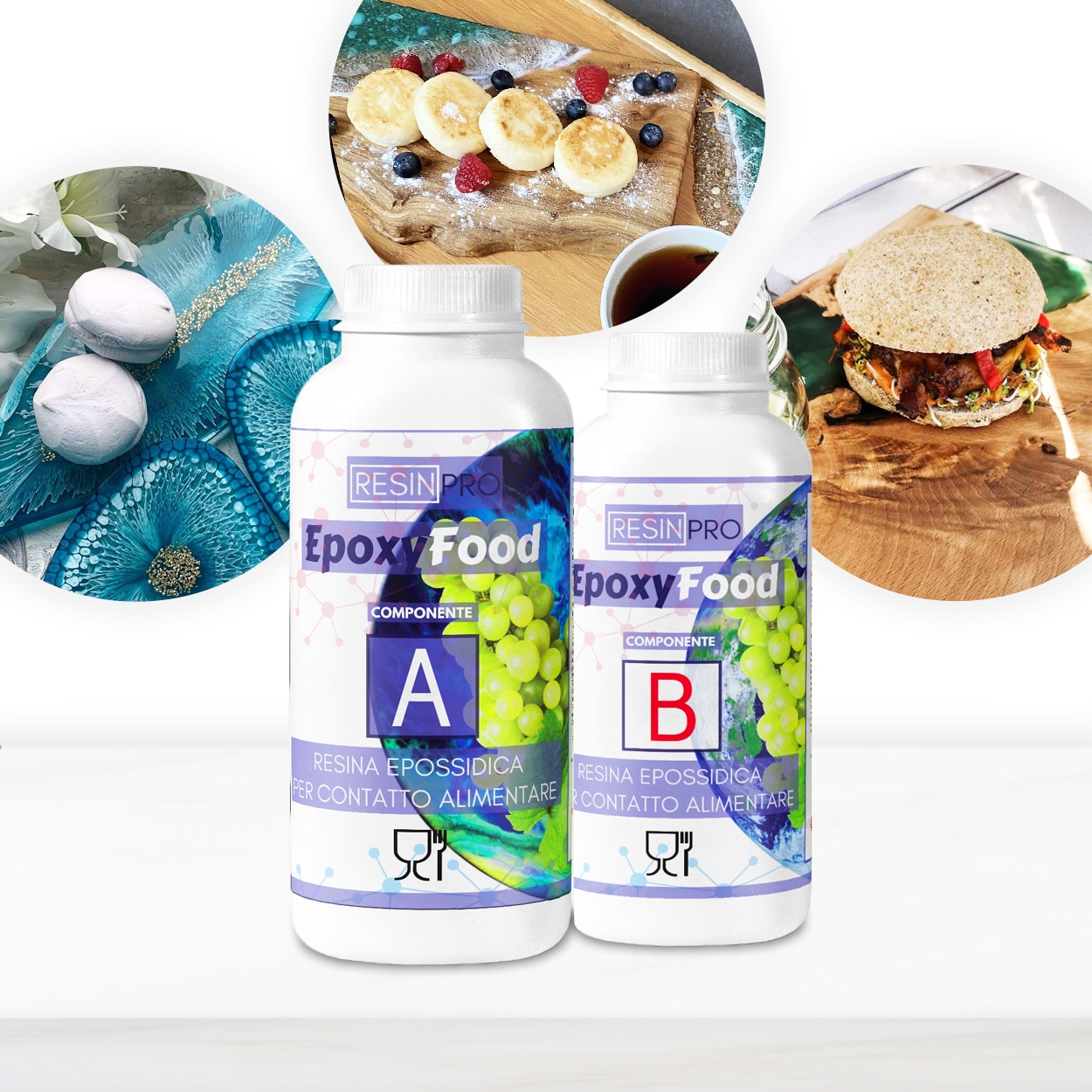
“EpoxyFood” – Certified Clear Food Contact Epoxy Resin for Coating
When the application demands food safety, like coating plates or boards, the “EpoxyFood” – Certified Clear Food Contact Epoxy Resin for Coating stands out. Its formulation is non-toxic, solvent-free, and certified under EU Regulation No. 10/2011 to ensure suitability for contact with food. Achieving this requires extremely pure raw materials and careful formulation. Additionally, this resin incorporates powerful UV filters for a 10-year yellowing warranty and offers a simple 100:55 mixing ratio for practical use—reflecting the unique needs of kitchen and catering projects typically found in the Multipurpose Epoxy Resins range.
“Epoxytable 10-Ten” – Deep Pour Epoxy Resin for Tables, Up to 10cm Casting
Casting deep resin river tables or artistic pieces calls for ultra-specialised formulations. “Epoxytable 10-Ten” – Deep Pour Epoxy Resin for Tables, Up to 10cm Casting is developed for thick layers, balancing heat generation (low exotherm) to avoid cracks or cloudiness. It incorporates strong UV resistance, high clarity, and extremely low viscosity for bubble-free results—demonstrating how ingredient ratios and additive selection enable safe, slow curing for projects up to 10cm thick, making it a leader in Resins for Tables and Surfaces Finishes.
“Carbon Resin” – Epoxy Resin for Carbon Fiber & Fiberglass Coating
“Carbon Resin” – Epoxy Resin for Carbon Fiber & Fiberglass Coating showcases what is possible with advanced resin chemistry for composites. Its formulation ensures deep impregnation of carbon fibre and fibreglass, with minimal bubbles, and builds high impact resistance. Curing at room temperature and producing a glossy finish, it is the go-to choice for technicians and modellers looking to reinforce structural integrity. This product exemplifies the importance of fine-tuning molecular structure for demanding technical processes and can be found in the Multipurpose Epoxy Resins category.
The Key to the Right Epoxy Resin: Chemistry Meets Application
The true art of epoxy resin manufacture lies in the precise balance between base ingredient quality, hardener design, and application-specific additives. For example, food-safe blends go through rigorous certification, deep pour formulas must be meticulously balanced to prevent exotherm, and UV protection is non-negotiable in outdoor or light-exposed projects. By understanding these differences, makers and professionals can select the best product for safe, long-lasting, and beautiful results.
Practical Tips: Choosing Epoxy Resin for Your Project
Selecting the ideal epoxy resin depends on your project’s demands—always check the product’s certification, mixing instructions, and suitability for your application. For decorative surfaces, opt for UV-stable products; for food-contact items, choose certified food-safe resins. Ask us for advice if you are unsure which formulation fits your purpose.

- "Trasparente" – Epoxy Binder for Coloured Pebbles and GritsPrice range: £33.45 through £397.95A transparent epoxy binder suitable for coloured pebbles and grits, offering UV resistance and a clear finish for decorative pebble floors.
- "EpoxyFood" – Certified Clear Food Contact Epoxy Resin for CoatingPrice range: £20.95 through £146.95A transparent, food-safe epoxy resin suitable for coating kitchenware such as plates and cutting boards offering clarity and a gloss finish.
 “Epoxytable 10-Ten” – Deep Pour Epoxy Resin for Tables, Up to 10cm CastingPrice range: £35.95 through £351.95“Epoxytable 10-Ten” is suitable for deep casting up to 10cm with features supporting clarity and controlled curing.
 "Carbon Resin" – Epoxy Resin for Carbon Fiber & Fiberglass CoatingPrice range: £19.95 through £37.95Epoxy resin designed for carbon fibre and fibreglass composites, providing durable impregnation and a glossy finish suited to the theme.
Frequently Asked Questions
What are the main ingredients of epoxy resin?
Epoxy resins are primarily made from epoxide monomers and specialised hardeners, with additives for specific applications.
What is special about cycloaliphatic amine hardeners?
They provide UV resistance and reduced yellowing, which is essential for clear or decorative applications exposed to sunlight.
What makes an epoxy resin food safe?
It must use certified raw materials, pass migration tests, and be manufactured in compliance with food contact regulations.
How does casting epoxy differ from coating epoxy?
Casting epoxies are formulated for thick pours and slow curing, while coating epoxies are designed for thin layers and fast curing.
Why is UV resistance important in epoxy resins?
UV resistance prevents yellowing, preserving the clarity and durability of resin surfaces exposed to sunlight.
How to choose the right epoxy resin for my project?
Consider your surface type, required thickness, exposure to food or sunlight, and check if the resin has suitable certifications.