 Free shipping on orders over £29,85
  Shipping Tracking!


 Google
 Facebook
← Back to How do you repair a resin prosthetic appliance?
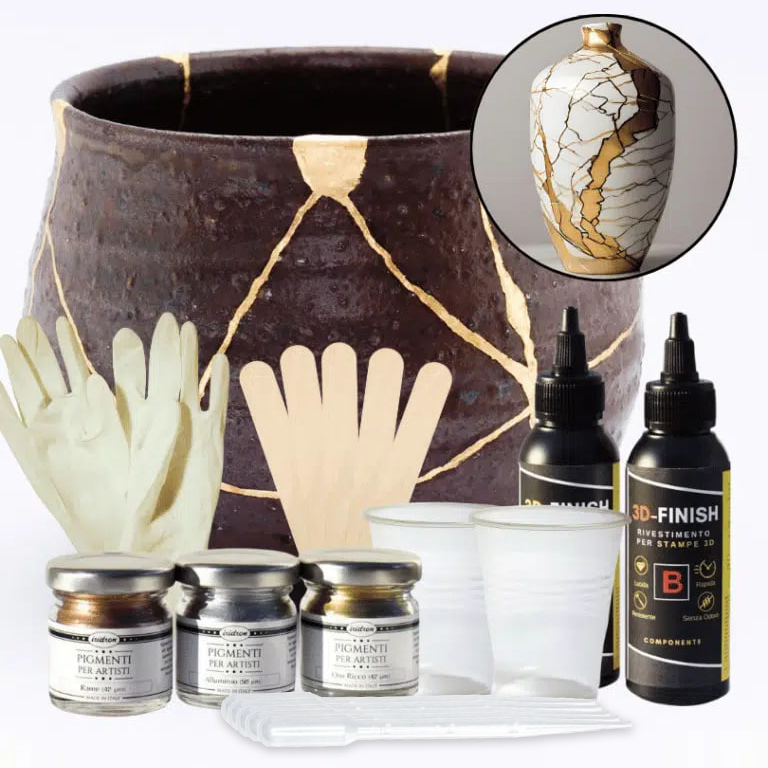

Kintsugi kits introduce a unique way to repair and revitalise damaged prosthetic appliances, placing the art of visible mending at the forefront of restorative work. But are they a good option for prosthetics?
Kintsugi Kits: Decorative and Functional Repairs
A Kintsugi kit can be successfully used for stabilising cracks and carrying out decorative repairs on resin prosthetic appliances. The method involves bonding broken or cracked areas with a high-viscosity resin, which can also be enhanced with metallic pigments for an artistic accent. This technique is not only about mending but also about showcasing the repair, embracing the philosophy of visible restoration.


Practical Steps and Considerations
- Surface Suitability: The Kintsugi kit is primarily designed for ceramics, but similar resin surfaces found in certain prosthetic appliances can also benefit from its strong bonding properties.
- Ease of Application: The resin is thick enough to stay put on vertical seams and is supplied with mixing tools, gloves and pigments. Follow the kit’s instructions for accurate, clean results.
- Limitations: While suitable for decorative repairs or reinforcing fragile sections, the kit is not intended for food-contact prosthetics or high-stress functional repairs.
When to Consider Kintsugi on Prosthetics
Using a Kintsugi kit makes sense if you want to restore stability to a cracked prosthetic or discreetly highlight a repair. It’s an ideal choice for those wishing to blend artistry with restoration, particularly when the appearance of the mend is part of the appeal.
Related products
Related guides
While a Kintsugi kit is mainly suited to decorative restoration, it can play a supporting role for resin prosthetic appliance repairs requiring both stability and creative flair. For more about professional repair options, see our guide to repairing resin prosthetic appliances.