 Free shipping on orders over £29,85
  Shipping Tracking!


 Google
 Facebook
How do you work with E30 resin?
Step-by-step E30 resin guide for clear, flawless casting

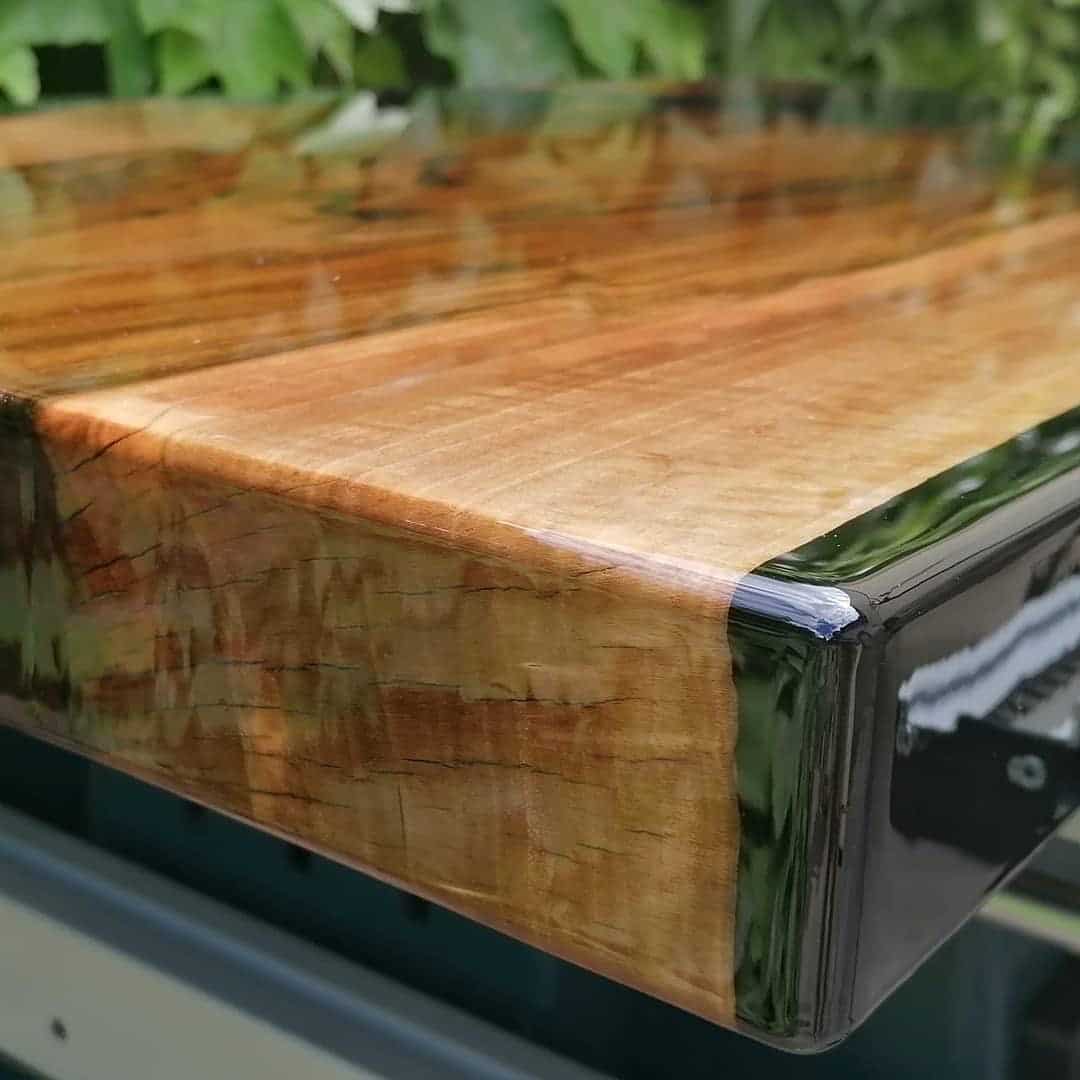
Working with E30 resin enables you to achieve crystal-clear castings, layered artwork, and beautifully finished pieces for artistic and practical applications. This guide is designed for beginners and pros alike, focusing on safe handling, correct preparation, and essential tips for mastering E30 resin in typical casting and surface projects.
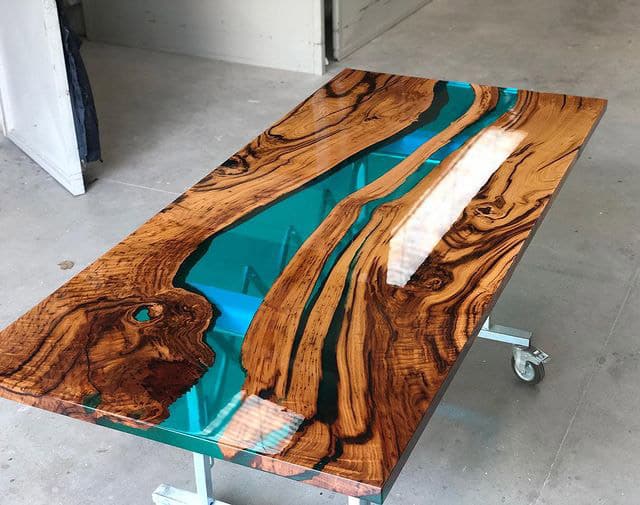
What You’ll Need
- “Epoxytable 10-Ten” – Deep Pour Epoxy Resin for Tables, Up to 10cm Casting – for very thick or deep castings
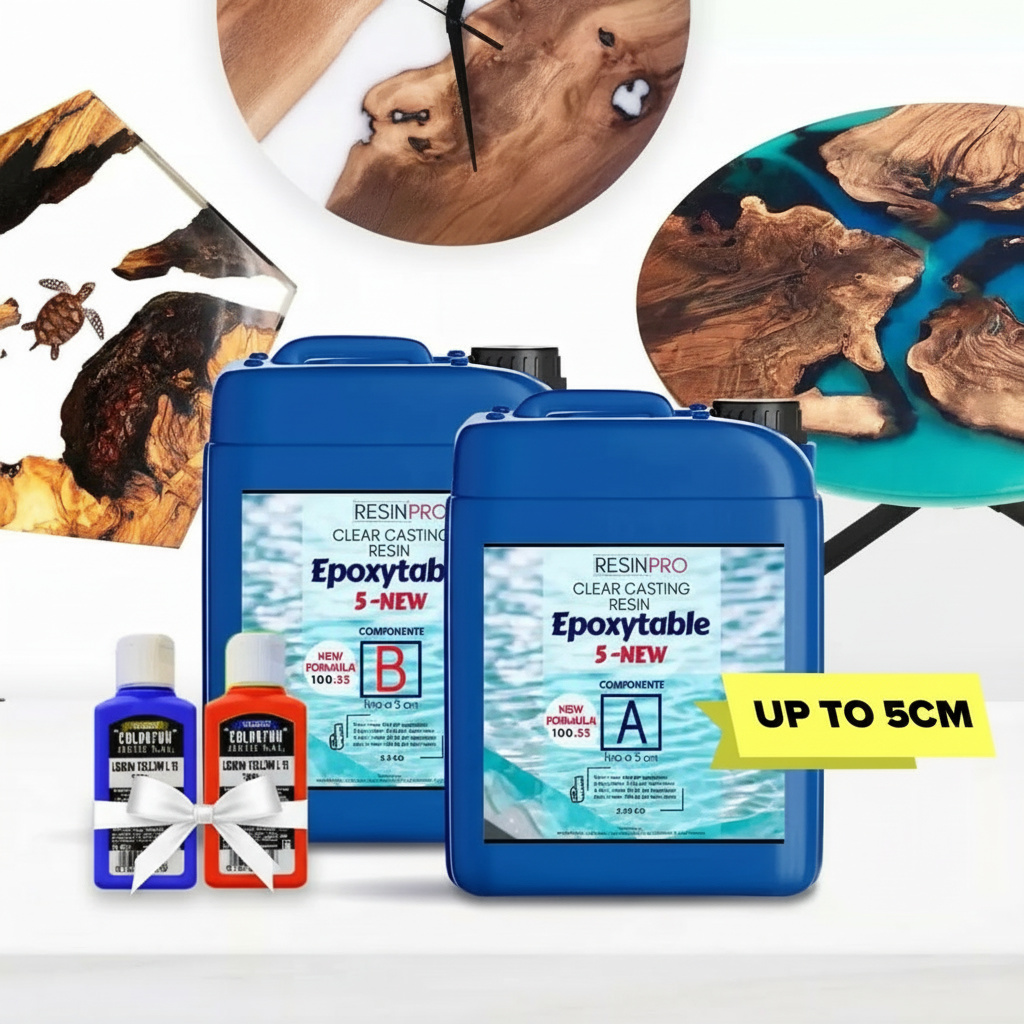
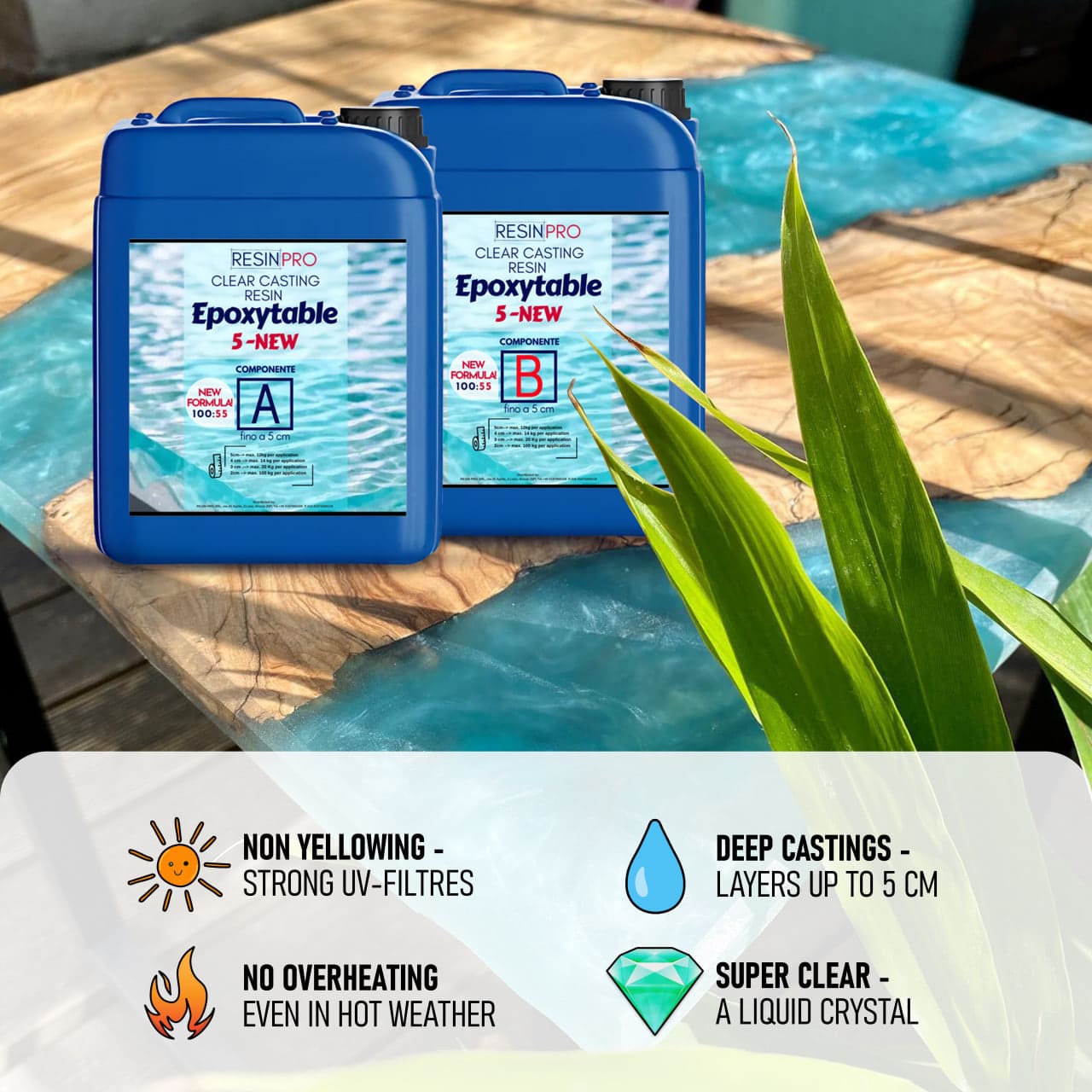
- “EpoxyTable 5-Five” – Deep Pour Epoxy Resin for Tables and Large Projects – Up to 5cm – for medium-depth table projects
- “Art Pro” – Clear Epoxy Resin for Artists and Surface Coating – ideal for clear, glossy artistic surfaces
- “Trasparente” – Multipurpose Clear Epoxy Resin for Casting – Up to 2cm – for shallow castings and fine detail
- Mixing containers and sticks
- Accurate scales (for weight measurement)
- Protective gloves and apron
- Dust mask (recommended)
- Heat gun or torch (for bubble removal – optional)

Key Tools and Material Prep for Resin Work
Organise all needed materials before starting your resin project. Having the right resin, mixing tools, accurate scales, and safety equipment at hand ensures a safer, smoother workflow — leading to clearer, more reliable results.
Step 1: Prepare Your Workspace and Moulds
Start by setting up a clean, level workspace protected from dust and direct sunlight. Secure your moulds or forms on a flat surface, using release agents if needed to enable easy demoulding. Always wear gloves and work in a well-ventilated area to protect your skin and respiratory health. Check the temperature is between 18–25°C, as resin performance can vary in cold or humid conditions.

Step 2: Measure and Mix Resin and Hardener
Precision is vital when measuring and combining E30 resin and the appropriate hardener. Measure resin and hardener precisely according to the recommended mixing ratio for your specific product. For example, Art Pro requires a straightforward 3:2 weight ratio. Pour both components into a clean container and mix slowly but thoroughly for at least three minutes, scraping the sides and bottom to ensure uniformity. This reduces the risk of tacky spots or imperfect curing.
When using “EpoxyTable 5-Five” for medium-depth pours, ensure your quantities match the scale of your project to prevent excess heat buildup.
Step 3: Pour and Level the Resin
After mixing, pour the resin carefully into your mould or onto your project surface. Try to pour in a thin, steady stream from a single spot to limit air entrapment. For very thick castings, such as river tables using Epoxytable 10-Ten, deep pours can be managed in one or multiple layers based on the project’s thickness—always follow manufacturer guidelines. Avoid rushing your pour or cure for optimal clarity and minimal bubbles.
Use a spatula or spreader to guide resin or create an even coat. Trapped air can cause bubbles; a gentle pass with a heat gun or torch can release these during the working time.


Step 4: Curing and Demoulding
Allow the poured resin piece to cure in a dust-free environment according to the product’s instructions (often 12–24 hours, or longer for deep casts). The temperature and humidity of your workspace affect cure speed and clarity. Thick pours must be done in stages if exceeding the maximum recommended depth (e.g., over 10cm for Epoxytable 10-Ten or 5cm for EpoxyTable 5-Five).
Do not disturb or move the project during the first few hours of cure. Once fully hardened, gently remove the piece from its mould or form.
Step 5: Finishing Touches and Surface Protection
Inspect your demoulded piece for any uneven areas or imperfections. Wet-sand and polish the surface progressively if needed, starting with fine-grit sandpaper and finishing with micro-abrasives. For added scratch resistance and clarity—particularly on artistic trays or coasters—consider applying a finishing layer of Art Pro. Wherever possible, add felt feet or protective pads to the underside of table pieces to prevent scratches. Your E30 resin project should now have a smooth, glossy, and resilient finish.

Tips and Common Mistakes to Avoid
Successful resin work is all about attention to detail. Temperature control is crucial—resin cures badly in temperatures below 18°C or in high humidity. Store resin in a cool, dry place before use. Always mix slowly and consistently to minimise bubbles, and remember that less is more with pigment additions. Don’t overpour; this invites overheating and uneven curing. If you find imperfections after demoulding, sanding and recoating is often the best remedy.
Mistake-Proof Your E30 Resin Project
Avoid common resin pitfalls by following instructions for your chosen product. Adhering to layer thickness limits, precise mixing, and correct curing conditions helps you achieve professional quality, long-lasting results every time.

- “Epoxytable 10-Ten” – Deep Pour Epoxy Resin for Tables, Up to 10cm CastingPrice range: £35.95 through £351.95“Epoxytable 10-Ten” is an epoxy resin designed for deep pour applications such as table castings up to 10cm.
- "EpoxyTable 5-Five" – Deep Pour Epoxy Resin for Tables and Large Projects – Up to 5cmPrice range: £17.95 through £1,154.95"EpoxyTable 5-Five" is suitable for deep pour projects like tables, offering UV resistance and a scratchproof surface.
 "Art Pro" – Clear Epoxy Resin for Artists and Surface CoatingPrice range: £19.95 through £267.95Art Pro offers a clear, durable epoxy resin suitable for crafts and decorative surfaces with a focus on clarity and UV protection.
 "Trasparente" – Multipurpose Clear Epoxy Resin for Casting – Up to 2cmPrice range: £8.95 through £397.95"Trasparente" is an ultra-clear epoxy resin for layering up to 2cm. It produces a smooth, glossy finish suitable for detailed and multipurpose…
Frequently Asked Questions
How do I prepare my workspace for E30 resin?
Choose a dust-free, level area with good ventilation and a stable temperature between 18–25°C. Always protect surfaces from spills.
What is the correct way to mix E30 resin?
Use precise ratios for your product, combine resin and hardener in a clean container, and mix slowly for at least three minutes.
How do I avoid bubbles in my E30 resin projects?
Mix gently, pour in a thin stream, and use a heat gun or torch to release trapped air immediately after pouring.
How long does E30 resin take to cure?
Most E30 resins cure in 12–24 hours for thin layers; thick or deep casts may require up to 72 hours for complete curing.
How thick can I pour E30 resin in one go?
Maximum recommended thickness depends on the resin: up to 10cm for deep pour, 5cm for medium, and 2cm for 'Trasparente'.
What if my resin stays sticky or soft?
Incomplete mixing, wrong ratios, or low temperature can cause incomplete curing. Scrape off uncured resin and reapply properly.