 Free shipping on orders over £29,85
  Shipping Tracking!


 Google
 Facebook
For tiles, are resin-based or water-based enamels better?
Choosing the ideal enamel for tile protection and decorative results
If you are looking to protect, restore, or update your tiled surfaces, choosing the right enamel is essential. This guide explores the differences between resin-based enamels and water-based options for tiles, covering performance, application, and suitability across a range of projects. Whether you are renovating interiors, designing decorative features, or seeking a durable finish for driveable areas, this page will help you make an informed purchase based on your specific requirements.
Resin-Based vs Water-Based Enamels: Key Differences
When selecting an enamel for tiling projects, the main considerations are durability, ease of use, finish quality, and environmental safety. Resin-based enamels—including advanced polyurethanes and epoxies—are renowned for their abrasion resistance, toughness, and long-term protection, especially on high-traffic or frequently washed tiles. They can offer glossy or satin finishes that are washable, UV-resistant, and decorative. Water-based enamels, often epoxy-based or acrylic formulations, generally prioritise low odour, easy clean-up, and eco-friendliness. They are especially valuable in indoor or residential environments where fumes and rapid drying are concerns. The best choice depends on whether your priority is ultimate durability (resin-based) or a balance of ease, safety, and versatility (water-based).
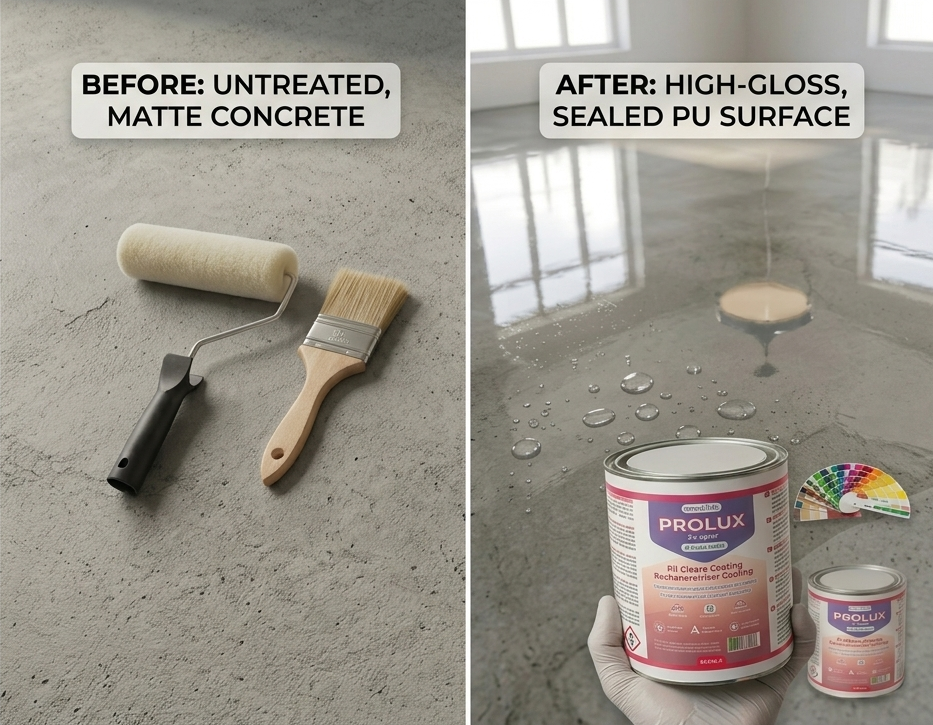
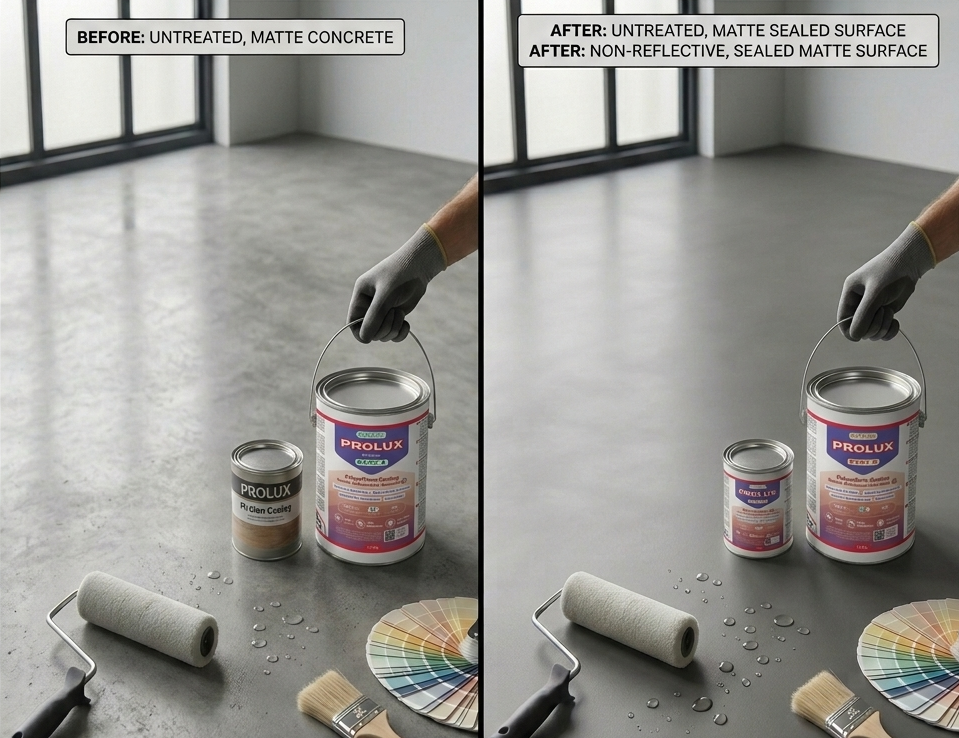
Visual Comparison: Resin-Based vs Water-Based Enamels on Tiles
See side-by-side project images featuring resin-based polyurethane, epoxy resin, and water-based coatings applied on tiles. Notice differences in finish, sheen, and depth of colour for each enamel system.
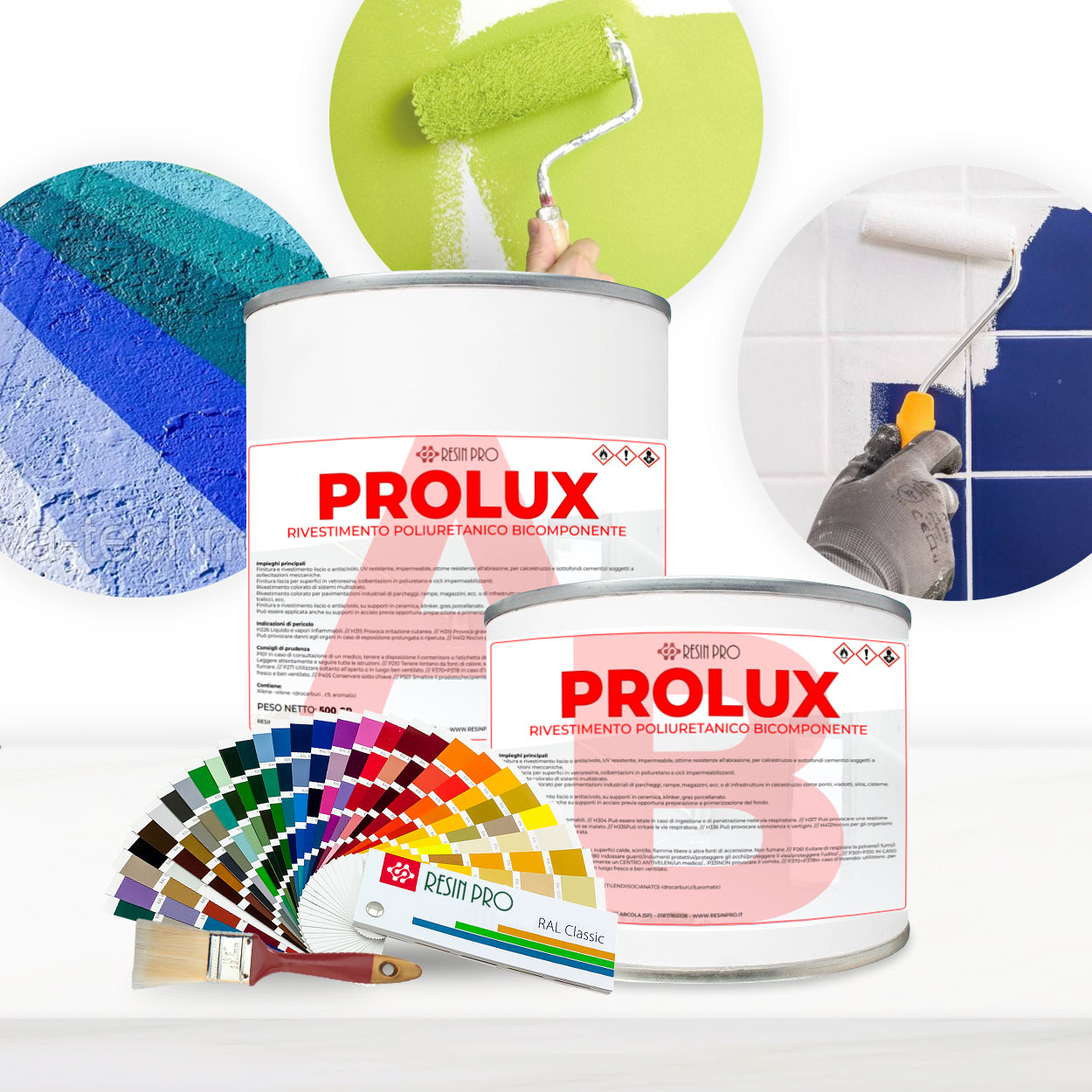
“Prolux” – PU Coating for Tiles, Concrete, Plastic and Metal – Suitable for Driveable Surfaces
Prolux – PU coating for tiles, concrete, plastic and metal – suitable for driveable surfaces is a professional two-component polyurethane enamel developed specifically for situations demanding maximum durability. Its robust formula is highly resistant to UV, yellowing, abrasion, and harsh weather, making it ideal for tiled floors, external areas, or industrial surfaces. This coating delivers a versatile finish—choose from any RAL colour, gloss, or satin—while achieving professional results in a single, high-coverage coat. If your tiled area encounters heavy stress, frequent cleaning, or outdoor exposure, resin-based solutions like Prolux deliver reliable, long-lasting results.
- Advanced protection: Resistant to UV, yellowing, abrasion and weathering.
- Ideal for damp and high-traffic areas: Tough polyurethane formula for maximum durability.
- Versatile finish: Available in any colour, in gloss or satin. High coverage in one coat.
- Suitable for multiple surfaces: Ideal for floors, external parking areas, warehouses and properly prepared steel.
- Certified and compliant: CE marked to EN 1504-2, with DoP.
- Easy to use: Mix the two pre-measured components in a 2:1 ratio.
“Epoxyprimer” – Universal Water-Based Two-Component Epoxy Floor Primer
For users prioritising environmental credentials, safety, and versatile preparation, Epoxyprimer – Universal Water-Based Two-Component Epoxy Floor Primer is an excellent water-based choice. Perfect for both professionals and DIYers, this primer maximises adhesion between tiles (and other flooring substrates) and resin or paint topcoats. It is odourless, eco-friendly, and safe for indoor applications, making it a fitting option for environments where ventilation or rapid use is required. Easy to apply by roller, brush, or spatula, it supports a wide range of decorative and renovation projects on concrete, ceramic, timber, and screed.
- Superior adhesion: Maximises bonding between substrates and epoxy resin coatings
- Eco-friendly & odourless: Safe for indoor use, free from harmful fumes
- Versatile compatibility: Suitable for concrete, wood, tiles, and screeds
- Simple application: Roller, brush, or spatula for smooth, consistent results
“Vertical Glass” – Thick Resin Decorative Wall Coating
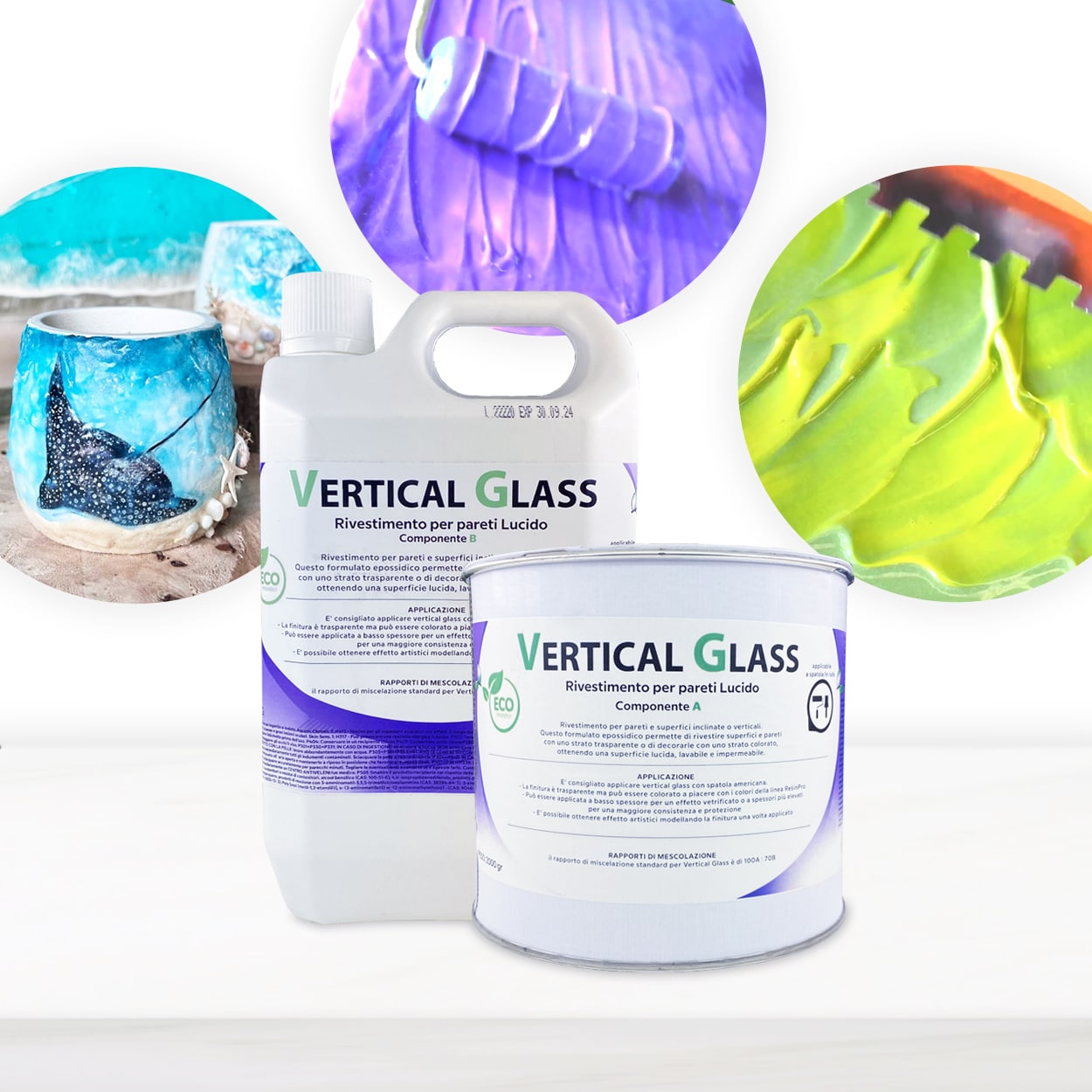
If your tiled surface is decorative, vertical, or in a high-moisture area (such as bathrooms or splashbacks), consider Vertical Glass – Thick Resin Decorative Wall Coating. This epoxy resin system is engineered for a customisable finish—tint it with any pigments or metals—and delivers durable, waterproof protection. Its glossy, easy-to-clean coating is suitable for a range of vertical applications beyond tiles (bricks, cement, wood) and excels at moisture resistance. A single application will seal and enhance, allowing creative expression without compromising on strength or resilience.
- Customisable finish: Tint with any pigments, including metallics, for unique, eye-catching effects.
- Glossy and washable: Durable, easy-to-clean coating perfect for high-moisture areas.
- Easy application: Simply apply with a spatula to tiles, cement, wood, bricks, or sloping surfaces.
- Repairs and seals: Single application effectively protects and restores surfaces.
- Finish control: Apply thinly for a vitrified effect or thicker for added protection; sandable after 48 hours for a satin finish.
“Trasparente” – Multipurpose Clear Epoxy Resin for Casting – Up to 2cm
When clarity, depth, and surface hardness are required, Trasparente – Multipurpose Clear Epoxy Resin for Casting – Up to 2cm delivers. Suitable for detailed castings, restoration, or DIY projects where a glass-like veneer is essential, this epoxy resin provides a scratch-resistant, ultra-clear finish. Its integrated UV filter guards against yellowing, making it excellent for artistic and functional coatings on tiles, mosaics, or design pieces that demand both aesthetics and longevity.
- Ultra-clear formula for a crystal-clear, liquid finish
- High scratch resistance – ideal for tables and floors
- Integrated UV filter to protect against yellowing, backed by a 10-year warranty
- Includes mixing sticks, gloves, and instructions for hassle-free use
- Sold over 385,000 kits since 2015, trusted quality
- Cruelty Free and Vegan Friendly
Choosing Your Enamel: Project Types and Practical Tips
The choice between resin-based and water-based enamels largely depends on where and how your tiles are used. For floor tiles, commercial settings, or driveable surfaces, polyurethane or epoxy coatings (such as Prolux or Vertical Glass) excel. Decorative walls, damp rooms, and artistic features benefit from water-based or resin systems that are easy to apply and maintain. Always consider ventilation, desired finish (gloss/satin/matte), and the substrate’s condition. Correct surface preparation ensures the best results; using primers like Epoxyprimer can significantly enhance adhesion and lifespan.
Which Enamel for Your Tile Project?
Still unsure whether to choose a resin-based or water-based enamel for your tiles? Focus on your project’s setting and requirements: select resin systems for floors, driveable, or highly durable surfaces, and water-based options for quick renovation, indoor safety, and easy cleaning.
- "Prolux" – PU coating for tiles, concrete, plastic and metal – suitable for driveable surfacesPrice range: £44.85 through £494.85"Prolux" is a polyurethane coating offering a tough, durable finish for tiles and other surfaces, designed for driveable and high-traffic areas.
 "Epoxyprimer" – Universal Water-Based Two-Component Epoxy Floor PrimerPrice range: £156.45 through £286.45Epoxyprimer is a water-based epoxy primer for reliable adhesion on concrete, tiles, and timber surfaces in flooring projects.
- "Vertical Glass" – Thick Resin Decorative Wall CoatingPrice range: £78.95 through £188.95Vertical Glass provides a customisable, waterproof epoxy resin coating suited to vertical and sloping surfaces including tiles and wood.
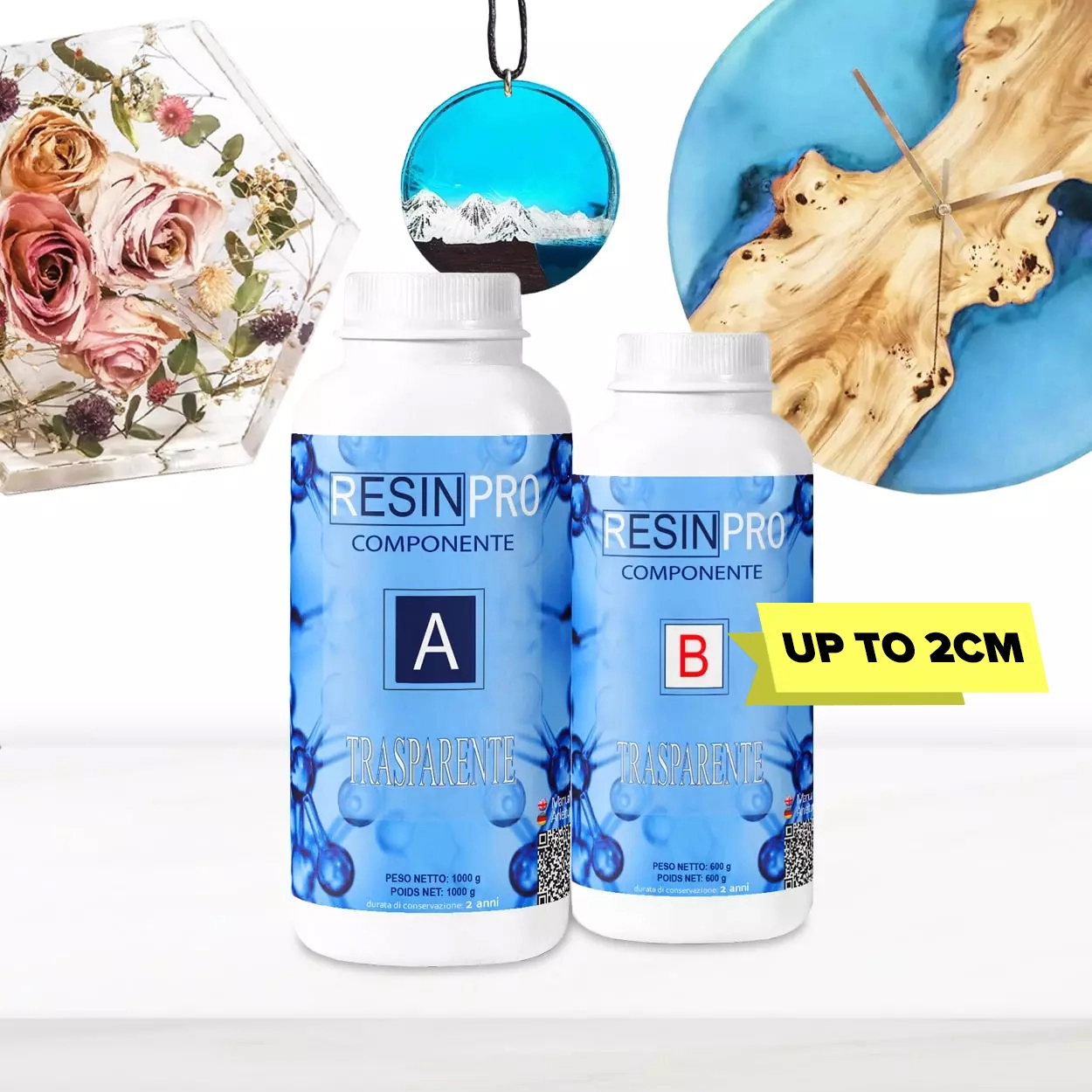 "Trasparente" – Multipurpose Clear Epoxy Resin for Casting – Up to 2cmPrice range: £8.95 through £397.95"Trasparente" offers an ultra-clear, glossy epoxy finish up to 2cm depth, suitable for DIY and woodworking projects.
Frequently Asked Questions
Can resin-based enamels be used on floor tiles?
Yes, resin-based enamels are specifically formulated for durability and are ideal for floor tiles in high-traffic or commercial areas.
Are water-based enamels eco-friendly and suitable for indoor use?
Water-based enamels are low in odour and VOCs, making them ideal for interior applications with environmental and health considerations.
Which enamel should I use for bathroom or kitchen tiles?
Choose a waterproof, easy-to-clean resin coating or a water-based enamel like Vertical Glass for high-moisture areas.
Do I need to prime tiles before applying epoxy or PU enamel?
Priming is recommended for best adhesion and longevity, especially with water-based or epoxy resin systems.
Can I achieve a satin or gloss finish with these enamels?
Yes, many resin-based and water-based coatings offer both satin and gloss finish options for tiles.
Are epoxy or PU enamels resistant to yellowing?
Advanced formulations such as Prolux and Trasparente include UV filters to prevent yellowing and fading over time.