 Free shipping on orders over £29,85
  Shipping Tracking!


 Google
 Facebook
How much resin per square metre?
A practical guide to calculating resin usage for tables, floors, and countertops
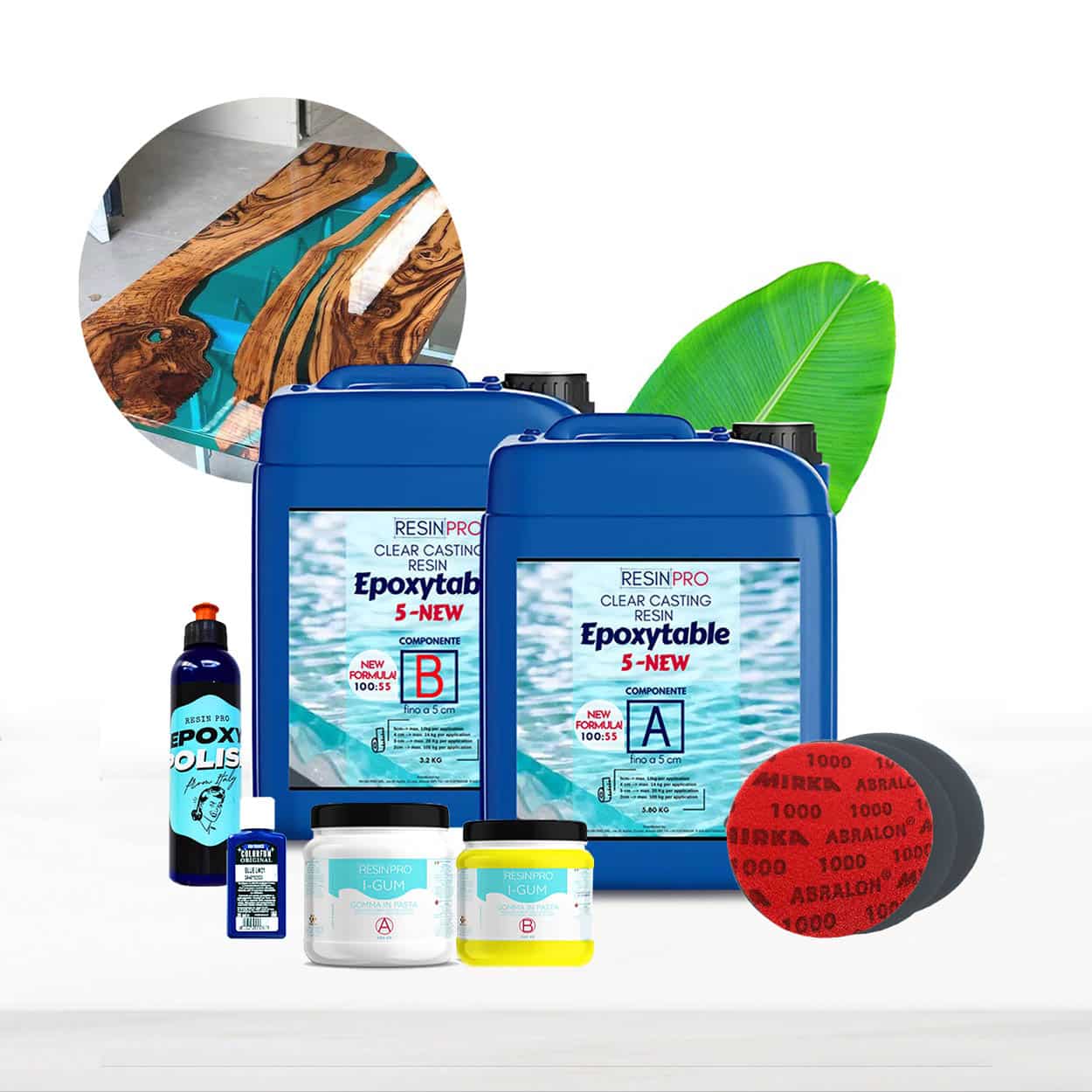
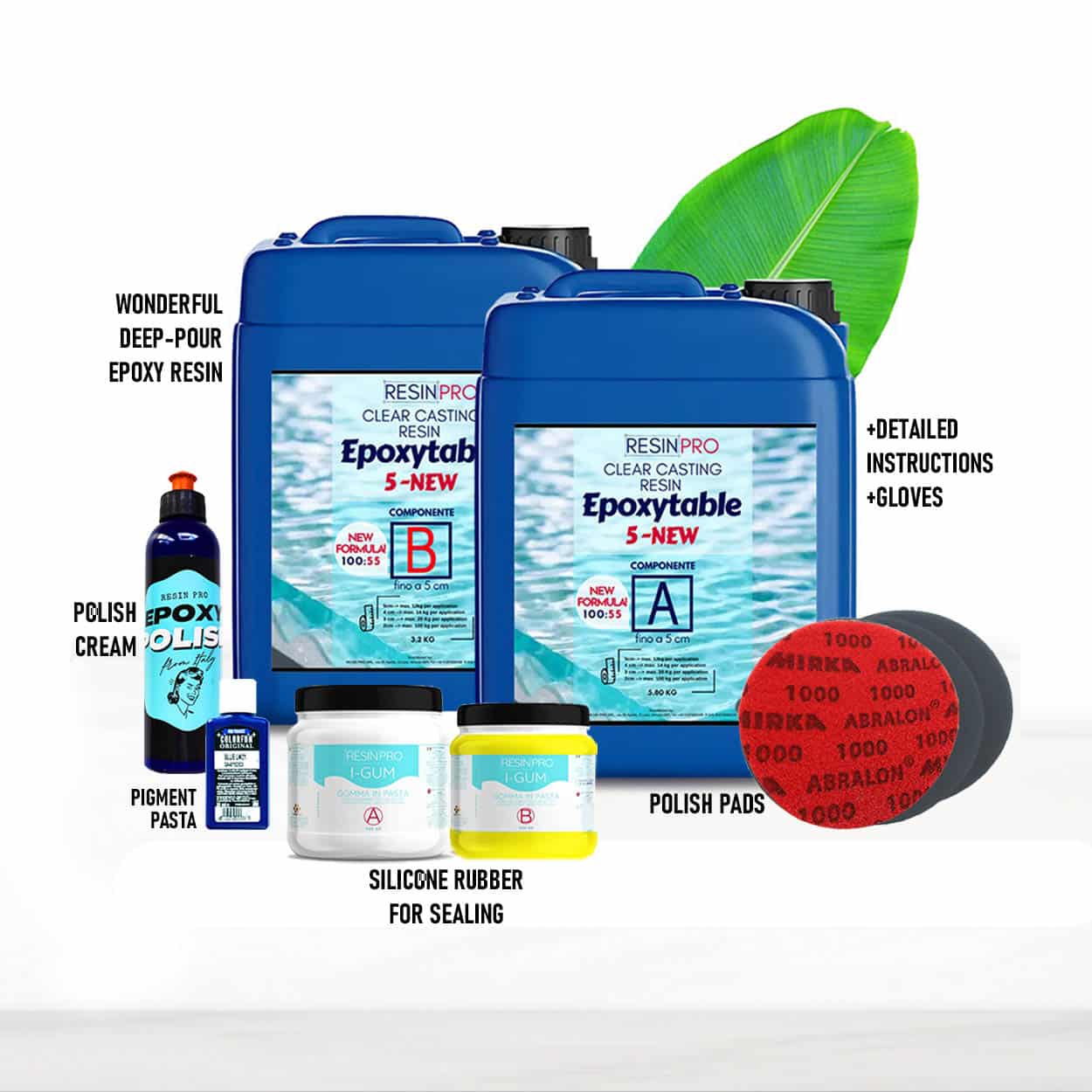
If you’re preparing to start a resin project—whether for river tables, permeable outdoor floors, or stunning countertops—knowing exactly how much resin you will need per square metre is crucial. This guide demystifies resin calculations, explains key product differences, and helps you choose the right kit to match your project’s needs, budget, and intended surface.
Comparing Resin Needs by Surface and Project
Different surfaces and project types require unique resin volumes. For example, a river table usually combines wood and resin, so you’ll use less resin per surface area than for a complete clear cast. Meanwhile, pebble or permeable floors require a resin-to-stone ratio, and countertop kits offer calculated coverage for efficient planning. Resin choice may also vary according to surface use—some require deep-pour epoxy, while others benefit from self-levelling or UV-stable formulas. Let’s compare typical scenarios and matched kits:
- Tables: About one-third resin, two-thirds wood; thickness and volume depend on table design.
- Countertops: Full surface coating, with kit options matched precisely to area (1–8 m²).
- Pebble/Stone Floors: Calculated by mixing ratio—usually 3% resin (by weight) per volume of pebbles or grit, and thickness of desired layer.
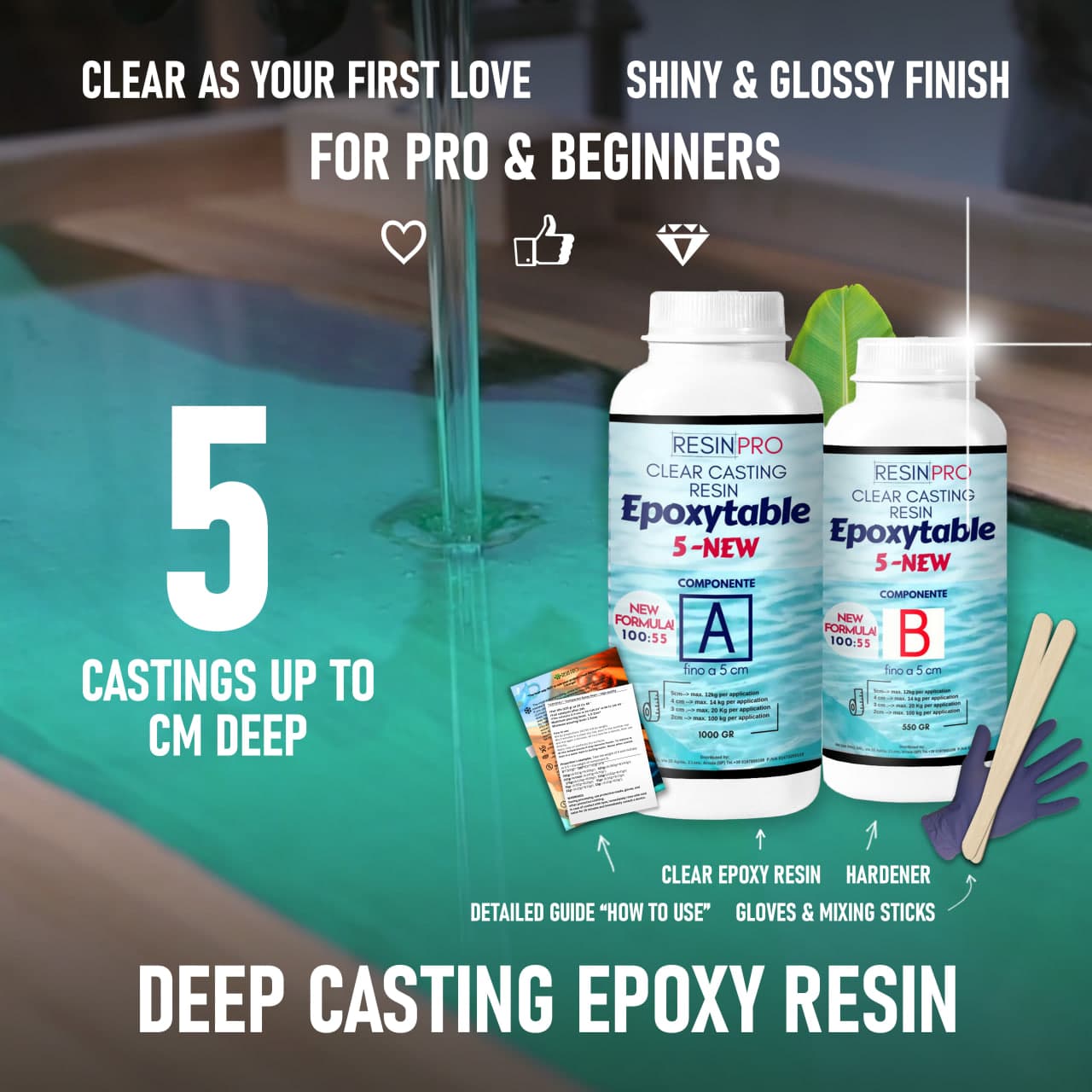
Visualising Resin Coverage and Application
Get a clear understanding of how much resin you’ll need by viewing typical example projects and completed surfaces. Skim through gallery images of river tables, countertops, and floors to see how surface area, thickness, and design influence resin usage. Each ResinPro kit gallery illustrates actual resin coverage per square metre, aiding your planning and inspiring creative results.
“River-Table” – Complete Kit for Creating Your First Epoxy Resin Table
The “River-Table” – Complete Kit for Creating Your First Epoxy Resin Table is ideal for anyone wishing to create a classic river table with a balanced combination of wood and resin. The kit’s quantities are specifically calculated for projects where approximately one-third of the area is resin and the rest is wood. Not sure how much resin per square metre? Clear instructions are provided to guide you through the setup and calculation, ensuring you only use exactly what you need—no waste, no guesswork. The kit includes deep-pour resin suitable for layers up to 5cm, pigments, polishing materials, silicone sealant and a release film, all making project planning straightforward for both beginners and experienced makers. Choose from Beginner, Pro or Maestro kit sizes, tailored to your surface.
- Includes epoxy resin suitable for pours up to 5cm or casting resin up to 2cm in thickness
- Supplied with silicone sealant for reliable formwork sealing and release film for easier demoulding
- Equipped with polishing kit and pigments to complete the project with finishing touches
“Flowstone” – Complete Permeable Floor Kit with Pebbles and Resin
If you are creating a durable and attractive outdoor permeable floor, driveway or patio, the “Flowstone” – Complete Permeable Floor Kit with Pebbles and Resin includes everything necessary for easy calculation and application. Here, resin is used as a binder to secure pebbles in place. Quantity per square metre is determined by the granule size and thickness of your chosen layer. Guidance within the kit and online calculator help you accurately measure both resin and stone, providing a practical and economical solution. The system is designed for weather resistance, drainage, and minimal puddling, with step-by-step instructions for both small and large scale surfaces.
- Permeable system allows water to drain through, reducing puddling
- Comes with colour-specific resin recommendations: polyurethane for white aggregates, epoxy for coloured stones
- Suitable for various urban and public spaces including terraces, bike paths, and shopping centres
- Includes step-by-step mixing and application instructions targeting ease of use
- Application requires substrate preparation; optional primer advised for improved adhesion
“Trasparente” – Epoxy Binder for Coloured Pebbles and Grits
The “Trasparente” – Epoxy Binder for Coloured Pebbles and Grits is perfect for permeable floors or decorative surfaces requiring a clear and stable finish. Its low viscosity formula ensures even distribution for full encapsulation. For each square metre, you’ll generally need about 3% resin by the total weight of stones, calculated for your desired thickness (e.g., 1.44m² at 20mm depth uses about 13kg binder and 432kg stones). This ensures clarity, UV protection, and safe application for both DIYers and professionals.
- Crystal-clear, bubble-free epoxy resin with UV resistance
- Certified non-toxic after curing, safe for skin contact
- Low viscosity for fast and thorough aggregate impregnation
- Cures fully in about 24 hours and walkable after 10 hours
- Maximum casting thickness recommended at 2 cm
“Stone Effect Collection” – Marble Epoxy Resin Countertop Kit
This all-in-one solution, the “Stone Effect Collection” – Marble Epoxy Resin Countertop Kit, makes calculating resin quantity per square metre almost effortless. Kits come in a range of sizes precisely matched to common countertop dimensions (from 1 up to 8 m²), allowing you to select exactly what’s required for your kitchen or bathroom update. They include every component needed for a professional marble or stone effect: resins, specialist pigments, and application tools. Self-levelling properties help avoid excess use and produce a uniform finish.
- Self-levelling crystal-clear resin for a smooth, mirror-like finish
- Kits include pigments, dyes, isopropyl alcohol, and tools for realistic veining
- Coverage options from 1 to 8 square metres for accurate project planning
Tips for Calculating and Using Resin Effectively
Achieving the best finish with minimum waste means planning carefully. Always measure your working area and intended thickness beforehand. If working with mixed media (like wood and resin), be sure to calculate resin only for the voids. For pebble or grit floors, use weight-based calculations combined with provided calculators or guides. Double-check manufacturer recommendations for pour thickness to avoid overuse and curing issues. Remember, most kits include enough resin for the stated coverage—if your surface has a complex geometry or unusual absorption, consider adding a safety margin.
Expert Resin Usage Advice & Application Gallery
Discover photos and expert tips from real-world resin applications, showing how adjusted calculations lead to better finishes and minimal excess. These visuals help you troubleshoot and refine your process, whether casting a table, laying a floor, or updating a countertop—each with optimised resin quantities for the best outcomes.

- "River-Table" – Complete Kit for Creating Your First Epoxy Resin TablePrice range: £198.45 through £467.45"River-Table" complete kit includes resin, silicone sealant, polish, and pigments with instructions, suited for entry-level resin table projects.
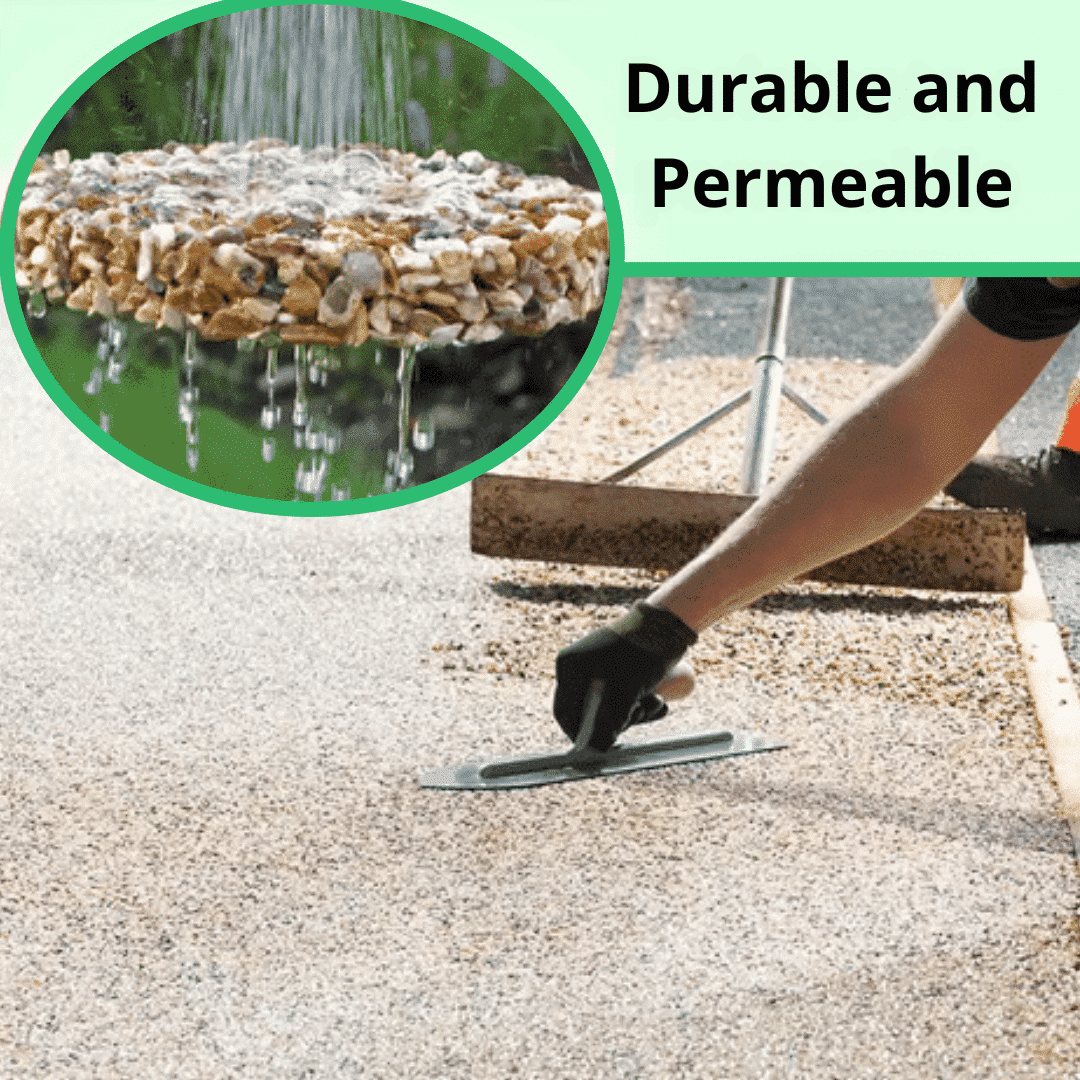 "Flowstone" – Complete Permeable Floor Kit with Pebbles and ResinPrice range: £49.95 through £3,915.45The Flowstone kit provides a permeable and durable pebble and resin floor solution with step-by-step application guidance for UK outdoor spaces.
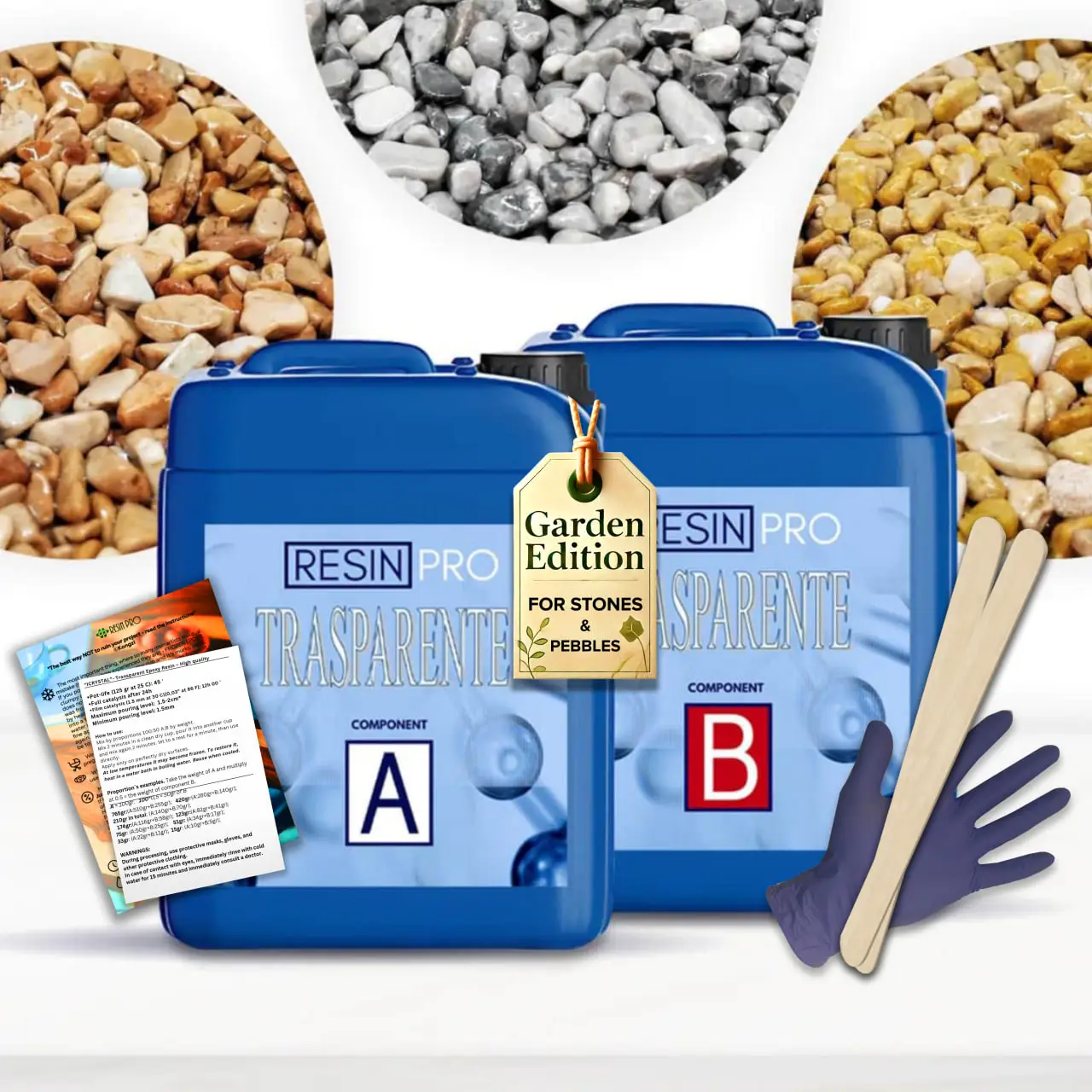 "Trasparente" – Epoxy Binder for Coloured Pebbles and GritsPrice range: £33.45 through £397.95"Trasparente" is a transparent epoxy binder designed for coloured pebbles and grits, providing a clear, UV stable finish for decorative floors.
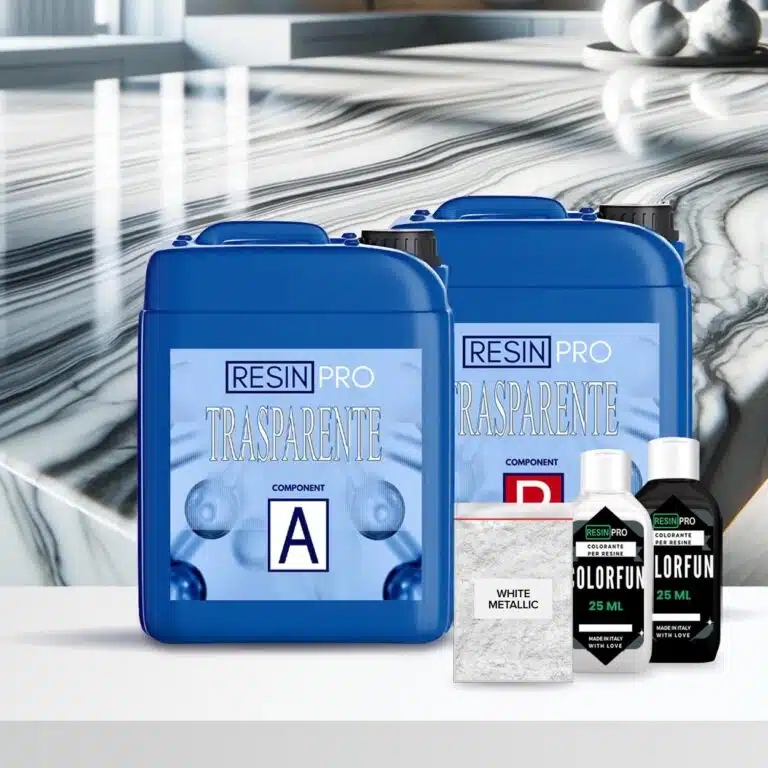 "Stone Effect Collection" – Marble Epoxy Resin Countertop KitPrice range: £57.95 through £272.95"Stone Effect Collection" offers an epoxy resin countertop kit suitable for kitchens and bathrooms, providing professional marble and stone effects.
Frequently Asked Questions
How is resin calculated for a river table per square metre?
Measure the total volume to be filled with resin (typically about one-third of the table area and desired thickness), then use your kit’s guide for the exact amount.
What is typical resin coverage for pebble or stone flooring?
Usually, around 3% resin by the weight of the stones is required per square metre and desired thickness; use kit calculators for specifics.
How do I choose the correct kit for my surface area?
Select a kit with a listed coverage range matching the measurements of your table, floor, or countertop. Add some margin for unexpected absorption.
What is the difference between deep-pour and surface resin?
Deep-pour resins allow thick layers in one go (up to 5cm), ideal for tables. Surface resins are for thin layer finishes or decorative coatings.
Can I use leftover resin for other projects?
Yes, leftover resin can be used for coasters, art, or repairs—just be mindful of pot life and correct ratios for small batches.
What’s the best way to measure thickness when calculating resin?
Measure at several points and use the average to avoid under- or overestimating; always consult the kit’s recommended maximum pour.
Does UV stability affect resin selection?
Yes, UV-stable resins are best for surfaces exposed to sunlight, such as outdoor floors or clear table finishes, to avoid yellowing.