 Free shipping on orders over £29,85
  Shipping Tracking!


 Google
 Facebook
← Back to How to make resin cabochons?
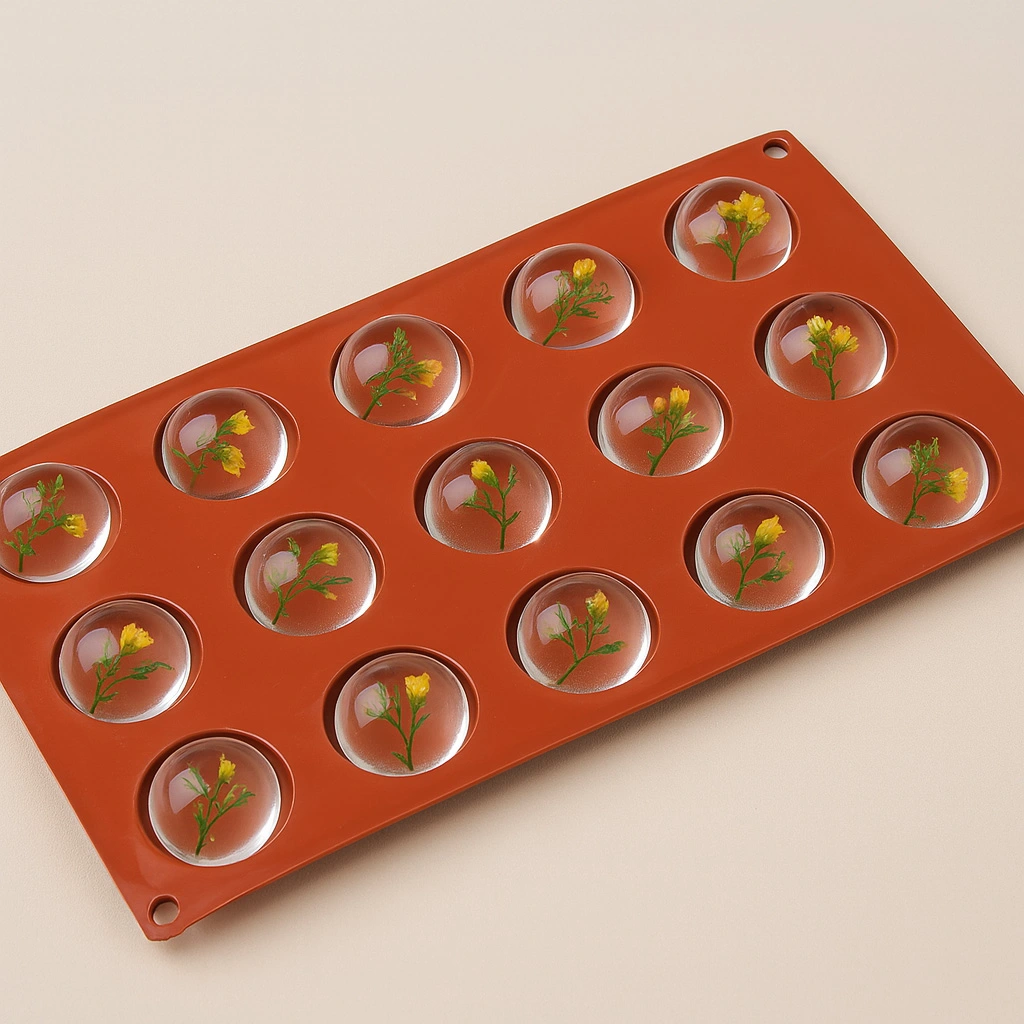
Choosing the right mould is essential when making resin cabochons, as it directly affects the quality, shine, and ease of demoulding your finished pieces. Let’s explore which moulds give the best results and why silicone is favoured among crafters.
Why Silicone Moulds Are the Top Choice
Silicone moulds are widely regarded as the best option for casting resin cabochons. Their flexibility allows cabochons to be released easily, minimising risk of damage and preserving sharp definition in every dome and curve. Silicone also doesn’t stick to resin, which means you get a consistently smooth and glossy surface on the finished pieces.
An excellent example is the Cabochon-15 mould, designed specifically for easy use and professional results. With moulds like this, even beginners can achieve a flawless finish for jewellery projects or decorative crafts.
Practical Tips for Using Silicone Cabochon Moulds
- Release resin promptly: For best results, remove your resin cabochons from the mould within 12 hours of pouring to avoid local adhesion.
- Clean with care: Wash moulds gently with warm, soapy water after use and allow them to dry fully before the next casting.
- Suitable for various materials: Quality silicone moulds like the Cabochon-15 can also be used for chocolate, soap, plaster, ice, and wax crafts, broadening your creative options.
When Quality of Finish Matters
If you’re making cabochons for jewellery or gifts where a glass-like shine and smoothness are important, investing in a professional-grade silicone mould truly pays off. These moulds reliably produce cabochons with a clear, even surface that enhances colour effects and embedded details within the resin.
Related products
Related guides
Using the right silicone mould streamlines cabochon making and lifts the quality of your creations. For more tips and project inspiration, return to our main guide on how to make resin cabochons.