 Free shipping on orders over £29,85
  Shipping Tracking!


 Google
 Facebook
← Back to How many liters can I make with one kg of silicone rubber?
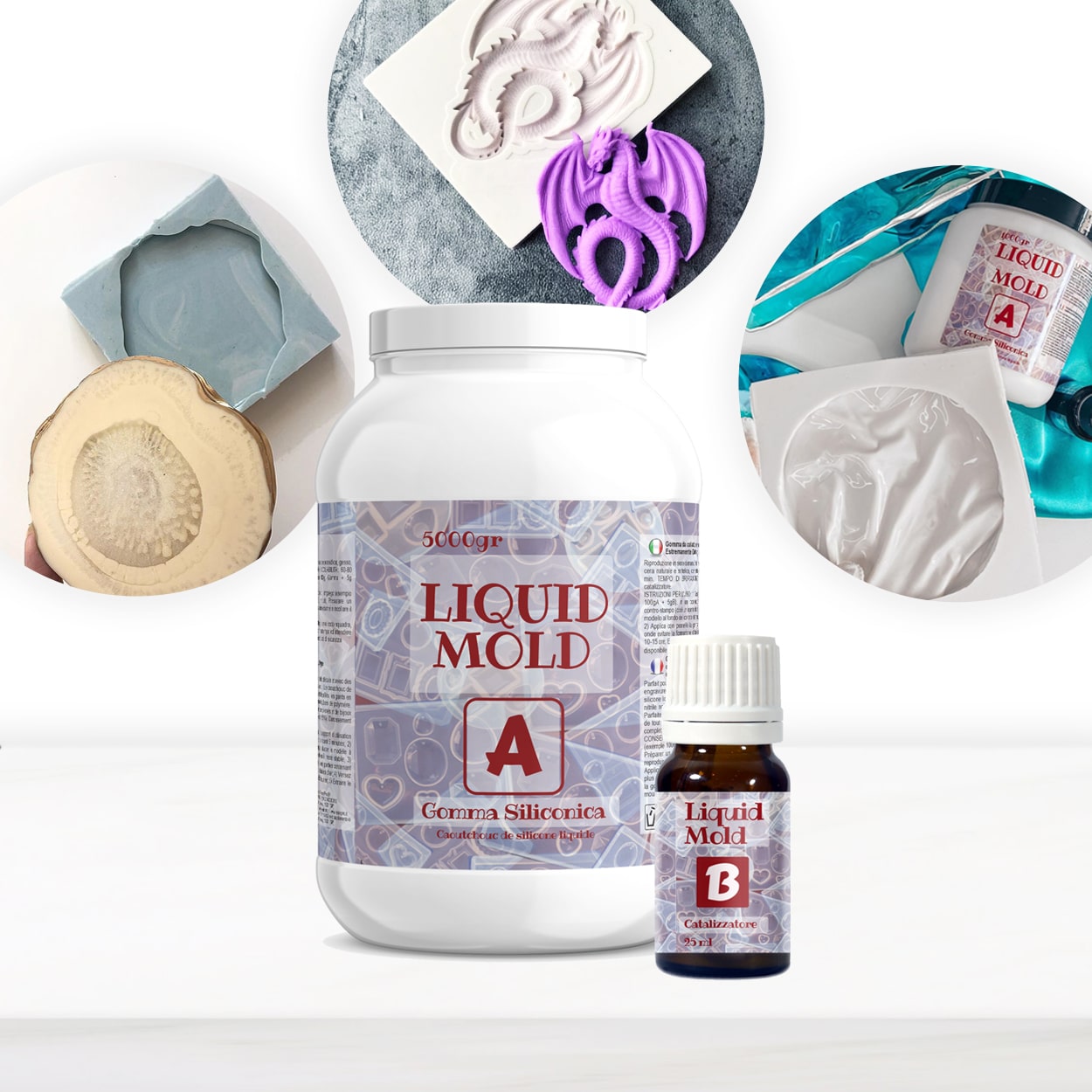
If you’re planning a mould making project and need to estimate how many litres you’ll produce from your silicone rubber kit, you might wonder whether to count both the base and catalyst in your calculations. This guide gives you everything you need to get your sums right.
Always Include Both Parts in Your Measurements
Silicone rubber mould kits are supplied as separate components—usually labelled Part A (the base) and Part B (the catalyst, or activator). The correct mixing ratio (for example 1:1 or 10:1, depending on the product) is essential for a proper cure and accurate yield. When working out how much material you have available, you should always add the weights of both components together. Only the combined amount represents the final usable volume once the mixture is cured.
Getting an Accurate Volume Estimation
Since silicone rubber is sold by weight, and you’re likely to be working to a mould volume in litres, remember that the stated kit weight is the sum of base and catalyst. Once mixed and cured, the resulting volume reflects the total starting weight of both parts. To convert from kilograms to litres, check the specific product’s density (usually close to 1 kg per litre for most silicone rubbers, but confirm in the product details if available). For instance, using “Liquid Mould” – Casting Liquid Silicone Rubber at the correct mixing ratio will deliver the most accurate idea of the litres you can pour.
When This Matters Most
Adding together both parts is especially important if you’re close to the limits of your mould size, or need to order the correct quantity for a project. Neglecting the catalyst could result in running short and having to pause your work unexpectedly.
Related products
Related guides
By including both base and catalyst in your calculations, you’ll achieve a more accurate result and smoother casting experience. For further tips on quantity and yields, see our main guide: How many litres can I make with one kg of silicone rubber?