 Free shipping on orders over £29,85
  Shipping Tracking!


 Google
 Facebook
← Back to How do I choose resin bound gravel?
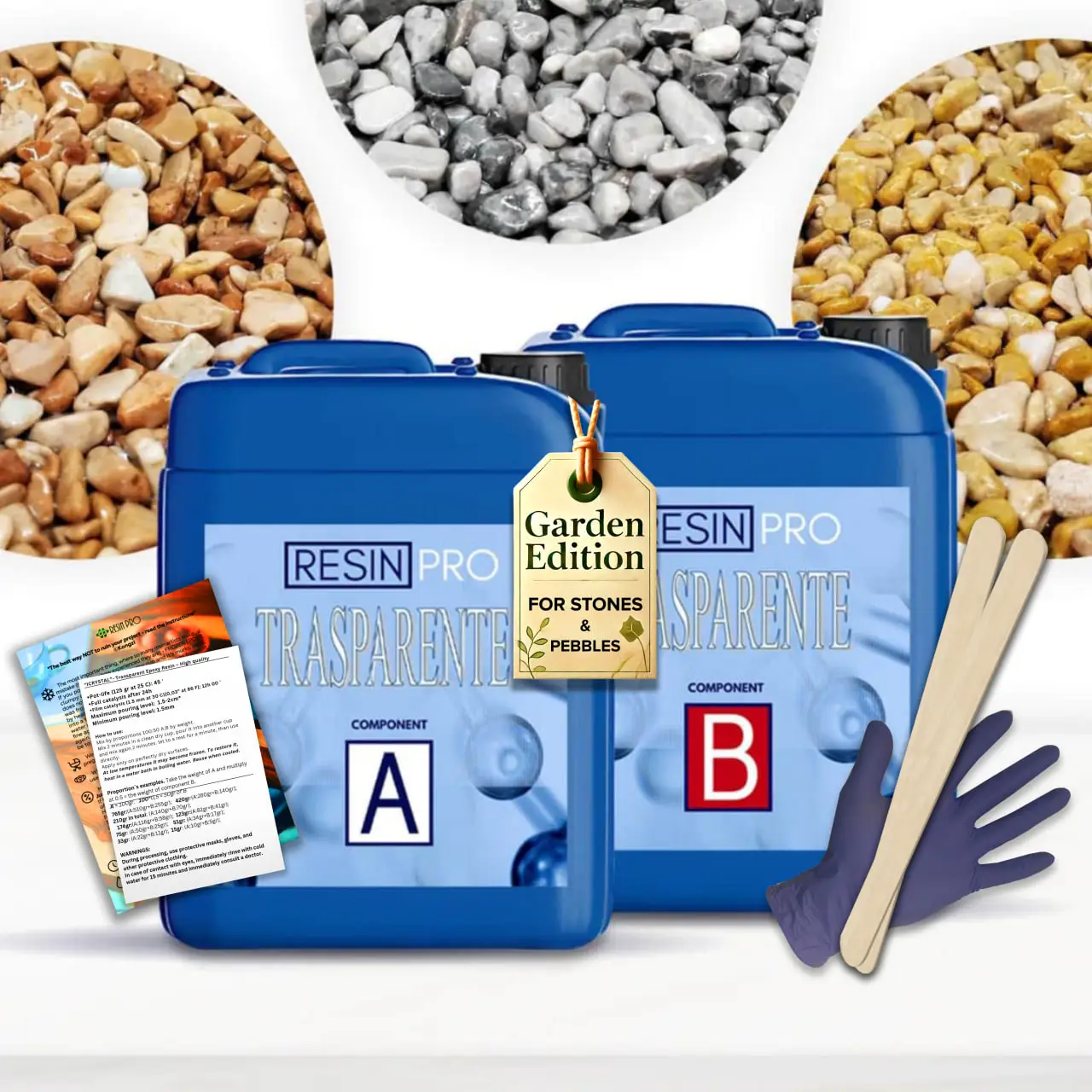
When considering ways to upgrade or stabilise an existing gravel surface, it might be tempting to simply pour epoxy binder on top. However, this method is not recommended and can lead to poor results. Here’s why and how you should approach resin bound gravel installation for best performance.
Why You Shouldn’t Pour Binder Over Loose Gravel
Piling resin or epoxy binder directly onto a laid gravel surface won’t achieve the desired structural integrity. The binder will not encapsulate the stones evenly, leading to unstable, loose patches and potential failure. Proper bonding and a strong, permeable layer require the gravel to be mixed thoroughly with the binder before laying. This ensures each stone is coated for long-lasting, resilient results.
The Correct Method: Mixing First, Then Laying
For a durable resin bound surface, lift your existing gravel, clean off debris or dust, and mix it evenly with a suitable binder, such as “Trasparente” Epoxy Binder for coloured aggregates or “Polirock” binder for white stones. Once fully mixed, spread and compact the blend over your prepared base. This approach ensures proper encapsulation, greatly improving strength, water permeability, and appearance.
When This Matters Most
The right technique matters most for surfaces that deal with regular foot or vehicle traffic, such as driveways, paths, and patios. An incorrectly applied binder layer can lead to trip hazards and premature wear, negating the benefits of resin bound gravel. Following recommended installation steps helps maximise your surface’s longevity and safety.
Related products
Related guides
Understanding the right way to use epoxy binders is crucial for resin bound gravel projects. For further advice on matching binders and aggregates, see our dedicated guide on how to choose resin bound gravel.