 Free shipping on orders over £29,85
  Shipping Tracking!


 Google
 Facebook
How many kilograms of resin are needed to cover 55 square metres?
Compare resin kits and usage ratios for large outdoor surfaces
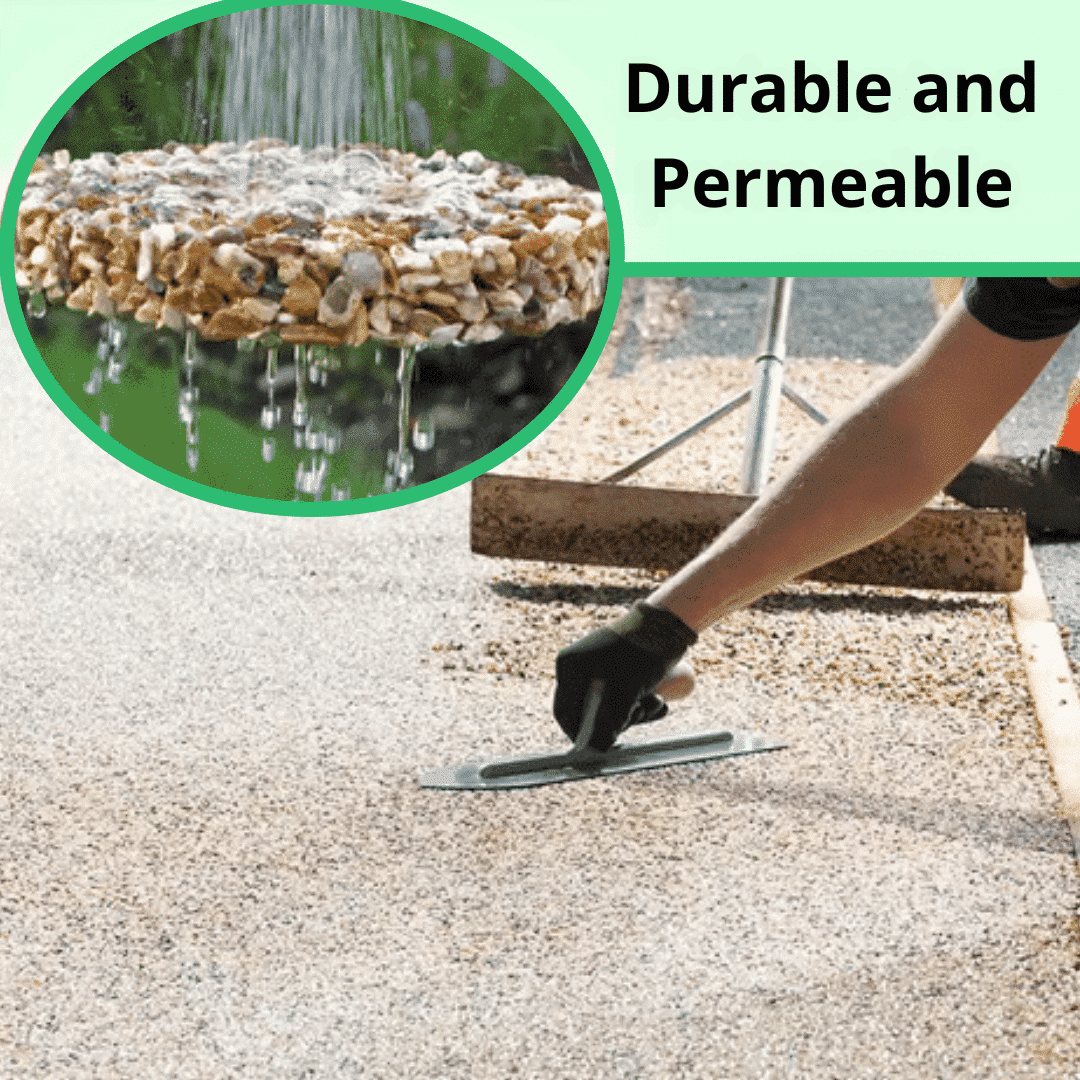
If you are planning to install a new permeable pebble or stone floor outdoors, knowing exactly how much resin is needed is crucial for both budgeting and a successful project. This page guides UK homeowners, landscapers, and DIY enthusiasts through choosing the correct amount and type of resin for covering 55 square metres, comparing leading resin binders and complete kits for outdoor applications.
Resin Coverage and Product Comparison
The quantity of resin required for 55 square metres depends on the type of stone, aggregate size, chosen binder, and intended finish thickness. Key differences lie in resin-to-aggregate ratios and suitability for coloured versus white stones. Polyurethane resins such as those found in “Polirock” – Polyurethane Binder for White Stones, 2kg Two-Component Kit are essential for white stone surfaces, while transparent epoxy binders, as in “Trasparente” – Epoxy Binder for Coloured Pebbles and Grits, are well-matched for coloured and natural aggregates. Complete kits, like “Flowstone” – Complete Permeable Floor Kit with Pebbles and Resin, remove the guesswork by bundling the right ratio of resin and aggregate by surface area.
Visualising Coverage and Surface Options
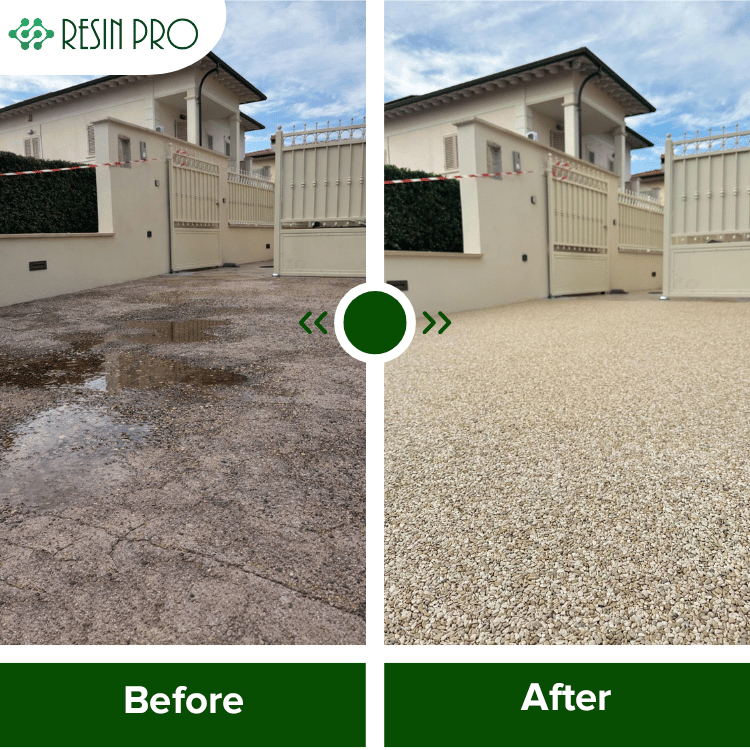
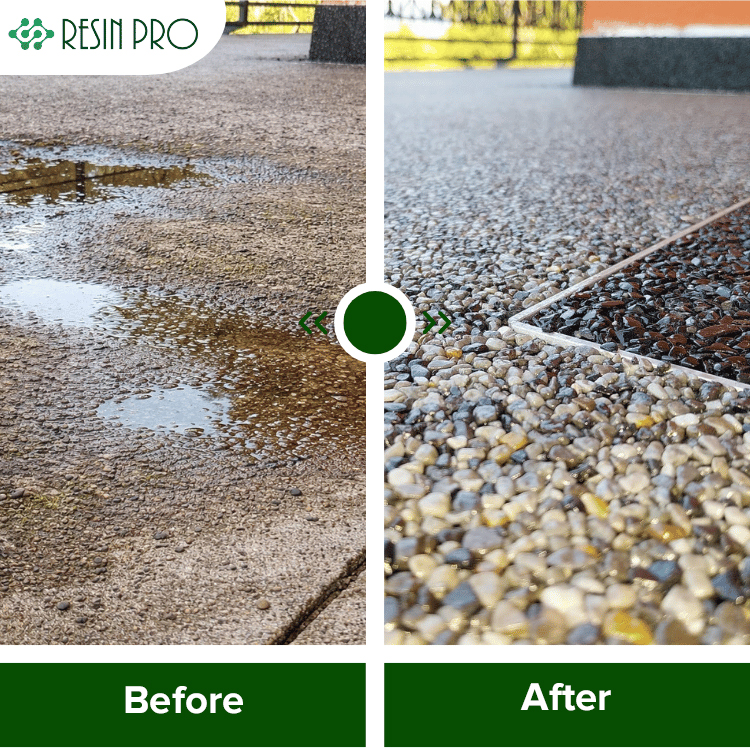
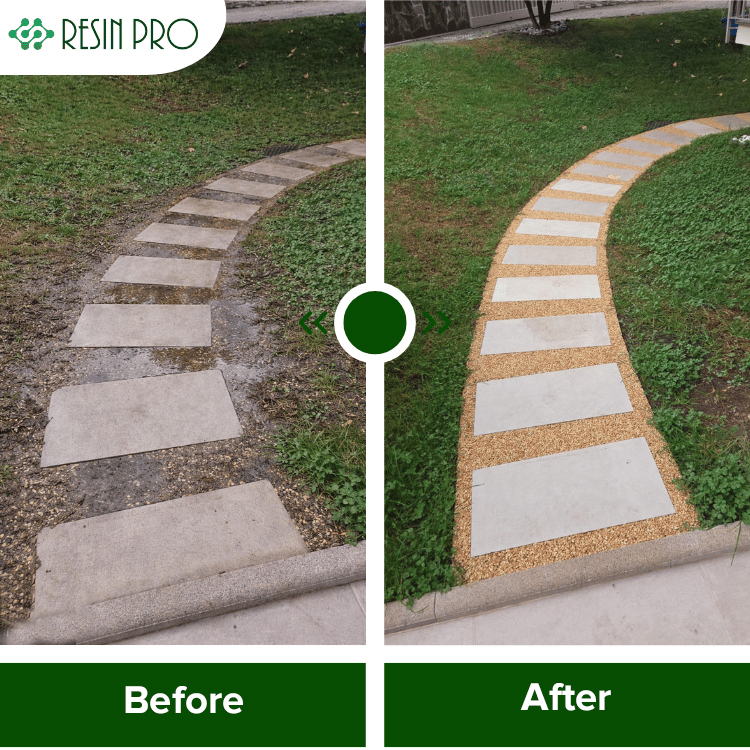
See real-life pebble floor installations, before-and-after transformations, and close-ups of various aggregate finishes. These visuals help you gauge the aesthetic and build-up of resin-bound systems, showing how aggregate colour and binder choice affect overall appearance and coverage.
“Flowstone” – Complete Permeable Floor Kit with Pebbles and Resin
The “Flowstone” – Complete Permeable Floor Kit with Pebbles and Resin is tailored for UK conditions and is sold according to the coverage area. It provides a pre-calculated amount of resin and pebbles for your project, ensuring optimal drainage, durability, and a consistently attractive finish. This is especially helpful if you’re aiming to resurface driveways, patios, or garden paths with minimal calculation. The included detailed instructions offer precise resin usage guidance: always select non-yellowing polyurethane resin for white stones and a low-yellowing epoxy for coloured stones within the kit. For 55m², simply select the appropriate kit size for your area or combine kits as needed.
“Trasparente” – Epoxy Binder for Coloured Pebbles and Grits
The “Trasparente” – Epoxy Binder for Coloured Pebbles and Grits is suitable for surfaces using coloured, natural or dark pebbles. This crystal-clear epoxy is low in viscosity for superb aggregate impregnation, delivers outstanding UV stability, and maintains a bubble-free, non-yellowing finish. For standard installations, you should use approximately 3% by weight of resin to aggregate. As an estimate, coating 55 square metres at a 2cm thickness will typically require around 12.5–17.5kg of resin (assuming around 25kg of stones per m²), but actual amounts can vary based on aggregate specification and depth.
“Polirock” – Polyurethane Binder for White Stones
Specially formulated for white or light-coloured stones, “Polirock” – Polyurethane Binder for White Stones, 2kg Two-Component Kit offers a weatherproof, non-yellowing and durable solution for decorative and practical installations. For white aggregate, the recommended mixing ratio is 1:1—use 2kg of Polirock for approximately every 2kg of white gravel. For 55 square metres at typical installation thickness (circa 2cm), you would need around 200–300kg of binder depending on the coverage depth and aggregate size. It’s crucial to adjust this ratio based on specific aggregate properties and desired wear performance.
Tips for Calculating and Applying Resin on Large Surfaces
When planning to cover 55 square metres of floor, accurate measurement and mixing are essential for a lasting, permeable surface. Always measure your area precisely, and factor in the intended layer thickness (commonly 1.5–2cm). Different aggregates absorb resin at varying rates, so follow each product’s ratio guidance carefully. For DIY projects, pre-measured kits like Flowstone greatly reduce uncertainty. Always check weather forecasts as most resins require application within a specific temperature and humidity range. For very large or high-traffic zones, consider professional installation to ensure a consistent mix and long-term durability.
Expert Guidelines for Accurate Resin Use
Measure twice, mix once: Double-check your area calculations before purchasing. Mix thoroughly: Uniform distribution of resin and pebbles is crucial for strength and permeability. Safety matters: Always use gloves and ensure good ventilation when mixing and spreading resin binders.
- "Flowstone" – Complete Permeable Floor Kit with Pebbles and ResinPrice range: £49.95 through £3,915.45The Flowstone kit provides a durable, permeable pebble and resin system with resin guidance tailored for UK outdoor areas.
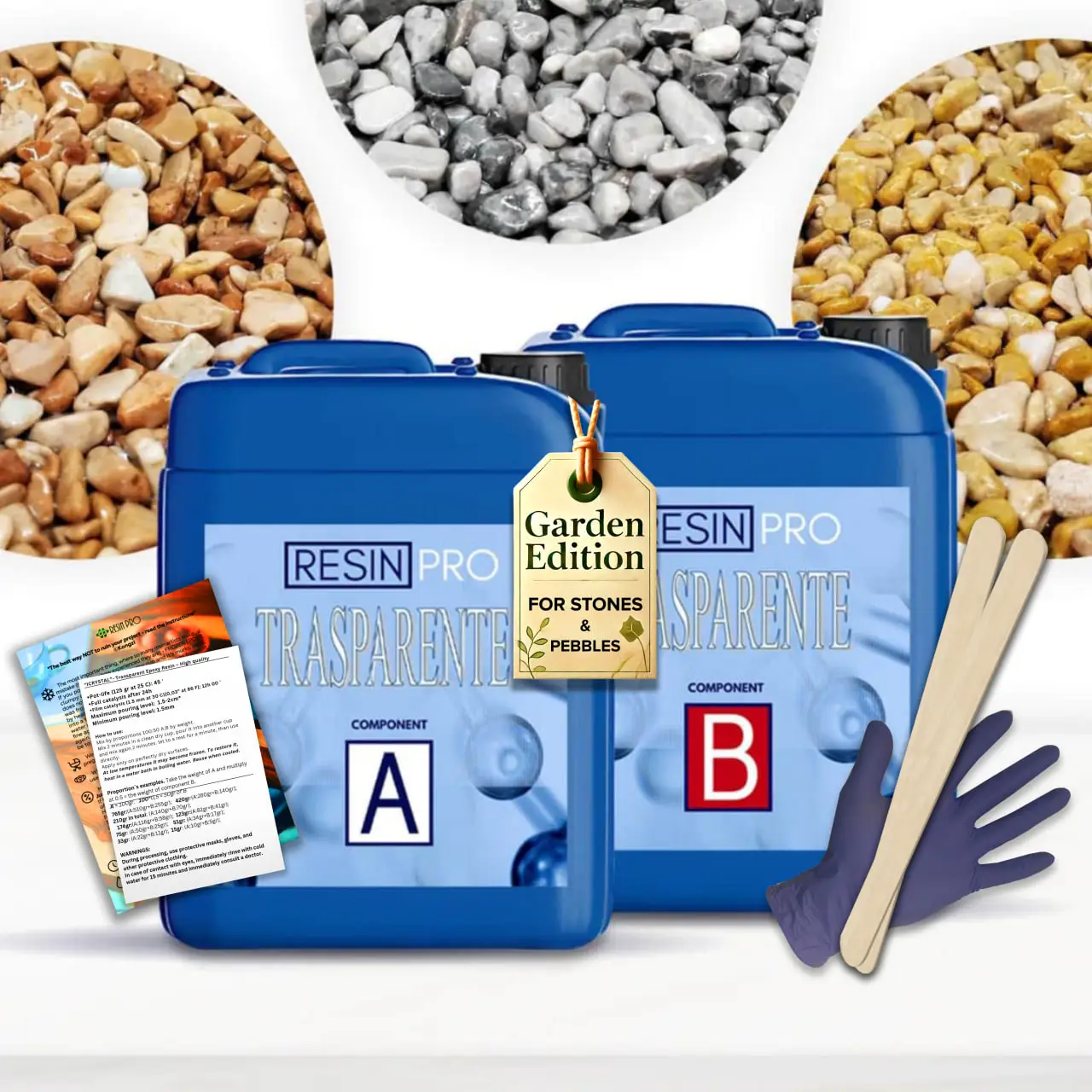 "Trasparente" – Epoxy Binder for Coloured Pebbles and GritsPrice range: £33.45 through £397.95"Trasparente" offers a clear, UV-resistant epoxy binder designed for coloured pebbles and grits with good impregnation suited to flooring projects.
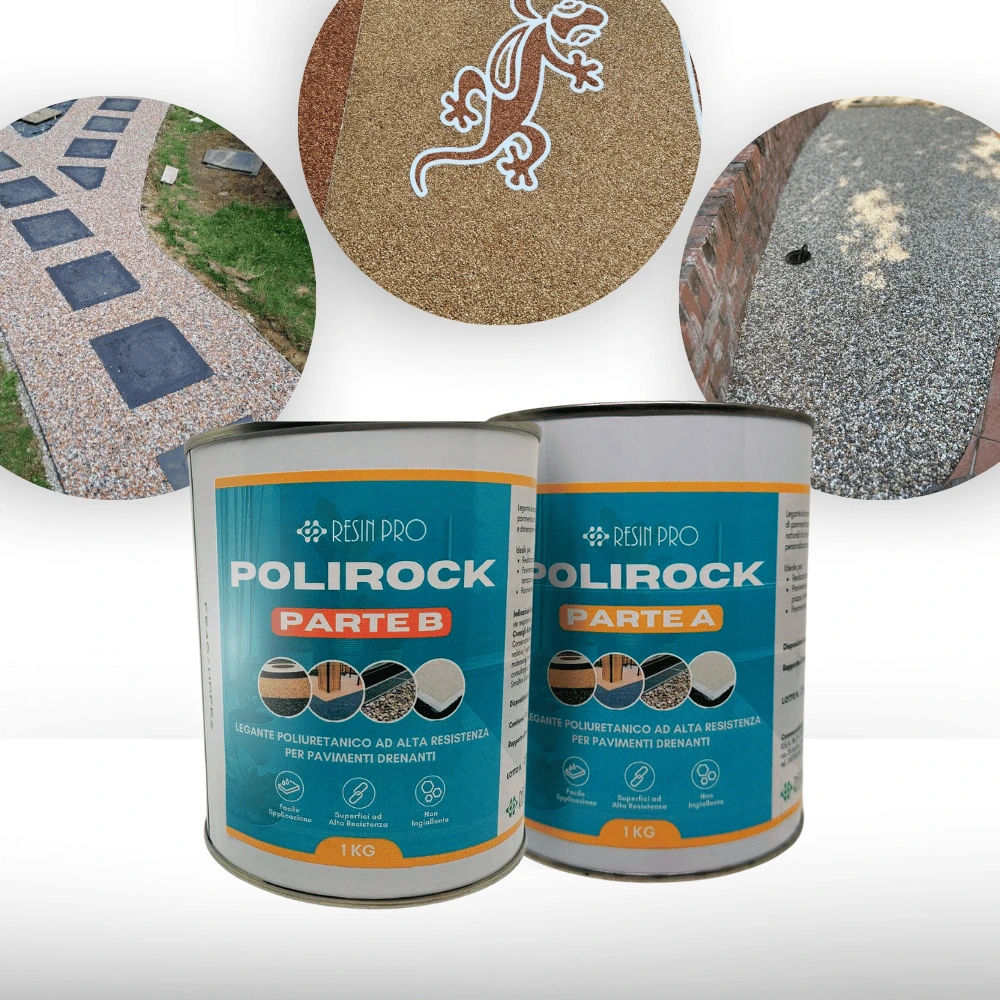 "Polirock" – Polyurethane Binder for White Stones, 2kg Two-Component Kit£61.95"Polirock" polyurethane binder is suited for creating durable, weather-resistant, and permeable outdoor stone surfaces.
Frequently Asked Questions
How much resin is needed per m² for large outdoor areas?
Typical use is 400–800g of resin per 25kg of aggregate, varying with aggregate size and surface depth.
How do I choose between epoxy and polyurethane binders?
Use polyurethane for white stones to avoid yellowing, and epoxy for coloured or dark aggregates.
Should I buy a complete pebble floor kit or separate resin?
Kits simplify resin calculations and ensure correct ratios, especially for large or DIY projects.
How should I prepare the surface before laying resin?
Clean, stable, and dry sub-bases are essential. Remove debris for optimal adhesion and drainage.
What is the curing time for resin-bound pebble floors?
Floors are generally walkable after 10–12 hours; maximum hardness is usually reached after 36–48 hours.
Do mixing proportions change with different aggregates?
Yes, larger and more porous aggregates may require more resin. Always follow the product guidance.
Can I mix binders for different stone colours in one project?
It is best to match each resin type to the stone: polyurethane for white and epoxy for coloured/ dark stones.