 Free shipping on orders over £29,85
  Shipping Tracking!


 Google
 Facebook
How much can you pour with two kilograms of resin?
A practical guide to selecting the right resin for your project

Whether you’re creating a river table, crafting jewellery, or working on an intricate casting project, understanding how much you can pour with two kilograms of resin is essential. This guide is designed for resin artists, DIY enthusiasts, and beginners alike who want reliable results and efficient use of materials. We’ll explore how different types of epoxy resin products affect coverage and casting thickness, helping you select the right resin and measuring tools for your project’s demands.
Resin Pour Volume: What 2kg Really Covers
Two kilograms of resin can seem like a small or large quantity depending on your project’s size, desired thickness, and the specific resin formula used. For example, a deep pour resin allows thicker layers, while jewellery resins are designed for fine detail. A litre of mixed epoxy typically has a density around 1.1kg/litre, so 2kg equates to approximately 1.8 litres. This means with 2kg you can fill a mould or tray 1cm thick measuring roughly 1800 square centimetres. The actual coverage and pour depth also depend on the resin’s maximum recommended layer thickness—exceeding this can risk overheating or imperfections.

Visualising Resin Pour Volumes
Seeing is believing: Compare typical pours with 2kg of resin — from shallow trays to deep embedments. Use a clear measuring cup to gauge area, depth, and resin clarity for each project type.
2L Graduated Measuring Cup for Resin – Precise Epoxy Dosing Tool
The 2L Graduated Measuring Cup for Resin – Precise Epoxy Dosing Tool ensures accurate measurement for any resin project. Its clear graduations from 100ml up to 2 litres help avoid guesswork, supporting clean mixes and consistent results. With a non-stick surface and convenient pouring spout, this tool is indispensable for keeping your proportions perfect when preparing 2kg resin batches for any pour size. Secure and precise, it’s especially valuable for beginners working with smaller amounts or those tackling projects that require exact resin/hardener ratios.
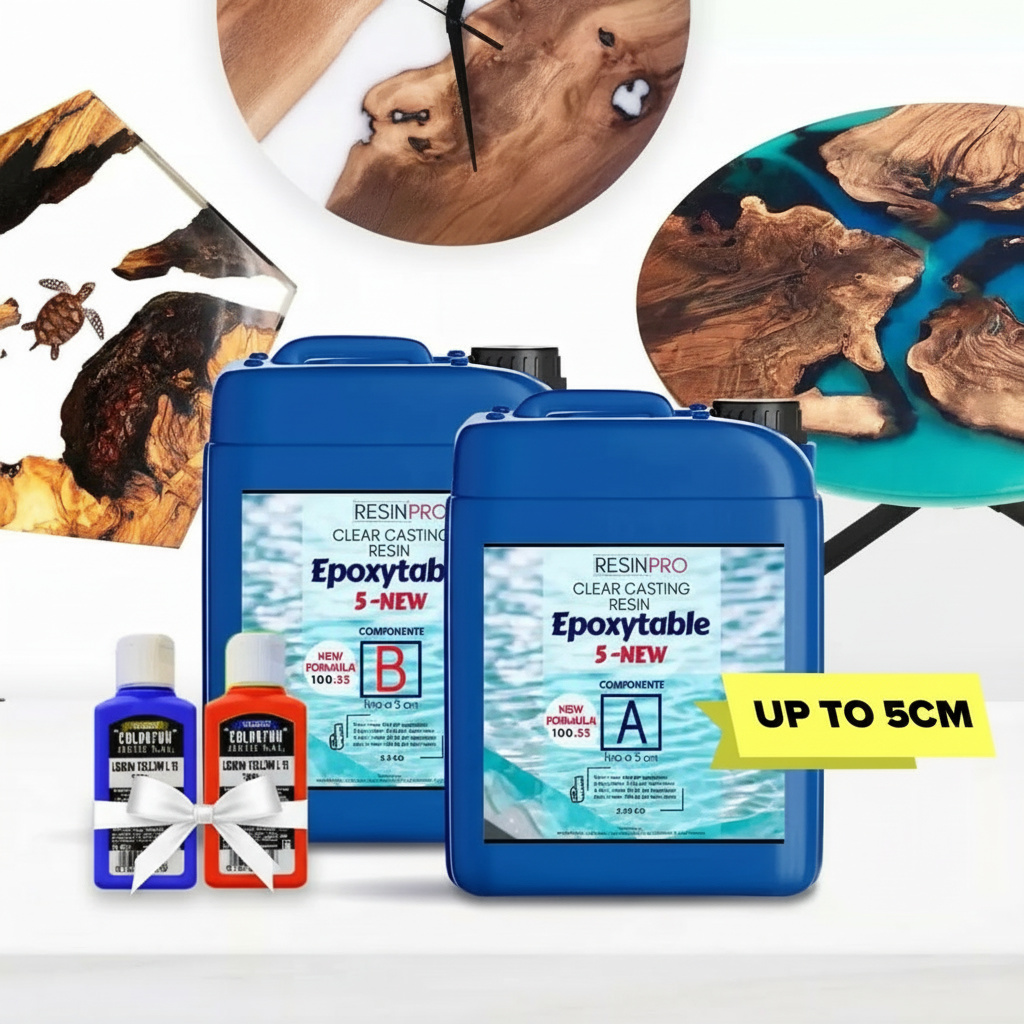
“EpoxyTable 5-Five” – Deep Pour Epoxy Resin for Tables and Large Projects – Up to 5cm
If you’re working on larger pieces — like river tables or thick castings — the “EpoxyTable 5-Five” – Deep Pour Epoxy Resin for Tables and Large Projects – Up to 5cm is engineered to pour safely in single layers up to 5cm thick. Two kilograms of this resin will create thicker or broader castings compared to shallow-pour formulas, making it ideal for tabletops, centrepieces, or embedded artwork where depth and clarity are paramount. Its low exothermic reaction means you can pour large volumes without risk, and advanced UV filters ensure your project remains crystal-clear for years.
“One-2-One” – Epoxy Resin for Handcraft, 1:1 Mixing Ratio
For jewellery, cabochons, and other handcrafts, the “One-2-One” – Epoxy Resin for Handcraft, 1:1 Mixing Ratio offers an ultra-simple equal-parts mixing ratio. Two kilograms will go a long way—especially since decorative or intricate projects tend to use smaller moulds. Its medium viscosity ensures minimal bubbling, a super-glossy finish, and manageable working times. The handcraft focus and non-toxic formulation make it the go-to for clear, detail-rich miniature work.
“Trasparente” – Multipurpose Clear Epoxy Resin for Casting – Up to 2cm
The “Trasparente” – Multipurpose Clear Epoxy Resin for Casting – Up to 2cm is perfect when you need a self-levelling, ultra-clear pour up to 2cm thick. With 2kg of this resin, you can pour a surface up to that thickness with high transparency and scratch-resistance, ideal for woodworking, embedded objects, or restoration jobs. Applications include smaller tabletops, panels, and moulds—this resin excels in detail, clarity, and reliability for a broad range of creative projects.
Tips for Calculating How Far 2kg Goes
To maximise results, always calculate the total volume of your mould or tray before mixing. Divide your available 2kg by the resin’s density (typically 1.1kg/litre) to estimate litres, then match this to the area and thickness you plan to fill. For layers thicker than the product allows, consider pouring in stages to avoid overheating. Use tools like the 2L Graduated Measuring Cup for error-free measurement. Always check the individual resin’s maximum recommended pour depth to prevent warping or curing issues—especially with deep pour formulas. Planning ahead ensures optimal clarity and finish.
Practical Examples of 2kg Resin in Action
Project inspiration: Watch how 2kg of epoxy can transform everything from a unique tabletop river scene to multiple batches of stunning resin jewellery and intricate castings.

- 2L Graduated Measuring Cup for Resin – Precise Epoxy Dosing Tool£4.04A 2L cup designed for precise epoxy dosing with clear graduations and easy cleaning, suitable for accurate resin measurement.
- "EpoxyTable 5-Five" – Deep Pour Epoxy Resin for Tables and Large Projects – Up to 5cmPrice range: £17.95 through £1,154.95EpoxyTable 5-Five is designed for deep pouring up to 5cm, suitable for tables and large projects with a scratch-resistant, UV-filtered surface.
 "One-2-One" – Epoxy Resin for Handcraft, 1:1 Mixing RatioPrice range: £15.95 through £59.95"One-2-One" epoxy resin is a medium viscosity, easy 1:1 mix resin suitable for jewellery and decorative crafts under the theme How much can you pour…
 "Trasparente" – Multipurpose Clear Epoxy Resin for Casting – Up to 2cmPrice range: £8.95 through £397.95"Trasparente" clear epoxy resin is for castings up to 2cm thick, offering a crystal-clear, self-levelling finish suited to DIY and woodworking.
Frequently Asked Questions
How much area does 2kg of resin cover?
At 1cm thickness, 2kg covers about 1800cm². The actual area depends on the thickness and resin type.
Can I pour all 2kg at once?
If your resin's maximum layer thickness matches the project's depth, yes. Otherwise, pour in stages to avoid overheating.
How do I calculate litres from kilograms?
Divide your weight by the resin's density (about 1.1kg/litre for epoxies). 2kg is usually around 1.8 litres.
What’s the best way to measure resin?
A graduated measuring cup with clear volume markings avoids mistakes and helps achieve perfect resin/hardener ratios.
Which resin is best for deep pours?
Use a deep pour formula like EpoxyTable 5-Five for layers up to 5cm. For less thickness, choose a dedicated casting resin.
What if I run out of resin during a pour?
Wait for the first layer to gel or cure, then pour more on top to avoid visible seams or bubbles. Always plan for slight excess.