 Free shipping on orders over £29,85
  Shipping Tracking!


 Google
 Facebook
How much catalyst to use in metal resin?
Compare mix ratios for silicone, epoxy and metal resin projects

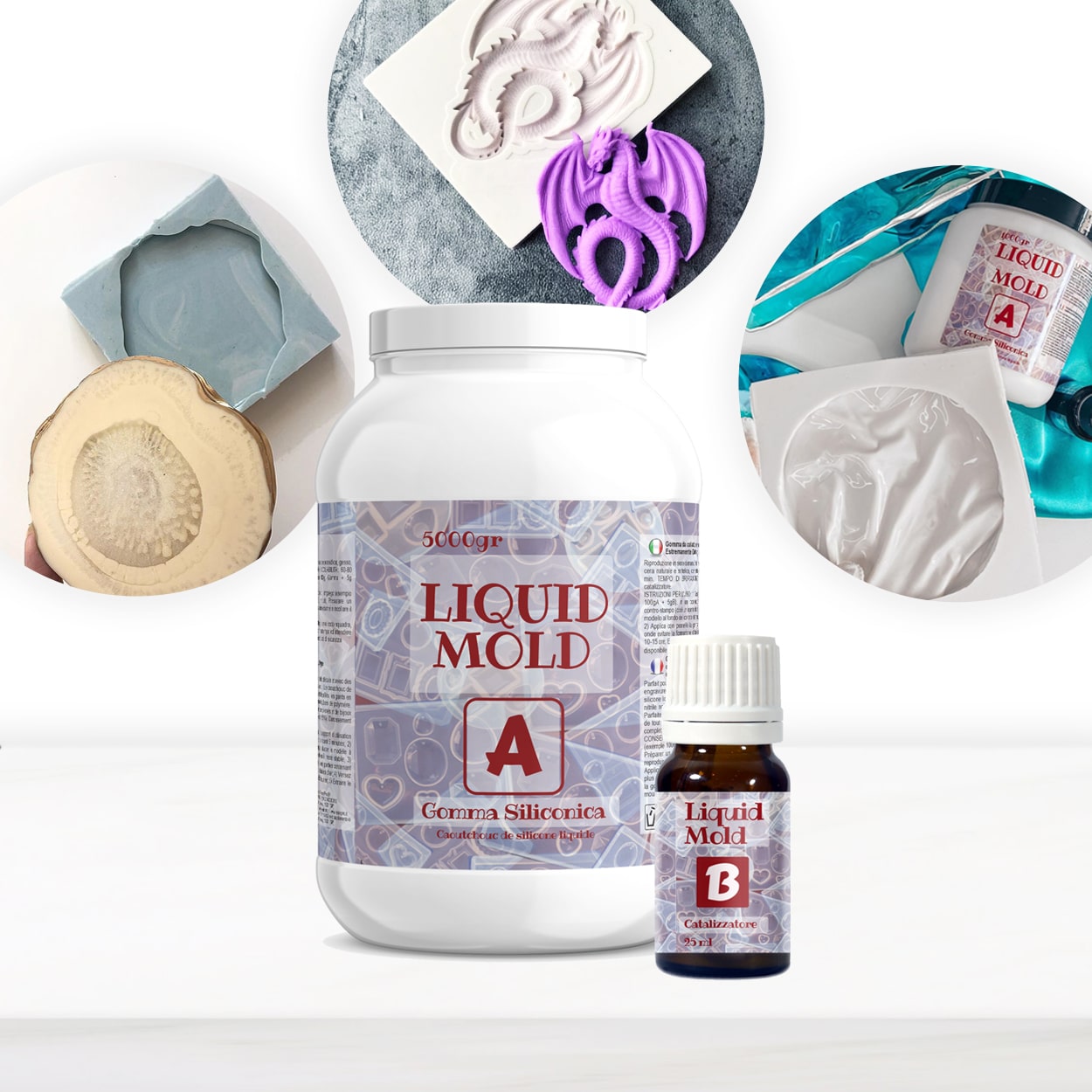
If you’re casting metal resin, understanding the correct amount of catalyst to add is crucial for achieving durable, accurate, and safe results. This guide compares recommended catalyst ratios and mixing approaches across leading silicone putties, liquid rubbers, and deep-casting epoxy resins. Whether you’re fabricating moulds for small items or working on large artistic projects, you’ll find clarity in choosing the right system for your casting needs.
Catalyst Ratios in Silicone, Epoxy, and Metal Resin Casting
Choosing the right catalyst ratio ensures your castings cure thoroughly without issues like brittleness, bubbles, or incomplete hardening. Silicone putties often require a 1:1 ratio (resin to catalyst), which is simple and forgiving. Liquid silicone rubbers generally need careful mixing as a bi-component (A+B), ensuring every detail is captured in your mould. Deep-casting epoxy resins, often used in metal resin effects, vary by manufacturer but typically use a fixed ratio such as 4:1. Attention to these differences is essential for project success, especially for technical work like metal or resin jewellery, detailed object reproduction, or large-scale table casting.
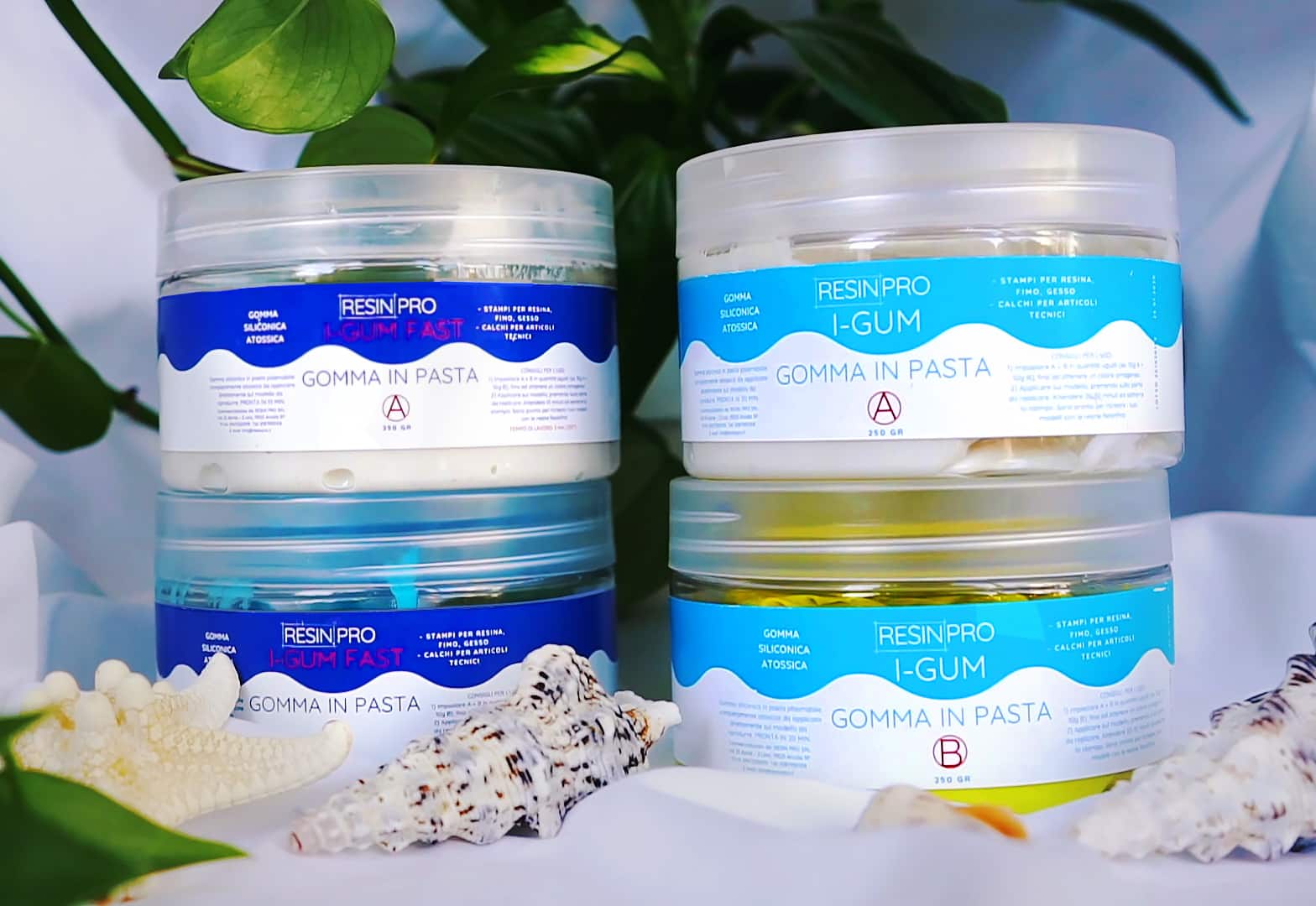
Visual Guide: Mixing and Curing Examples
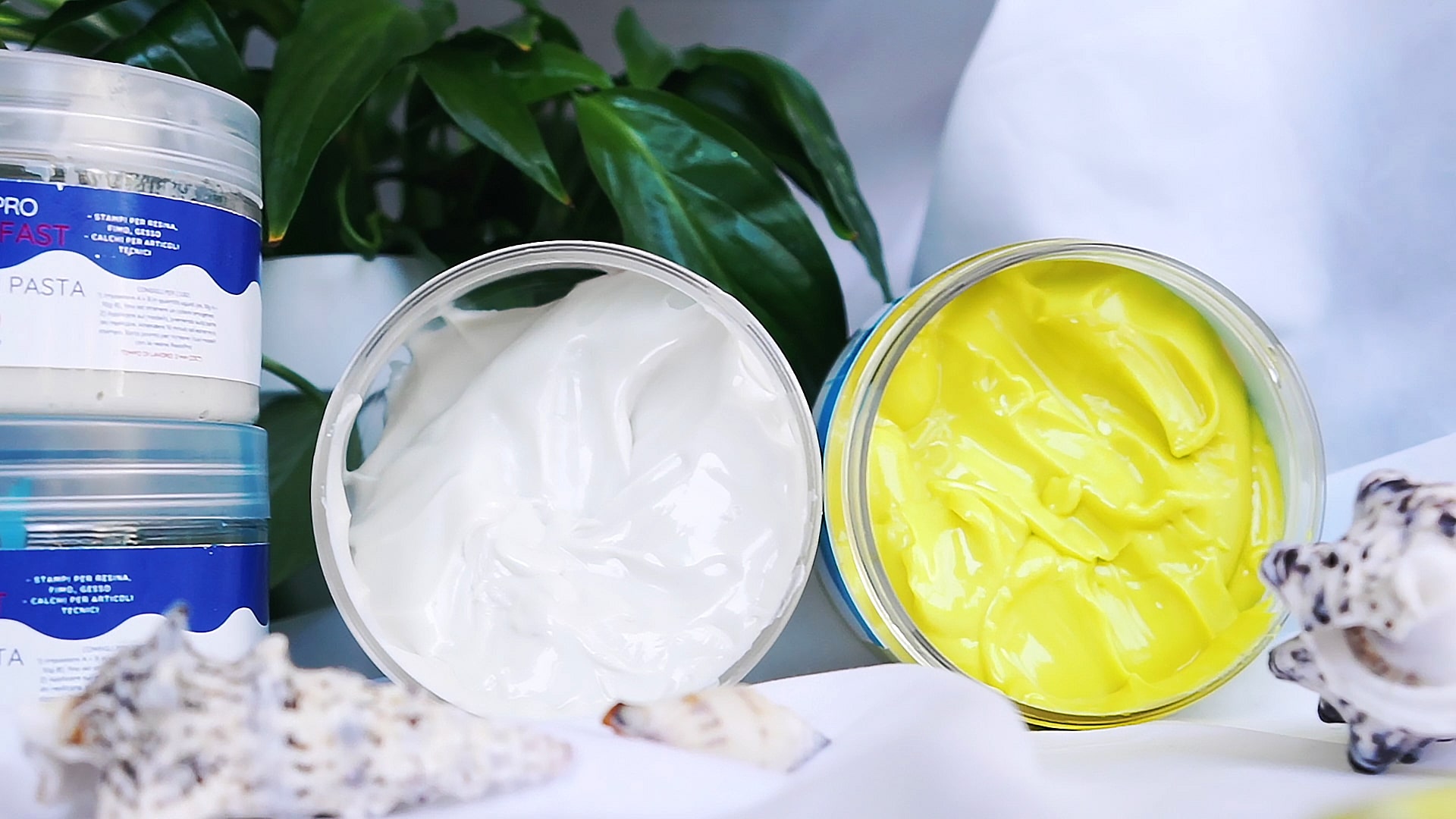
See the various stages of mixing silicone putty, combining bi-component liquid rubber, and deep-pour epoxy resin. Side-by-side images illustrate proper ratios, blending techniques, and what well-mixed catalyst and resin should look like before and after curing.
“I–Gum” – Non-Toxic Silicone Putty for Mould Making
The “I–Gum” – Non-Toxic Silicone Putty for Mould Making is ideal for those who prioritise ease and safety. This two-component system requires an equal 1:1 mixing ratio of putty to catalyst paste. Its long working time of 20 minutes allows users to position their pieces or embed objects without rushing.
Mix with catalyst paste in equal parts (1:1 ratio)
Non-toxic and can be handled without gloves
This makes “I-Gum” a strong choice for hobbyists making coasters, trays, or decorative objects. The odourless, vegan-friendly formula removes much of the anxiety around mold making, especially for those new to catalyst proportions. It is not designed for use as a release agent or for applications outside the recommended material set.
“Liquid Mould” – Casting Liquid Silicone Rubber (5–40 Shores, Bi-Component A+B)
For those requiring more detailed, intricate moulds, “Liquid Mould” – Casting Liquid Silicone Rubber, 5-40 Shores, Bi-Component A+B provides exceptional detail-taking. Formulated as a bi-component system (A+B), it requires thorough mixing of both parts with the included catalyst just before pouring. This careful combination ensures full detail reproduction and structural strength.
Bi-component liquid silicone rubber for mould making
Penetrates well to capture small details and undercuts
Use this product for fine art bronzes, jewellery components, and any project where intricate mould features matter. The working time and cure process allow multiple reproductions, and its compatibility with resin, soap, and polymer pastes provides greater versatility. Avoid skipping the catalyst or imprecise ratios, as this can lead to improper curing or surface tackiness.
“Liquid Mould” – Casting Liquid Silicone Rubber, 15 Shores 20.8 kg
The “Liquid Mould” – Casting Liquid Silicone Rubber, 15 Shores 20.8 kg is optimised for larger scale or repeated prototype work. Like the previous liquid mould, this too is a bi-component silicone system, requiring precise mixing prior to use. It’s built for technical detail and repeated castings without deterioration in accuracy.
Compatible with resin, soap, polymer pastes, and hot waxes
If you’re casting for technical applications or need robust, high-mechanical-property forms, this product ensures repeatability and definition. Do not attempt use without following the catalyst ratio as per product instructions.
“Epoxytable 10-Ten” – Deep Pour Epoxy Resin for Tables, Up to 10cm Casting
For substantial pours such as river tables or dramatic metallic inlays, “Epoxytable 10-Ten” – Deep Pour Epoxy Resin for Tables, Up to 10cm Casting offers a reliable 4:1 resin to catalyst ratio. Designed for thicknesses up to 10 centimetres in a single pour, it ensures even, bubble-free curing due to its low exothermic reaction and long working time.
Formulated for castings up to 10 cm thick with low exothermic reaction
Non-yellowing with strong UV filters guaranteed for five years
Super low viscosity for bubble-free finish and long working time
This resin is best for grand-scale projects such as handmade tables with metal resin effects, art pieces, or installations. Accurate measurement and blending of resin to catalyst is essential — never shortcut the ratio or mix vigorously, as these can result in exothermic spikes or incomplete hardness, especially in deep pours.
Tips for Perfect Catalyst Ratios in Mould and Resin Casting
Success in metal resin or silicone mould casting comes down to precise measurement and thorough mixing. Always:
- Use electronic scales for weight-based ratios
- Mix small test batches for new moulds or resin types
- Do not attempt to alter cure speed by changing recommended catalyst proportions — this often leads to failure
- Take note of working times to plan pour and placement accordingly
- Consult the individual product page such as “I–Gum” – Non-Toxic Silicone Putty for Mould Making or “Epoxytable 10-Ten” – Deep Pour Epoxy Resin for precise logarithmic mixing guides
Common Pitfalls in Catalyst Mixing
Missed measurements, insufficient stirring, or attempting to adjust catalyst for faster cures are frequent causes of failure. For the best results, follow each product’s instructions and consult product pages for additional resources on safety and troubleshooting.
- "I–Gum" – Non-Toxic Silicone Putty for Mould MakingPrice range: £24.00 through £104.95"I–Gum" silicone putty is designed for mould making with a 1:1 mix ratio and suitable for resin and other materials.
- "Liquid Mould" – Casting Liquid Silicone Rubber, 5-40 Shores, Bi-Component A+BPrice range: £14.45 through £387.45"Liquid Mould" is a casting liquid silicone rubber designed for making moulds with fine details, suitable for resin and compatible materials.
- "Liquid Mould" – Casting Liquid Silicone Rubber, 15 Shores 20.8 kg£348.85Casting liquid silicone rubber suitable for detailed moulds and small objects, compatible with resin and polymer pastes.
 “Epoxytable 10-Ten” – Deep Pour Epoxy Resin for Tables, Up to 10cm CastingPrice range: £35.95 through £351.95Epoxy resin for super-deep pours up to 10cm, designed for tables and artistic projects with low viscosity and UV resistance.
Frequently Asked Questions
What is the correct catalyst ratio for silicone putty like I-Gum?
Silicone putty I-Gum should be mixed in a 1:1 ratio with its catalyst paste for optimal results.
How do I use Liquid Mould silicone rubber with resin or metal?
Mix bi-component A and B as instructed, add catalyst, blend thoroughly and pour immediately for accurate detail reproduction.
What is the catalyst proportion for deep-pour epoxy like Epoxytable 10-Ten?
Epoxytable 10-Ten uses a 4:1 resin to catalyst ratio. Accurate weighing is essential for proper curing.
Is it safe to add extra catalyst for a quicker cure?
No, exceeding the recommended catalyst ratio can cause brittleness, overheating, or incomplete curing of the casting.
How can I prevent bubble formation when mixing resin or silicone with catalyst?
Mix slowly and thoroughly. For high-detail or deep pours, consider a pressure pot to remove trapped air.
Are there safety precautions when using catalyst with resin?
Always follow product-specific safety advice. Use gloves for epoxy but I-Gum is non-toxic and can be handled without gloves.