 Free shipping on orders over £29,85
  Shipping Tracking!


 Google
 Facebook
How to apply resin to terraces?
Step-by-step guidance for attractive, durable terrace flooring.

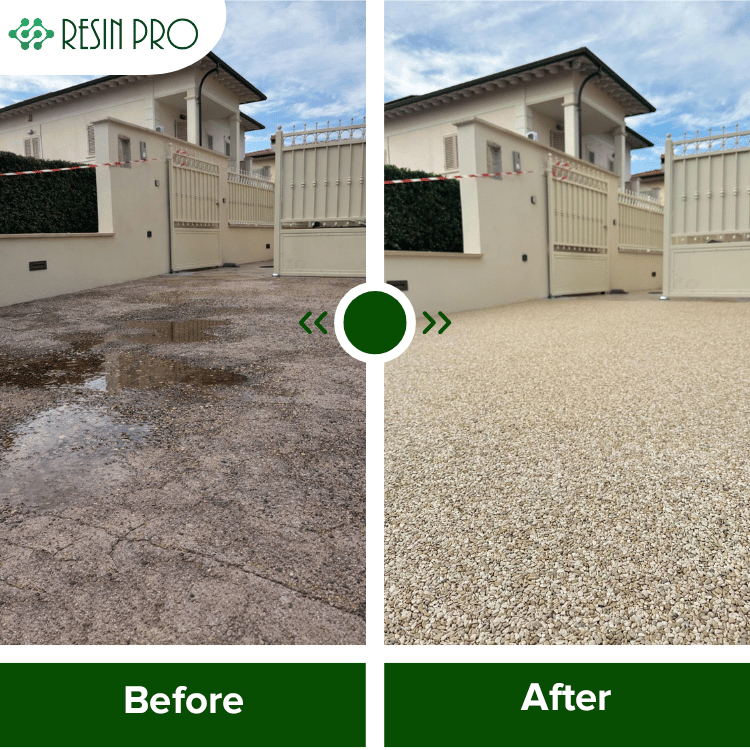
Transforming your terrace with a resin-bound or resin-coated surface delivers a modern, hard-wearing finish that stands up to UK weather conditions. This guide covers all the essential steps, from surface preparation to applying resin and achieving a long-lasting result, whether you are resurfacing concrete or installing decorative stone flooring.
What You’ll Need
- “Flowstone” – Complete Permeable Floor Kit with Pebbles and Resin: For a full system combining pebbles and binder for new, permeable stone terraces.
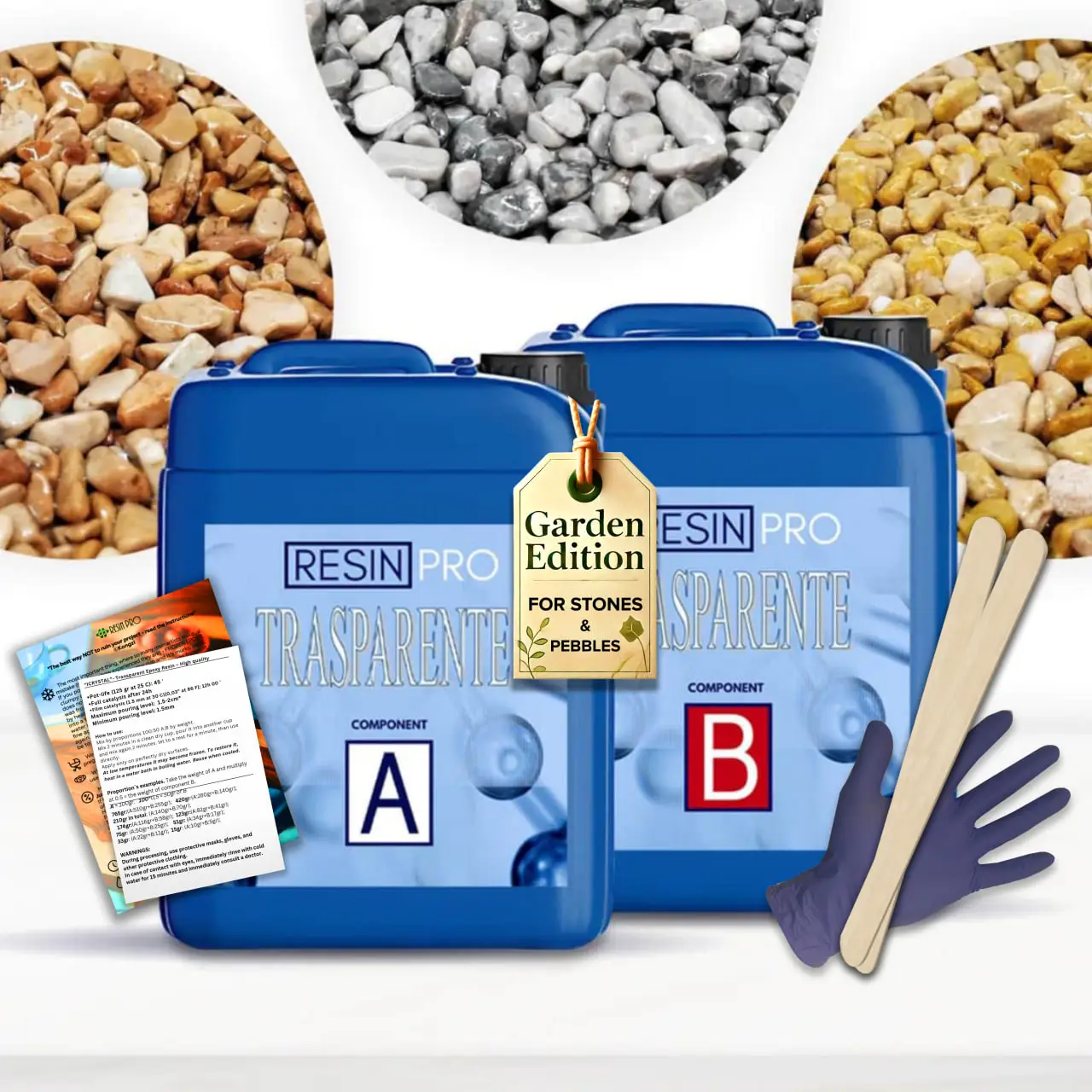
- “Trasparente” – Epoxy Binder for Coloured Pebbles and Grits: Ideal epoxy system if using coloured or dark gravel to create decorative resin-bound surfaces.
- “Polirock” – Polyurethane Binder for White Stones, 2kg Two-Component Kit: Specially formulated for binding white and natural stone aggregates for a pristine finish.
- “Resinstone” – One-Component Methacrylic Resin for Concrete Floors and Driveways: Use for sealing or renovating existing concrete terrace surfaces.
- Protective gloves, mixing buckets or cement mixer (for larger surfaces), strong trowel or float, squeegee, dustpan brush, and masking tape.
Essential Surface Preparation for Resin
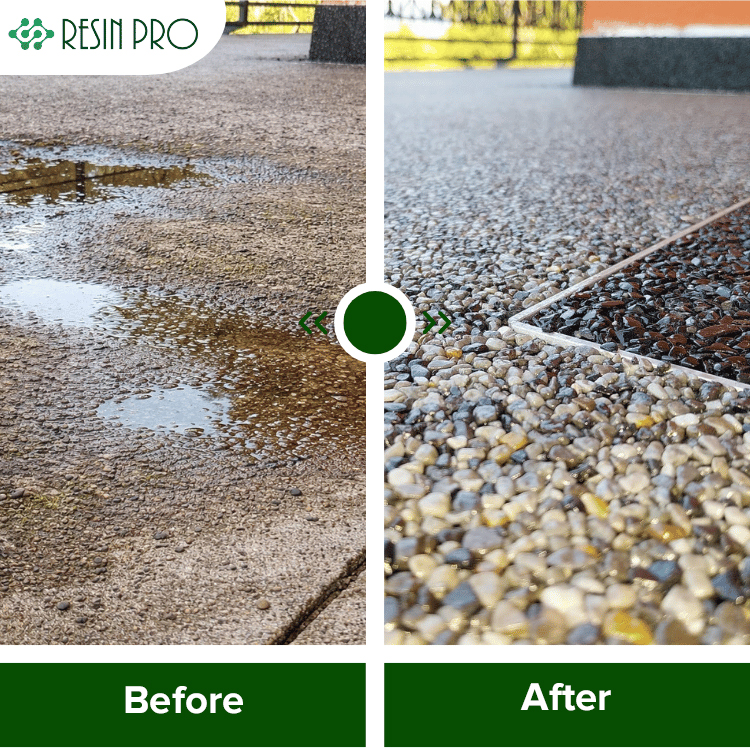
Proper groundwork sets the stage for a resilient resin terrace. Take time to clean, repair, and dry your patio thoroughly. Remove oil stains and patches of moss. For best safety, mask edges and protect walls or adjoining areas before you start resin mixing or application.
Step 1: Prepare the Surface Thoroughly
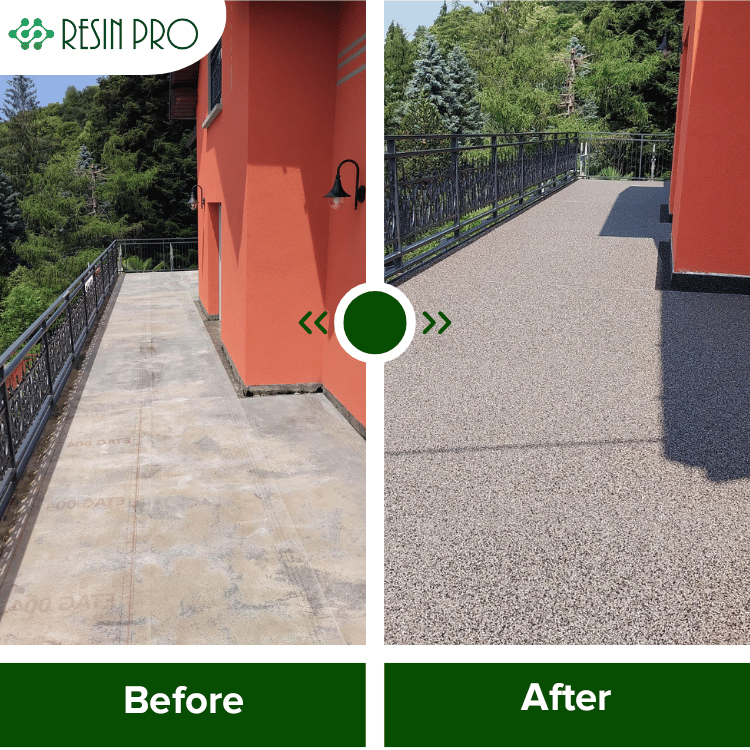
Start by sweeping the terrace to remove dust, leaves, and loose debris. If you are coating existing concrete, repair any cracks or holes and ensure the surface is level. Wash the area and allow it to dry completely. Moisture or instability in the substrate can cause poor adhesion and future defects. If the terrace is new, allow adequate curing time for the base material. Clean, dry, and stable substrate is essential for resin success.
Step 2: Select and Mix Your Resin Binder and Aggregates
Choose the appropriate resin system for your terrace. For new pebble finishes, combine washed and dried aggregate with the chosen resin binder in a clean bucket or cement mixer. Mix thoroughly until the pebbles are fully coated. Epoxy binders are optimal for coloured stones, while polyurethane suits white or light stones prone to yellowing. Proper mixing is crucial for coverage and surface integrity. Always follow the manufacturer’s recommended resin-to-aggregate proportions.
Step 3: Apply the Resin Mixture Evenly
Work in sections no larger than you can finish within the resin’s usable time window. Tip the mixed resin and aggregate onto the terrace and spread using a trowel or float, pressing firmly to remove any air pockets. Aim for a consistent layer, matching the recommended depth from your chosen product. If sealing concrete, roll or brush the resin in thin, even coats, taking care to avoid pooling. Work in manageable sections to ensure a smooth, uniform finish before curing begins.

Step 4: Finishing Touches and Curing
Before the resin sets, lightly smooth the surface and wipe away excess material from joints or borders. If an anti-slip finish is required, broadcast fine sand or suitable aggregate while the surface is tacky. Allow the resin terrace to cure undisturbed for the period specified by the manufacturer, usually 10–24 hours for pedestrian use. Block off the area to prevent accidental marking. Allow correct curing time for full strength and weather protection. Wait until the resin surface is hard and dry before removing tape and returning furniture.
Tips, Common Mistakes, and Troubleshooting
To avoid cloudiness or poor bonding, never apply resin over damp surfaces—always check for residual moisture. Test a small inconspicuous area if you are unsure about substrate compatibility. Mixing more resin than you can lay within the working time can lead to wasted materials and uneven appearance. Use anti-slip finishes where needed, especially on outdoor terraces exposed to rain. Test compatibility before full application and avoid application in extreme temperatures to maintain optimal performance and appearance.
Pro Tip: Achieving a Professional Finish
For the smoothest, most even results, plan your work in cooler, dry weather and avoid direct sunlight during application. Always mix the full resin component and aggregate well to ensure colour and texture remain consistent. Finish edges carefully for a defined border that looks professionally installed.
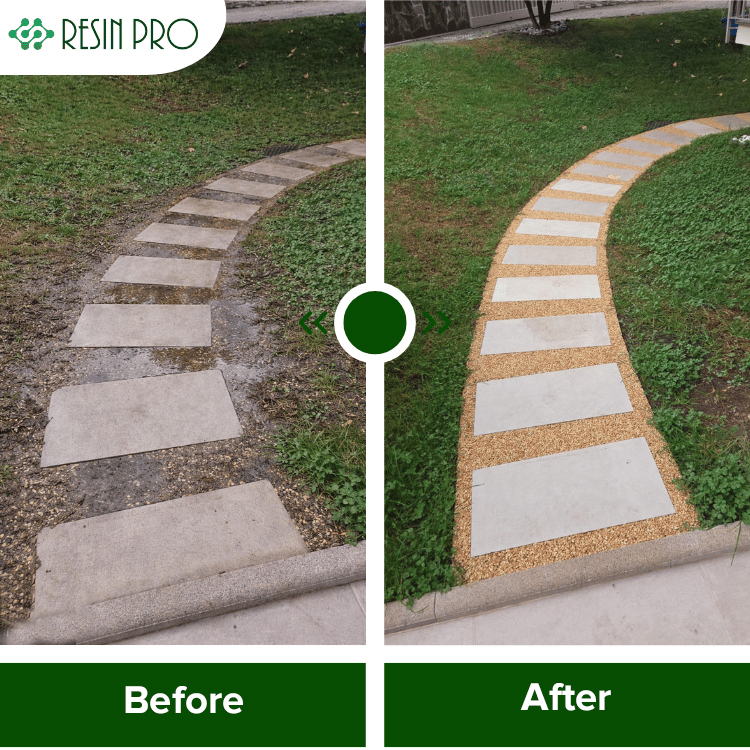
- "Flowstone" – Complete Permeable Floor Kit with Pebbles and ResinPrice range: £42.85 through £3,389.85"Flowstone" kit offers a durable, permeable pebble and resin flooring system suitable for UK outdoor spaces with guidance for easy application.
- "Trasparente" – Epoxy Binder for Coloured Pebbles and GritsPrice range: £31.85 through £948.85"Trasparente" transparent epoxy binder designed for coloured pebbles and grits offers a clear, UV-stable finish suitable for terraces.
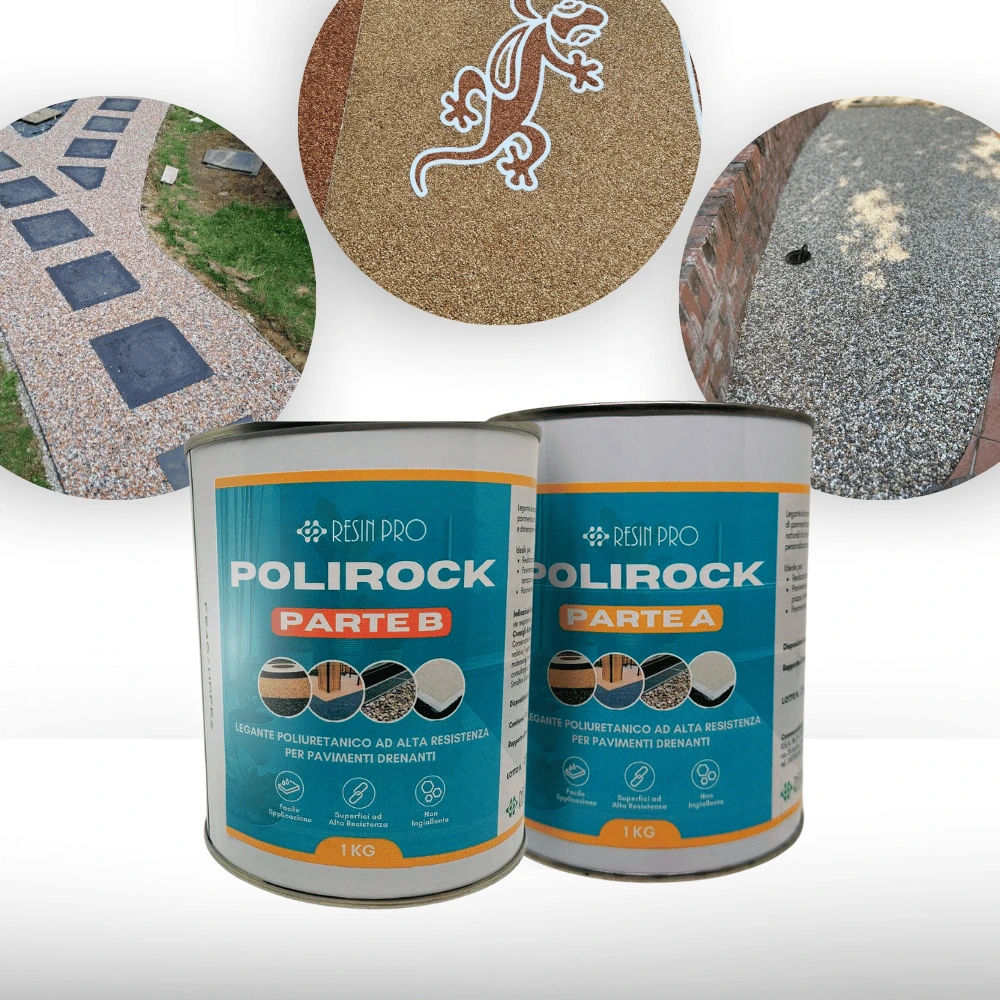 "Polirock" – Polyurethane Binder for White Stones, 2kg Two-Component Kit£58.85"Polirock" is a two-component polyurethane binder for white stones, used to create decorative, permeable outdoor stone surfaces.
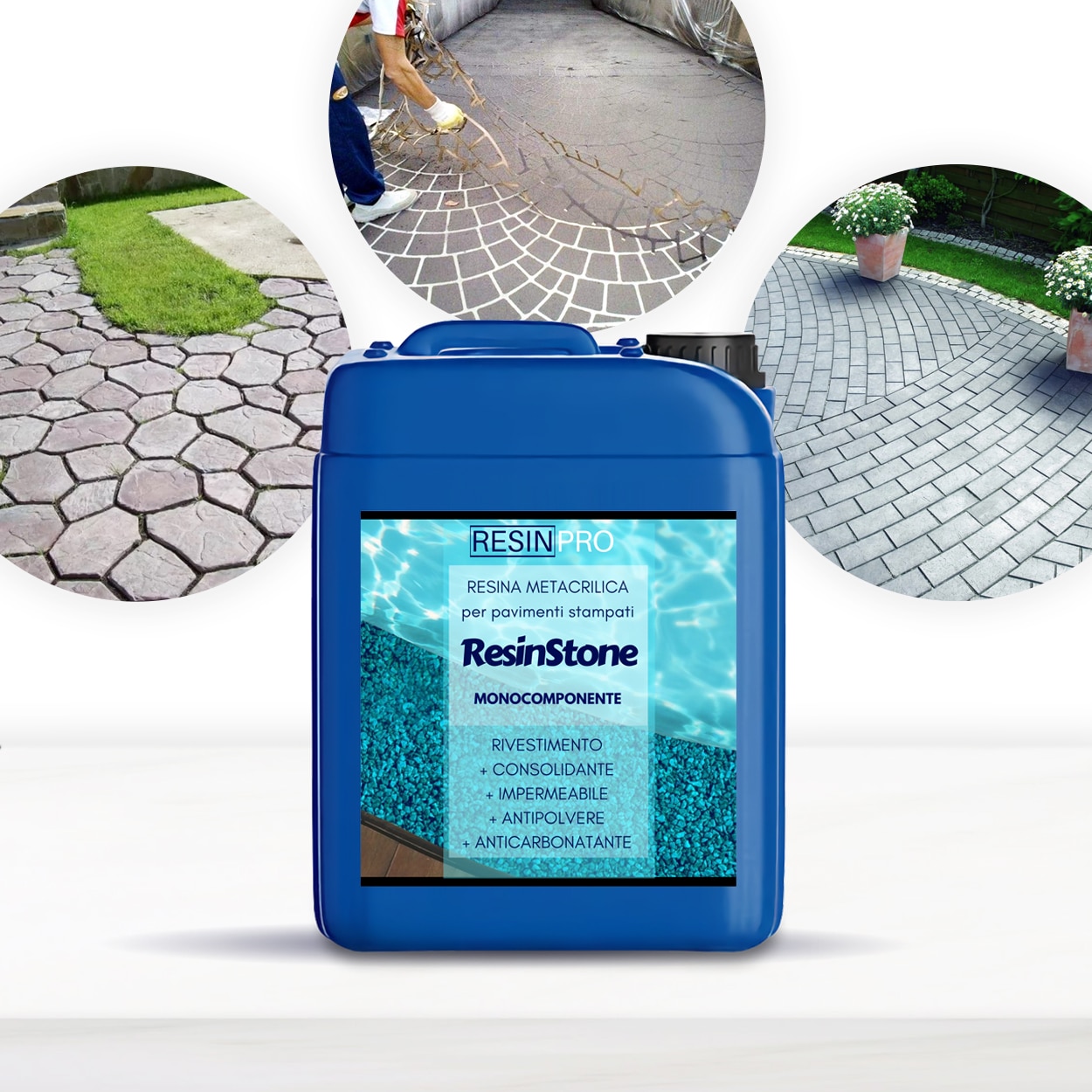 "Resinstone" – One-Component Methacrylic Resin for Concrete Floors and DrivewaysPrice range: £29.85 through £59.85Resinstone is a one-component methacrylic resin designed for sealing concrete floors and driveways, suitable for terrace applications.
Frequently Asked Questions
What type of resin is best for UK terraces?
Choose UV-resistant epoxy for coloured gravel or polyurethane for white stones. Methacrylic resin works well for concrete sealing.
When is the best time to apply resin on a terrace?
Apply resin during mild, dry weather and avoid rain or high humidity for optimal curing and adhesion.
Do I need to prime the terrace before applying resin?
Most systems do not require primer on a clean, porous surface. If in doubt, always follow the specific product instructions.
How long before I can walk on my resin terrace?
Resin surfaces are usually walkable after 10–24 hours, depending on the product and weather conditions.
How do I prevent slipperiness on resin terraces?
Broadcast fine sand or suitable anti-slip aggregate into wet resin for safer, non-slip outdoor surfaces.
Can I apply resin over any terrace surface?
The substrate must be stable, clean, and dry. Porous surfaces like concrete are ideal, but avoid unstable or damp bases.
How should I clean my resin terrace?
Sweep regularly and wash with mild detergent; avoid abrasive cleaning or high-pressure washing to preserve finish integrity.